On this page
Table of ContentsWhat Is a Mullet? Classic Mullet vs Modern Mullet All Mullet Variations Mullet by Hair Type Mullet with Fade Mullet for Women Mullet for Kids How to Style a Mullet How to Ask Your Barber Maintenance FAQ Related GuidesA mullet is a haircut that is shorter at the front and sides and longer at the back. The classic version was the defining haircut of the 1980s. The modern mullet keeps the same basic structure but with more texture, cleaner fades, and significantly less volume than the original. It works on straight, wavy, and curly hair, and suits oval and square face shapes best.
Table of Contents
- What Is a Mullet?
- Classic Mullet vs Modern Mullet
- All Mullet Variations
- Mullet by Hair Type
- Mullet with Fade
- Mullet for Women
- Mullet for Kids
- How to Style a Mullet
- How to Ask Your Barber
- Maintenance
- FAQ
What Is a Mullet?
A mullet is a haircut where the hair at the front and sides is kept short, while the hair at the back is left significantly longer. The standard shorthand description is “business in the front, party in the back,” which captures the contrast in length from front to back.
The mullet appeared in various forms throughout history but became widely recognized in the 1970s and 1980s when it was popular across rock music culture and professional sports. By the 1990s it had become culturally associated with a certain era rather than a current style. The second wave began in the mid-2010s and has grown consistently since, driven largely by social media.
The modern mullet differs from the classic in a few concrete ways. Classic mullets used large volume, often with perms or heavy product. Modern versions typically use less product, add a fade or taper at the sides, and work with natural texture rather than amplifying it artificially. The back length in modern versions is also usually shorter, landing at the collar rather than mid-back.
This guide covers mullet variations for men and women, all major styles, how to ask your barber, and maintenance. It does not cover the wolf cut, which shares characteristics with the mullet but is treated as a separate style in the trending styles section.
Classic Mullet vs Modern Mullet
| Feature | Classic Mullet | Modern Mullet |
| Era | 1970s-1990s | 2015-present |
| Back length | Long, often past shoulders | Short to medium, collar to shoulder |
| Volume | High, often permed | Natural or lightly textured |
| Sides | Usually straight cut | Often faded or tapered |
| Product | Heavy-hold sprays | Light texturizers or nothing |
| Overall look | Retro, high-contrast | Casual, effortless |
The modern mullet is easier to wear in everyday settings because the overall proportions are more balanced. The back does not reach as low, the volume is controlled, and the fade or taper at the sides updates the perimeter.
Full guide on the most popular modern version: modern mullet.
All Mullet Variations
Modern Mullet
The most requested version today. The front and top are shorter, the back is left at collar length or slightly longer, and the sides are tapered or faded. Texture is added with a small amount of product or left natural. Works on most hair types.
Full guide: modern mullet.
Shaggy Mullet
A mullet with more texture and movement throughout. Rather than clean layers, the shaggy version has choppy, uneven lengths that create a looser, less groomed look. Popular with wavy and curly hair. The shaggy mullet is the least formal version and suits casual, creative settings.
Full guide: shaggy mullet.
Curly Mullet
Curly hair and a mullet combine naturally. The curls at the back add volume and movement, while the shorter front and faded sides keep the shape controlled. The key is letting the curls do the work rather than fighting them. This version requires the least styling effort.
Full guide: curly mullet.
Mullet Fade
A mullet with a fade at the sides. The fade creates a cleaner transition from the short sides to the longer back, and gives the overall shape more definition. Low fades keep the look subtle. High fades make the back-to-side contrast more dramatic.
Full guide: mullet fade.
Burst Fade Mullet
A burst fade follows the curve of the ear around the back of the head, creating a rounded arc rather than a straight horizontal line. With a mullet, the burst fade frames the back section of longer hair and makes the longer back more prominent. One of the most technically refined mullet variations.
Low Taper Fade Mullet
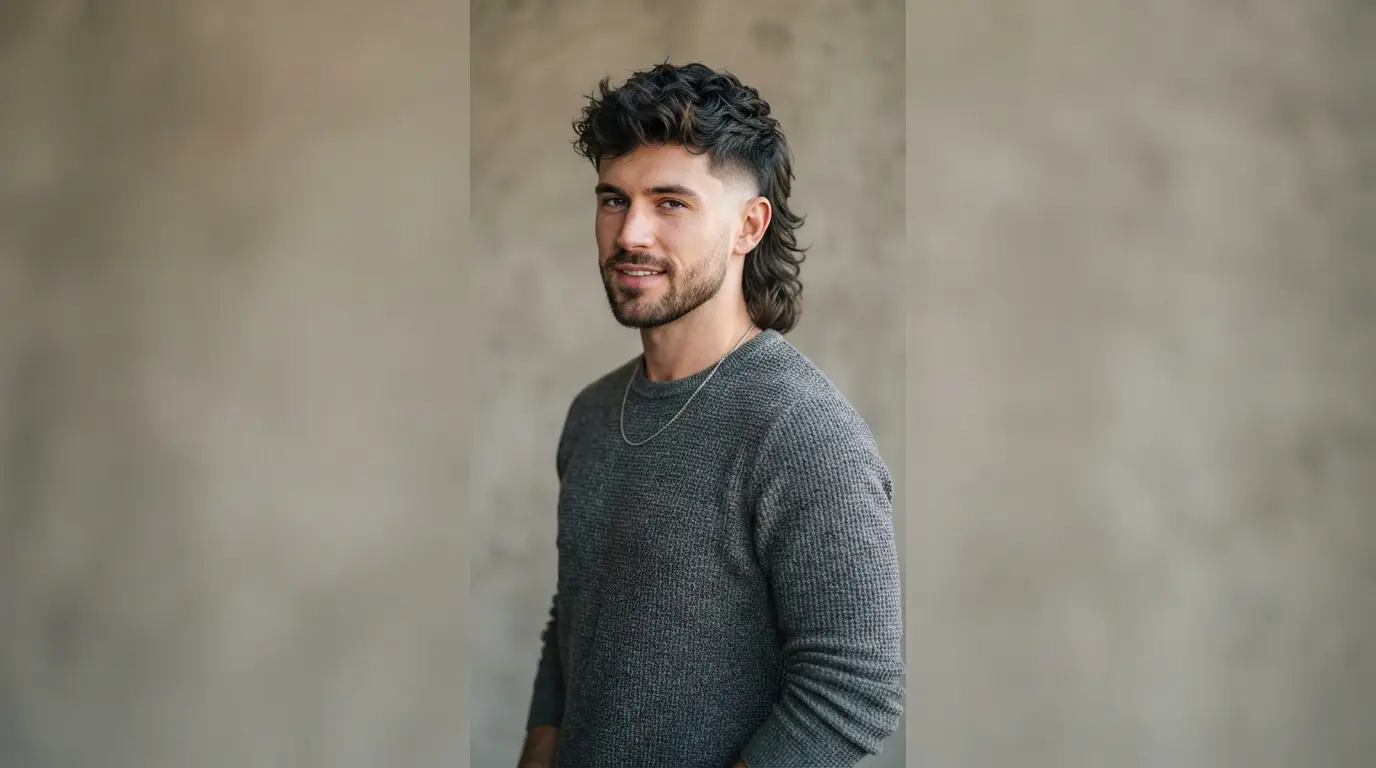
A mullet with a low taper fade at the sides, where the fade starts just above the ears. Less aggressive than a high fade mullet, this version works well in settings where a full mullet might be too bold. Full guide: low taper fade mullet.
Permed Mullet
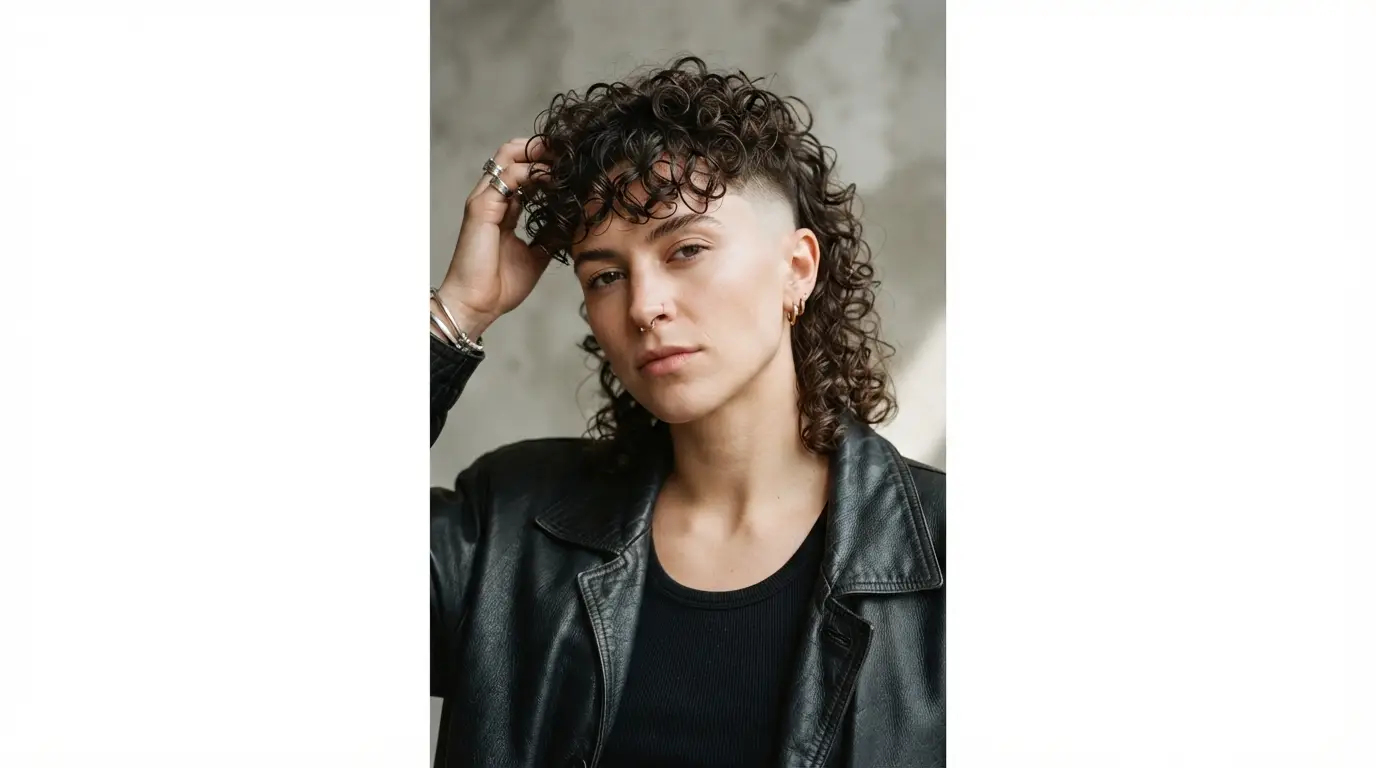
The back section of a mullet given a perm to add curl or wave texture. Popular in the 1980s original era and making a return in the modern revival, particularly for people with naturally straight hair who want the volume and movement of a curly mullet.
Short Mullet
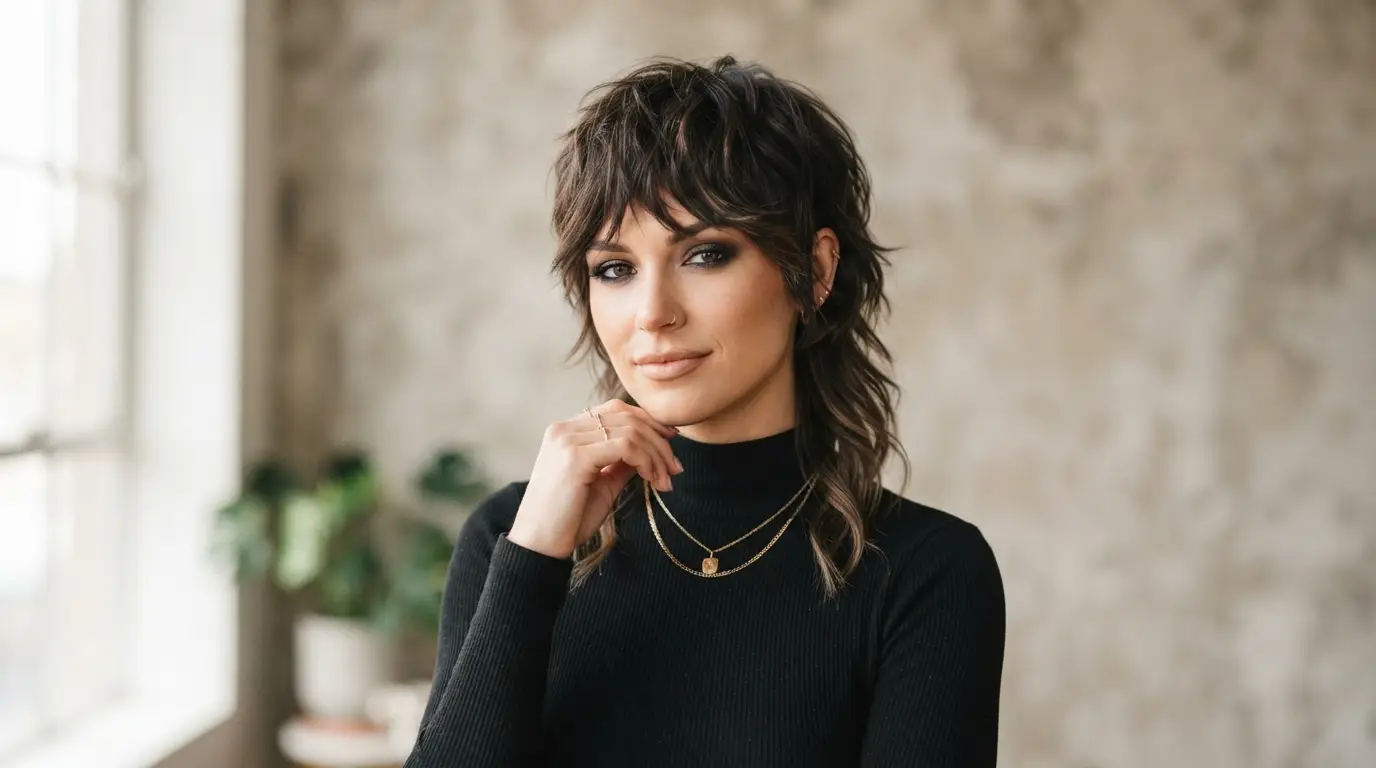
A mullet where the back length is minimal, typically just past the collar. This is the most conservative version and the easiest entry point. The contrast between the short front and slightly longer back is enough to read as a mullet without being dramatic.
Wolf Cut Mullet

The wolf cut is a blend between a shag haircut and a mullet. It uses heavy layering, curtain bangs, and longer back sections. When specifically called a wolf cut mullet, the back is more pronounced than a standard wolf cut and the overall shape is closer to the classic mullet silhouette. Popular on social media and particularly common with wavy and curly hair.
Mohawk Mullet
A mohawk combined with a mullet, sometimes called a mulhawk. The center strip runs front to back but the hair at the back is left longer than a standard mohawk, creating the characteristic mullet drop at the nape. Works best with thicker hair.
Mullet with Undercut
The sides are shaved or closely cut like an undercut, while the top and front sections are short and the back is longer. The undercut creates a sharp boundary at the sides that emphasizes both the top section and the back length. Full guide: undercut haircuts.
Mullet with Taper
A taper, rather than a full fade, at the sides. The hair decreases in length as it approaches the ears but does not go all the way to skin. A softer version of the mullet fade.
Mullet for Black Men
The mullet works across hair textures including tight coils and natural hair. A taper afro at the front and sides with natural hair left longer at the back is one interpretation. A burst fade or drop fade version with a defined back section is another. The style is less common in Black barbershop culture but has grown as the modern mullet revival has expanded.
Kentucky Waterfall
A regional nickname for the classic long mullet, particularly associated with the American South and Midwest. The term refers specifically to the long, straight, flowing back section typical of the 1980s version. The Kentucky waterfall is the same cut as the classic mullet, just named differently.
Rat Tail Haircut
A close relative of the mullet where a single narrow tail of hair grows from the nape while the rest of the hair is short. Less of a full mullet and more of an accent, the rat tail is a distinct style but shares the “short everywhere except one section” logic of the mullet.
Mullet by Hair Type
Mullet for Straight Hair
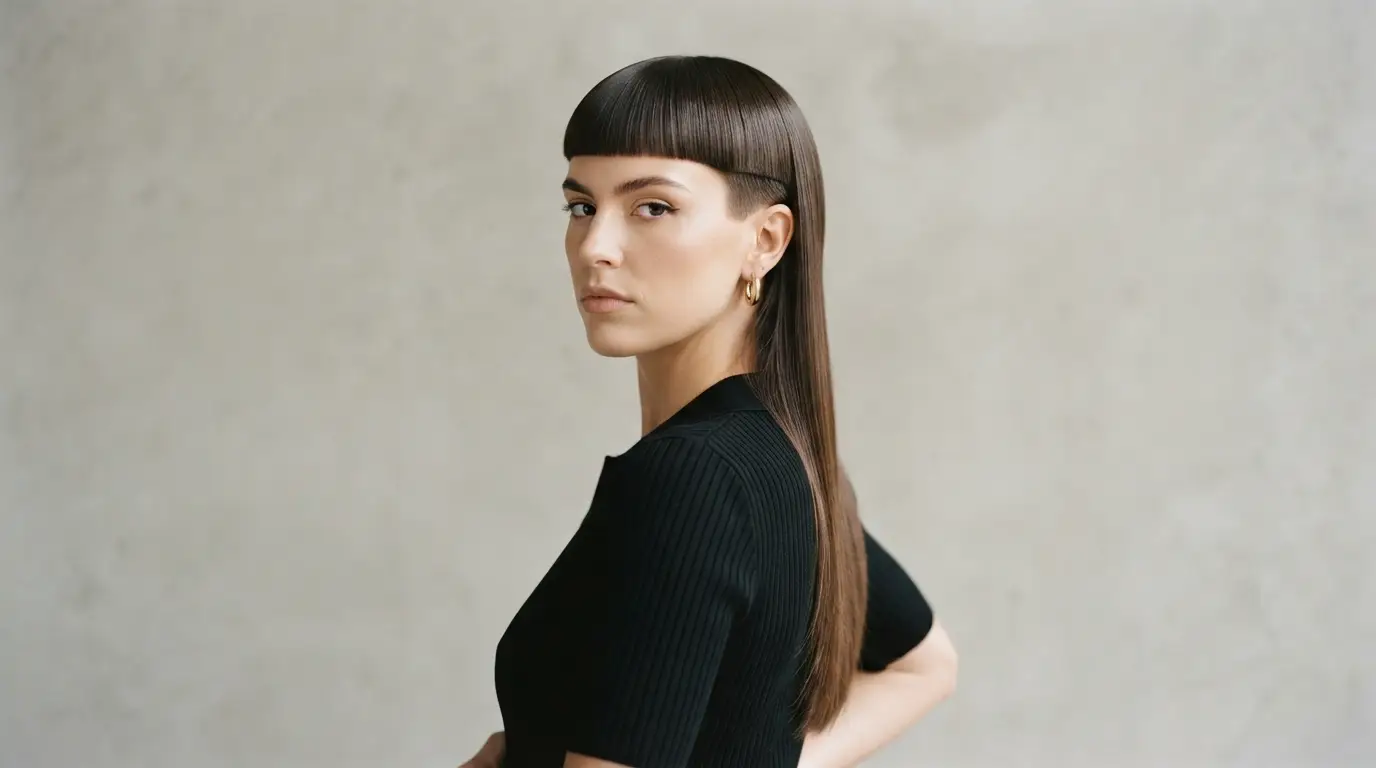
Straight hair shows the length contrast of a mullet clearly. The back lies flat and neat, the front stays controlled, and the sides are clean. Product adds movement if wanted but is not required. A sea salt spray or light texture cream adds some separation without weight.
Mullet for Wavy Hair
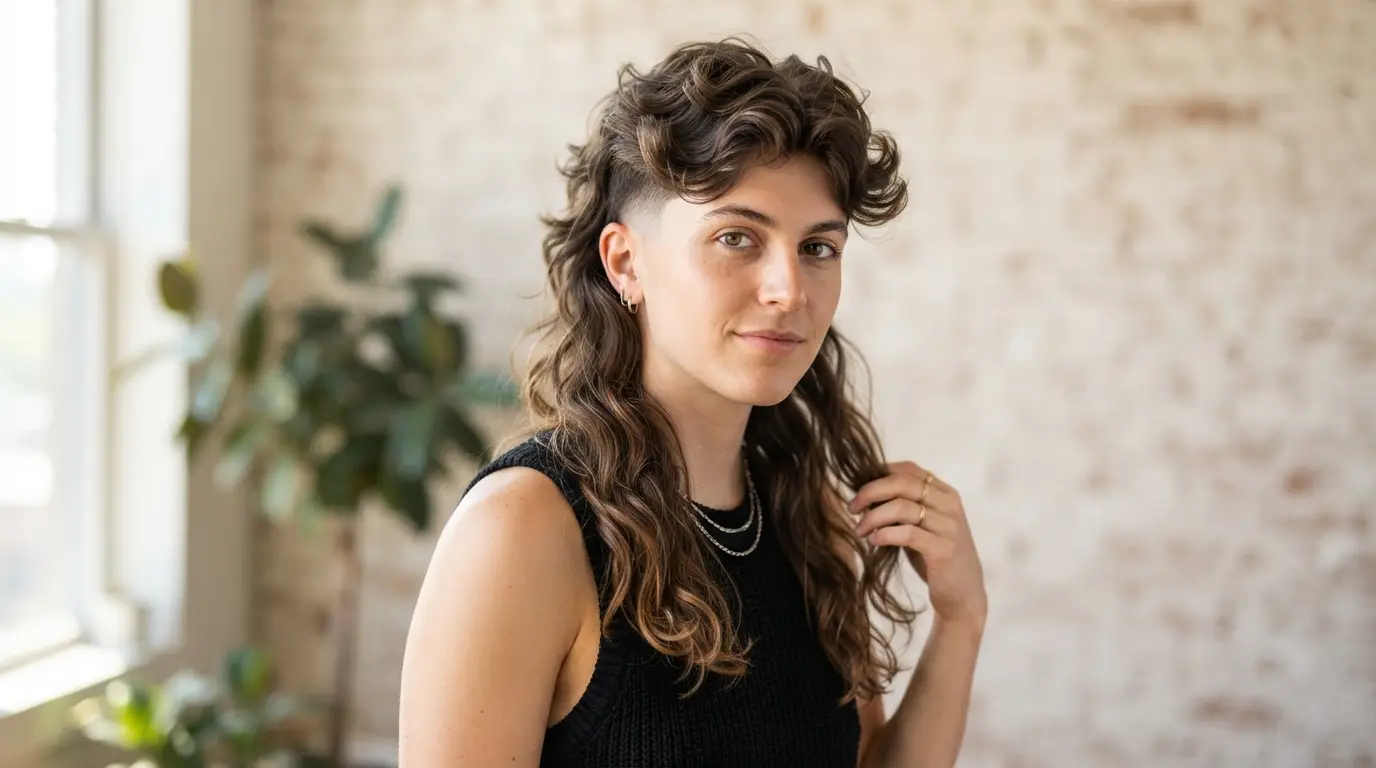
Wavy hair is arguably the best natural texture for a modern mullet. The waves create natural movement in the back section without needing product, and the loose texture fits the relaxed feel of the current style. Air-dry after washing and leave it alone.
Mullet for Curly Hair
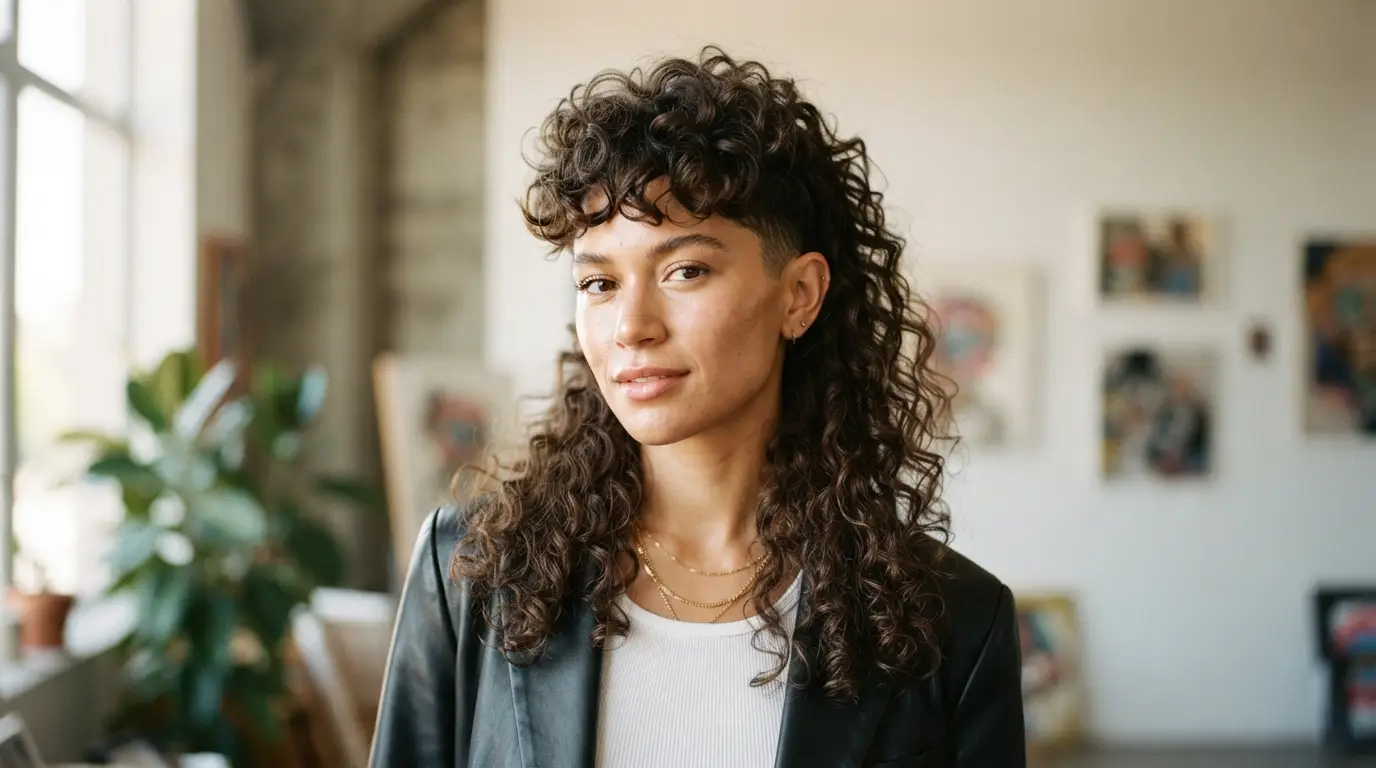
Curly hair works well at the back, where the curls bounce and expand. The front and sides should be shorter to keep the top controlled. The curls provide all the texture needed. A curl cream on damp hair and an air-dry is the standard approach.
Full guide: curly mullet.
Mullet for Thick Hair
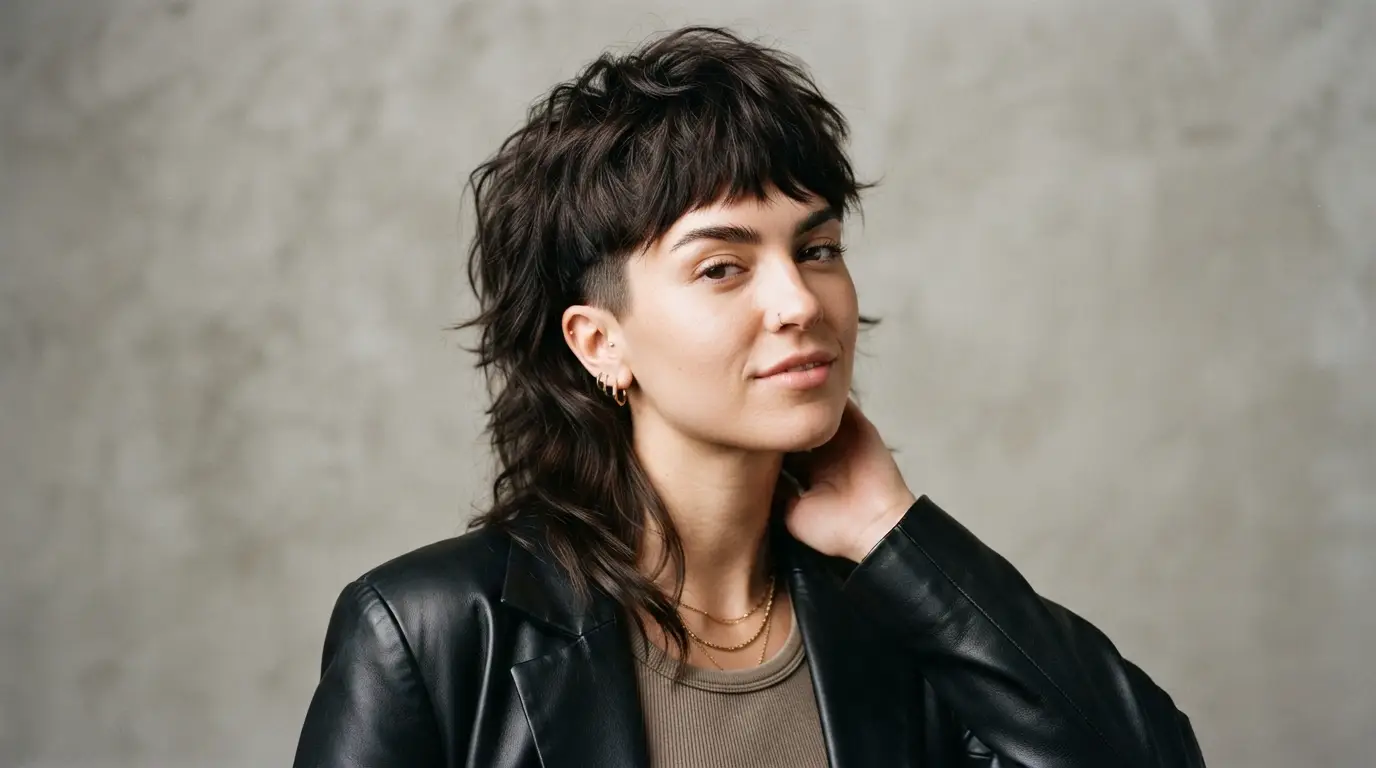
Thick hair holds the back length well and gives the mullet a full, substantial look. The sides benefit from a fade or taper to remove bulk. Without some kind of side management, thick hair can make a mullet look too wide.
Mullet with Fade

The most common modern mullet includes some kind of fade or taper at the sides. The fade cleans up the sides and draws a cleaner boundary between the short front section and the longer back.
Options in order of increasing contrast:
- Low taper: Subtle, starts above the ears. Least dramatic.
- Mid fade: Moderate contrast, starts at the midpoint of the sides.
- High fade: Strong contrast, starts above the temples.
- Burst fade: Curved arc around the ear, frames the back section specifically.
- Drop fade: Follows the curve of the head, drops lower at the nape.
Full guide: mullet fade.
Mullet for Women

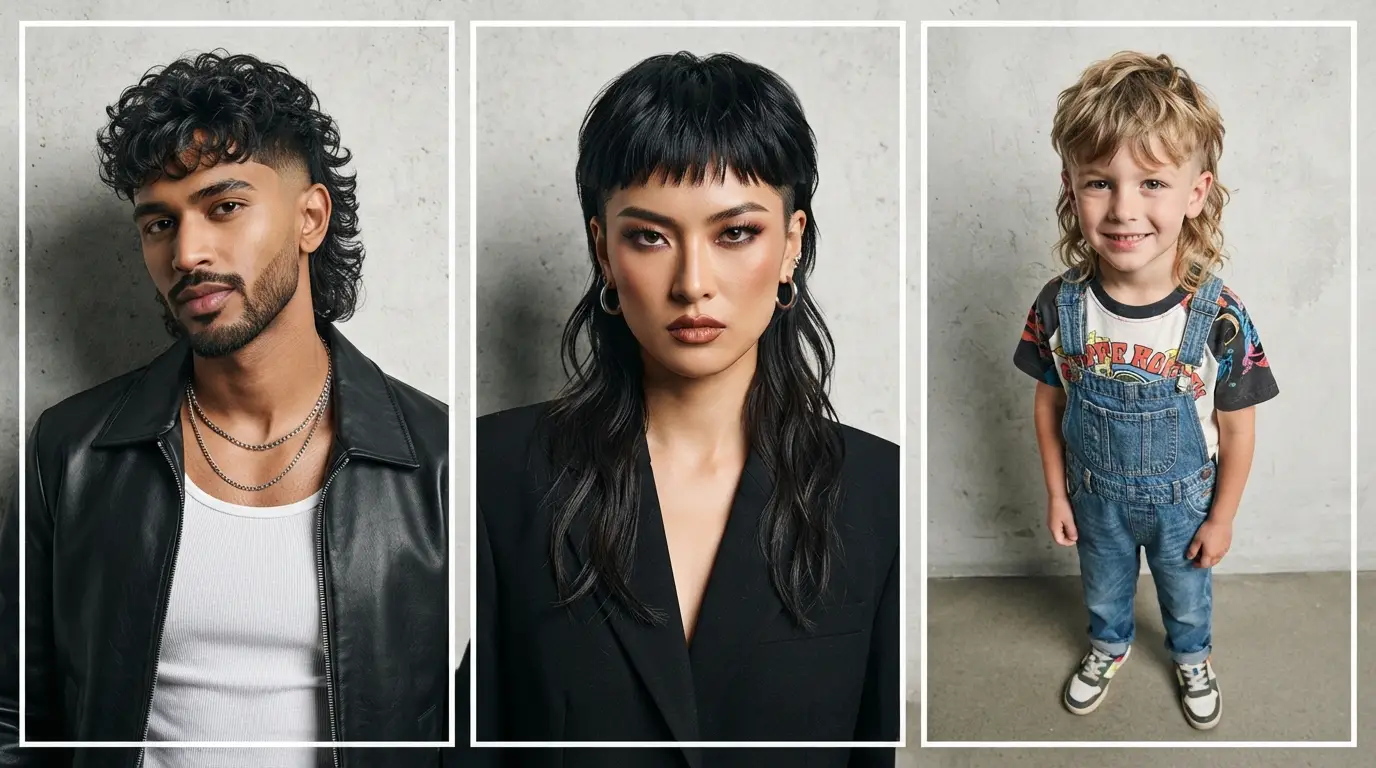
Women’s mullets have been part of style culture since the 1970s and have seen a significant return in the 2020s. The basic structure is the same: shorter at the front and sides, longer at the back. Women’s versions often use more layering throughout and tend to lean toward the shaggy or wolf cut interpretation.
The style works at all lengths. A short women’s mullet has a cropped front and a back that reaches just past the collar. A longer version keeps the front at chin length or longer, with the back reaching mid-back.
Full guide: mullet for women.
Mullet for Kids

Mullets for kids have had a notable presence in both the classic era and the modern revival. The short mullet or a simple taper fade with a slightly longer back are the most common versions for children. Easier to maintain than more complex cuts, and popular for kids who want to stand out.
How to Style a Mullet
Styling a mullet depends on the hair type and the specific version.
Straight hair: A small amount of matte pomade or texture paste through the back creates separation and movement. Run fingers through rather than using a comb for a looser look.
Wavy hair: A sea salt spray on damp hair, scrunched upward from the ends, then air-dried. The waves do most of the work. Avoid heavy products that weigh the waves down.
Curly hair: Curl cream or leave-in conditioner applied to damp hair, scrunched upward, air-dried. Do not touch while drying.
Shaggy version: A texturizing spray or lightweight mousse adds the separation and piece-y look. Rough-dry with fingers rather than a brush to keep the texture loose.
Permed mullet: A curl cream or mousse refreshes the perm between washes. Avoid heat on permed hair to maintain the texture.
Products at a glance:
| Hair Type | Product | Finish |
| Straight | Matte pomade or paste | Natural, separated |
| Wavy | Sea salt spray | Textured, beachy |
| Curly | Curl cream | Defined, bouncy |
| Thick | Lightweight clay | Controlled |
| Permed | Mousse or curl cream | Soft hold |
How to Ask Your Barber
Most barbers today are familiar with the modern mullet. Bring a photo of the specific version you want, since “mullet” covers a wide range from the short conservative version to the full shaggy variety.
Key details to specify:
Back length: Tell them how long you want the back. Collar length, shoulder length, or longer. This is the most important measurement for a mullet.
Front and top length: How short should the front and top be? The contrast between front and back defines how prominent the mullet looks.
Sides: Do you want a fade, a taper, or a clean straight cut? If a fade, specify low, mid, or high.
Texture: Do you want it to look structured and clean, or loose and shaggy?
Sample phrases:
- “Modern mullet, keep the back at collar length, low fade on the sides.”
- “Shaggy mullet with wavy hair, leave as much texture as possible, taper the sides.”
- “Curly mullet, back down to the collar, fade the sides mid-high.”
- “Short mullet, just a bit longer at the back, not too dramatic.”
Maintenance
The mullet requires two different maintenance schedules: one for the sides and one for the back.
Sides with fade or taper: The fade grows out in 2-3 weeks and starts to look undefined. Visit the barber every 2-4 weeks to keep the sides clean.
Back length: The back grows at the same rate as all hair (roughly half an inch per month) but does not need frequent trimming unless you want to keep it at a specific length. Most people trim the back every 6-8 weeks.
At home: You can maintain the overall shape of the back section with scissors between visits if you are comfortable doing so. Thinning shears add texture to the back. The sides should go to a barber.
FAQ
What is a mullet haircut?
A mullet is a haircut that is shorter at the front and sides and longer at the back. The defining feature is the contrast in length between the front and back sections.
Is the mullet coming back?
Yes. The modern mullet has been gaining popularity since the mid-2010s and saw a significant increase in searches and barbershop requests from 2020 onward. The modern version is more refined than the classic 1980s style.
What is a modern mullet?
A modern mullet keeps the shorter front and longer back structure of the classic mullet but uses cleaner fades or tapers at the sides, less volume, and natural texture rather than heavy product.
What is a Kentucky waterfall?
A Kentucky waterfall is a regional nickname for a classic mullet with a long, straight back section. It refers to the same cut as a traditional mullet.
What is a shaggy mullet?
A shaggy mullet has choppy, uneven layers throughout that give it a looser, less structured look than a standard mullet. Works well with wavy and curly hair.
What is a burst fade mullet?
A burst fade mullet combines a burst fade, which curves around the ear in an arc, with the longer back section of a mullet. The fade frames the back of the head and makes the length contrast more prominent.
Does a mullet work on curly hair?
Yes. Curly hair adds natural movement and volume to the back section of a mullet without requiring product. The curly mullet is one of the most popular current versions.
How long should the back of a mullet be?
For a modern mullet, the back typically reaches the collar or slightly past it. Classic mullets were longer, sometimes reaching mid-back. The short mullet version has just a few inches of extra length at the back.
What is a rat tail haircut?
A rat tail is a narrow tail of hair growing from the nape while the rest of the hair is kept short. It shares the mullet’s logic of longer hair in one specific section but is distinct in that only a thin strip grows long rather than the full back section.