On this page
Table of ContentsWhat Is a Taper Fade? Taper vs Fade: The Actual Difference All Types of Taper FadesTaper Fade Styles by Hair Type {#by-hair-type}Taper Fade for Different Face Shapes Taper Fade with BeardTaper Fade with Design Taper Fade for Black Men Taper Fade for Different Ethnicities Taper Fade with Different Top Styles {#top-styles}How to Ask Your Barber for a Taper Fade MaintenanceFAQA taper fade is a haircut where the hair at the sides and back gradually shortens as it moves down the head, blending into the skin with no hard line. The position where the blending starts determines whether it is a low, mid, or high taper fade. It works on all hair types, suits most face shapes, and pairs with virtually any style on top. Most people need a fresh cut every 2-4 weeks.
Table of Contents
- What Is a Taper Fade?
- Taper vs Fade: The Actual Difference
- All Types of Taper Fades
- Taper Fade Styles by Hair Type
- Taper Fade for Different Face Shapes
- Taper Fade with Beard
- Taper Fade with Design
- Taper Fade for Black Men
- Taper Fade for Different Ethnicities
- Taper Fade with Different Top Styles
- How to Ask Your Barber
- Maintenance
- FAQ
What Is a Taper Fade?
A taper fade is one of the most requested haircuts in American barbershops. The hair on the sides and back gets progressively shorter as it moves down toward the neck and ears, finishing at the skin with a clean, gradual blend. There is no hard line where one length stops and another begins. The change in length is smooth.
Two things define a taper fade specifically. First, it tapers, meaning the length decreases as it descends. Second, it fades, meaning the shortest point blends into the skin rather than stopping abruptly. Many haircuts include one or the other. A taper fade does both.
The result is a haircut that looks sharp at the perimeter without requiring the hair on top to be any particular length. You can pair a taper fade with a buzz cut, a pompadour, curly natural hair, a mullet, dreads, or any other top style you want. The sides handle themselves.
Taper vs Fade: The Actual Difference
People use these terms interchangeably, and barbers usually understand what you mean regardless of which one you say. But technically they describe different things:
| Term | What It Means |
| Taper | The hair gets shorter as it moves down, but the shortest point still has visible hair |
| Fade | The hair blends all the way into the skin, going to zero at the base |
| Taper fade | Both: the hair tapers down AND fades into the skin |
A traditional taper (no fade) was common in classic barbershop cuts from the 1950s and earlier. The hair at the neck would be very short but not shaved to skin. You can still ask for this if you prefer it. Most modern “taper” requests get a taper fade unless you specify otherwise.
The popular search query “taper vs fade” gets about 49,500 searches per month in the US, which tells you how common the confusion is. Short answer: a taper fade combines both techniques. If your barber takes the sides to skin, it is a fade. If they leave a small amount of hair at the base, it is technically just a taper.
All Types of Taper Fades
Low Taper Fade
The blend starts just above the ears and around the neckline, in the lower third of the sides. The result is subtle and clean. The contrast between the top and sides is lower than with other fade types. Good for professional settings and first-time fade clients.
Full guide: low taper fade.
Mid Taper Fade
The blend starts at roughly the midpoint of the sides, about halfway between the ear and the top of the head. This creates moderate contrast and removes more bulk from the sides than a low fade. The mid taper fade is a solid middle ground between subtle and dramatic.
Full guide: mid fade haircuts.
High Taper Fade
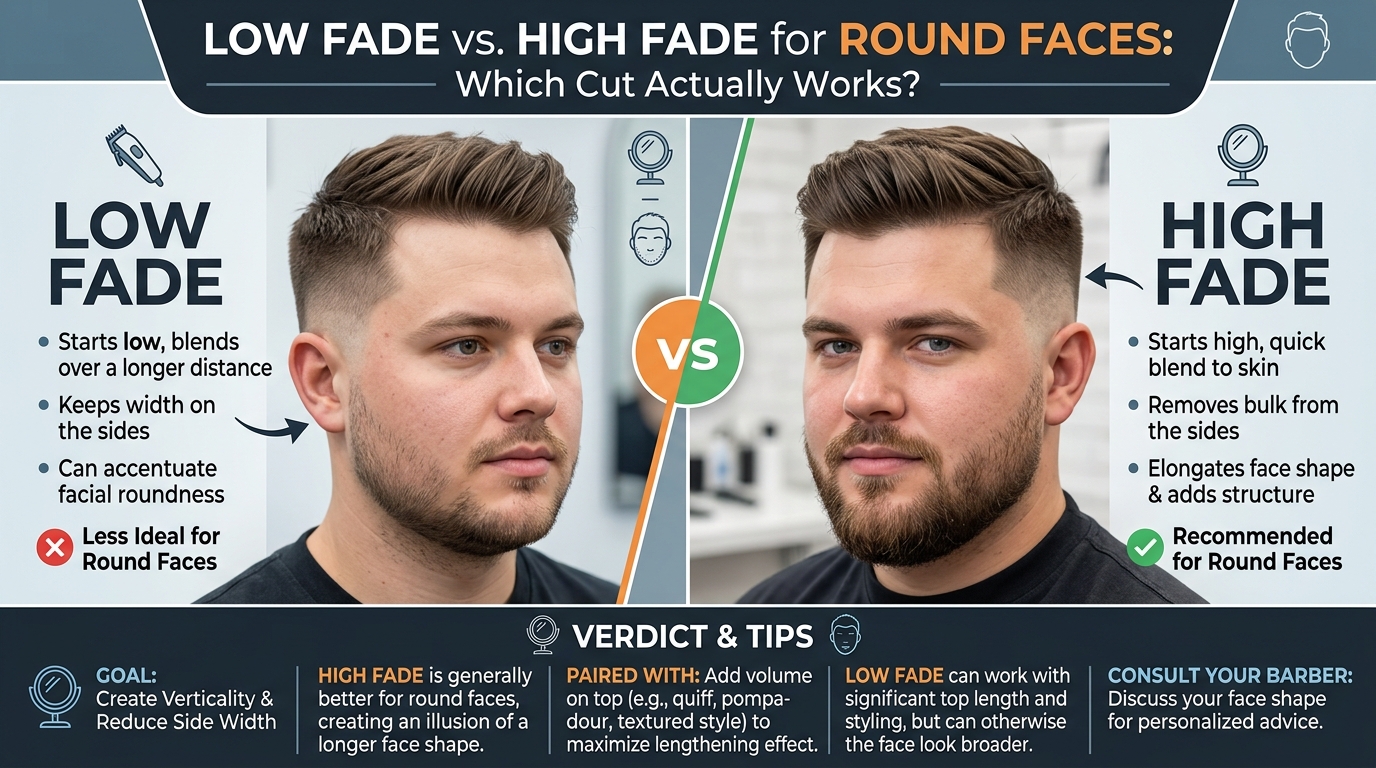
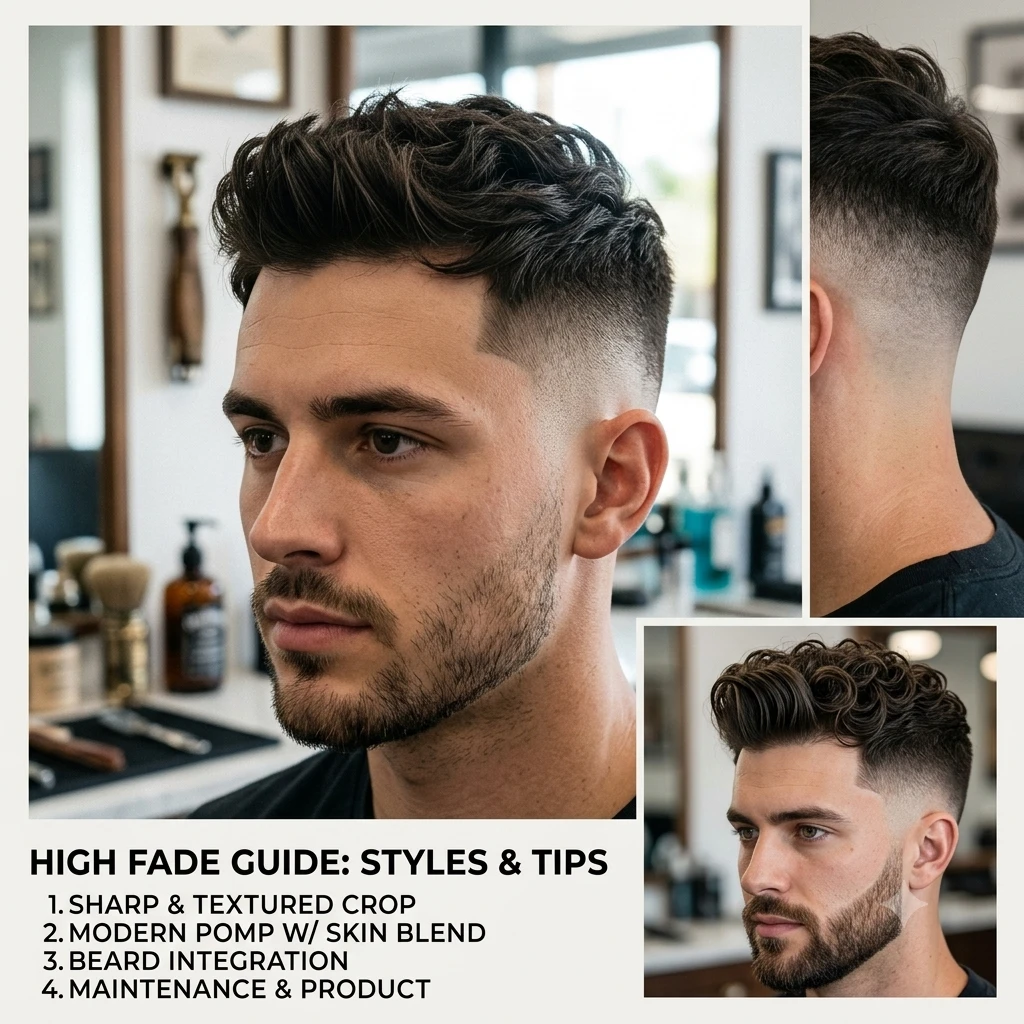
The blend starts above the temples, high on the sides. This creates strong visual contrast between the longer hair on top and the very short sides. The high taper fade looks bolder than the low or mid version and suits thicker hair well because it removes more overall volume.
Full guide: high fade haircuts.
Skin Taper Fade (Bald Fade)
Any of the above fades that take the hair all the way to bare skin at the base. The “skin fade” or “bald fade” is characterized by that clean, zero-hair finish at the neck and around the ears. Requires more frequent maintenance because the shaved skin grows out visibly fast.
Full guide: skin fade haircuts.
Temp Taper Fade
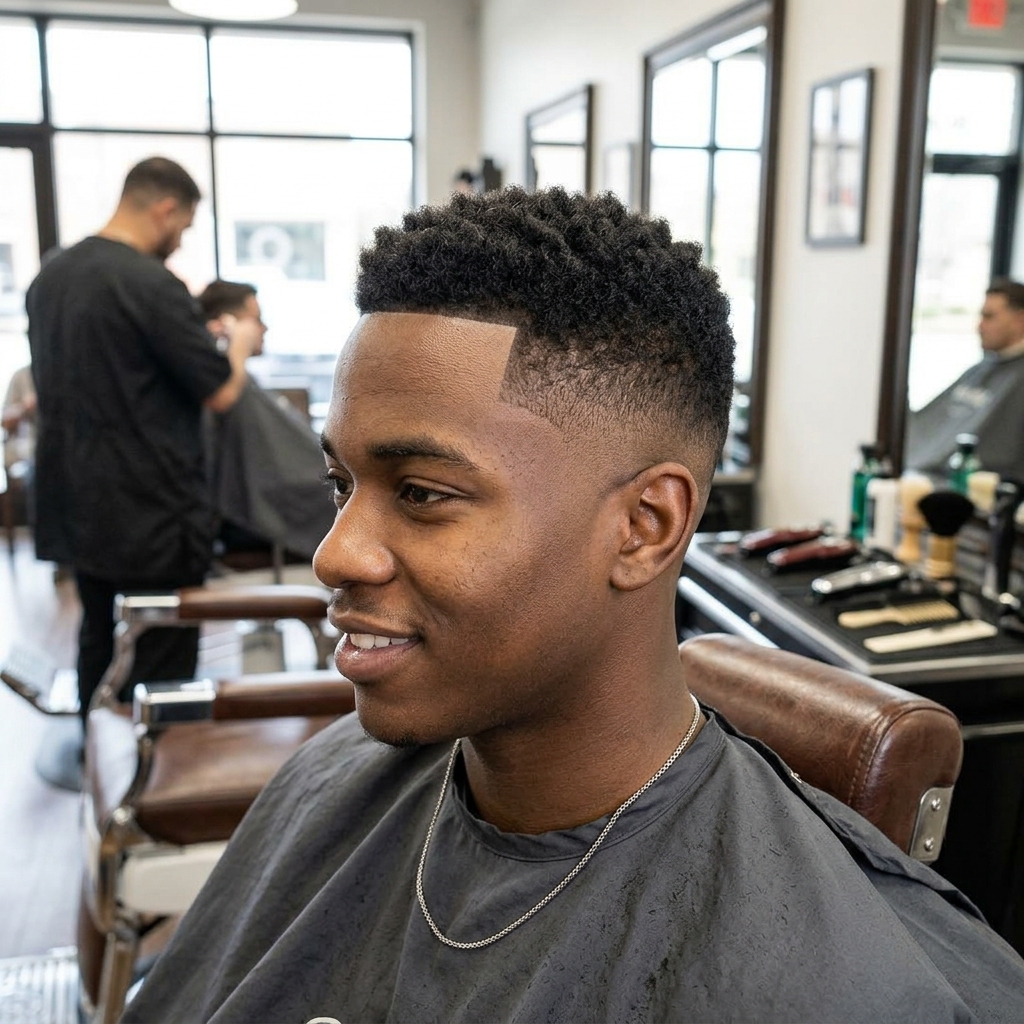
A temp fade (short for temple fade) starts the blending at the temple area, targeting the corners of the hairline near the forehead and running around the ears. It creates a sharp, clean look around the face without necessarily taking the back very short. Popular in barbershop culture, especially with waves, afros, and other natural hair styles.
Full guide: temp fade haircuts.
Drop Taper Fade
A drop fade follows the curve of the skull as it wraps behind the ear, allowing the fade to drop lower at the nape before rising toward the temples. When viewed from the back, the fade line curves downward rather than staying horizontal. This works especially well with rounder head shapes.
Full guide: drop fade haircuts.
Taper Fade Afro
A taper fade with a natural afro on top. The sides and back are faded, keeping the afro’s shape clean and defined around the perimeter. The fade can start low for a subtle effect or high for a more dramatic silhouette. The afro itself stays full and rounded above the fade line.
Taper Fade Styles by Hair Type {#by-hair-type}
Taper Fade for Curly Hair
Curly hair pairs well with a taper fade because the fade defines the perimeter while the curls provide texture and volume on top. The amount of top length you need depends on your curl type. Looser waves at 2A-2C can work with 2-3 inches on top. Tighter coils at 3A-4C may need more length because the curls shrink significantly when dry.
Ask your barber to leave more length than you think you need on the first visit. Curly hair is easier to shorten on the next cut than to grow back.
More: taper fade curly hair.
Taper Fade for Straight Hair
Straight hair shows the gradient of a taper fade very clearly because there is no curl to break up the blending. This makes the cut look precise and intentional. Straight hair on top can be styled in almost any direction, from a slick back to a textured quiff to a simple comb over.
Taper Fade for Long Hair
Long hair on top with a taper fade at the sides keeps the bulk where you want it. The sides stay controlled while the top retains its length. Common top styles include a man bun, a slick back, a flow, or simply letting the hair fall naturally. The taper fade at the bottom gives the overall shape a cleaner edge than untreated long hair.
Taper Fade for Short Hair
A very short top with a taper fade at the sides creates a clean, structured look with minimal maintenance. The shorter the top, the more the taper fade becomes the defining feature of the cut. A number 3 or 4 on top with a low taper fade is one of the most common everyday haircuts for men who want to look put together with minimal effort.
Taper Fade for Wavy Hair
Wavy hair gives a soft, natural texture on top that contrasts well with the clean lines of a taper fade. The result tends to look relaxed without being unkept. Salt spray or a light mousse on damp hair, then air-dried, is usually enough to bring out the waves.
Taper Fade for Different Face Shapes
Round face: Add height on top with a quiff, pompadour, or forward-brushed style. Avoid very wide or puffy tops that add width at the sides. A mid or high taper fade removes some bulk from the sides, which helps.
Oval face: The most adaptable face shape. Almost any taper fade position and top style works well.
Square face: A square jaw with a taper fade creates a bold, angular look. If you want to soften the angles slightly, a low fade with a textured or slightly rounded top does the job. If you lean into the square jaw, a high fade with a flat or close-cropped top looks sharp.
Oblong or long face: A low taper fade adds width at the lower sides without adding height. Avoid very tall tops. A side part or crop with some texture laid sideways works better here than a quiff or pompadour.
Diamond face: A diamond face has wider cheekbones and narrower forehead and chin. A low to mid taper fade works well. Avoid very short sides that make the cheekbones look even wider.
Heart face: A wider forehead tapering to a narrower chin. A low taper fade with a textured, slightly wider top can balance the proportions.
Taper Fade with Beard
A taper fade with a beard is the combination that most commonly gets requests at barbershops. The key detail is the transition from the fade into the beard at the sideburn. A barber who handles this well will blend the sideburn continuously into the beard, so the two look like one connected shape rather than two separate things sitting next to each other.
The beard length affects how this transition works. A short stubble beard blends more easily because there is not a large height difference between the faded sides and the beard. A longer beard requires more careful gradation at the connection point.
Medium beards (half an inch to 2 inches) tend to pair most naturally with a taper fade because the proportions stay balanced. Very long beards can look heavy against closely faded sides.
Taper Fade with Design
A design cut into a taper fade adds a visual element to an otherwise clean haircut. Common options are a single shaved line near the temple, a part cut into the side, a curved line running along the fade, or more elaborate geometric shapes. The designs are usually small and placed in the section where the hair is shortest, typically near the temple or above the ear.
Designs at the temples grow out in about 1-2 weeks. If you want the design to stay sharp, plan for a touch-up visit rather than waiting for a full cut.
Taper Fade for Black Men
The taper fade is one of the most culturally central haircuts in Black barbershop culture. It works across all natural hair textures and serves as the foundation for many signature styles:
360 waves: A taper fade at the perimeter keeps the waves looking defined. The fade is often a low or temp fade that flows into the wave pattern rather than cutting it off sharply.
Afro taper fade: The sides are faded while the afro stays full on top. The barber shapes the afro outline to keep it symmetrical.
Twists with taper fade: Starter locs, two-strand twists, or finger coils on top with a clean taper fade at the sides. The contrast between the defined texture on top and the clean fade makes the top style more prominent.
Taper fade with line-up: A line-up at the forehead and temples combined with a taper fade at the sides is one of the most complete-looking combinations in men’s haircuts. The straight edges frame the face while the fade handles the sides.
Full guide: taper fade for Black men.
Taper Fade for Different Ethnicities
Taper Fade for Asian Hair
Asian hair tends to be thick, straight, and dense. It fades cleanly because the straight texture blends predictably under clippers. The main consideration is that thick, coarse hair can look heavy on top if left too long without thinning. A scissor trim on the top combined with a low or mid taper fade gives a clean result.
Popular top styles for Asian men with a taper fade include the two-block cut, curtain bangs, and textured crops.
Taper Fade for White or Caucasian Hair
Caucasian hair varies widely from fine and straight to thick and wavy. Fine hair shows fades very clearly because the scalp shows through at lower guards. Men with fine hair often prefer a number 2 or 3 minimum at the base rather than going all the way to skin, which can look harsh when the hair is light-colored.
Thicker or wavier hair handles lower guards with more coverage because the natural texture diffuses the look of the scalp.
Taper Fade for Latino Men
Latin hair textures range from straight to curly and everything in between. The taper fade is deeply embedded in Latino barber culture, and the Edgar cut with a low taper fade is one of the most widely requested combinations. The fade tends to be paired with a crisp line-up for a finished, deliberate look.
Taper Fade with Different Top Styles {#top-styles}
The taper fade works underneath almost any top style. Here are the most common combinations:
Taper fade mullet: The front and top stay shorter, the back grows out. A low or mid taper fade at the sides keeps the mullet looking intentional rather than overgrown. More: taper fade mullet.
Taper fade mohawk: The sides are faded down close to the skin while the center strip of hair on top stays longer, creating a mohawk shape. A taper fade rather than a skin fade gives the mohawk a slightly softer edge. More: mohawk haircuts.
Taper fade with dreads: Dreadlocks on top with a taper fade at the sides. The fade keeps the perimeter clean while the locs grow freely above. This is a common choice for men growing out their first set of locs who want a barbershop-quality look during the process.
Taper fade afro: Covered above in the Black men section. The afro stays full, the sides are faded.
Taper fade pompadour: The pompadour with a taper fade gives the classic volume-heavy style a modern, cleaner edge. The fade starts low or mid to let the height of the pompadour be the focal point.
Taper fade comb over: A comb over on one side, tapered and faded on the other. This is one of the most popular professional hairstyles for men because it looks intentional and polished.
How to Ask Your Barber for a Taper Fade
The phrase “taper fade” is understood by most barbers across the country. To get the specific result you want, add more detail:
Specify the position: Tell them whether you want a low, mid, or high taper fade. If you are not sure, say “keep it low, just above the ears.” You can always go higher on the next visit.
Specify the skin: If you want the fade to go all the way to skin at the bottom, say “take it to skin at the base” or “I want a skin fade.” If you prefer to keep a bit of hair at the base, say “do not go all the way to the skin.”
Describe the top: Tell them how much to take off the top, or say “leave the top as it is.” If you want a specific style on top, describe it or show a photo.
Bring a reference photo: Verbal descriptions are imprecise. A photo of exactly the taper fade style you want is the single most effective communication tool. Show it to your barber at the start of the cut, not halfway through.
Common requests that work:
- “Low taper fade, skin at the base, leave the top.”
- “Mid fade, not too aggressive, medium length on top.”
- “High taper fade with a line-up, take a little off the top.”
- “Same as last time but go slightly higher with the fade.”
Maintenance
A taper fade grows out fastest at the base, where the hair is shortest. The clean blend at the skin becomes fuzzy and the line starts to look less defined within 2-3 weeks for most people.
How often you need a cut depends on:
- How short the fade goes at the base: A skin fade grows out visibly faster than a fade that leaves a little hair at the base.
- How fast your hair grows: Average hair growth is about half an inch per month, but individual rates vary significantly.
- How sharp you want it to look: Some people tolerate a slightly grown-out fade. Others want it fresh.
Most men with a taper fade get a cut every 2-4 weeks. If you have a line-up, the forehead and temple edges need a touch-up roughly every 1-2 weeks to stay sharp.
At home, a trimmer can handle the neckline between visits. The fade itself is harder to maintain without barbershop tools and technique.
FAQ
What is a taper fade?
A taper fade is a haircut where the hair on the sides and back gradually shortens as it moves down the head, blending smoothly into the skin at the base. The “taper” describes the gradual shortening; the “fade” describes the blend to skin with no hard line.
What is the difference between a taper and a fade?
A taper leaves a small amount of very short hair at the base without going to skin. A fade takes the hair all the way to the skin at the shortest point. A taper fade does both: the hair graduates in length and ends at skin level.
What does a taper fade look like?
The sides and back transition smoothly from the length on top down to very short or skin-level at the neckline and around the ears. There is no visible line where one length stops and another starts.
How do I ask for a taper fade?
Say “I want a taper fade” and specify whether you want it low, mid, or high. Add whether you want it to go to skin at the base. Bring a photo if you have a specific style in mind.
Does a taper fade work on curly hair?
Yes. A taper fade works on all hair types including tight coils and natural textures. The barber adjusts the blend to work with the hair’s behavior.
How long does a taper fade last?
The clean look holds for about 2-3 weeks before the fade starts to grow out noticeably. Most people get a fresh cut every 2-4 weeks.
Is a taper fade the same as a low taper fade?
Not exactly. “Taper fade” is the general term for the style. “Low taper fade” specifies that the blending starts low on the head, just above the ears. A high taper fade starts the blend above the temples.
What is a temp taper fade?
A temp fade, short for temple fade, specifically targets the temple area, blending the hair near the corners of the forehead and around the ears. It can be combined with a low, mid, or high fade at the back. More: temp fade guide.
Does a taper fade suit afro hair?
Yes. A taper fade with an afro on top is a classic combination. The fade defines the perimeter cleanly while the natural texture of the afro stays full above the fade line.
Can you get a taper fade with dreads?
Yes. A taper fade at the sides with dreadlocks on top is a common request. The fade keeps the perimeter sharp while the locs grow freely.
How much does a taper fade cost?
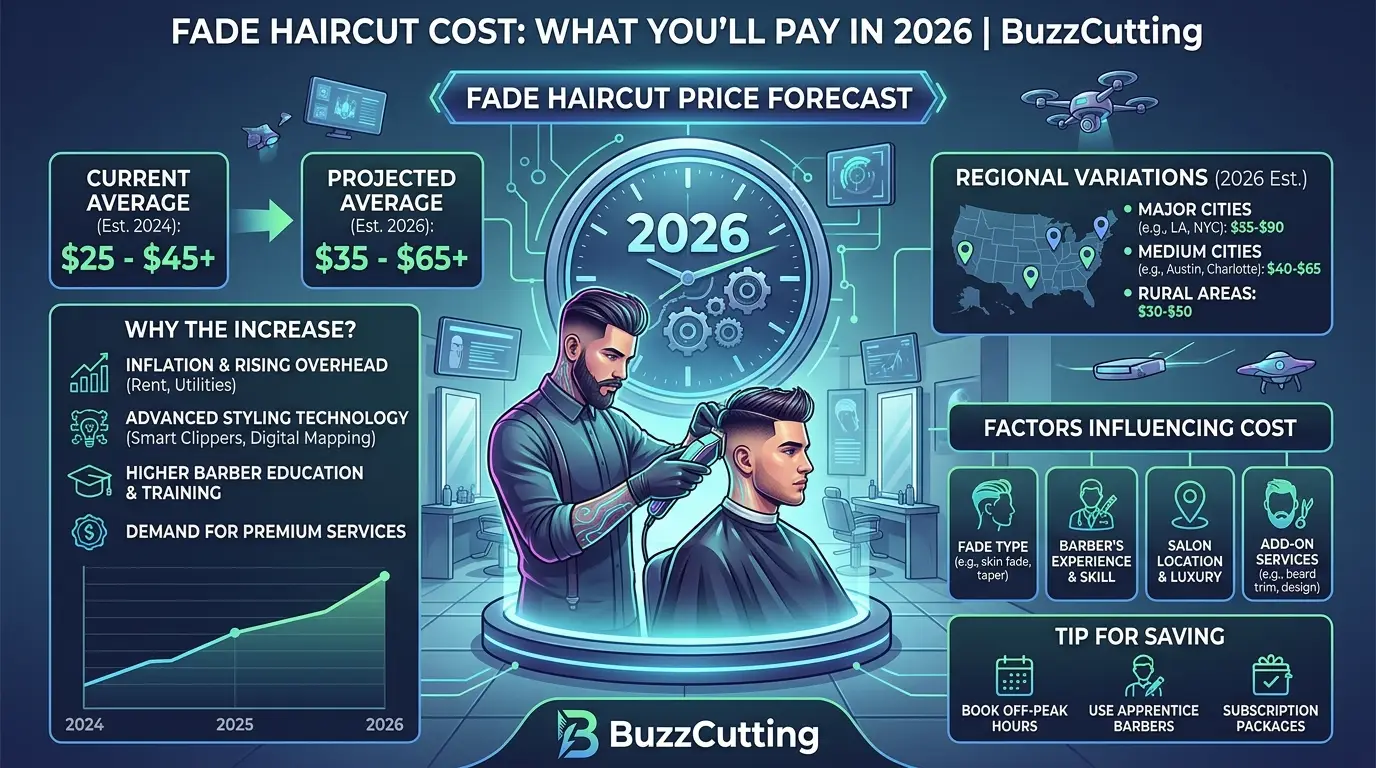
Typically $25-$50 in most US cities, with variation by location and barbershop. A line-up, design, or beard service adds to the base price.