On this page
What Is the Edgar Cut? Where Did the Edgar Cut Come From? All Edgar Cut Variations Edgar Cut by Hair Type Edgar Cut with Fade Edgar Cut for Kids Edgar Cut for Girls How to Style an Edgar Cut How to Ask Your Barber Maintenance FAQ Related GuidesWhat Is the Edgar Cut?
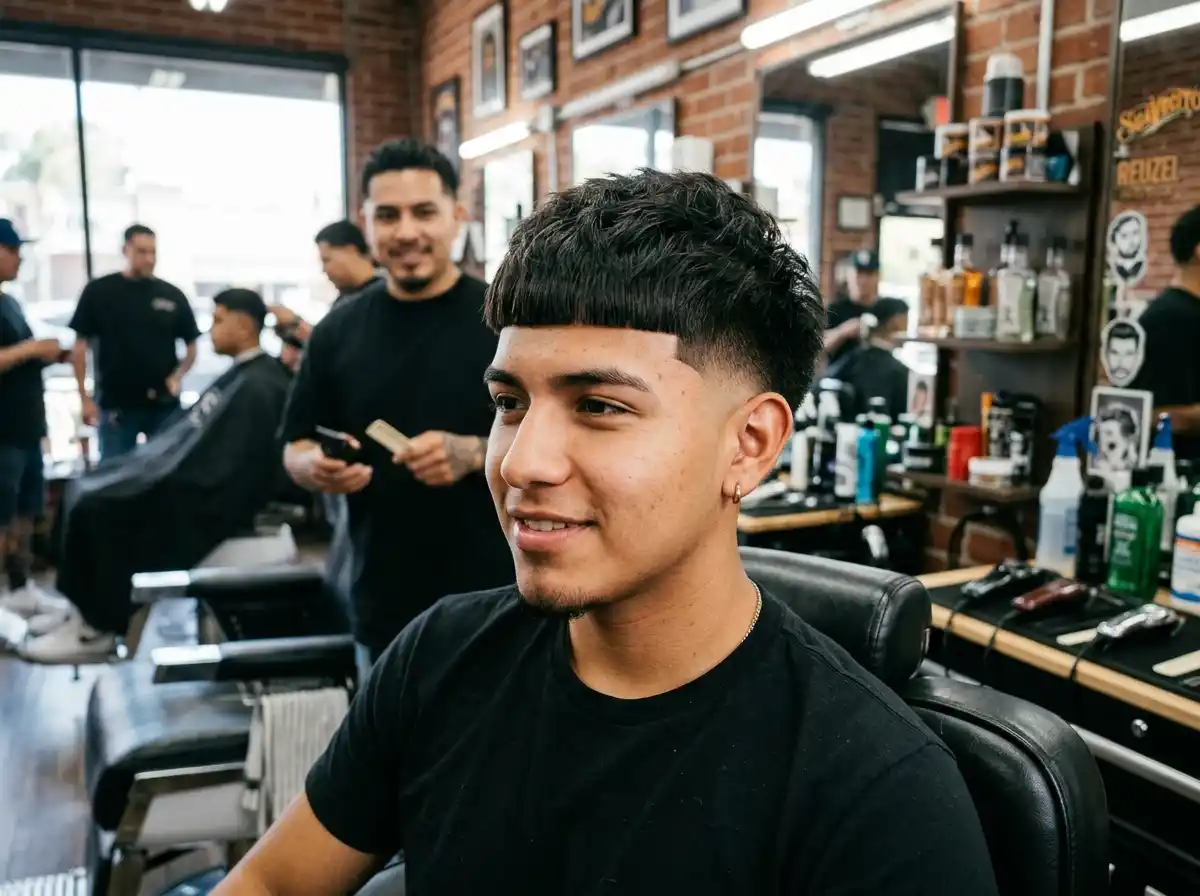
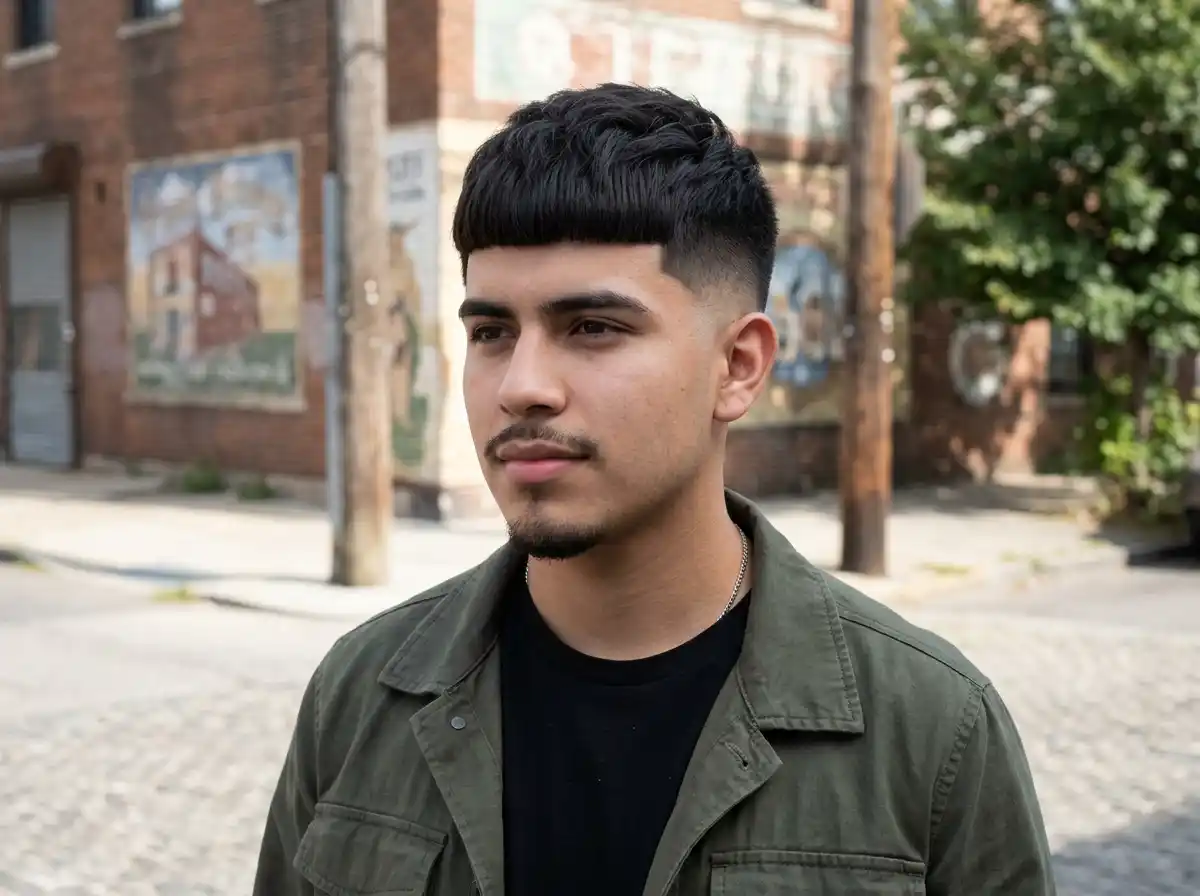
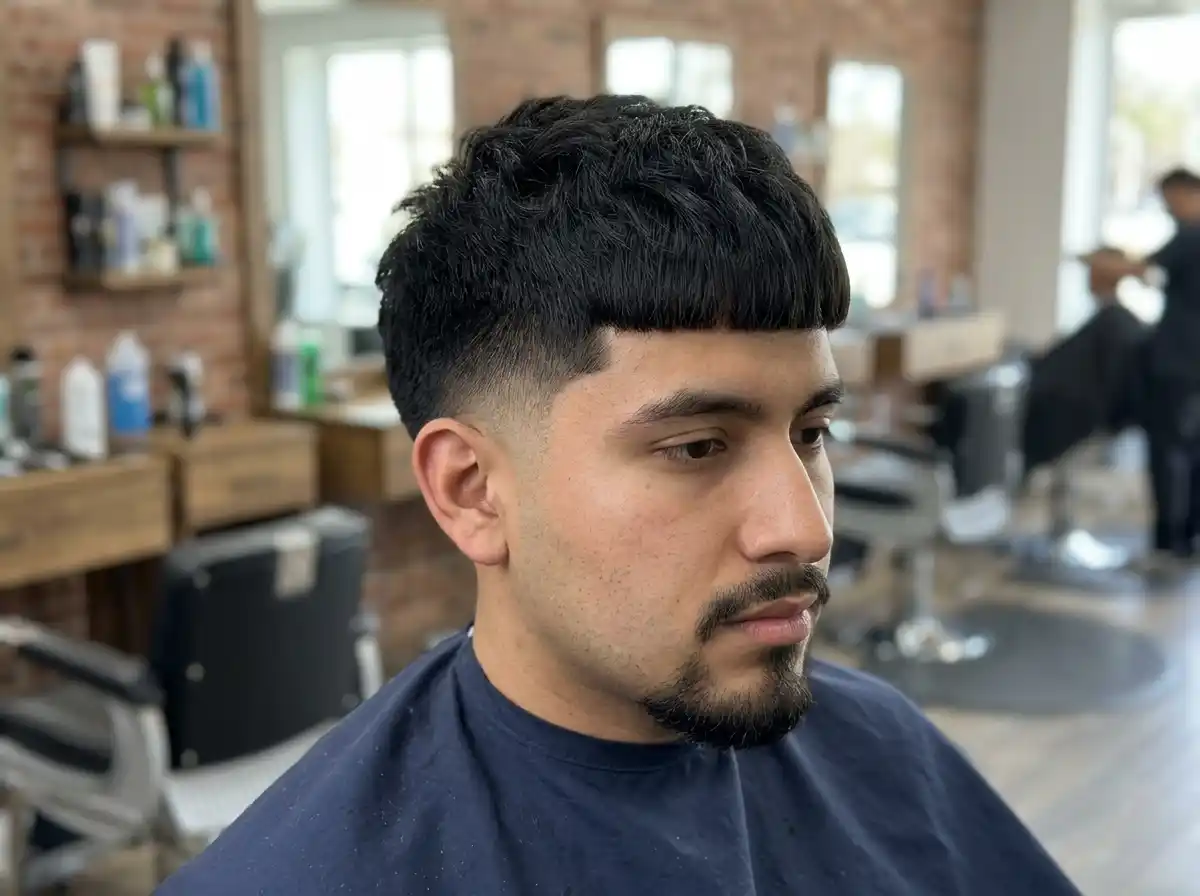
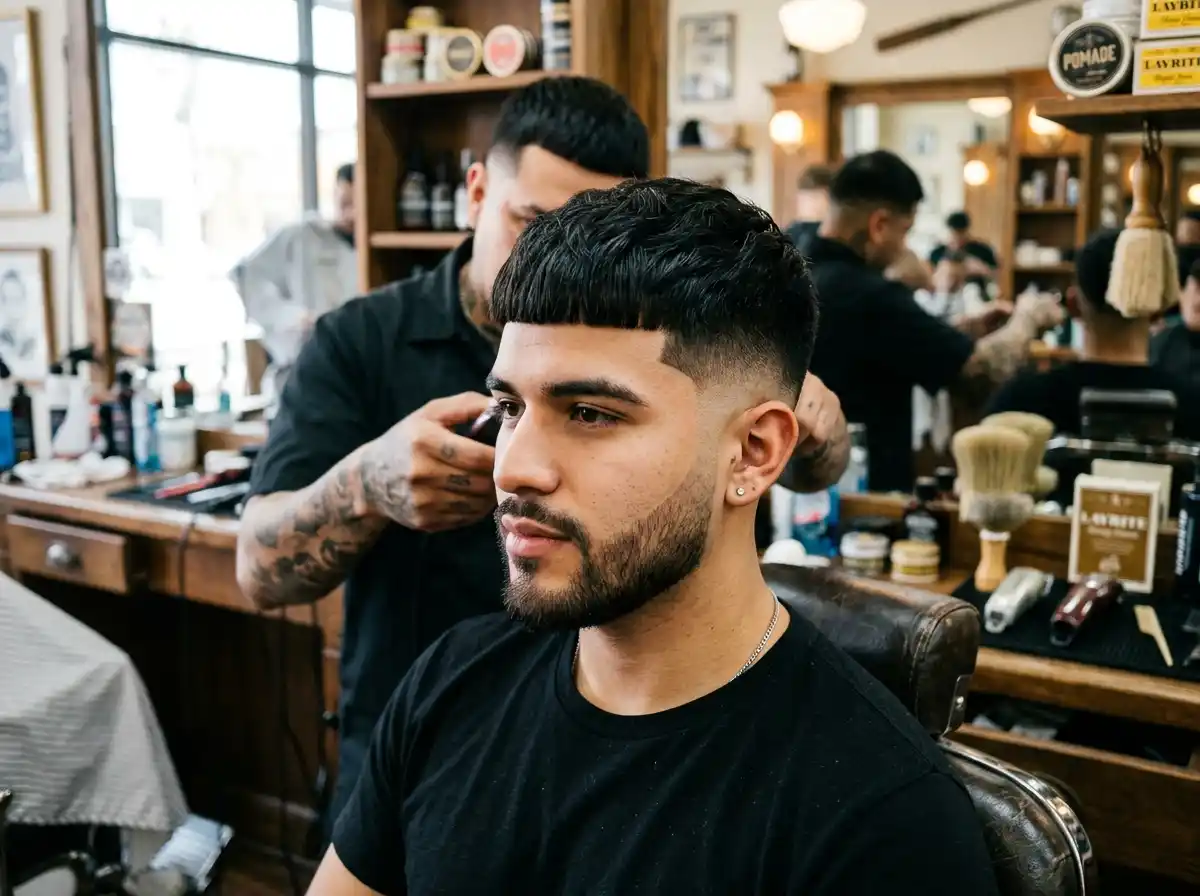
The Edgar cut is a short men’s haircut characterized by a blunt, straight fringe cut horizontally across the forehead. The sides are faded or tapered, typically with a low or mid fade, and the top is kept flat or very slightly rounded. The overall shape has a boxy, geometric quality because of the hard horizontal line at the front.
What makes the Edgar cut distinct from other short cuts with fringes is the flatness and bluntness of that front line. There is no sweeping, no angling, no feathering. The hair at the forehead is cut in a straight horizontal line and left there. This creates a strong graphic shape when viewed from the front.
The style is most associated with Latino men and has deep roots in Mexican-American barbershop culture. It spread widely across social media platforms between 2019 and 2022 and remains one of the most searched men’s haircuts in the United States.
This guide covers all major Edgar cut variations, hair type considerations, styling, and how to ask your barber. It does not cover the Mexican Edgar cut as a separate style since it refers to the same haircut named for its cultural origin, covered in the cluster guide at Mexican edgar cut.
Where Did the Edgar Cut Come From?
The Edgar cut is named after Edgar Martinez, a Mexican-American barber whose clients began requesting the style by his name. The cut itself draws from traditional Mexican-American barbershop conventions where clean lines, flat tops, and crisp edges are standard. It is closely related to the Takuache aesthetic, a subculture associated with lifted trucks, norteño music, and a specific style sensibility that includes the Edgar cut as a signature haircut.
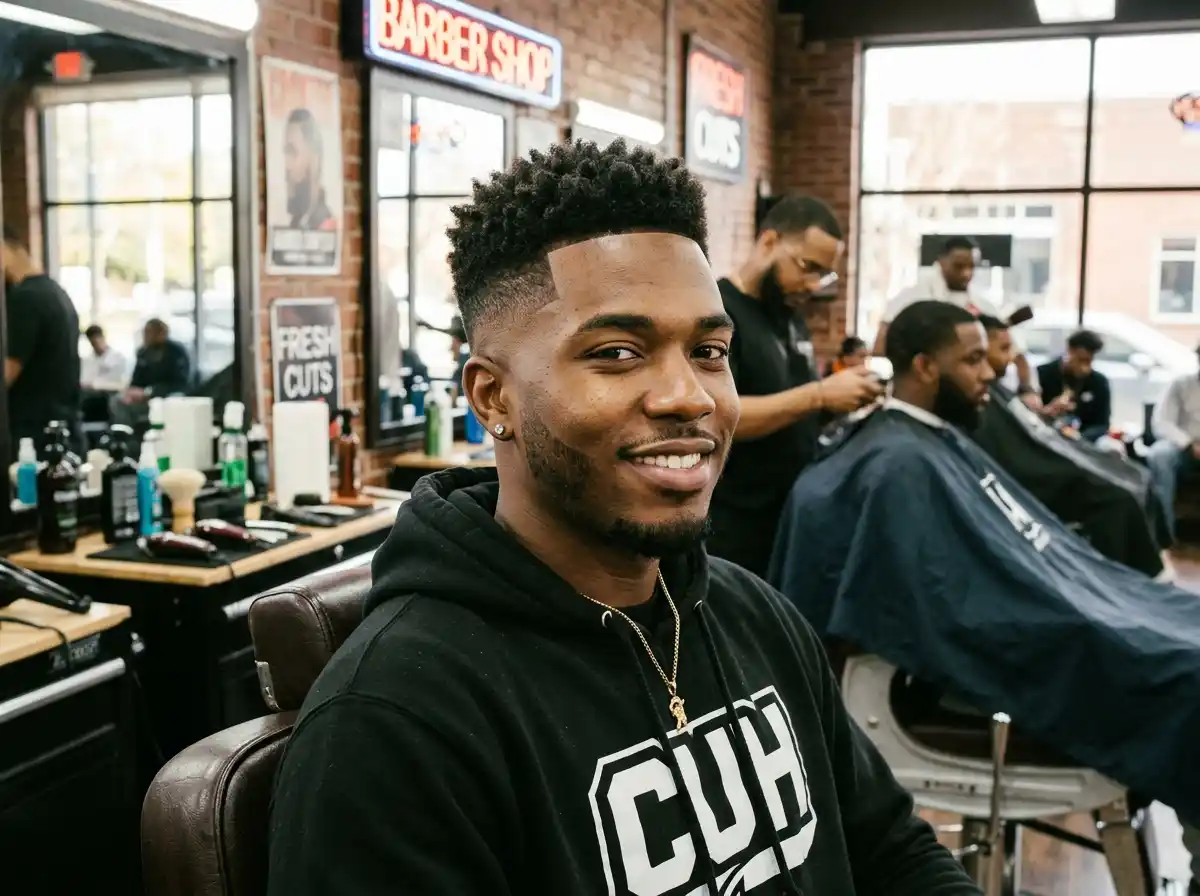
The “cuh haircut” is another name for the Edgar cut, used within the same cultural context. “Cuh” is slang for “cousin” or a general term of address, and the haircut became so associated with a particular group that the name stuck.
The TikTok and Instagram visibility of the style from 2019 onward brought it well outside its original community. It is now requested at barbershops across the country regardless of the client’s background.
All Edgar Cut Variations
Fluffy Edgar Cut
The top of the hair is left with more volume and texture rather than being flat and close. The fringe is still blunt and horizontal, but the hair above it rises slightly or sits loosely. This version works particularly well on thick or wavy hair and became the most widely searched Edgar variation after going viral on TikTok.
Full guide: fluffy edgar.
Puffy Edgar Cut
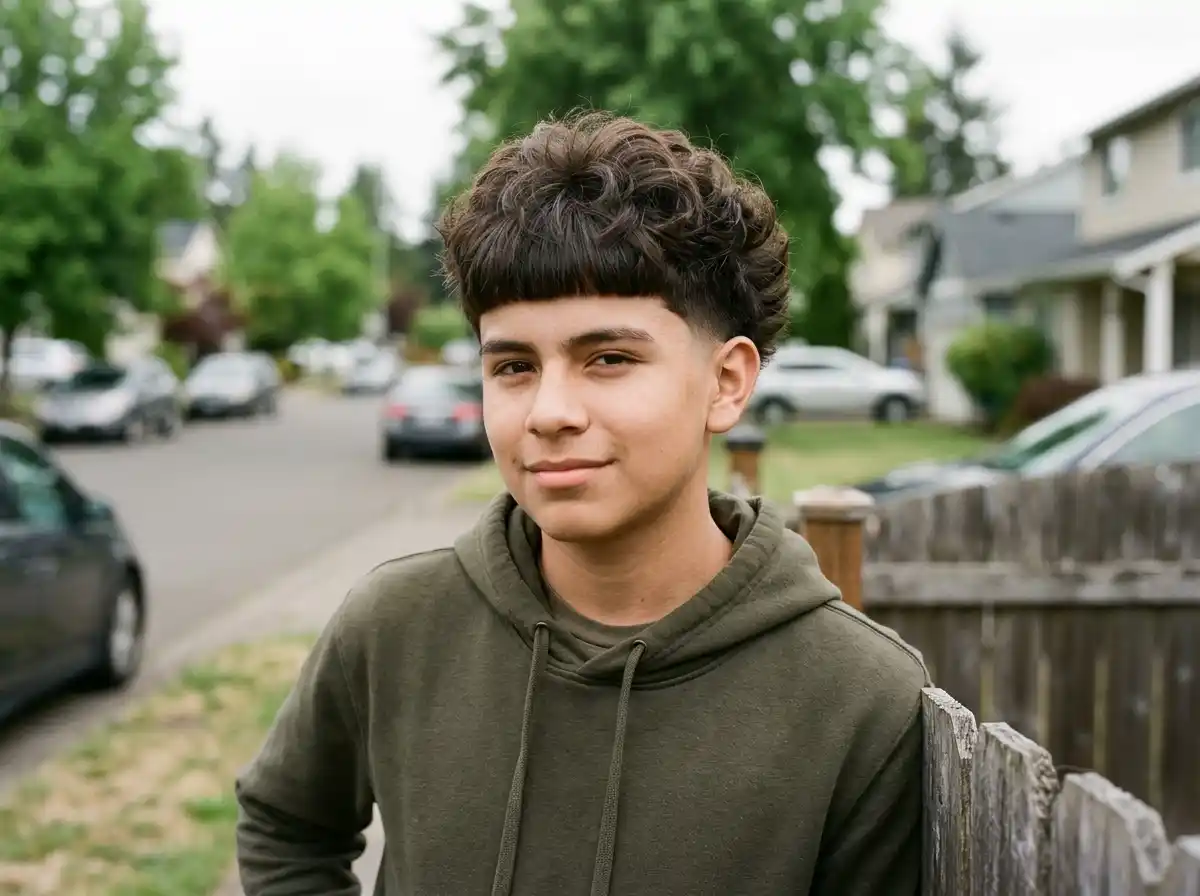
Similar to the fluffy edgar, with more volume on top. The hair puffs up noticeably above the blunt fringe. Works on thick, wavy, or naturally voluminous hair. Requires less styling effort than the flat top version because the natural lift does most of the work.
Messy Edgar Cut
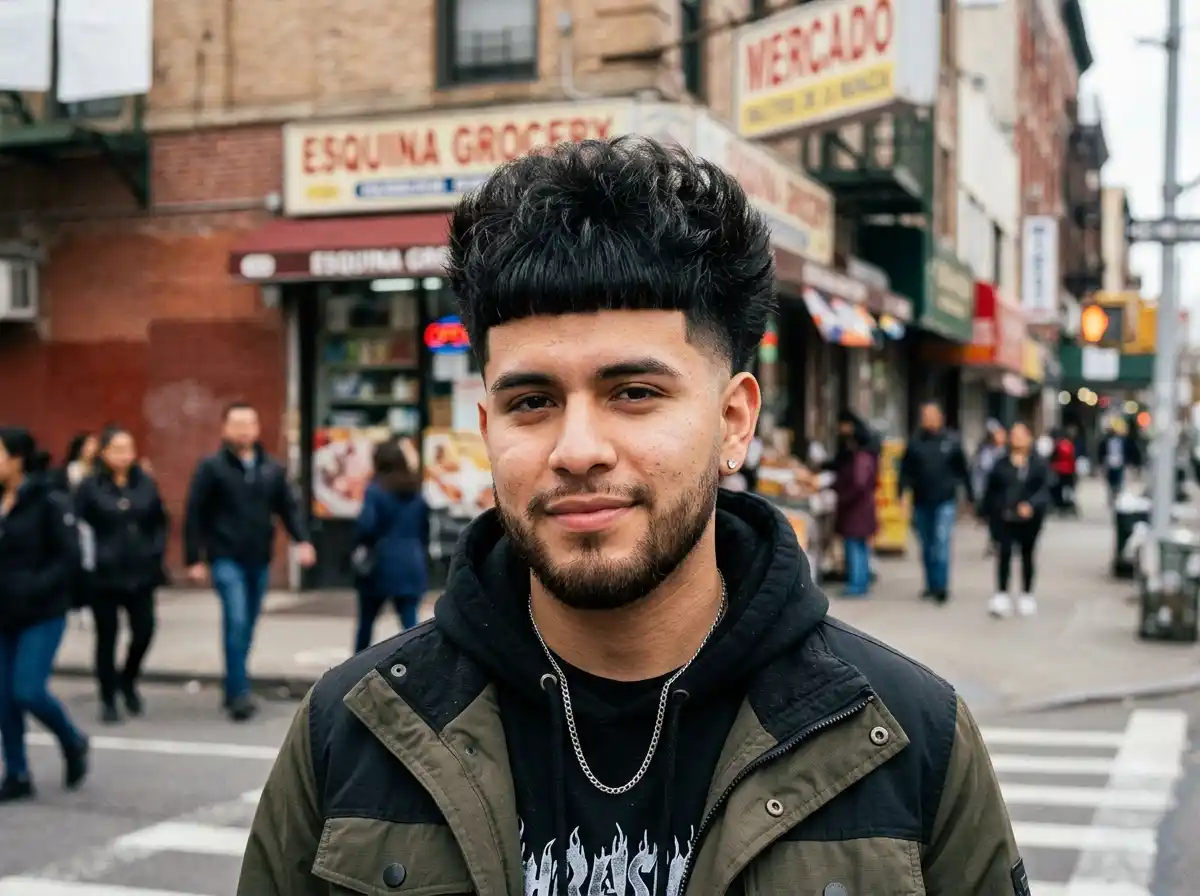
The top is styled with intentional texture and separation rather than being smooth or flat. A matte clay worked through the top with fingers creates a piece-y, disheveled look while the blunt fringe and clean sides stay sharp. Popular with thicker hair textures.
Edgar Cut for Curly Hair
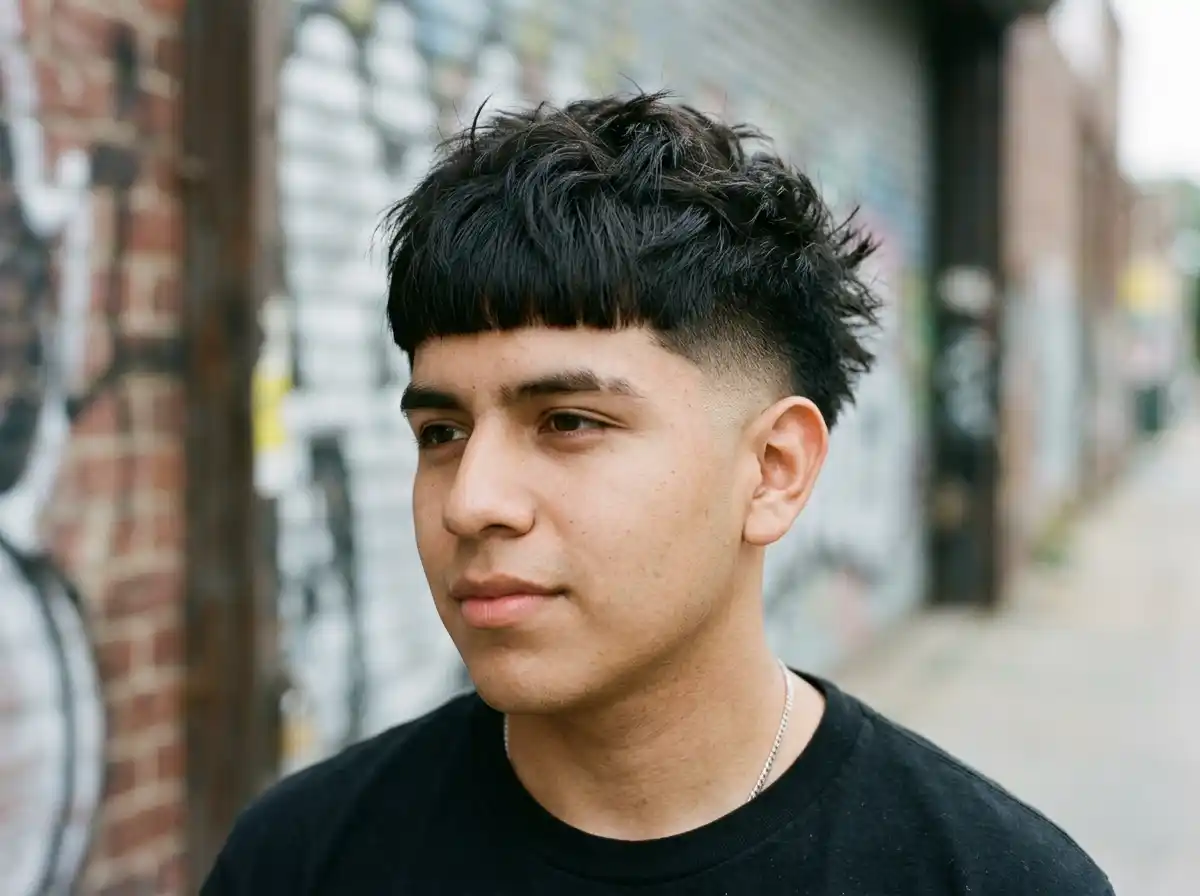
Curly hair works well with the Edgar cut because the curls add natural volume above the blunt fringe. The key adjustment is that the fringe itself needs to account for curl shrinkage. The barber cuts the front line slightly lower than the target length when the hair is straight, because the curls will pull it up when dry. Full guide: edgar cut curly hair.
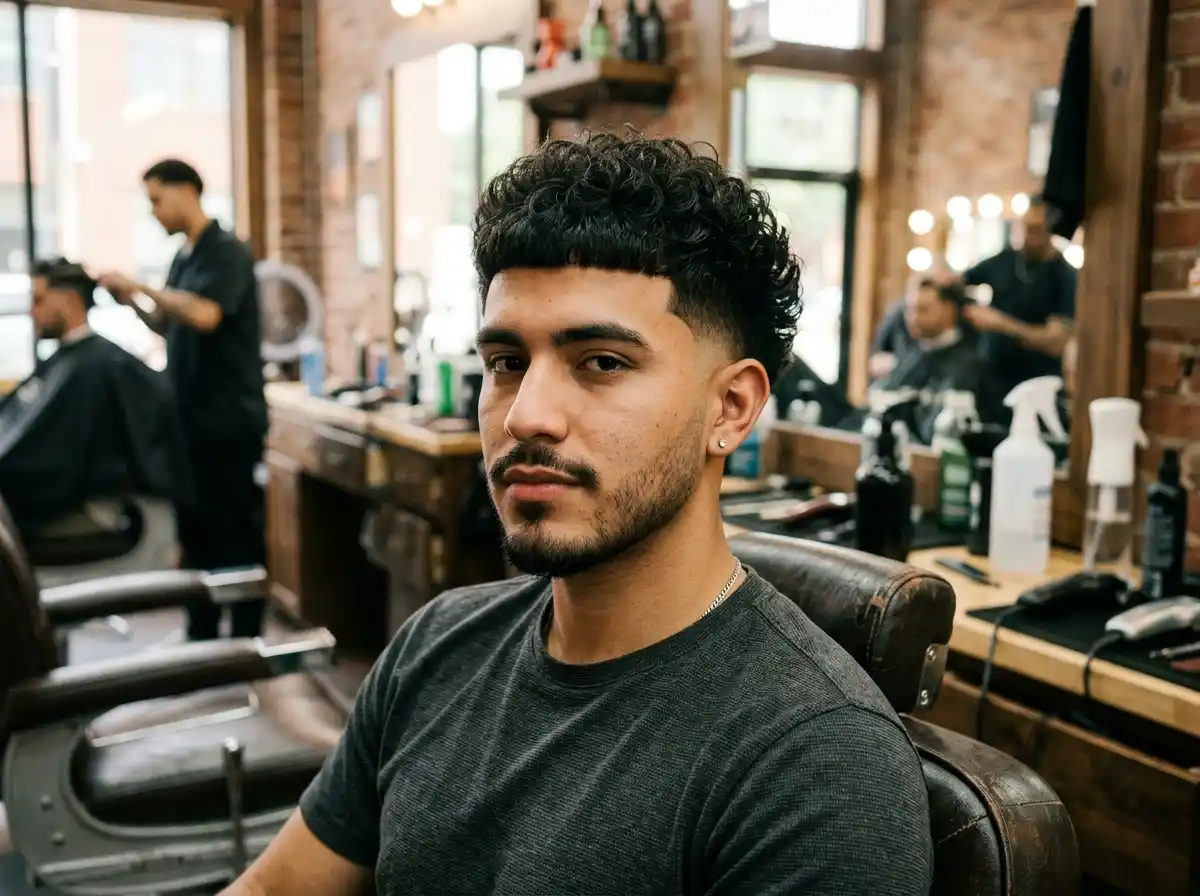
Edgar Mullet
The front and top follow the standard Edgar cut structure, with a blunt horizontal fringe and short top, while the back is left longer in a mullet shape. The combination of the angular Edgar front and the longer back creates a distinctive contrast. Full guide: edgar mullet.
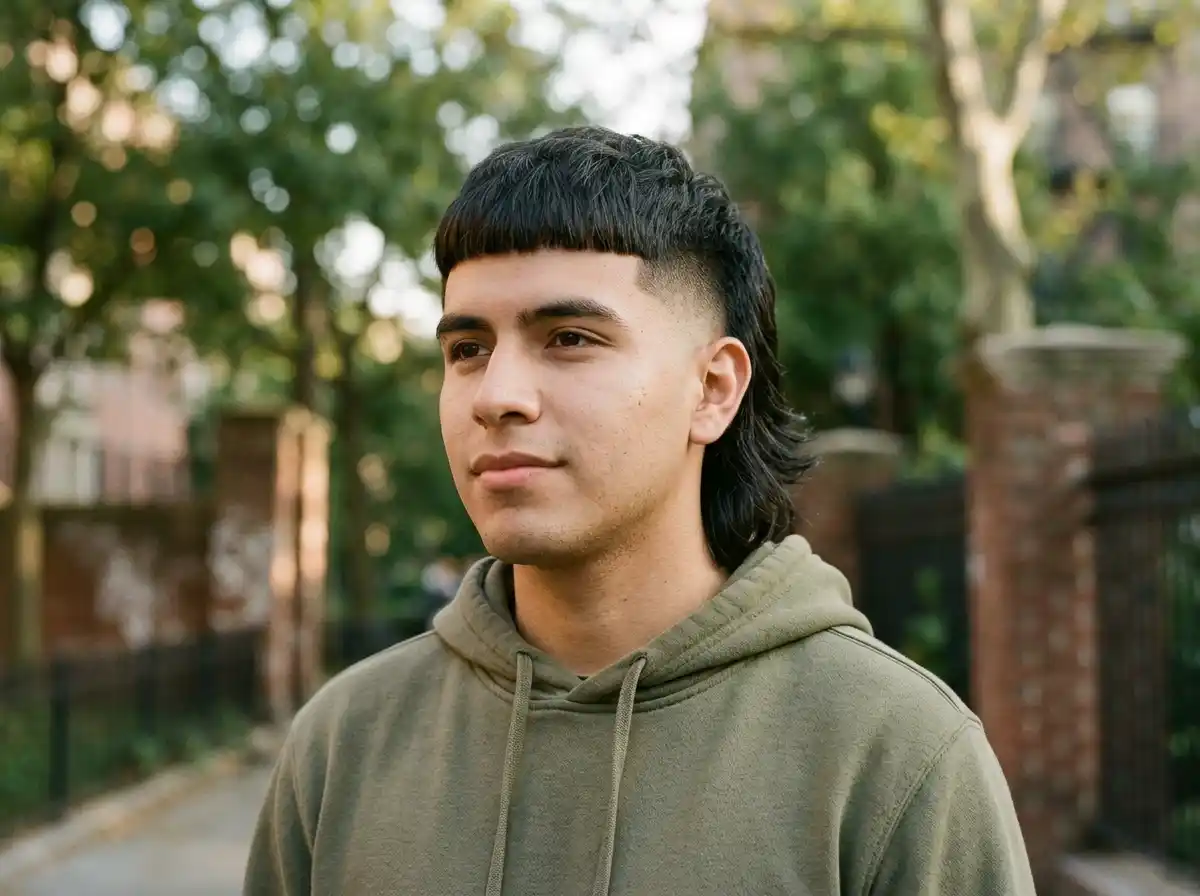
Mexican Edgar Cut
The traditional version rooted in Mexican-American barbershop culture. The sides are usually taken with a low taper fade, the fringe is sharp and horizontal, and the overall cut is clean and precise. Less variation in the top texture compared to the fluffy or messy versions. Full guide: Mexican edgar cut.
Takuache Haircut
The Edgar cut as worn within the Takuache subculture. Typically paired with a low taper fade, a sharp line-up, and a clean, close finish at the sides. The top is flat or very slightly textured. The cultural context is specific, but the haircut itself is structurally the same as a standard Edgar cut.
Full guide: takuache haircut.
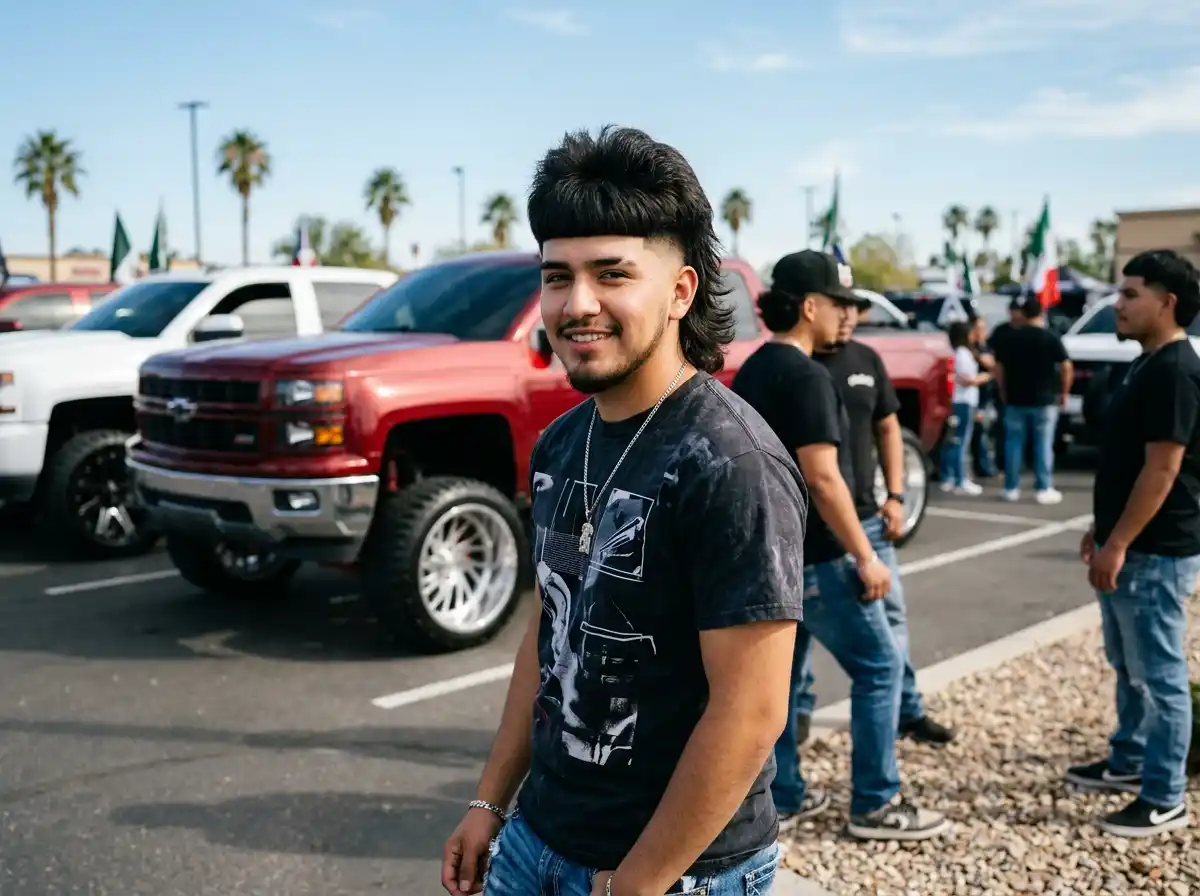
Edgar Low Taper
An Edgar cut with a low taper fade at the sides, where the blending starts just above the ears. The most common and versatile version. The low taper keeps the sides clean without being aggressive. Works in most settings, from school to work.
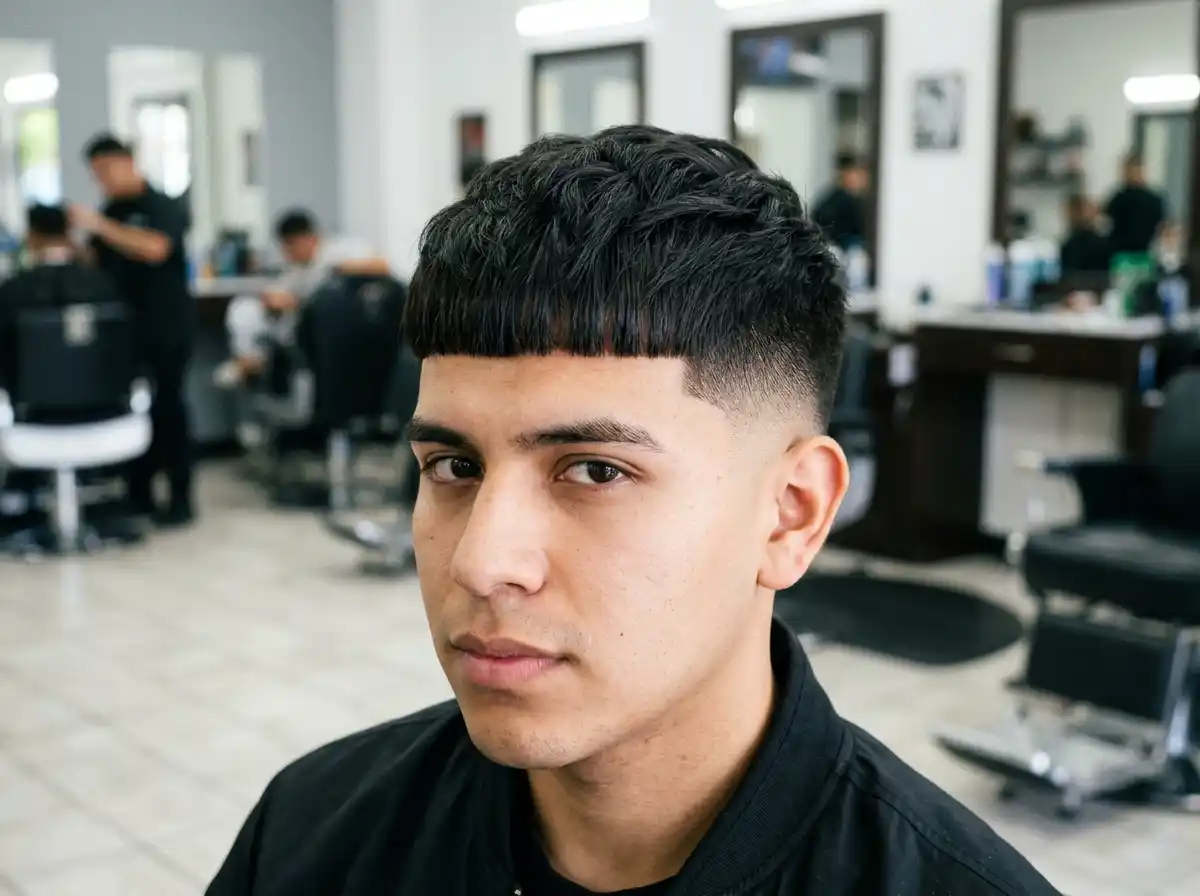
Edgar Mid Taper
An Edgar cut with a mid taper fade, starting at the midpoint of the sides. More contrast than the low taper version. The mid taper pushes more focus to the top of the head where the blunt fringe sits.
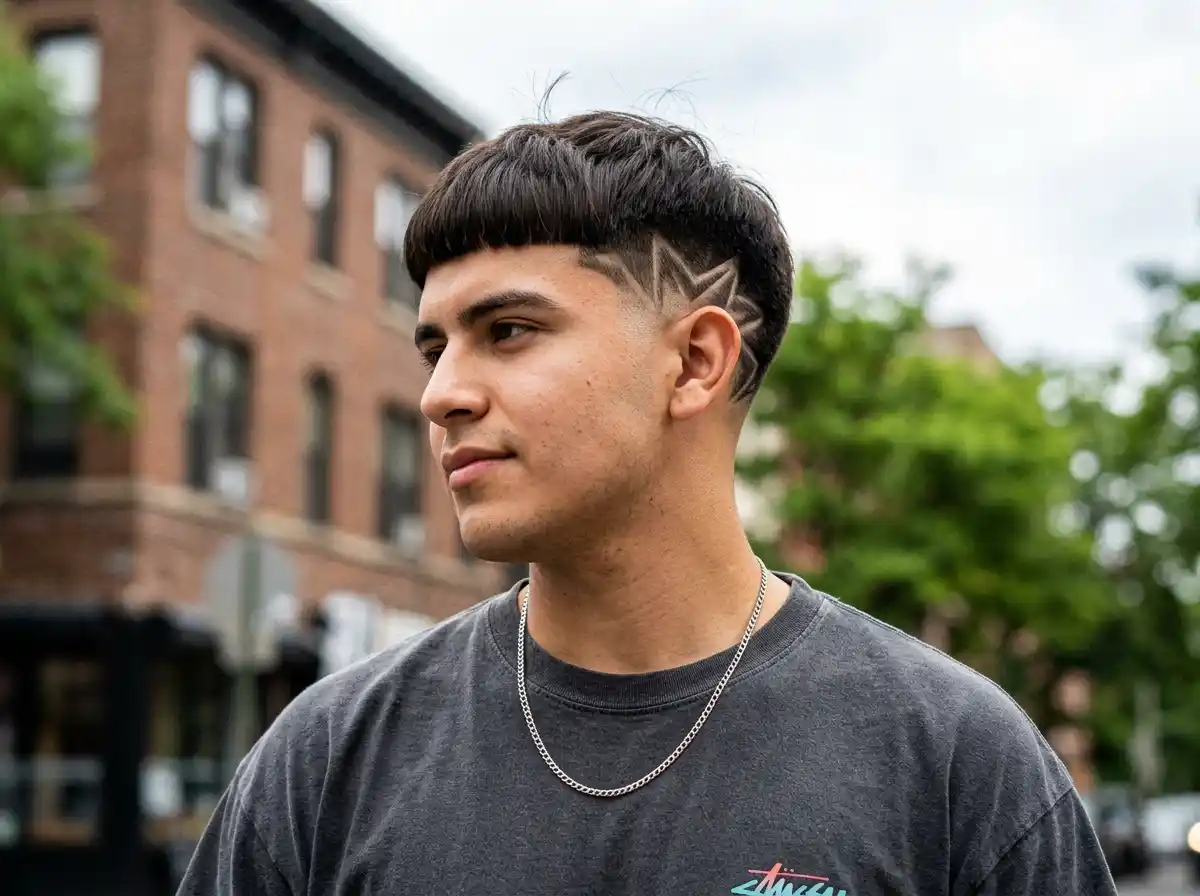
Edgar Cut with Design
A shaved line, geometric pattern, or decorative shape added to the side of the fade near the temple. The design sits in the shortest section of the fade and grows out in about 1-2 weeks. Common addition for kids and teens who want a more customized result.
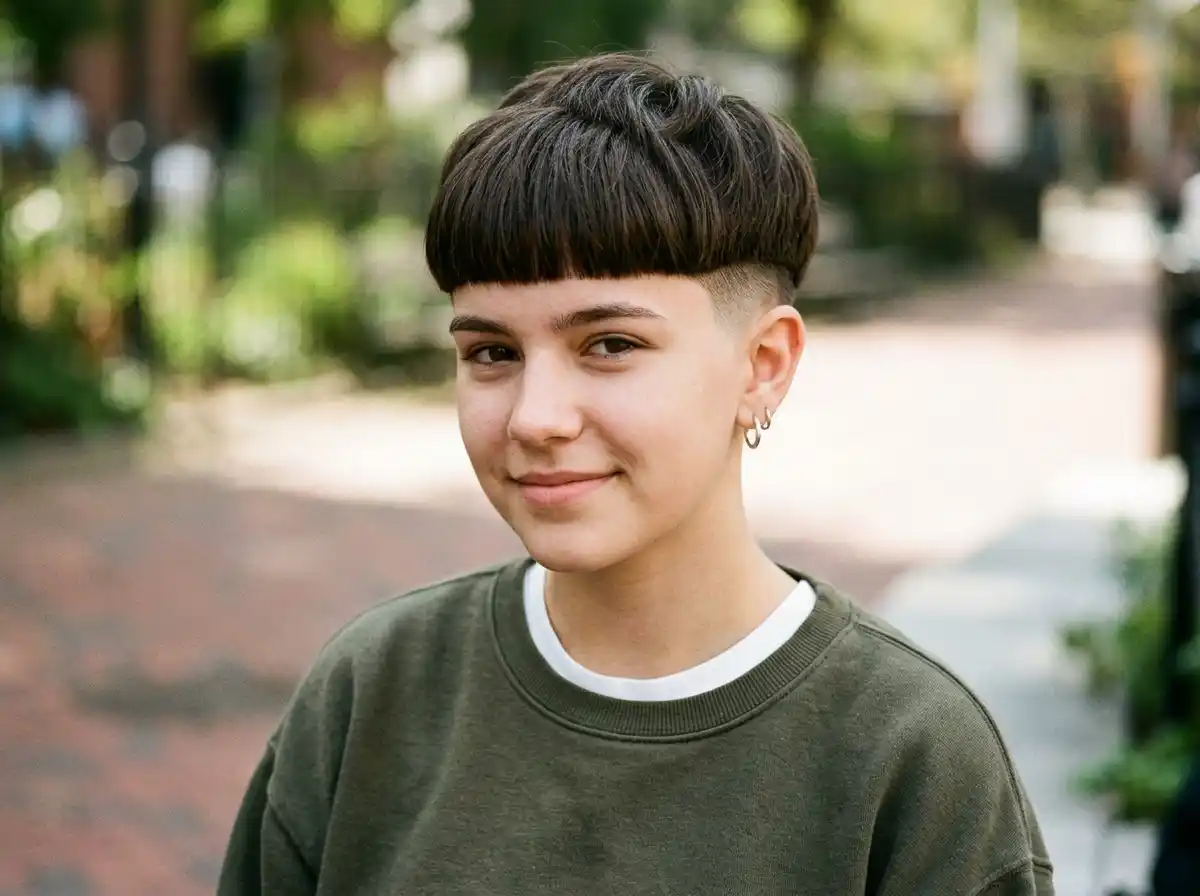
Edgar Cut for Girls
A women’s version of the Edgar cut that applies the blunt horizontal fringe principle to longer or medium-length hair. The fringe is cut straight across the forehead in the same manner, but the rest of the hair stays at medium or longer lengths rather than being short all over.
Full guide: edgar cut for girls.
Cuh Haircut
Another name for the Edgar cut, used within the same Latino cultural context where the style originated. Structurally identical to the standard Edgar cut.
Edgar Cut by Hair Type
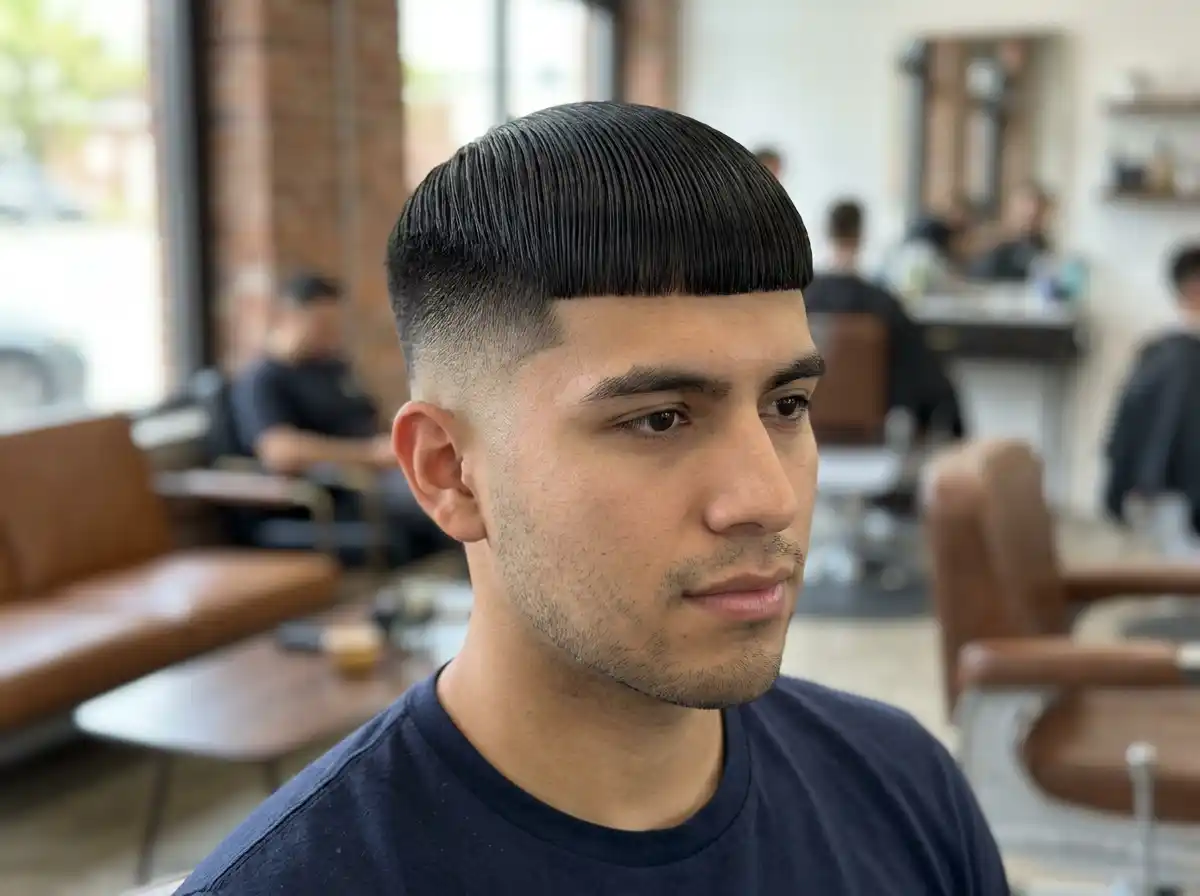
Edgar Cut for Straight Hair
Straight hair shows the blunt fringe of the Edgar cut most precisely because the hair lies flat and the horizontal line is clean. The flat top version of the Edgar cut works best on straight hair. Product is optional but a light clay or pomade adds texture if wanted.
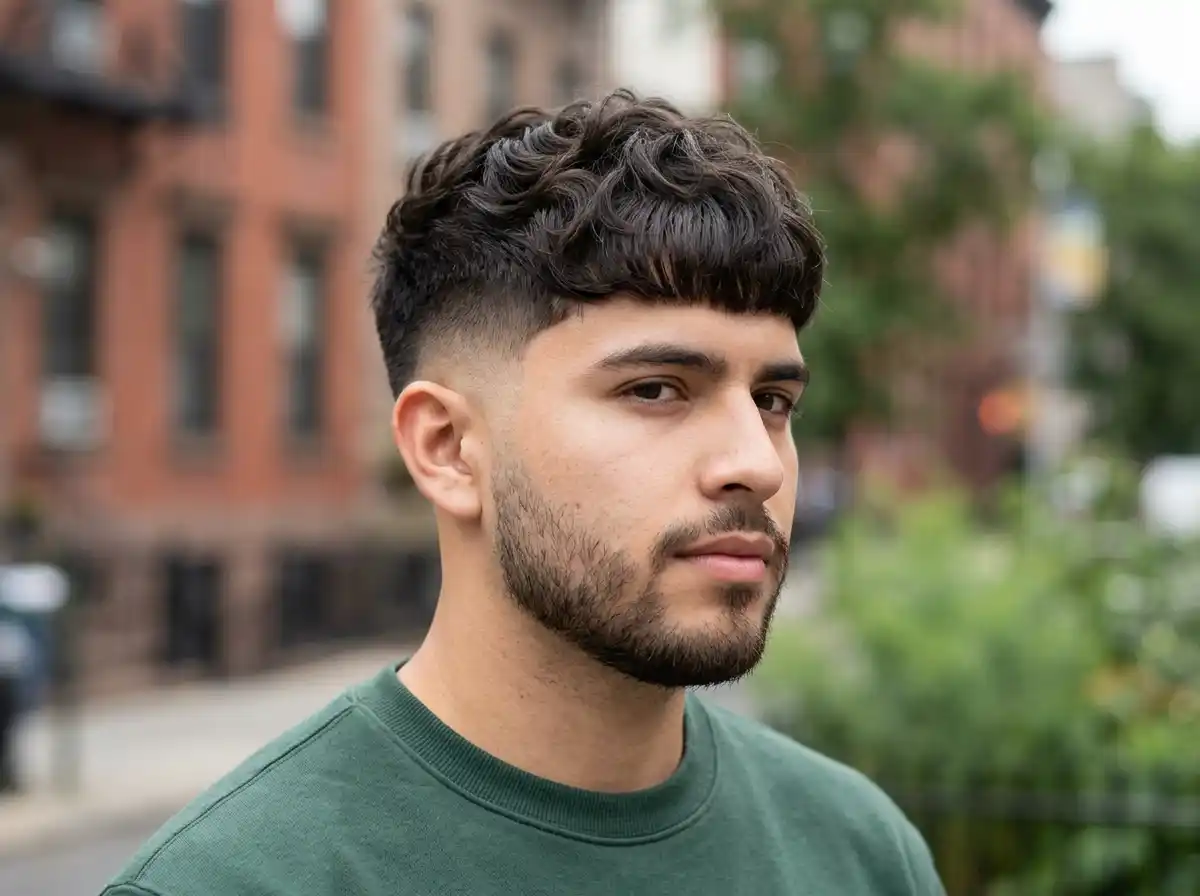
Edgar Cut for Wavy Hair
Wavy hair creates natural texture on the top that suits the fluffy or messy Edgar variations well. The waves add volume above the fringe without needing product. The fringe itself may have slight movement but stays close to horizontal. A sea salt spray on damp hair adds definition to the waves.
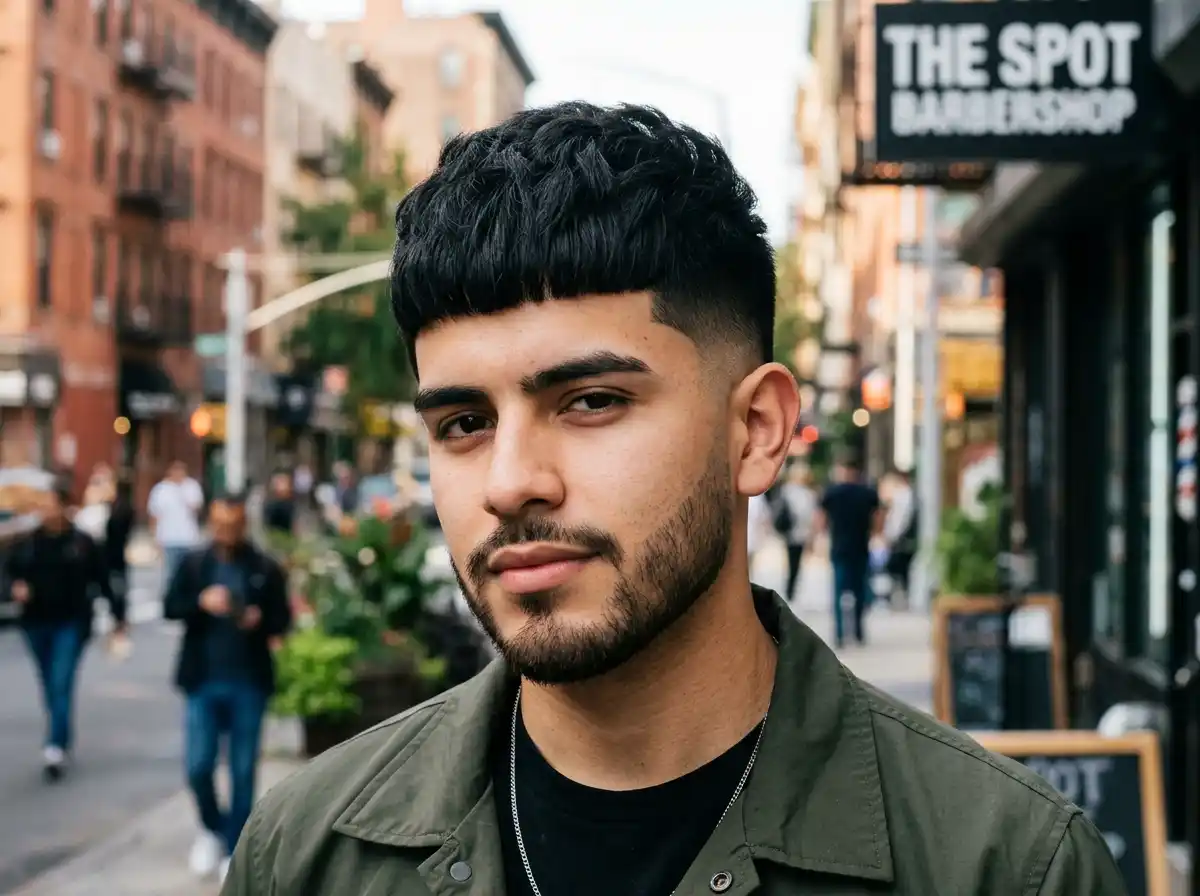
Edgar Cut for Thick Hair
Thick hair can create too much volume without some management. The fluffy or puffy Edgar works well on thick hair because the natural lift is the point. For the flat top version, the barber may need to thin the top slightly to keep it from rising too high.
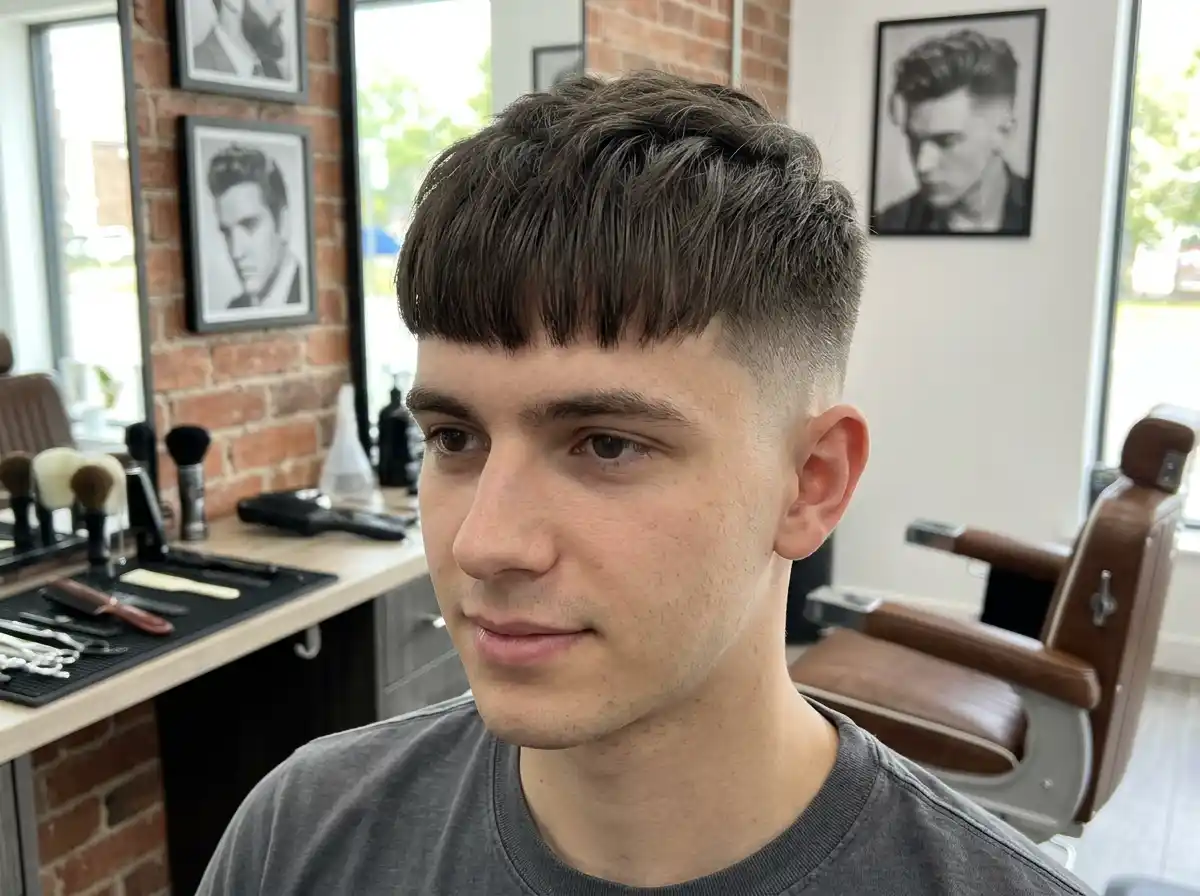
Edgar Cut for Thin Hair
Thin hair at the fringe can look sparse if the front line is cut too short. Keeping the fringe at a medium length, just at or slightly above the eyebrows, and avoiding a very close top length keeps the cut looking full.
Edgar Cut with Fade
The Edgar cut is almost always paired with a fade or taper at the sides. The sides being closely cut is what makes the blunt fringe the dominant feature of the haircut.
| Fade Type | Effect | Most Common With |
| Low taper fade | Subtle, clean sides | Classic and Mexican edgar |
| Mid fade | Moderate contrast | Fluffy and messy edgar |
| High fade | Strong contrast | Bold versions |
| Skin fade | Maximum contrast | Show-stopping versions |
The low taper fade is the most traditional pairing with an Edgar cut. It keeps the sides controlled without making the haircut too aggressive for everyday wear.
Edgar Cut for Kids
The Edgar cut is widely requested for school-age children, particularly in Latino communities. The low taper fade version with a clean line-up is the standard approach. The flat fringe reads as neat and structured at school while being distinctive enough for kids who want their own style.
For younger children, a softer taper rather than a full fade tends to work better because the haircut needs less precision to maintain.

Edgar Cut for Girls
A women’s Edgar cut applies the blunt horizontal fringe at the forehead while leaving the rest of the hair at medium or longer lengths. The fringe is the statement piece and the rest of the style does not follow the short-sides structure of the men’s version. This has grown in popularity as the blunt fringe has returned as a wider trend across women’s haircuts.
How to Style an Edgar Cut
Classic flat Edgar: Apply a small amount of medium-hold pomade or gel to slightly damp hair. Comb the top flat. Use a round brush and low heat from a blow dryer to keep the top smooth and close. The fringe should sit at the forehead with no movement.
Fluffy Edgar: Apply a light mousse or volume spray to damp hair. Rough-dry with a diffuser or blow dryer on medium heat while using your fingers to lift the hair at the roots. Let the top lift naturally above the fringe. Finish with a small amount of matte clay for separation.
Messy Edgar: Work a matte clay or fiber through damp hair with your fingers. Do not comb. Break the hair into sections and twist or separate strands slightly for texture. The fringe should still sit relatively flat even while the rest of the top looks tousled.
Curly Edgar: Apply curl cream to damp hair, especially at the front where the fringe will sit. Scrunch the top upward and air-dry or use a diffuser. The fringe may not lie perfectly flat, which is part of the appeal on curly hair.
Products by style:
| Style | Product | Finish |
| Classic flat | Pomade or gel | Smooth, defined |
| Fluffy | Mousse + matte clay | Volume, natural |
| Messy | Matte clay or fiber | Textured, separated |
| Curly | Curl cream | Defined, bouncy |
How to Ask Your Barber
The Edgar cut is well known at most barbershops, particularly those with experience in Latino men’s haircuts. A photo is still the most reliable communication tool.
Key details to specify:
Fringe length: How long do you want the fringe at the forehead? Just above the eyebrows is the most common position. At the eyebrows is slightly longer. Higher on the forehead is shorter.
Top texture: Flat and smooth, fluffy, or messy? Tell them which version you want.
Fade position: Low taper, mid, or high? Specify whether you want it to go to skin or stop short of skin.
Line-up: Do you want a crisp edge at the hairline? Most Edgar cuts include a line-up, but confirm this.
Sample phrases:
- “Edgar cut, low taper fade, fringe just above my eyebrows, flat on top.”
- “Fluffy edgar with a mid fade, keep the top loose and textured.”
- “Edgar haircut for my son, low taper fade, clean line-up.”
- “Edgar with a design on the side, low fade, messy texture on top.”
Maintenance
The Edgar cut requires attention to two things: the fringe length and the fade.
Fringe: Hair grows roughly half an inch per month, so a fringe cut just above the eyebrows will reach the eyebrows in about 4 weeks. If you want to keep the fringe at its original position, plan a trim every 3-4 weeks.
Fade: The fade grows out in 2-3 weeks and starts to lose definition. A fresh fade visit every 2-4 weeks keeps the sides clean.
At home: A trimmer can maintain the neckline between visits. The fringe requires scissors and a steady hand if you want to touch it up at home. Many people let the barber handle it during the scheduled fade visit.
FAQ
What is the Edgar cut?
The Edgar cut is a men’s haircut with a blunt, horizontal fringe cut straight across the forehead, closely faded or tapered sides, and a short top. It originated in Latino barbershop culture and became widely popular through social media.
Why is it called the Edgar cut?
It is named after Edgar Martinez, a Mexican-American barber whose clients began requesting the style by his name.
What is the difference between an Edgar cut and a regular fringe?
A regular fringe can be angled, swept, feathered, or tapered at the sides. The Edgar fringe is specifically blunt and horizontal, cut straight across with no variation in length from side to side.
What is a fluffy Edgar?
A fluffy Edgar is an Edgar cut where the hair on top is left with more volume and texture rather than being flat and close. The fringe stays blunt and horizontal, but the hair above it rises naturally.
What is a takuache haircut?
A takuache haircut is the Edgar cut as worn within the Takuache subculture, typically paired with a low taper fade and a sharp line-up.
What is a cuh haircut?
A cuh haircut is another name for the Edgar cut used within the same Latino cultural context where the style originated.
Does the Edgar cut work on curly hair?
Yes, but the barber needs to account for curl shrinkage when cutting the fringe. The curls will pull the front line up when dry, so the barber should cut slightly lower than the target length.
What fade goes best with an Edgar cut?
A low taper fade is the most common and traditional pairing. A mid fade increases the contrast. The choice depends on how bold you want the overall result.
How often do you need to trim an Edgar cut?
Every 3-4 weeks for the fringe and every 2-4 weeks for the fade, depending on how fast your hair grows and how sharp you want it to look.