On this page
First, What Makes a Face “Round” Anyway?What’s the Actual Difference Between Low and High Fade?Low Fade on a Round Face: The Case For ItHigh Fade on a Round Face: The Case Against (Mostly)Low Fade vs High Fade: Quick ComparisonSo Which One Actually Works for Round Faces?Styling Tips to Make Either Fade Work BetterCommon Mistakes People Make With Fades on Round FacesFrequently Asked QuestionsThe Bottom LineLow Fade vs High Fade for Round Faces: Which Cut Actually Works?
If you’ve got a round face and you’re standing in front of a barber’s chair scrolling through Pinterest photos, you already know the problem: almost every haircut looks great on the model and then somehow “off” once you picture it on your own face. Fades are no exception. Ask five different barbers whether a low fade or a high fade suits round faces better, and you might get five different answers.
So let’s actually settle this — not with vague opinions, but with how these two cuts behave on round face shapes, why one usually wins out, and how to make either one work if you already have your heart set on it.
First, What Makes a Face “Round” Anyway?
Before picking a fade, it helps to know what you’re working with. A round face usually has:
- Roughly equal width and length
- Soft, curved jawline with no sharp angles
- Fuller cheeks
- A rounded hairline instead of a defined widow’s peak or straight edge
The goal with almost any haircut on a round face isn’t to hide it — it’s to add the illusion of length and structure, so the face doesn’t look wider or shorter than it is.
This is exactly where the low fade vs high fade debate starts to matter.
What’s the Actual Difference Between Low and High Fade?
Both are fades — meaning the hair gradually shortens down to skin — but the difference is where that fade starts.
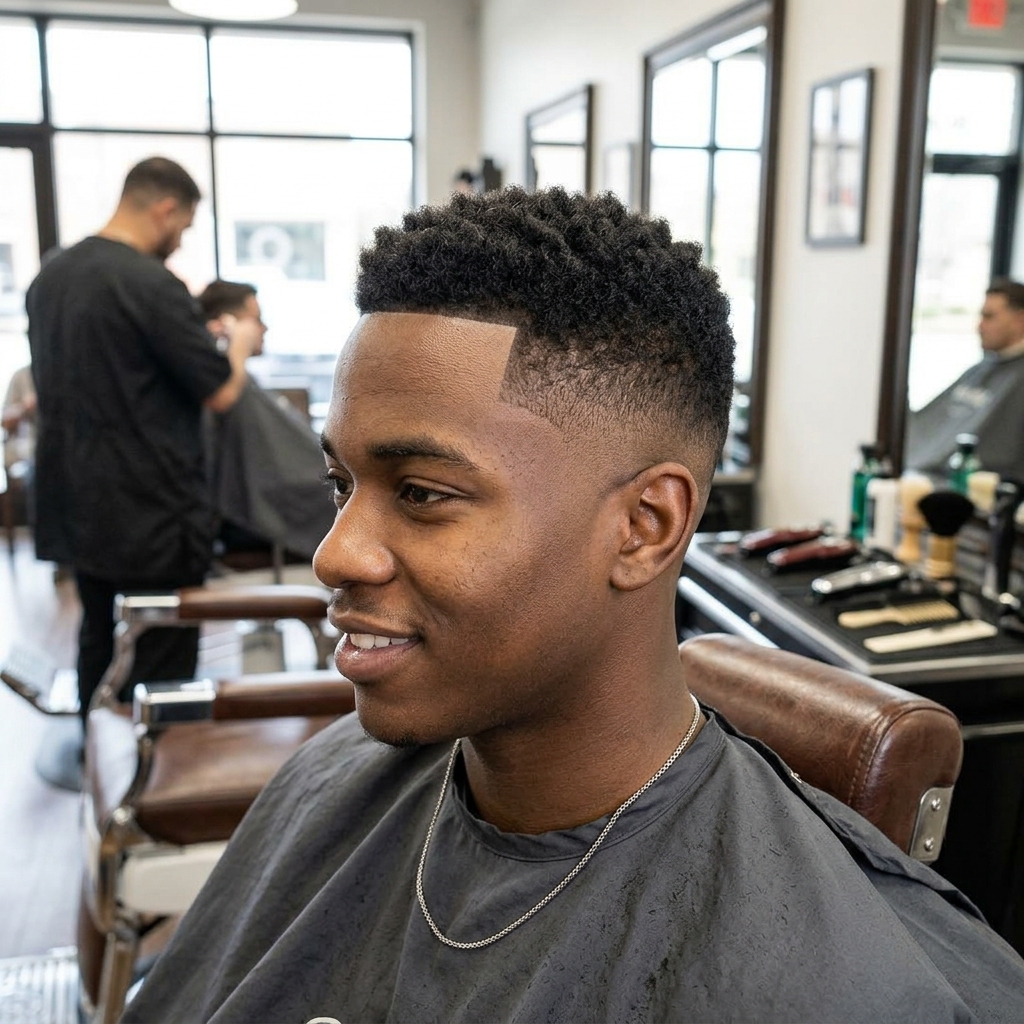
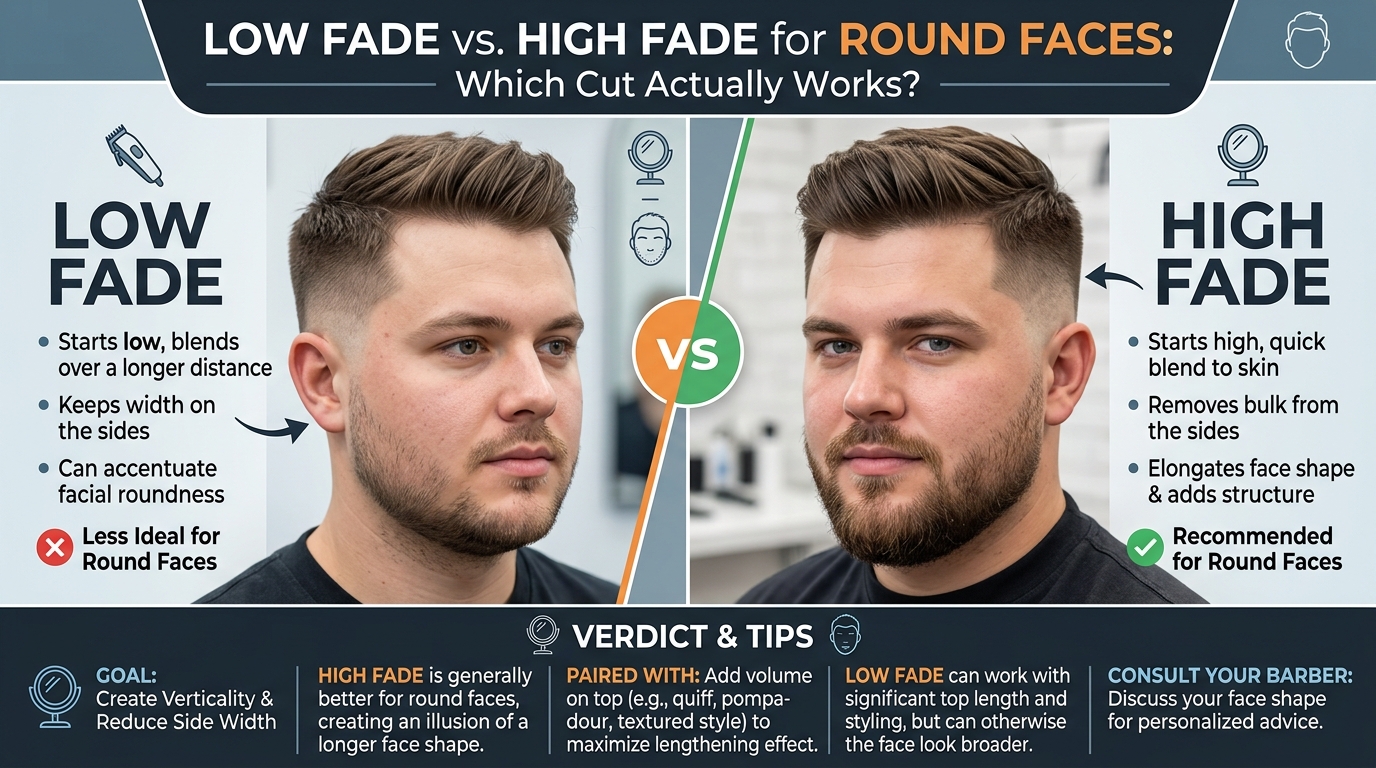
Low fade: The fading begins low, just above the ears and around the neckline. Most of the head keeps its length and volume, and the transition to skin is subtle and close to the hairline.
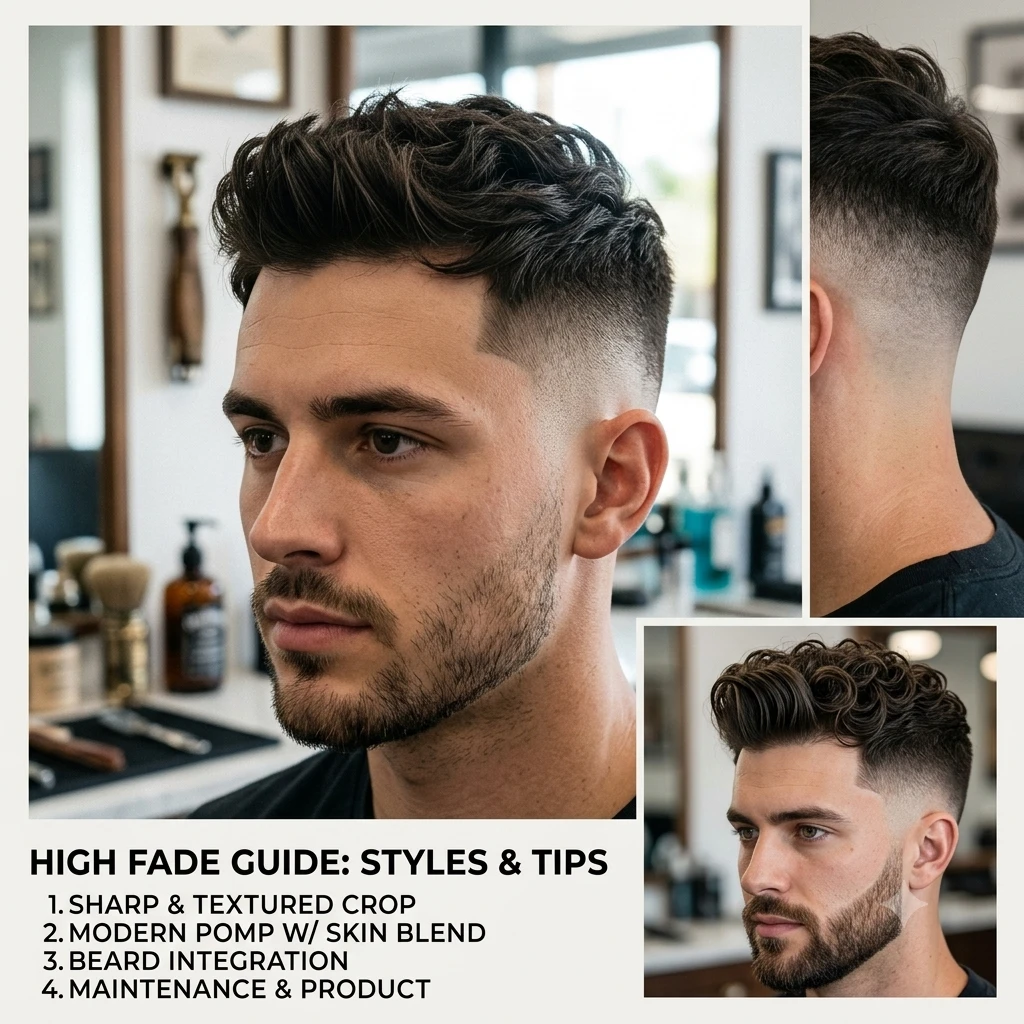
High fade: The fading starts much higher, often above the temples, cutting deep into the sides before blending into a shorter or longer top. It creates a much sharper contrast between skin and hair.
That’s it in theory. In practice, this small difference in starting point completely changes how each cut sits on a round face.
Low Fade on a Round Face: The Case For It
A low fade tends to be the safer, more flattering option for round faces, and here’s the actual reasoning:
- It keeps volume on the sides, which means the head doesn’t look artificially narrow. Reducing side volume too aggressively (like a high fade can) actually emphasizes the roundness of the cheeks and jaw instead of minimizing it.
- The subtle skin taper adds a soft vertical line near the ear without creating a stark contrast that draws the eye horizontally across the face.
- It pairs naturally with height on top, and height is the single most reliable trick for making a round face look longer.
- It looks more “grown up” and versatile — the kind of cut that works in an office as easily as it does on a night out.
The downside? A low fade can look less “sharp” or trendy compared to a high fade, and it doesn’t create as much dramatic contrast if that’s the look you’re after.
High Fade on a Round Face: The Case Against (Mostly)
A high fade isn’t off-limits for round faces, but it comes with real trade-offs:
- It removes bulk from a wider zone of the head, which can make cheeks and jawline look even fuller by comparison. Less hair beside the face means less visual competition for the width of the face.
- The stronger contrast between skin and hair draws the eye sideways, which works against the “add length” goal.
- It demands a strong, deliberate style on top — if the top isn’t textured or given height, a high fade on a round face can look like it’s just accentuating the roundness rather than balancing it.
That said, a high fade isn’t automatically a bad choice. It just requires more precision and more commitment to styling the top correctly to counteract the width it creates.
Low Fade vs High Fade: Quick Comparison
| Low Fade | High Fade | |
|---|---|---|
| Where it starts | Just above the ears | Above the temples |
| Effect on round face | Slims and elongates gently | Can widen if not styled carefully |
| Contrast level | Subtle | Bold, sharp |
| Styling difficulty | Easier to maintain | Needs more precise top styling |
| Best paired with | Textured crop, quiff, side part | Pompadour, spiky top, slick back |
| Overall vibe | Clean, versatile, everyday | Edgy, modern, statement-making |
So Which One Actually Works for Round Faces?
Here’s the honest answer most barbers won’t give you in one sentence: the low fade is the more reliable choice for round faces, especially if you want a haircut you don’t have to think too hard about every morning. It preserves width where you need it, adds subtle vertical lines, and doesn’t fight against your natural face shape.
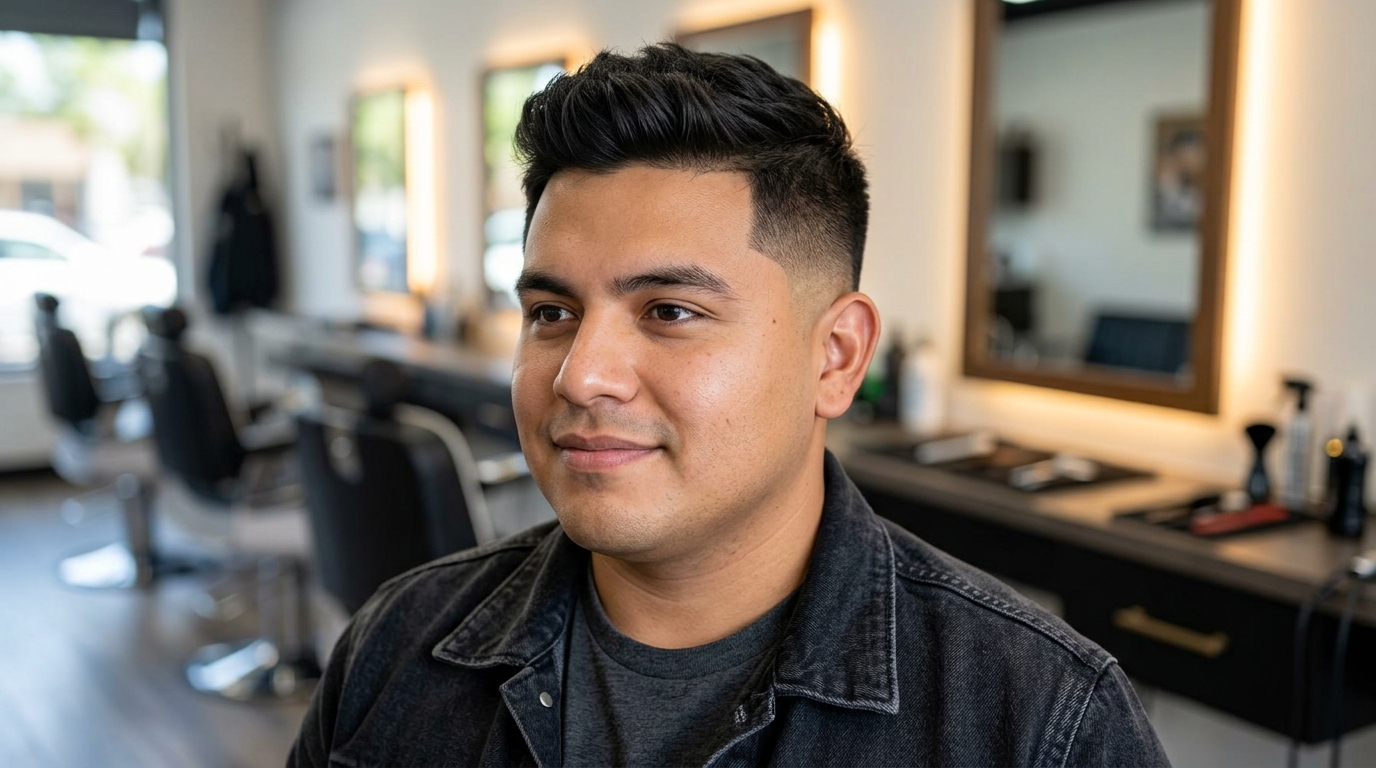
But a high fade can work — it’s just not a “set it and forget it” cut. It only looks good on a round face when the top is doing real work: think noticeable height, texture, or a defined pompadour that pulls the eye upward instead of sideways. If you’re not willing to style your hair with some effort daily, a high fade is more likely to backfire.
In short: low fade for effortless balance, high fade only if you’re committed to styling the top with intention.
Styling Tips to Make Either Fade Work Better
- Add height, always. Whether you go low or high, ask your barber to leave more length on top and use a matte paste or clay to push it upward and forward slightly.
- Keep the top textured, not slicked flat. A flat, smooth top emphasizes roundness. Texture breaks up the silhouette.
- Avoid rounded fringes or curtain bangs. These mirror the shape of your face instead of contrasting it.
- Ask for a slight taper on the beard line too, if you have facial hair — a squared or slightly angular beard shape works with either fade to add definition to the jaw.
- Don’t go too short on top with a high fade. The combination of short sides and short top removes almost all length illusion, which is the worst combination for a round face.
Common Mistakes People Make With Fades on Round Faces
- Choosing a high fade purely because it’s trending, without adjusting the top length to compensate
- Going too tight on both sides and top, which flattens the whole silhouette
- Skipping styling products entirely — fades rely on a well-shaped top to actually flatter the face
- Not communicating “round face” to the barber at all — a good barber will adjust the cut specifically for your face shape if you mention it
Frequently Asked Questions
Does a low fade make a round face look slimmer? Yes, generally. By keeping more hair volume on the sides and creating a subtle, low transition point, a low fade avoids emphasizing the width of the cheeks and jaw, which helps the face read as slightly longer and more balanced.
Can a high fade ever look good on a round face? Yes, but it depends heavily on how the top is styled. Height, texture, and a defined shape (like a pompadour or quiff) can offset the width a high fade tends to expose.
What’s a good middle ground if I can’t decide? A mid fade — starting between the low and high points — offers a lot of the low fade’s flattering balance with a bit more of the sharper, modern contrast a high fade provides.
Does hair texture matter in this decision? Yes. Thicker or wavy hair holds height and shape more easily, making a high fade more forgiving. Fine or straight hair may need extra product or a blow-dry technique to hold the same height, which matters more with a high fade than a low one.
The Bottom Line
Both cuts can work on a round face, but they’re not equally low-effort. A low fade is the more forgiving, everyday-friendly option that naturally works with your face shape rather than against it. A high fade can absolutely look sharp, but only if you’re willing to put in the styling work on top to balance it out.
If in doubt, walk into your next appointment, describe your face shape, and let a skilled barber adjust the fade height and top length together — because the real answer isn’t just “low or high,” it’s how well the whole cut is balanced for your specific features.