
 →
→ →
→ →
→ →
→ →
→ →
→ →
→ →
→ →
→On this page
Table of ContentsTable of ContentsWhat is a drop fade?Where does the curve start and end?Drop fade vs straight fade: what changes?Which height should you choose: low, mid or high?Drop fade vs taper vs burst vs skin fade: how do they compare?Drop fade guard numbers: what to ask forWhich tops go best with a drop fade?Pompadour or quiff on topCurly hair: how does it look and what should you ask for?Drop fade for Black men, waves and afro texturesBraids, twists and locs: how do they pair with the curve?Drop fade mulletHow should a beard blend with the fade?Older men, grey hair and thinning hairWho should think twice before getting this cut?How does it compare with an undercut, a buzz cut and a crew cut?Which face shapes and head shapes suit the curve?Is it professional? What about teens and kids?What does a drop fade cost and how long does it take?How do barbers cut a drop fade? Step by stepCan you cut it at home?How to ask your barber for a drop fadeSix mirror checks before you leave the chairHow long does a drop fade last and how often should you get one?How to style and maintain it at homeHow do you prevent razor bumps and irritation after a fade?Common mistakes and how to fix themFrequently asked questionsMore guides in this seriesQuick answer. A drop fade is a fade where the blend line curves down behind the ear, so it sits lower at the nape than at the temple. Ask for it low, mid or high, with a bottom guard of #0 to #2 (bald to 6 mm) and a longer guard of #3 or #4 above the line. It suits straight, wavy, curly and coily hair, goes with almost any top, and needs a tidy-up every 2 to 3 weeks to stay sharp.
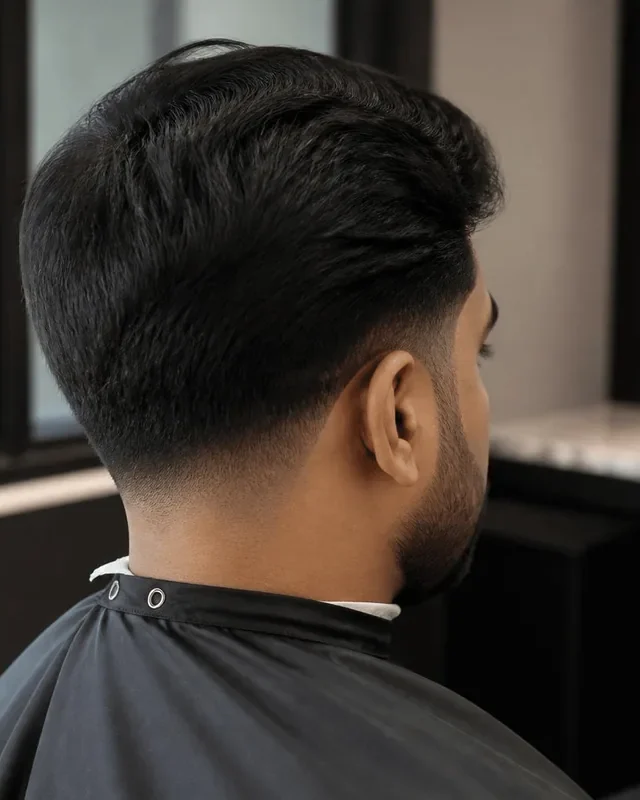
Most fades run flat around the head like a shelf. The drop fade breaks that rule. Behind the ear the line bends down toward the neck, so from the side it looks like a gentle arc and from the back it frames the skull. It is the reason a cut can look sharp in a photo and still grow out well.
This is our main guide to the cut. It answers what the cut is, how it differs from a taper, a burst fade and a low fade, which height to choose, which guards to ask for, how it is cut, which tops and hair types suit it, what it costs, how long it lasts and how to fix the common mistakes. It sits inside our fade haircuts hub, and each deep-dive page linked below covers one variation in full.
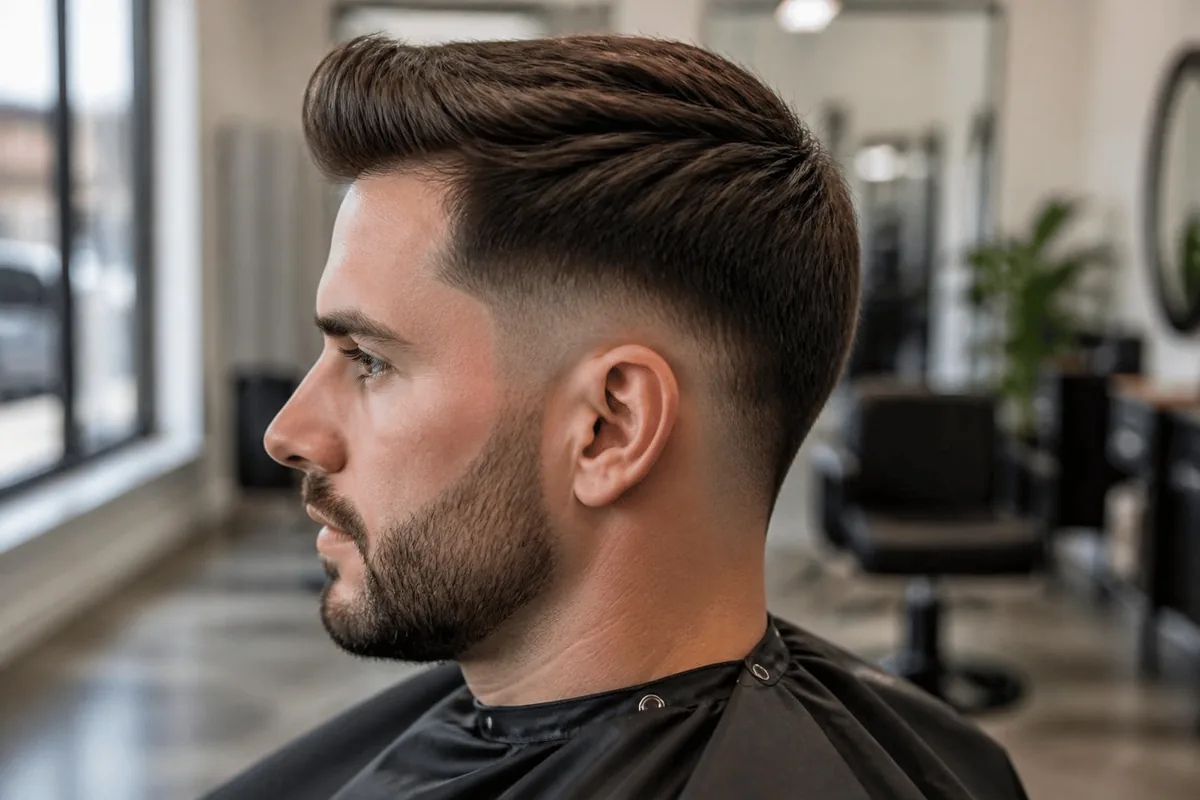
Table of Contents
Table of Contents
What is a drop fade?
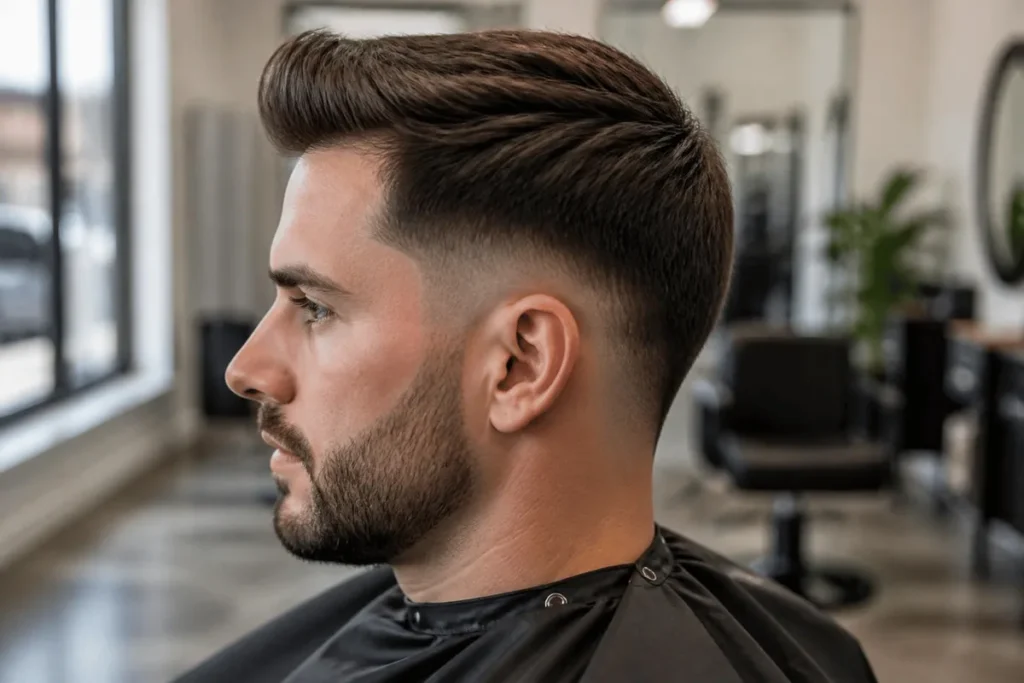
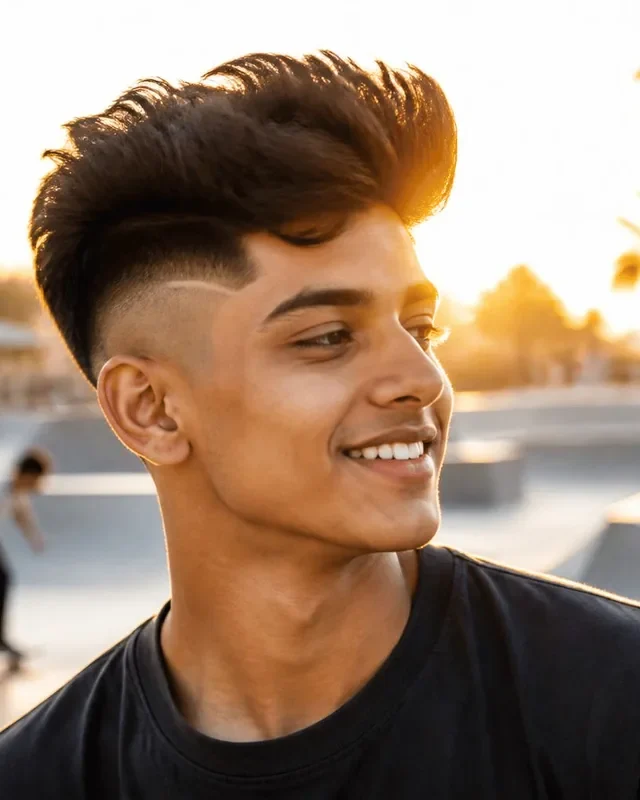
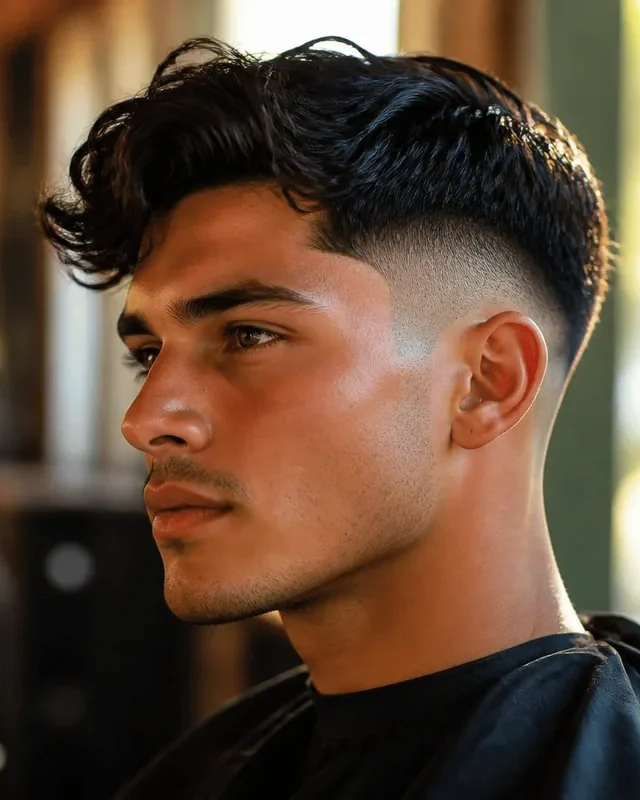
A drop fade is a haircut where the fade line follows the shape of the head and drops down behind the ear, ending lower at the nape than at the temple. Everything below the line is short or bare, and everything above it stays longer. Seen from the side, the line looks like a smile; seen from the back, it looks like an arch.
The curve is the whole point. A straight fade ignores the shape of the skull, while this one follows it. That is why the drop fade pairs well with round heads and with tops that need a sharp frame, such as a quiff, a pompadour or a textured crop. It is also why barbers call it a shape cut: the fade is not only a blend, it is an outline.
People search for it under many names: drop fade haircut, curved fade, arch fade and fade with a line up. They all describe the same idea. The version most men ask for is the low drop taper fade, which keeps the sides longer and softer than a skin version.
Where does the curve start and end?
The curve has three anchor points, and knowing them helps you read any photo.
- The start: the temple, just in front of the ear, where the line sits level with the fade height you chose.
- The turn: directly behind the ear, where the line begins to angle down.
- The end: the nape, where the line finishes 2 to 4 cm lower than the start, depending on the height.
A shallow drop (about 1 to 2 cm) reads as subtle and professional. A deep drop (3 to 4 cm) reads as bold and works best on curly and coily hair, where the contrast is easier to see. If the line looks level in your photo, it is a regular fade, not a drop.
Drop fade vs straight fade: what changes?
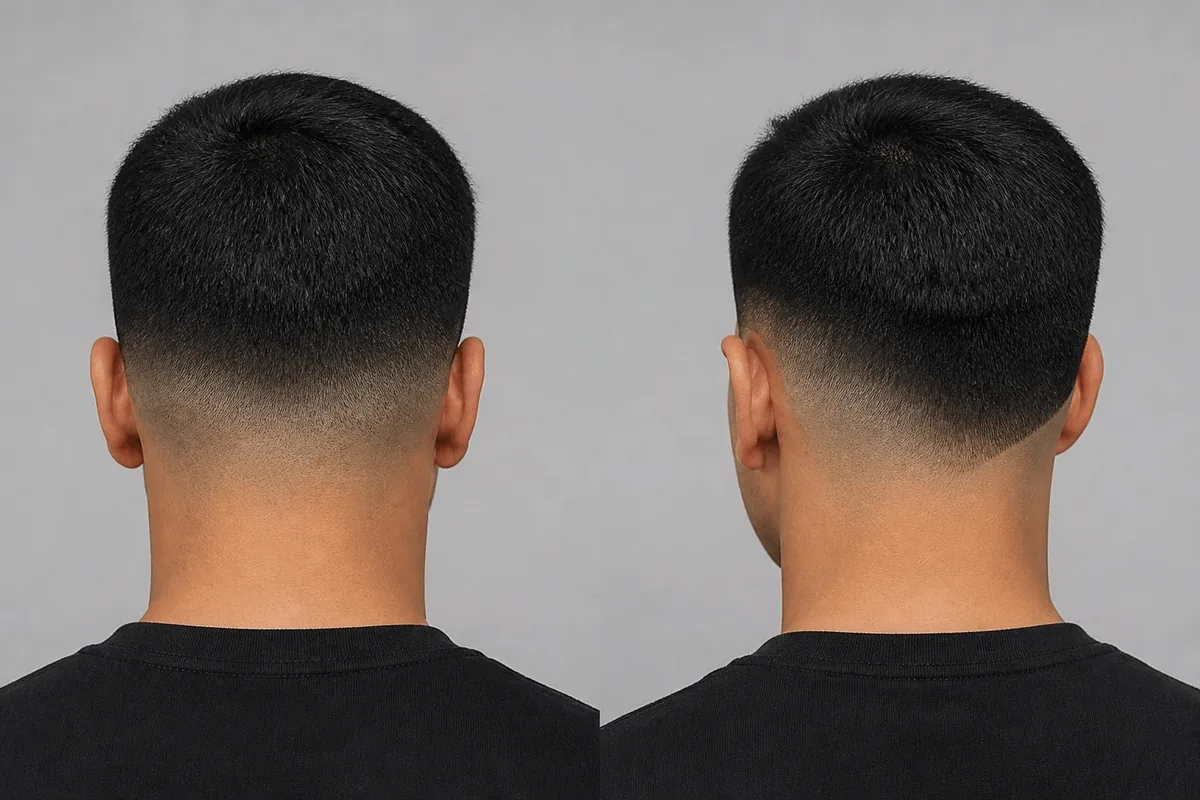
The difference is only the path of the line, but it changes how the whole head looks.
| Feature | Drop | Straight (level) fade |
|---|---|---|
| Line behind the ear | Curves down toward the nape | Runs level around the head |
| Effect on head shape | Adds an arch, flatters round and flat backs | Neutral, follows a geometric line |
| Skill needed | Higher, the curve must match on both sides | Lower |
| Grow-out | Softens into a natural taper | Shows a ledge when it grows |
| Best top | Textured, voluminous, styled | Almost anything |
If your head has a flat back or a sharp corner near the crown, the curve fills the space visually and smooths the outline. That is one reason the cut is so popular with barbers who like to sculpt.
Which height should you choose: low, mid or high?
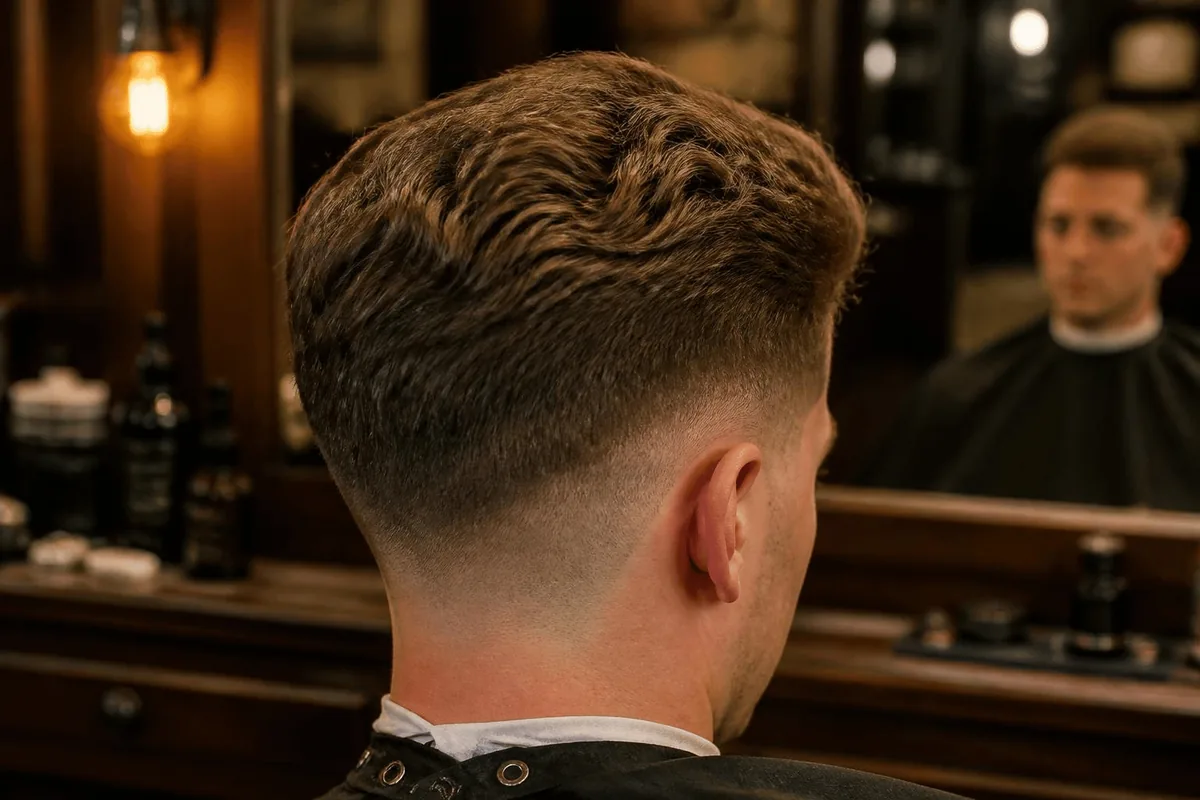
The height tells the barber where the fade starts. The drop is built on top of it.
| Height | Starts at | Look | Best for |
|---|---|---|---|
| Low drop | Just above the ear | Subtle, tidy, office-friendly | First fade, thinning hair, conservative jobs |
| Mid drop | Level with the temple | Balanced, the most popular | Most men and most tops |
| High drop | Above the temple, toward the crown | Bold, high contrast | Short sides, curls, strong styles |
If you are unsure, start with the mid. It looks good on most faces and gives your barber room to go up or down at the next visit. Our guides to the low fade, mid fade and high fade explain how each height changes the head shape.
Drop fade vs taper vs burst vs skin fade: how do they compare?
Barbers use fade words loosely, so clients often ask for the wrong one. Here is the plain comparison.
| Cut | What it does | Line shape | Contrast |
|---|---|---|---|
| Drop | Curves down behind the ear | Arch or smile | Medium to high |
| Taper fade | Trims only the sideburn and nape | Short, soft edges | Low |
| Burst fade | Curves around the ear in a half circle | Semi circle | Medium to high |
| Skin fade | Goes down to bare skin | Any line, with a bald bottom | Very high |
| Low fade | Starts low above the ear | Usually level | Medium |
| Temple fade | Fades only the temples | Short, in front | Medium |
The simplest rule: if the line bends down at the back, it is a drop. If it wraps around the ear, it is a burst. If it only trims the edges, it is a taper. You can also combine them, for example a drop with a skin bottom, or a low taper with a drop curve.
Many men also type “drop fade vs taper” or “low drop fade vs low taper”. A taper is gentle and keeps most of the length, while a drop is a deliberate arch. The low drop taper fade sits between the two and is the safest choice if you want the curve without a strong contrast.
Drop fade guard numbers: what to ask for
Guard sizes vary by brand, so use these as a guide and show a photo. Our haircut numbers page explains each guard in detail.
| Part of the cut | Typical guard | Length |
|---|---|---|
| Bottom of the fade (skin version) | #0 or razor | 0 mm |
| Bottom of the fade (soft version) | #1 or #2 | 3 to 6 mm |
| Middle of the fade | #1.5 to #3 | 4.5 to 10 mm |
| Top of the fade | #3 or #4 | 10 to 13 mm |
| Above the line | Scissor length | 2 cm or more |
The most common request is “a mid drop fade starting at a #1, blended up to a #3”. If you want a tidy, soft finish, ask for a #2 at the bottom. If you want sharp contrast, ask for a skin or #0 bottom.
Which tops go best with a drop fade?
This is the question behind most searches for this cut: which haircut should go on top? The fade sets the frame, so almost any top works. These are the most popular pairings.
| Top | Why it works | Best hair | Learn more |
|---|---|---|---|
| Pompadour | The curve frames the volume | Straight, wavy, thick | Pompadour guide |
| Quiff | Softer than a pompadour, easy to wear | Straight, wavy | Quiff guide |
| Textured crop | Short, choppy, low maintenance | Straight, wavy, curly | Textured crop guide |
| Crew cut | Neat, military, office-safe | Straight, medium | Crew cut guide |
| Buzz cut | Clean, minimal, hot-weather | Any | Buzz cut guide |
| Undercut | Strong contrast, disconnected | Straight, thick | Undercut guide |
| Slick back | Formal, polished | Straight, wavy, thick | Slick back guide |
| Side part | Classic, tidy | Straight, wavy | Side part guide |
| Mullet | Modern, with length at the back | Wavy, curly, straight | Mullet version |
| Sponge twists and curls | Defined curl on top, sharp sides | Curly, coily | Curly version |
| 360 waves | The arch finishes the wave pattern | Coily | Black men and waves |
| Braids, twists and locs | Clean sides, neat base for the pattern | Coily | Braids and locs version |
| Comb over | Sharp part with a smooth blend | Straight, wavy | Comb over fade |
| Long top or man bun | Tight sides balance the length | Any long hair | Long hairstyles |
Pompadour or quiff on top
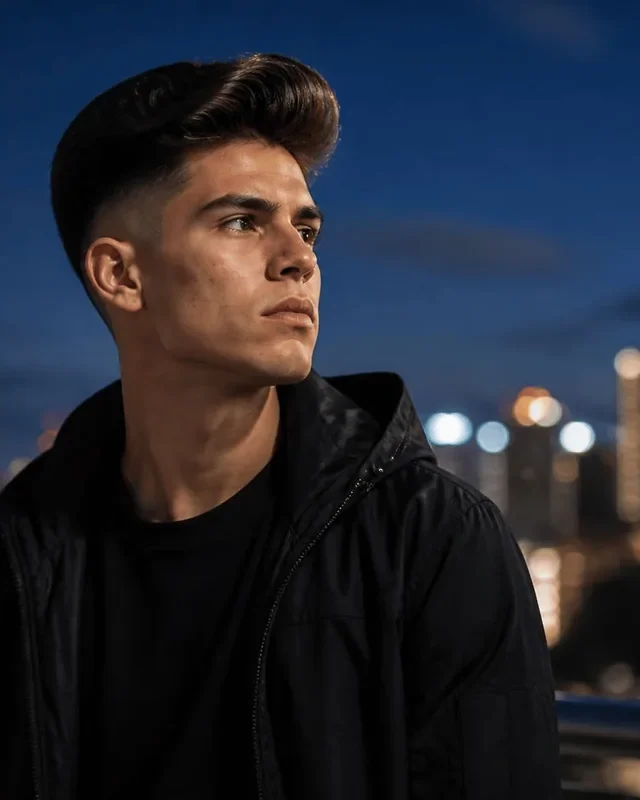
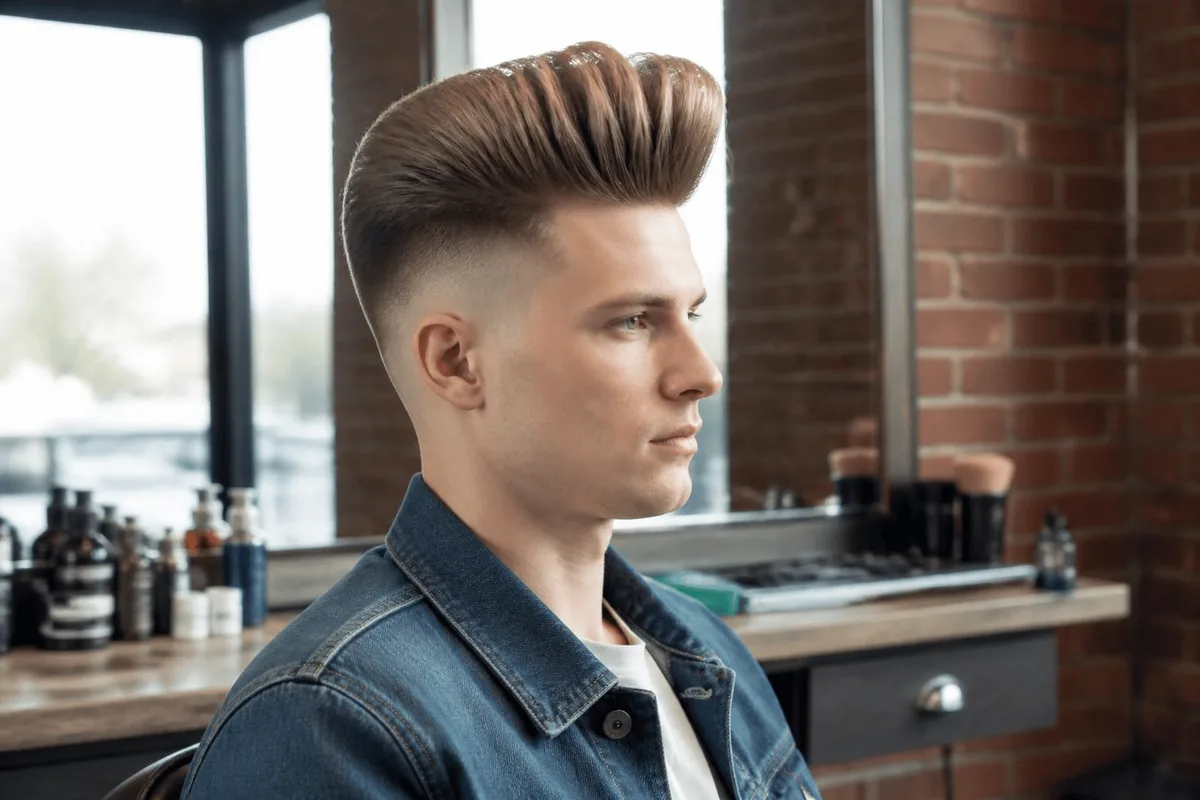
The pompadour is the classic partner. Keep 6 to 9 cm on top, sweep it up and back, and let the curve frame the volume. A blow dryer and a medium-hold pomade do the work. What goes wrong: if the fade is too high, the pompadour looks like it floats. A mid drop with a soft blend keeps the shape grounded. A quiff uses less length (4 to 7 cm) and a looser finish, so it suits office jobs better.
Curly hair: how does it look and what should you ask for?
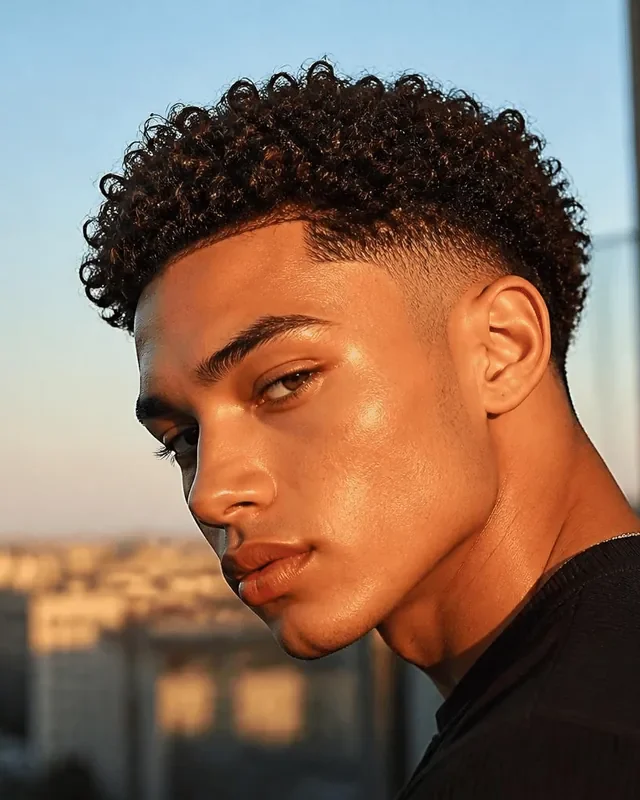
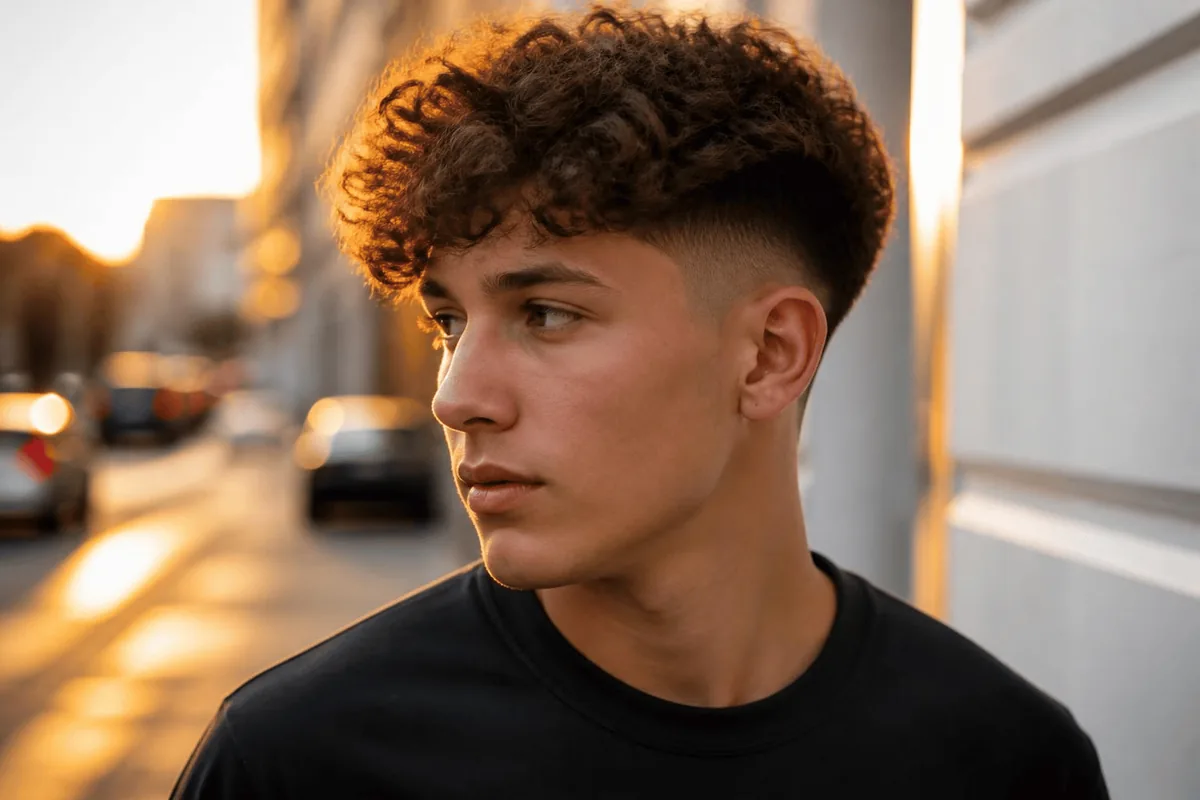
Curly hair and this cut are a strong pair because the contrast between a dense top and a clean side is easy to see. Ask for the top to be cut dry, so the barber sees where the curls fall, and keep 4 to 8 cm for definition. A leave-in cream and a diffuser keep the curls clear. What goes wrong: cutting curls wet makes them spring up shorter than planned. Our drop fade for curly hair page covers sponge curls, twist-outs and the best products.
Drop fade for Black men, waves and afro textures
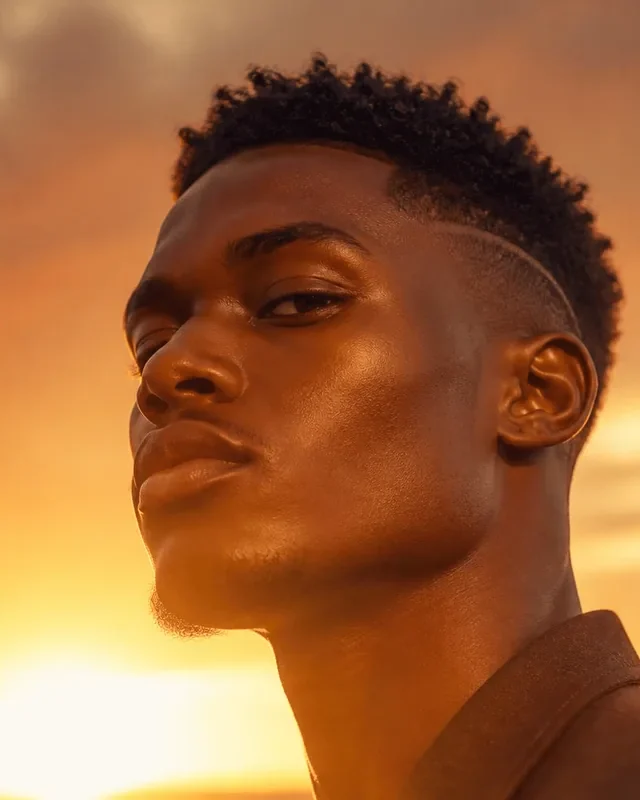
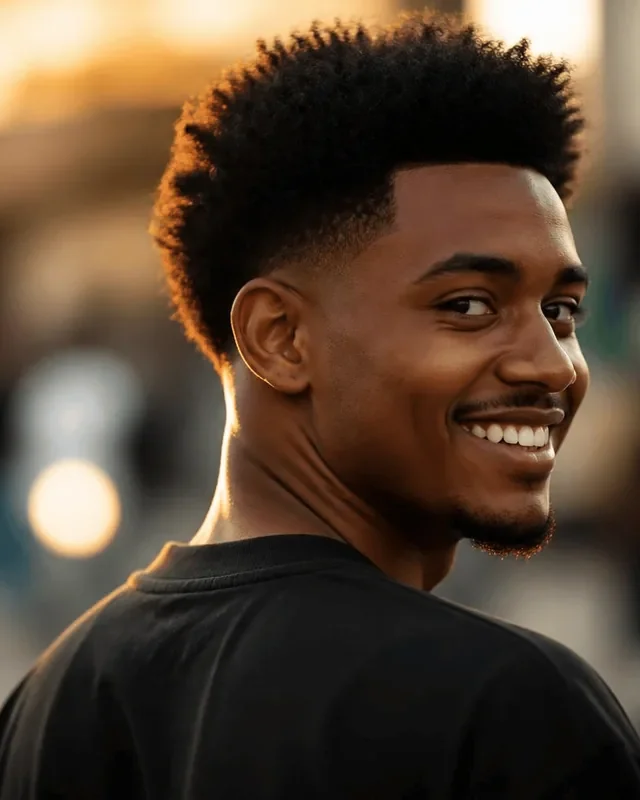
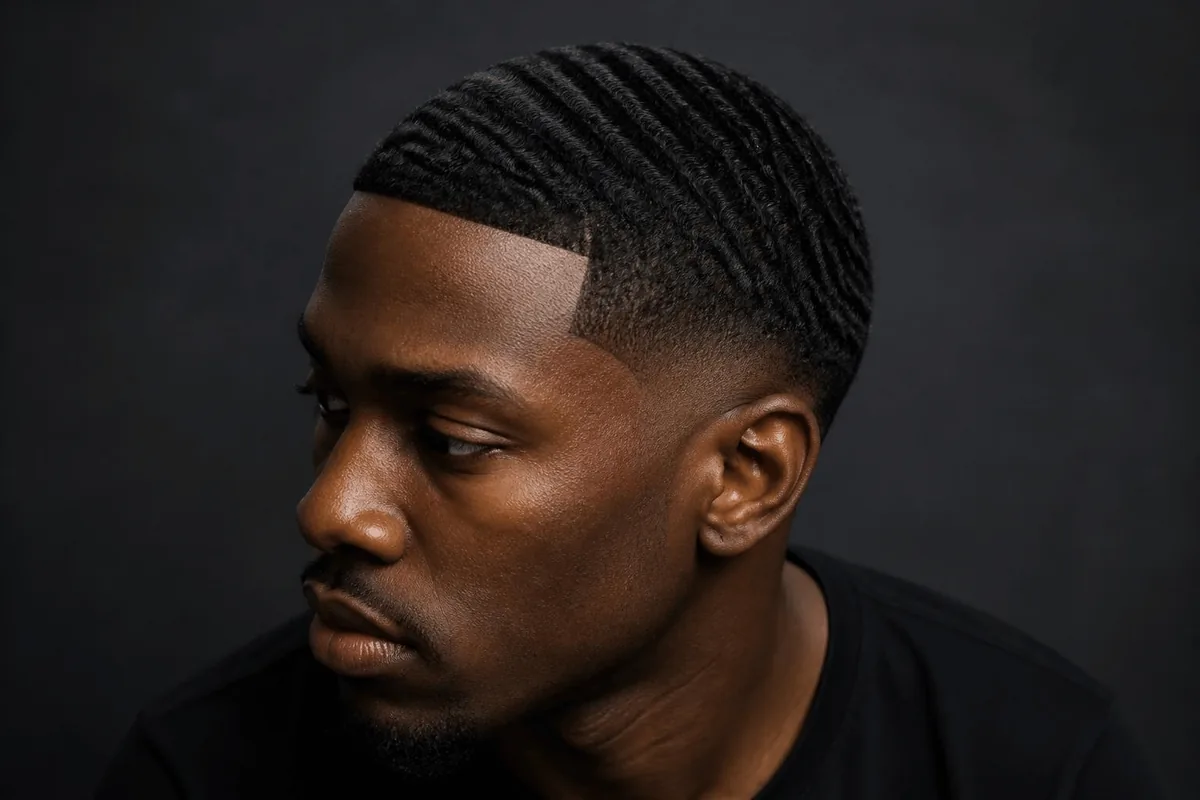
It is a staple in Black barbering. On coily hair the line is crisp, the shape-up (edge-up) frames the face and the arch adds a clean outline. It works with a short afro, a flat top, twists, a wave pattern or a low cut. For waves, the fade should be tight enough to show the pattern, and the barber follows the curve of the head so the waves flow with it. The 360 waves guide explains the brush and moisture routine that keeps the pattern clear.
- Ask for a shape-up. A sharp hairline makes the fade look finished.
- Use a moisturiser. Dry hair shows lines and flakes at the fade.
- Protect at night. A durag or satin bonnet prevents flattening and frizz.
- Plan the next visit. Dense hair makes the line soften quickly, so book every 2 weeks if you want it razor sharp.
For the full page, see our guide for Black men.
Braids, twists and locs: how do they pair with the curve?
This fade gives braids, twists and locs a clean base. The sides stay neat, the pattern on top shows clearly and the curve ties the shape together. Barbers usually fade first and install the style after, so the scalp is clean and the braids sit well. What goes wrong: getting the fade the same day as tight braids can irritate the scalp, so book them a day or two apart. See locs, cornrows and twist hairstyles for the top styles, and drop fade with braids and locs for the pairing.
Drop fade mullet
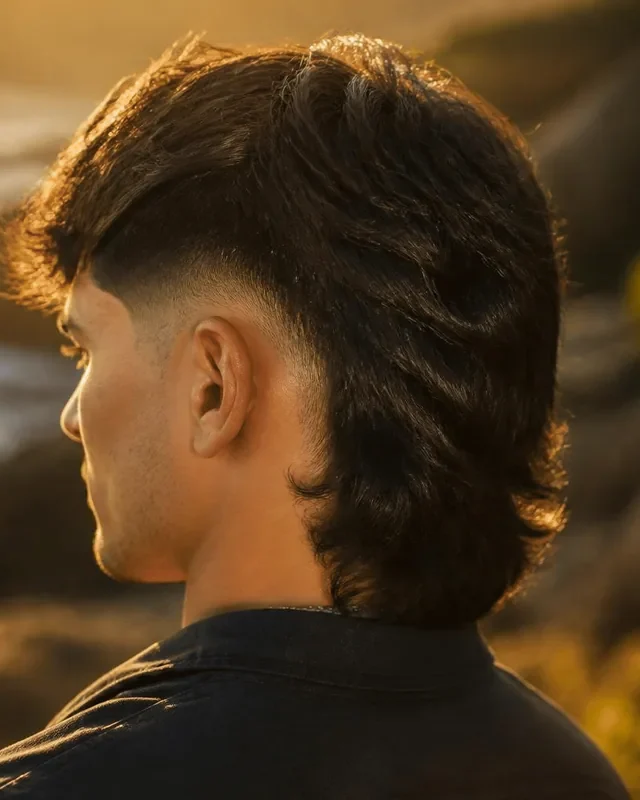
The mullet has returned in a modern form with tight sides and length at the back. A drop is a natural fit because the curve follows the line of the neck and leads the eye to the longer back. Keep the back at 8 to 15 cm, add a soft fringe and style with sea salt spray. Compare it with the mullet guide, and see drop fade mullet for photos and barber scripts.
How should a beard blend with the fade?
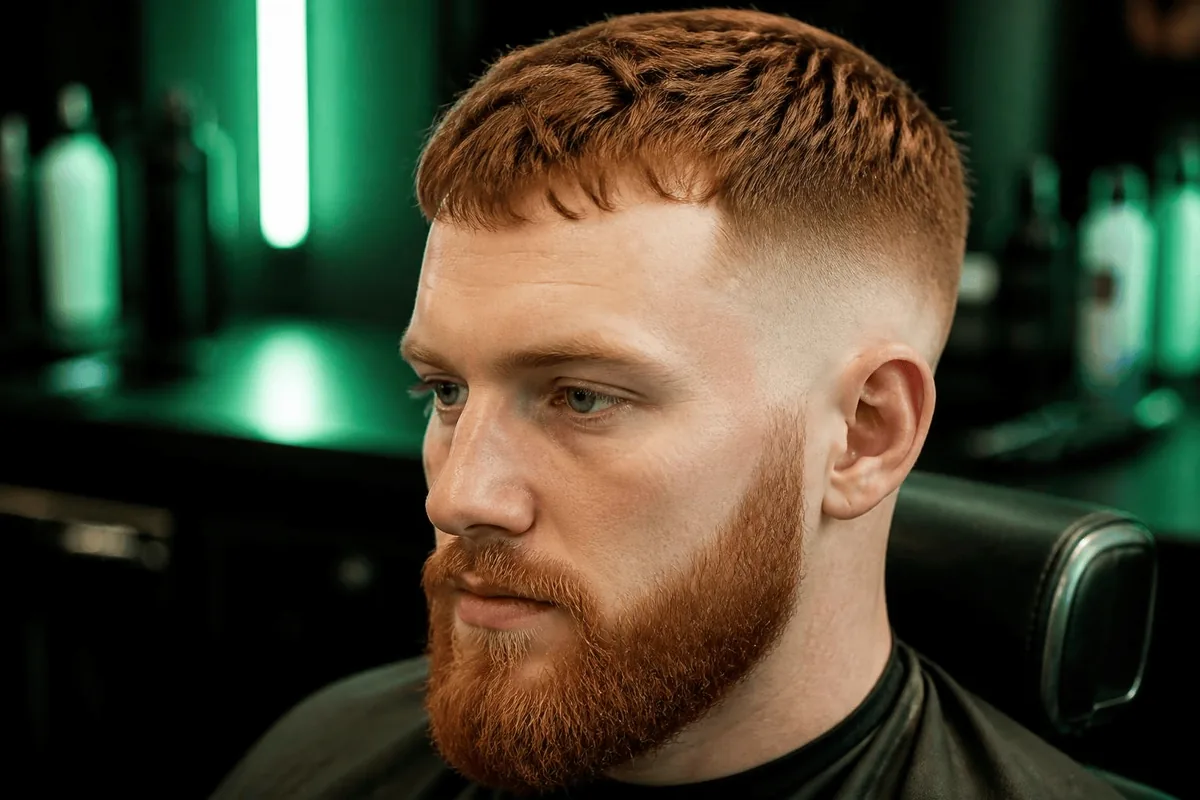
A fade and a beard share one rule: the two must blend. Ask the barber to continue the fade into the sideburn and the beard so there is no gap. A short, full beard (2 to 6 mm) suits a mid or high drop, while a long beard looks best with a low drop so the sides do not compete. What goes wrong: a bald fade next to a thick beard creates a harsh line unless the beard is faded too. See the beard fade guide for the blend.
Older men, grey hair and thinning hair
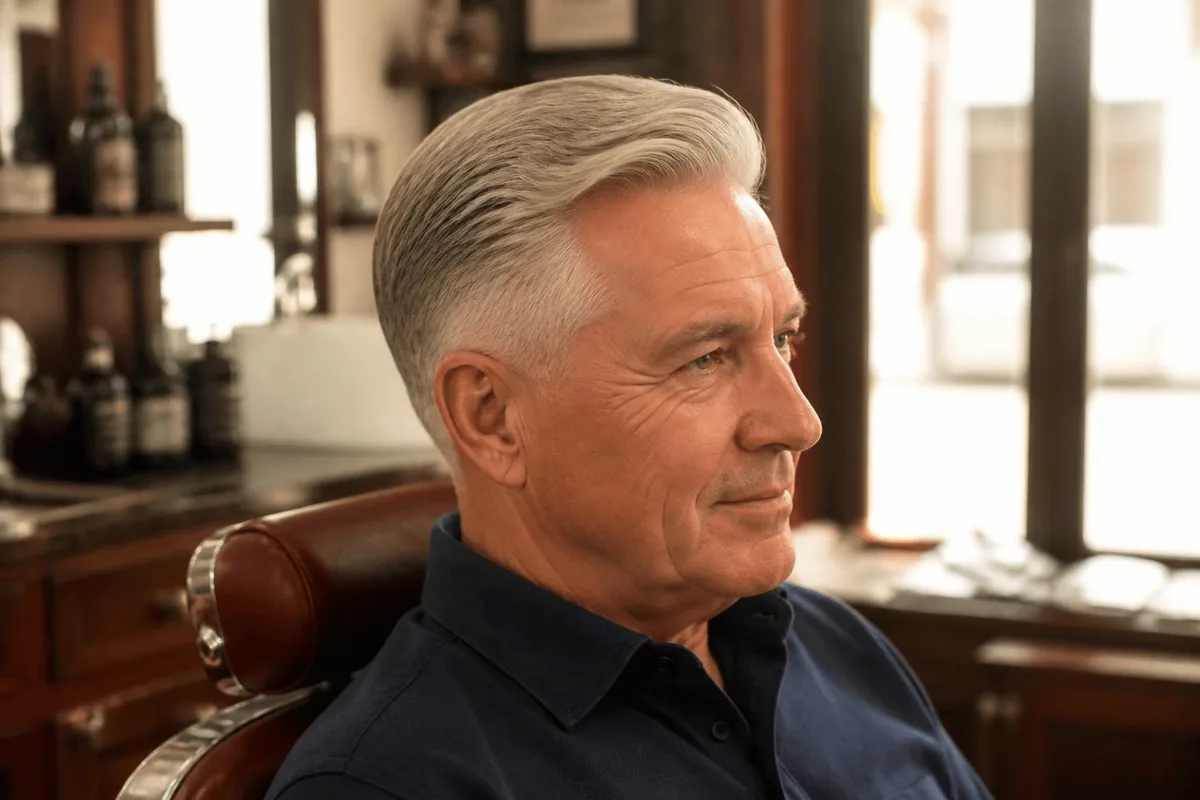
It is a good cut for men over 40 and over 60. Grey and silver hair show the fade as a soft shadow, and the curve adds shape without looking young or trendy. For thinning hair, keep the top short (2 to 4 cm), use a low or mid height and pick a #2 or #3 at the bottom, because a skin fade can make thin hair look thinner. A forward fringe or a short side part helps with a receding hairline, and our receding hairline guide has more ideas.
Who should think twice before getting this cut?
Most men can wear it, but a few situations call for care. If you have scars, moles or raised skin behind the ears, tell the barber so the clippers avoid them, and choose a longer guard. If your hair is very sparse at the sides, a bare bottom can expose scalp, so a #2 or #3 is kinder. If you cannot book a visit every 3 or 4 weeks, pick a low version, because a high contrast curve looks untidy within days. And if your workplace has a strict grooming code, check the rules before you ask for a skin bottom.
How does it compare with an undercut, a buzz cut and a crew cut?
| Cut | Sides | Transition | Upkeep |
|---|---|---|---|
| Curved fade | Curved gradient | Smooth blend that dips behind the ear | Every 2 to 3 weeks |
| Undercut | One short length | Hard line, no blend | Every 4 to 6 weeks |
| Buzz cut | One length all over | None | Every 2 to 4 weeks |
| Crew cut | Tapered, short | Gradual, not curved | Every 3 to 4 weeks |
The undercut and the buzz cut have no blend at all, so they grow out in a block. The crew cut tapers gently but does not curve. The curved version sits between them: more shape than a taper, more forgiving than an undercut.
Which face shapes and head shapes suit the curve?
- Oval faces suit any height and any top.
- Round faces look longer with a mid or high drop and a tall top.
- Square faces look softer with a low drop and some texture.
- Long faces look balanced with a low drop and a shorter top, because height adds length.
- Heart faces look balanced with a low drop and a longer fringe.
- Flat back heads gain shape from the curve at the back.
Read haircuts by face shape and haircuts by hair type for the full chart.
Is it professional? What about teens and kids?
Yes, if you choose the right version. A low drop with a #2 or #3 at the bottom and a neat side part looks tidy in banks, courts and offices. A high skin drop with a bold top is a stronger statement and may not suit very conservative workplaces. For teens and boys, the cut is popular and easy to wear, but keep the bottom guard at #1 or #2 and avoid a razor on young skin. Our boys haircuts hub covers age-appropriate versions.
What does a drop fade cost and how long does it take?
Prices vary by city, shop and barber, so check locally. A fade usually costs more than a basic scissor cut because it takes more time and skill. Expect 30 to 45 minutes in the chair for a standard drop, and up to an hour if you add a beard, a shape-up or a design. A busy shop, a long top or a very precise curve all add time. It is worth paying a skilled barber, because the curve is the hardest part of the cut to fix.
How do barbers cut a drop fade? Step by step
This helps you follow what your barber is doing. If you want the full home guide, read our home guide.
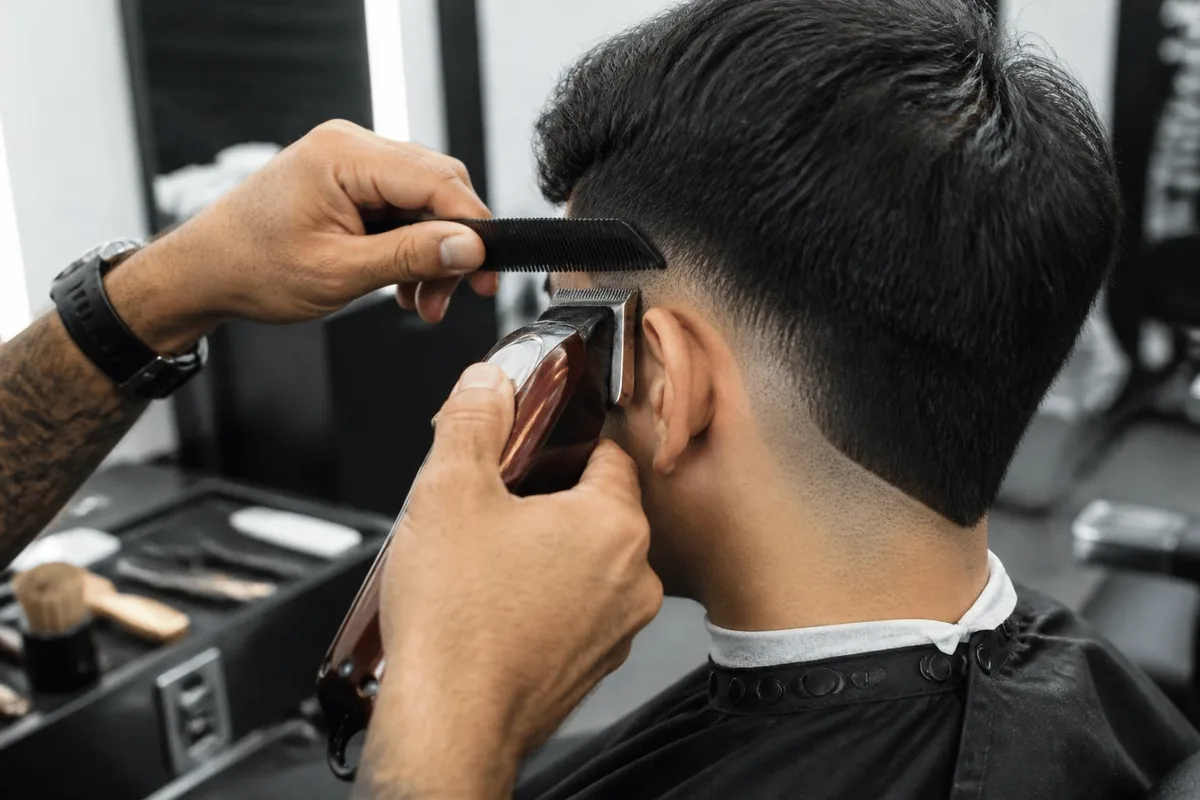
Step 1: Draw the guideline
The barber sets the fade height with a trimmer or a comb, marking the line level at the temple and curving it down behind the ear. What goes wrong: a guideline drawn too high or too flat makes the whole cut look wrong, and every blend after it follows the mistake.
Step 2: Cut the bulk
The clippers remove the bulk below the line with a #3 or #4 guard. What goes wrong: forcing the clippers through dense hair leaves steps that are hard to blend later.
Step 3: Build the fade
The barber works up from the bottom, using a #1, then #1.5 and #2, with a flicking motion that follows the curve. What goes wrong: stopping the clippers in one place leaves a visible line.
Step 4: Shape the curve
Using clipper over comb, the barber follows the arc behind the ear and checks both sides. What goes wrong: one side higher than the other, so the cut looks lopsided from the back.
Step 5: Detail the edges
The hairline, sideburns and neckline are cleaned with a trimmer or a razor. What goes wrong: a razor on sensitive skin can cause bumps (see the skin care section below).
Step 6: Cut and finish the top
The top is cut to length with scissors and shaped. What goes wrong: cutting the top before the fade means you cannot judge the balance.
Step 7: Check the cut
The barber brushes the hair off, shows you the back with a hand mirror and tweaks any gaps. What goes wrong: skipping this check leaves patches you only notice at home.
Can you cut it at home?
You can, but it is one of the harder fades. The curve must match on both sides, and you cannot see the back. If you try, use a mirror setup, keep the guards in order and work slowly. Start with a low taper instead of a high drop, and follow our step-by-step home guide. For general advice, see how to cut your own hair.
How to ask your barber for a drop fade
Barbers love a clear request, and a photo helps more than any words. Here is a script you can use in the chair.
- “I want a mid drop fade.” Name the height and the curve.
- “Start at a #1 and blend up to a #3.” Say the bottom and the top guard.
- “Curve it down behind the ear.” This is the drop. Point to the spot.
- “Leave about 5 cm on top.” Show the length with your fingers.
- “Keep a natural neckline” or “square the neckline.” Pick one.
- “Add a shape-up.” Only if you want a sharp hairline.
Our guide to how to ask for a haircut has extra phrases.
Bring three photos if you can: one from the side, one from the back and one from the front. The side photo shows the curve, the back photo shows how deep it drops and the front photo shows the hairline. Say what you like about each one, and what you do not, because a barber can only copy what they can see. If your hair type differs from the model in the photo, say so, since coily hair holds a sharper line than fine straight hair.

Six mirror checks before you leave the chair
- Is the line the same height on both sides?
- Does the curve start at the same spot behind each ear?
- Is the blend smooth, with no visible stripes?
- Is the neckline the shape you asked for?
- Are the sideburns even?
- Does the top sit where you want it without product?
How long does a drop fade last and how often should you get one?
A fade starts to soften after about a week and loses its shape after 2 to 3 weeks. According to the Cleveland Clinic, hair grows about 1 centimetre per month, so a bare fade shows regrowth within days. The numbers below are typical estimates.
| Version | Trim every | Why |
|---|---|---|
| Skin drop | 1 to 2 weeks | Regrowth shows fast |
| Mid drop | 2 to 3 weeks | The default for most men |
| Low drop taper fade | 3 to 4 weeks | Grows out softly |
| Fade with a beard | 2 to 3 weeks | The blend needs upkeep |
If your budget allows only one visit a month, choose a low version with a longer bottom guard. Our how often to get a haircut page explains more.
Hair type changes the timing. Coily and thick hair grow in dense, so the contrast at the bottom of the fade fills in quickly and the line looks soft within about two weeks. Fine straight hair shows regrowth less, so a low version can stretch to four weeks. Beards, warm weather and oily scalps all make a fade look untidy sooner, because loose hairs stick to the skin and hide the blend.
How to style and maintain it at home
- Wash and dry. Use a mild shampoo and towel dry.
- Prep. Add sea salt spray for texture or a leave-in cream for curls.
- Dry the top. Use a hairdryer and your fingers to set the direction.
- Style. Use a pea-sized amount of clay, paste or pomade on the top only.
- Keep the sides clean. Product on the fade makes it look dirty.
- Tidy between visits. A trimmer on the neckline extends the life of the cut.
What goes wrong: too much product weighs down the top and hides the fade. Use less than you think. See the best hair products for men page for choices.
How do you prevent razor bumps and irritation after a fade?
Close clipper work and razor edging can cause ingrown hairs and razor bumps, especially at the nape and sideburns. The American Academy of Dermatology has a clear guide on preventing razor bumps. In practice:
- Ask for clippers instead of a razor if you get bumps.
- Cut with the grain at the neckline.
- Rinse loose hair and use a gentle, fragrance-free moisturiser after the cut.
- Do not pick at bumps, and see a dermatologist if they persist.
Common mistakes and how to fix them
| Mistake | What you see | Fix |
|---|---|---|
| Line too level | Looks like a regular fade | Ask for a deeper curve and point to the nape |
| Uneven sides | Lopsided from the back | Check with a hand mirror before you pay |
| Fade too high | Top looks small | Ask for a low or mid height next time |
| Hard line | Visible stripe | Ask the barber to blend with a lower guard |
| Too much product | Greasy, flat top | Use a pea-sized amount on dry hair |
| Skipping visits | Shape lost, fuzzy sides | Book every 2 to 3 weeks |
Frequently asked questions
What is a drop fade haircut?
It is a fade where the line curves down behind the ear, ending lower at the nape than at the temple. It can be low, mid or high.
What is the difference between a drop fade and a regular fade?
A regular fade runs level around the head. This one curves down at the back, which gives it an arch and a more sculpted shape.
Is a drop fade the same as a burst fade?
No. A burst fade curves in a half circle around the ear, while the drop follows the head down toward the nape.
What is the difference between a drop fade and a taper fade?
A taper trims only the sideburns and neckline and keeps most of the length, while this one is a deliberate curved blend that shows more contrast.
What guard goes with it?
A #1 or #2 at the bottom, blended up to a #3 or #4. Use a #0 or razor for a skin version.
How often should you get one?
Every 2 to 3 weeks for a sharp look, or every 3 to 4 weeks for a low taper version.
Is it good for curly hair?
Yes. The contrast makes curls look defined. Ask for a dry cut and use a leave-in cream.
Does it work for Black men and waves?
Yes. It is a staple on coily hair, and it finishes a 360 wave pattern cleanly.
Is it professional?
A low or mid version with a neat top looks professional in most offices.
Does it work for thinning hair?
Yes, with a low height, a #2 or #3 bottom and a short top.
Can you get one with a beard?
Yes. Ask the barber to fade the sideburn into the beard.
Can you cut one at home?
You can, but the curve is hard to match. Start with a low taper if you are new.
More guides in this series
These deep-dive pages sit under this pillar: low drop taper fade, curly hair, Black men and waves, braids and locs, mullet, pompadour and cutting one at home. Explore the rest of the range on our fade haircuts hub, or compare the low taper fade and skin fade pillars.
Guard sizes, timings and costs are typical estimates, since barbers, brands and hair types differ, and the growth figure follows the Cleveland Clinic. Our editorial policy explains how we label estimates and update pages.