
 →
→ →
→ →
→ →
→ →
→ →
→ →
→On this page
What is a low taper fade?The four edges a barber shapesHow long should the sideburns be?Neckline: faded, rounded or square?Low taper fade vs low fade vs low dropHow do barbers cut a low taper fade?Clippers and blade care for a clean edgeLow taper fade guard numbersWhich hair types suit a low taper fade?Low taper fade with a beardLow taper fade for men over 40 and grey hairWhich version fits your hair thickness?Low taper vs mid taper vs undercutIs it a good cut for a receding hairline?Is it professional?Is it a good cut for teens and kids?What does it cost and how long does it take?How to ask your barber for a low taper fadeSix mirror checks before you leave the chairHow long does a low taper fade last?How to maintain it at homeProducts that keep the shapeWhen to book it before an eventCommon mistakes with this cutLow Taper Fade FAQMore fade guidesQuick answer. A low taper fade is a haircut where the hair shortens gradually only at the sideburns, around the ears and down the neckline, starting about 1 to 2 cm above the ear. The sides keep their length and the top stays fully styled. It is the least dramatic fade, the easiest to grow out, and a trim every 3 to 4 weeks keeps it neat.
If a fade feels like too much commitment, the low taper fade is the cut to start with. Nothing about it shouts. The edges around your ears and neck get cleaner, the sideburns get a gentle slope, and the rest of your hair stays where it is.
This guide follows the cut from the ear outward. It covers the four edges a barber shapes, the guard numbers, how to match the cut to your hair type, and the words that make a barber give you exactly what you showed in the photo.
What is a low taper fade?
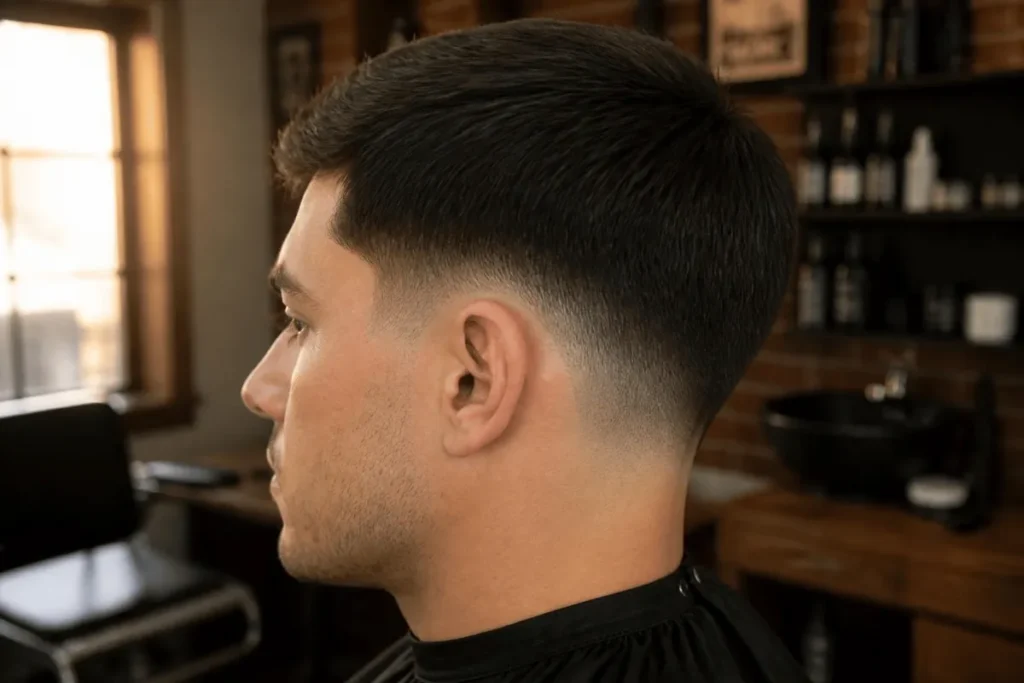
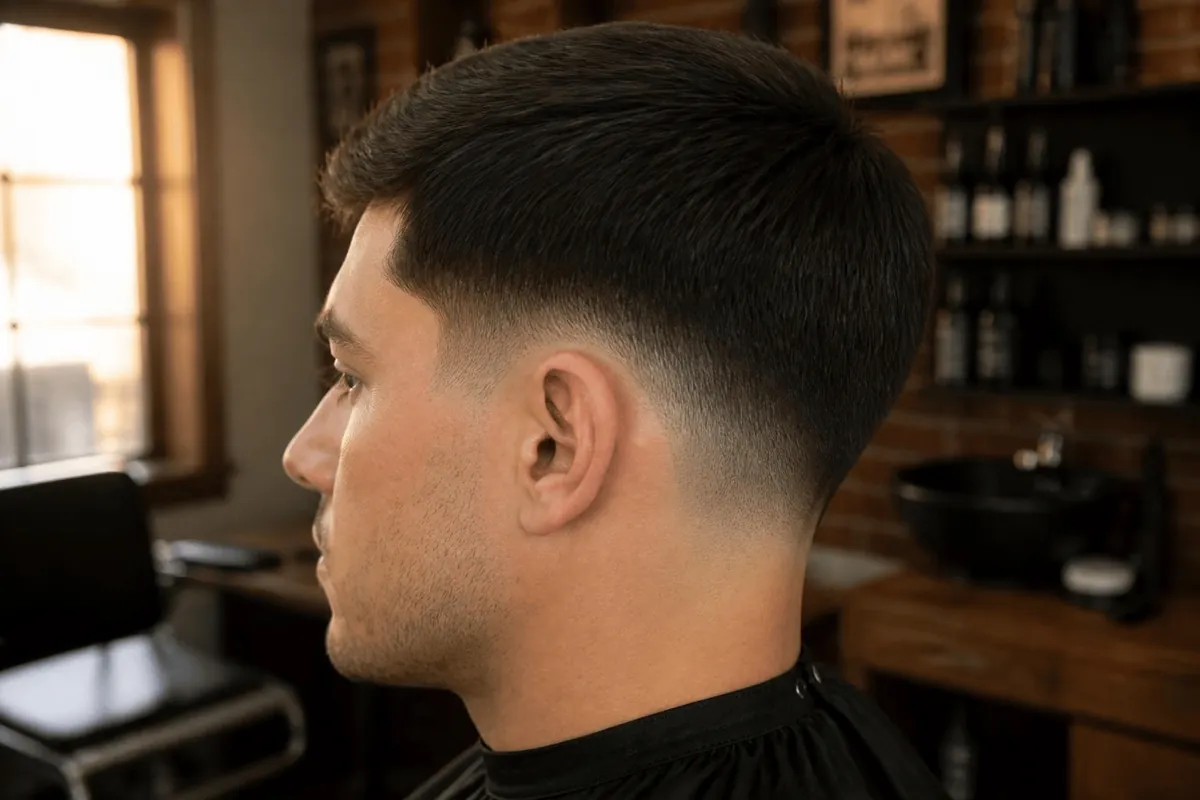
A low taper fade is a haircut where the length gradually shortens around the ears, sideburns and nape, beginning low on the head just above the ear. Everything above that small zone stays long. The blend is subtle, so the cut looks like a very clean version of a classic scissor cut.
The cut differs from a low fade, which removes more hair and often goes to skin, and from a standard taper fade, which can start higher. Here the blend stays low, and the contrast stays soft.
The four edges a barber shapes
A barber shapes four edges: the sideburns, the arc around each ear, the temple corner and the neckline. Each edge gets its own length, and the quality of the cut depends on how well the four match. The table lists what happens at each edge.
| Edge | What the barber does | Typical guard | Common mistake |
|---|---|---|---|
| Sideburn | Slopes from the sides down to the cheek | #1 or #2 | Two sides unequal in length |
| Ear arc | Clears a small half-circle | #0.5 to #1 | Cutting too far from the ear |
| Temple | Rounds the hairline corner | #1 to #3 | Taking too much off |
| Neckline | Fades out, squares or rounds | #0.5 to #2 | Not saying which shape |
How long should the sideburns be?
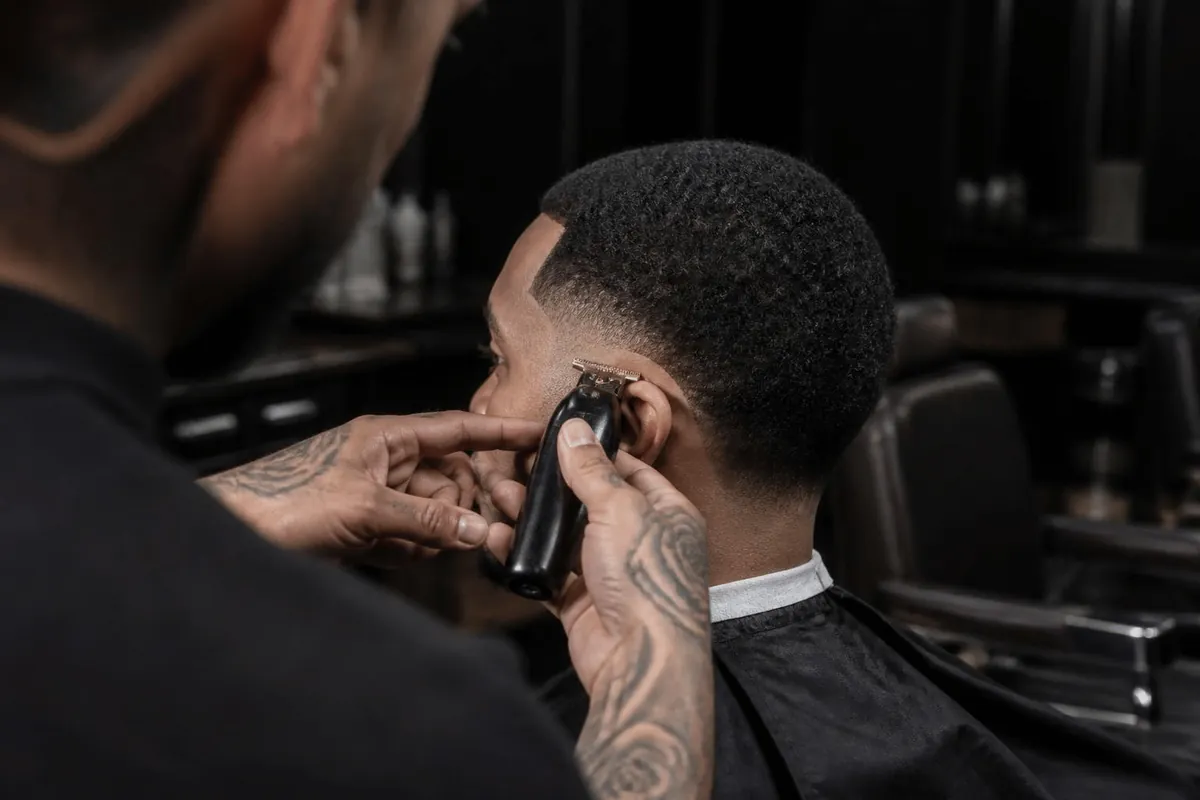
Sideburn length changes the whole feel of the cut. A short sideburn ending at the middle of the ear looks neat and modern, a mid-length one ending at the bottom of the ear is the classic choice, and a long one reaching the jaw suits beards and retro styles. Pick the length before the barber starts.
| Length | Ends at | Look | Best for |
|---|---|---|---|
| Short | Middle of the ear | Clean, modern | Offices, round faces |
| Standard | Bottom of the ear | Classic | Most men |
| Long | Jaw line | Bold, retro | Beards, long faces |
If you want a beard line to connect, say so before the cut, because the sideburn sets the start of the cheek line.
Neckline: faded, rounded or square?
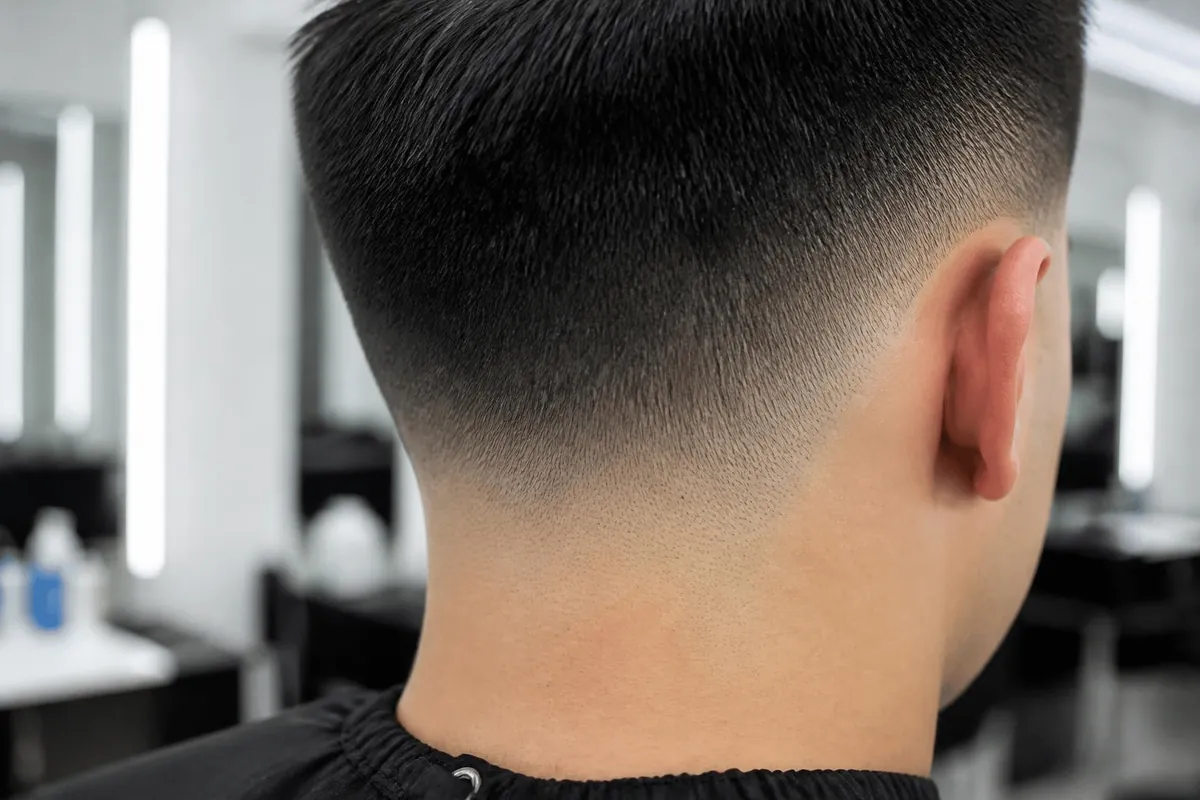
The neckline is the edge people notice from behind, and it decides how the cut grows out. A tapered neckline fades into the skin and looks natural for weeks. A square neckline looks sharp for a few days and then shows the stubble. A rounded neckline sits in between.
| Neckline | Look | Grows out | Best for |
|---|---|---|---|
| Tapered | Soft, natural | Gracefully, 3 to 4 weeks | Everyday wear |
| Rounded | Clean, relaxed | Fairly well, 2 to 3 weeks | Medium hair |
| Square | Sharp, formal | Poorly, 1 to 2 weeks | Events |
Low taper fade vs low fade vs low drop
A low taper keeps the most hair, a low fade removes more and often reaches skin, and a low drop fade curves down behind the ear. A barber interview in Modern Barber with Pete Cranfield describes a taper as a gradual blend that keeps more hair around the ears and a fade as more contrast with more scalp showing. Clients, he says, often underestimate how short a fade ends up.
| Cut | Starts | Shortest length | Contrast |
|---|---|---|---|
| Low taper fade | 1 to 2 cm above the ear | 3 to 6 mm | Low |
| Low fade | 1 to 2 cm above the ear | 0 to 3 mm | Medium |
| Low drop fade | Dips behind the ear | 0 to 3 mm | Medium |
The drop fade guide covers the curved cut.
How do barbers cut a low taper fade?
A barber cuts a low taper fade by marking a low guide above the ear, trimming the edges with a short guard, and blending upward in small steps with clipper-over-comb work. The cut takes 25 to 35 minutes and is quicker than a full fade.
- Mark the height. A comb or clipper edge marks a low line above the ear. What goes wrong: unequal lines make one side look higher.
- Cut the edges. A #1 or #2 guard clears the sideburn, ear arc and nape. What goes wrong: starting too short turns the cut into a fade.
- Blend upward. A #3 and #4 climb in small steps. What goes wrong: large steps leave a visible line.
- Flick out the guide. A light wrist movement erases the line.
- Detail. A trimmer sharpens the sideburns and ears.
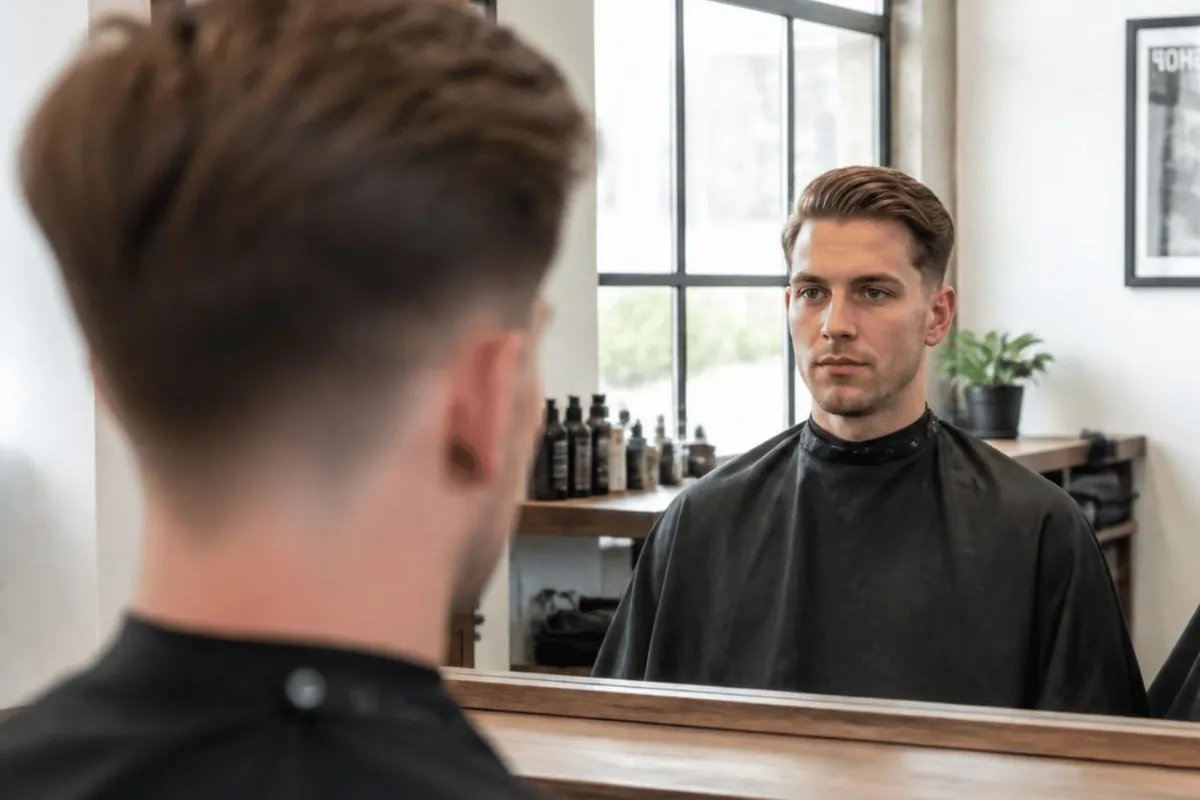
- Compare. The barber checks both sides in the mirror and cuts the top.
Clippers and blade care for a clean edge
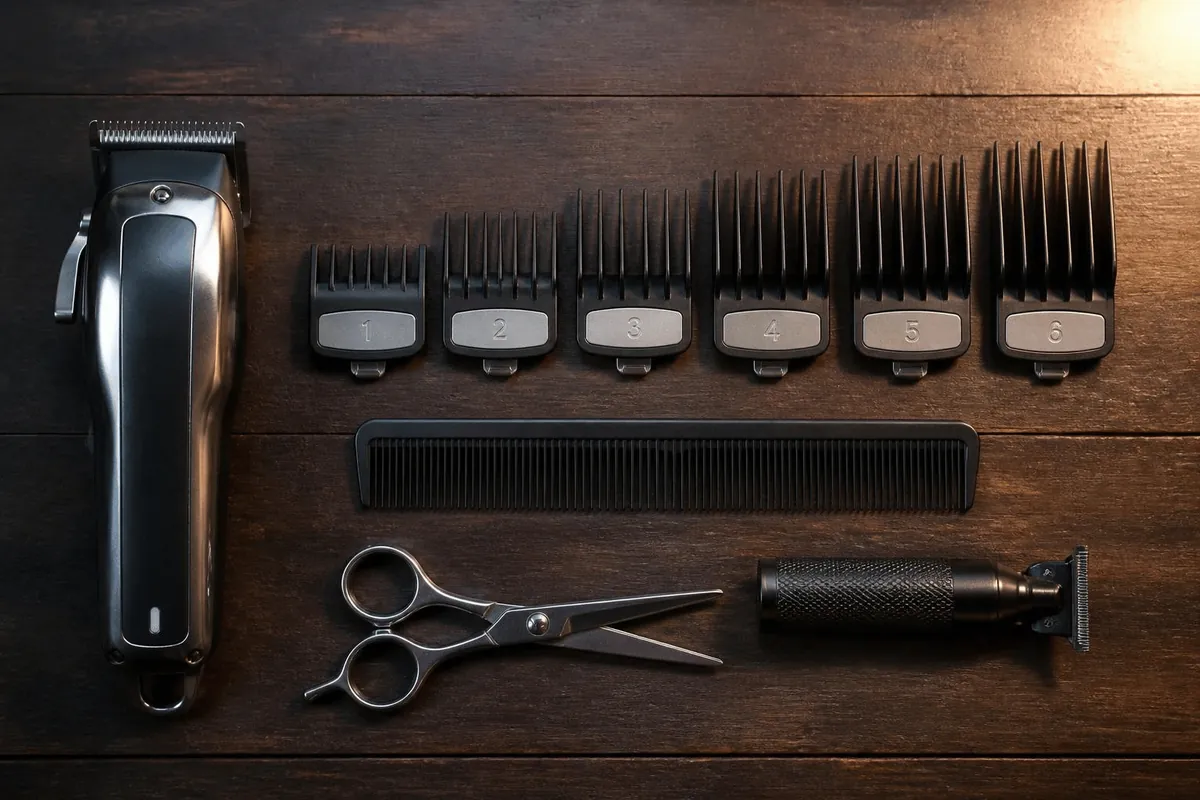
A clean edge needs sharp, oiled blades. The Modern Barber interview with Pete Cranfield advises using the clipper lever to move between lengths and keeping blades oiled. Dull blades tug the hair and leave a ragged line around the ear, where the skin is thin.
- Oil the blades before each cut, one drop on each side of the teeth.
- Brush the hair out of the blades after each use.
- Use the lever to move between lengths instead of swapping guards all the time.
- Replace a blade that tugs or leaves lines.
Low taper fade guard numbers
A #1 guard leaves 3 mm, a #2 leaves 6 mm, a #3 leaves 10 mm and a #4 leaves 13 mm. A standard recipe is #1 at the edge, #2 and #3 in the blend, and a #4 where the taper meets the sides. Our haircut numbers chart lists every clipper size.
| Version | Edge | Blend | Meets the sides |
|---|---|---|---|
| Soft | #2 | #3 | #4 |
| Standard | #1 | #2 to #3 | #4 |
| Tight | #0.5 | #1 to #2 | #3 |
Which hair types suit a low taper fade?
Every hair type suits it, which is its biggest strength. The taper changes only the edges, so it does not fight your natural texture. Choose the top by hair type and by your morning routine.
| Hair type | Top length | Best top | Product |
|---|---|---|---|
| Straight | 5 to 9 cm | Side part, quiff | Pomade or clay |
| Wavy | 6 to 10 cm | Textured quiff, messy crop | Sea salt spray |
| Curly | 6 to 10 cm | Curly top | Curl cream |
| Coily | 2 to 8 cm | Afro, twists | Moisturiser |
| Thin | 3 to 5 cm | Short crop | Light powder |
Low taper fade for wavy hair
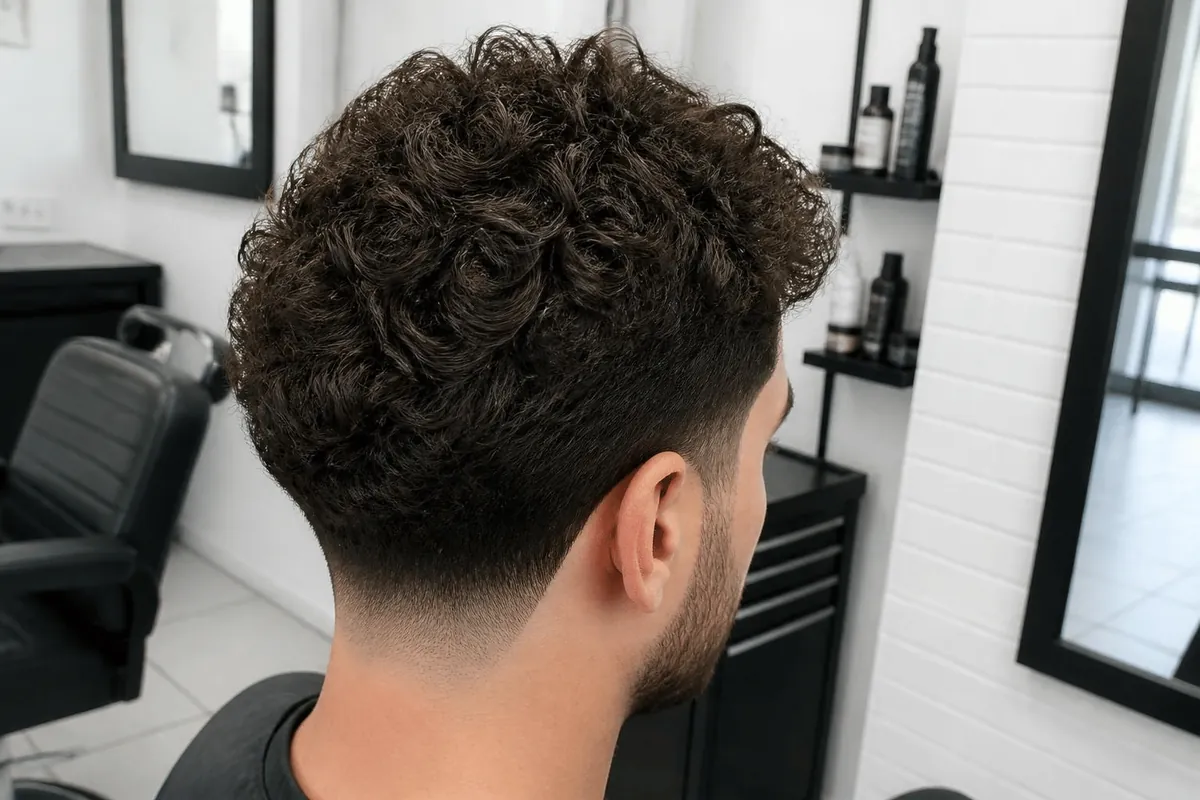
Wavy hair keeps its shape because the sides stay in proportion with the top. Leave 6 to 10 cm, add sea salt spray to damp hair and scrunch. A short crop on wavy hair turns fluffy, so keep the length.

Low taper fade for curly hair
Curls need the sides to stay controlled, and the taper does that without removing bulk. Ask the barber to cut the curls dry, because wet curls shrink and hide the true length. Leave 6 cm or more.
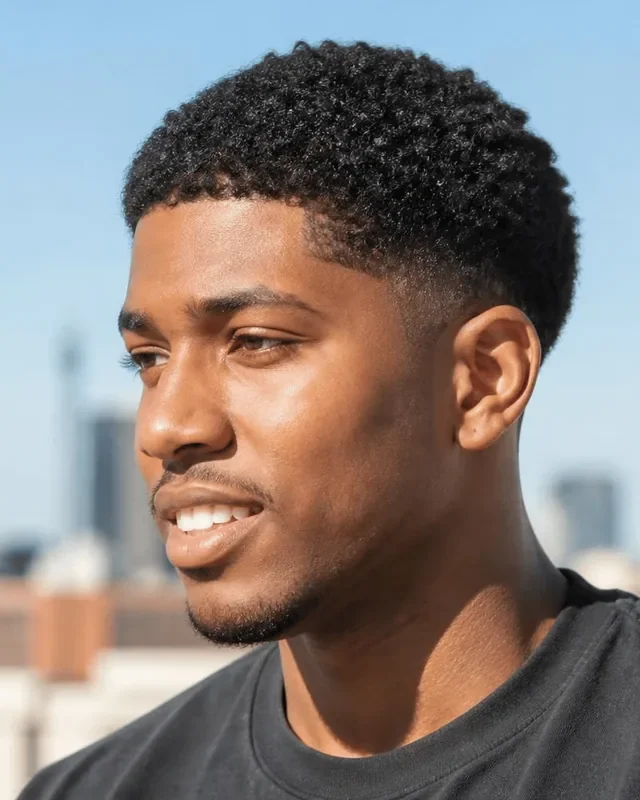
Low taper fade for Black men and coily hair
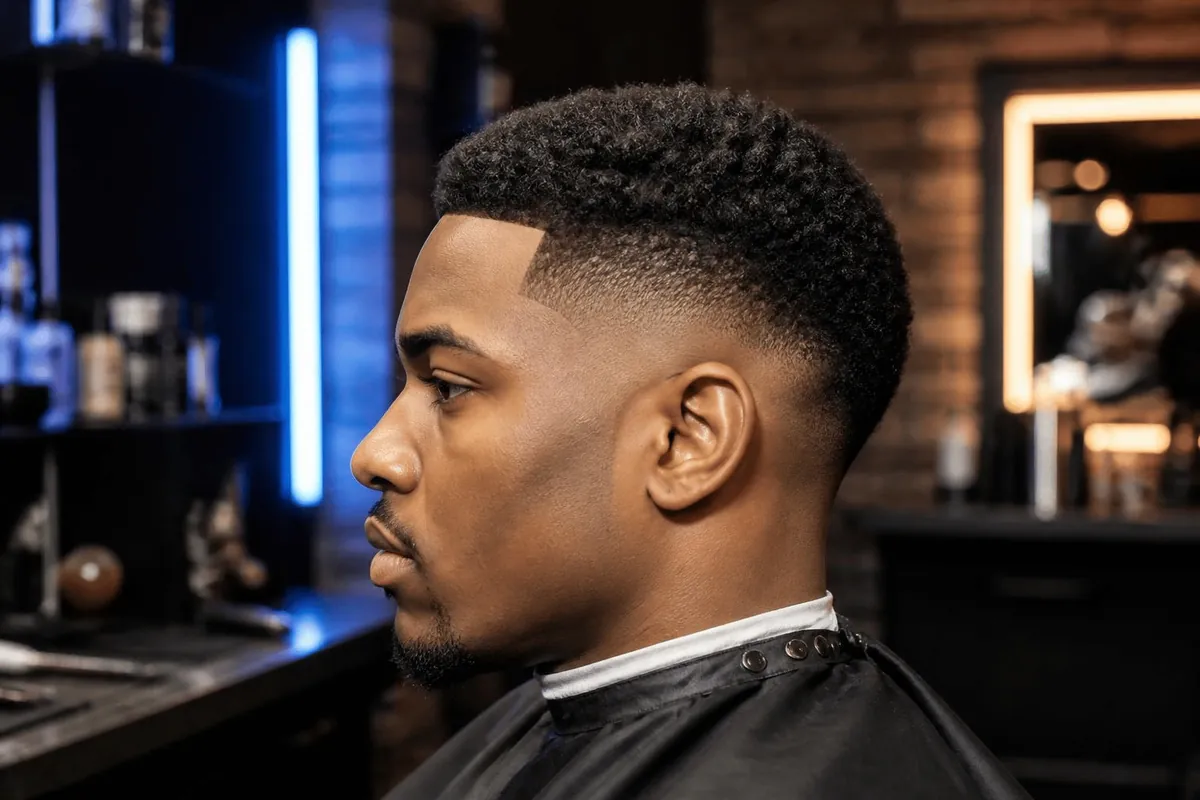
This cut works well for coily hair, especially with a sharp edge-up at the front. The low blend keeps the skin protected, which matters because razor bumps are common on short coily hair. The American Academy of Dermatology suggests shaving with the grain, softening the hair with warm water first, replacing disposable razors after 5 to 7 shaves, and brushing the area daily with a soft toothbrush. It adds that you should see a dermatologist if razor bumps persist. Our 360 waves guide covers wave work.
Low taper fade with a beard
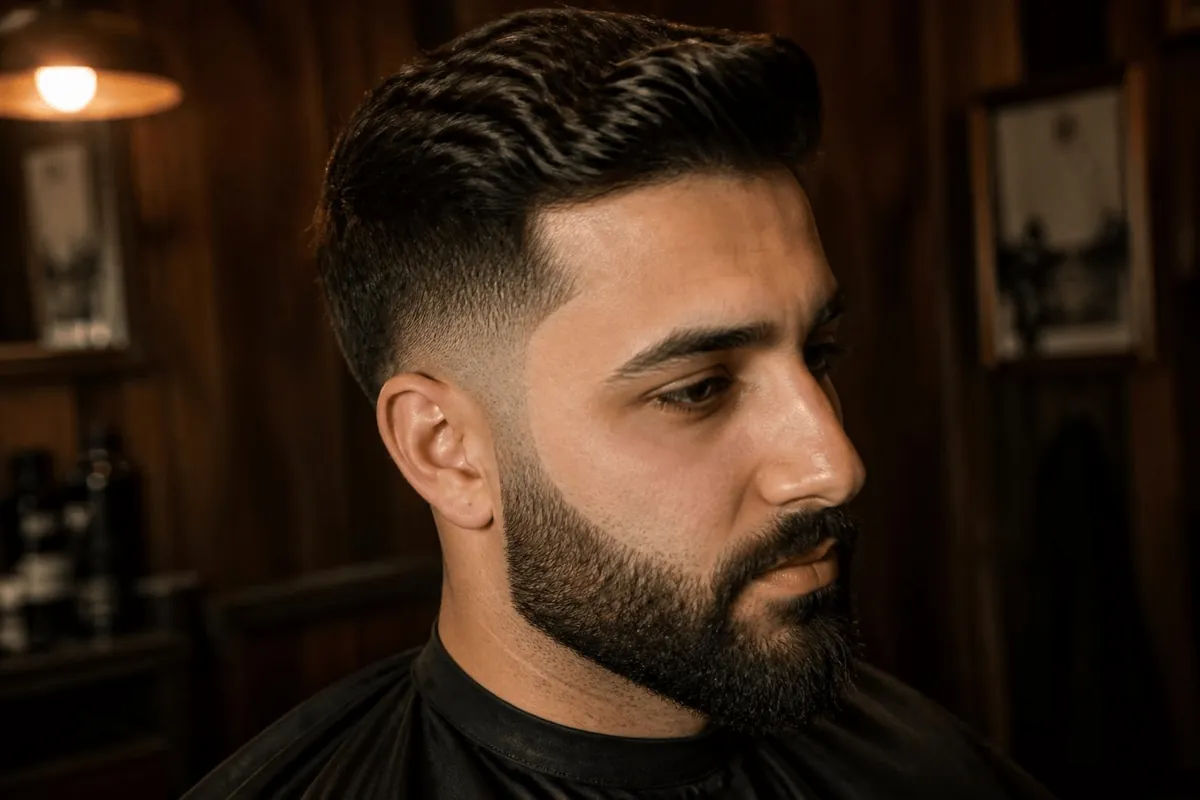
The sideburn flows straight into the beard, so the low blend looks natural. Decide the beard length first, then ask the barber to match the cheek line and fade the sideburn into the beard. Our beard fade guide explains the blend.
Low taper fade for men over 40 and grey hair
This is the most popular fade for men over 40. It tidies the ears and neckline without exposing the scalp, grey hair blends in naturally and the top can stay full. Ask the barber to leave the hair behind the ear a little longer, and take extra care around the ears, where older skin is thin.
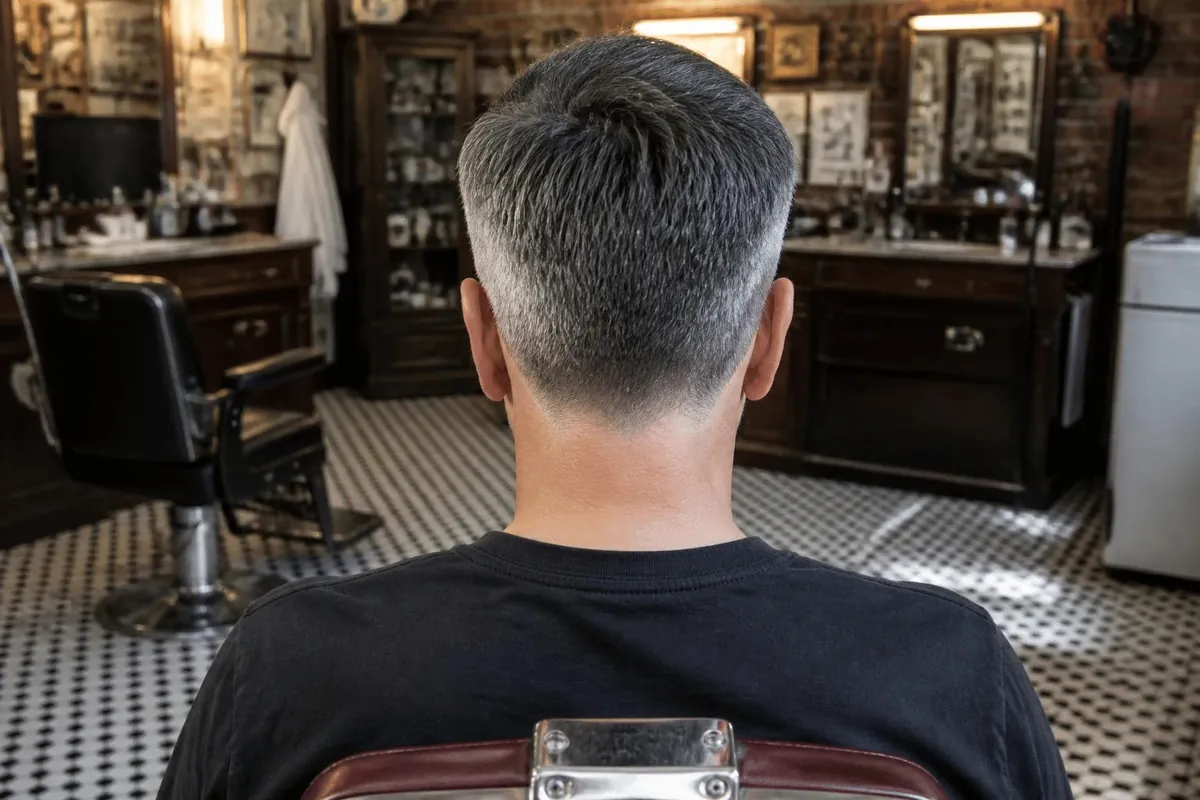
Which version fits your hair thickness?
Thick hair needs a tighter edge or the sides puff, fine hair needs a softer one or the sides look thin, and coily hair needs light pressure at the nape. Match the version to your hair as well as to the photo.
| Hair thickness | Problem | Best version | Edge guard |
|---|---|---|---|
| Thick and straight | Sides puff at 3 weeks | Standard | #1 |
| Fine and straight | Sides look thin | Soft | #2 |
| Thick and curly | Uneven bulk | Standard | #1 |
| Coily | Razor bumps at the nape | Tight with a shadow edge | #0.5 or #1 |
| Thinning | Highlights the crown | Soft | #2 or #3 |
Low taper vs mid taper vs undercut
A low taper blends only just above the ear, a mid taper blends at the temple, and an undercut keeps the sides at one short length with a hard line. The low taper is the softest of the three and the easiest to grow out.
| Feature | Low taper | Mid taper | Undercut |
|---|---|---|---|
| Starts | Just above the ear | At the temple | Hard line |
| Hair removed | Little | Medium | A lot |
| Grow-out | Slow, neat | Medium | Boxy |
| Office friendly | Yes | Yes | Depends |
Is it a good cut for a receding hairline?
Yes. A low blend does not draw the eye to the temples, so it is one of the safest choices for a receding hairline. Keep the top at 3 to 5 cm, sweep it forward, and ask for a soft edge at the temple with a #2 or #3 guard. Avoid a high blend.
Is it professional?
Yes. It is the most conservative fade, and it passes in nearly any office, interview or formal event. A soft version with a side part and a tapered neckline is the safest option for strict dress codes. If your workplace has written grooming rules, show the barber the wording so the edge guard and the neckline stay inside the policy.
Is it a good cut for teens and kids?
Yes. It is neat, easy to keep and suits most school rules. For young children, barbers often use a #2 or #3 at the edge and avoid bare skin. Bring a photo and say how you want the neckline.
What does it cost and how long does it take?
Prices vary by city and shop. A low taper usually costs about the same as a standard haircut and takes 25 to 35 minutes. Because it needs a visit only every 3 to 4 weeks, it is cheaper over a year than a bare fade, which needs a visit every 1 to 2 weeks.
How to ask your barber for a low taper fade
Name the height, the edge guard, the neckline and the top. A guide from Men’s Hairstyles Today suggests bringing three or four photos and lists confusing a taper with a fade and skipping the neckline among the common mistakes. Use the phrase table below.
| You say | The barber hears |
|---|---|
| “Low taper” | Blend starts just above the ear |
| “Keep the sides” | Do not fade the whole side |
| “Number 1 on the edges” | 3 mm at the edge |
| “Taper the neck” | Neckline fades out |
| “Square the neck” | Straight neckline |
A sample request: “Low taper fade, #1 at the edge, blend to a #3, keep the sides, 6 cm on top with a side part, tapered neckline.”
Six mirror checks before you leave the chair
- Sideburns. They match in length and shape.
- Ears. The arcs are clean and equal.
- Blend. No lines show between guards.
- Neckline. It matches the shape you asked for.
- Sides. They keep their length.
- Top. The length matches the plan.
How long does a low taper fade last?
It looks sharp for about 2 weeks and fine for 4. Hair grows about 1 to 1.25 cm a month, roughly 2.5 to 3 mm a week, but the soft edge hides growth better than a bare fade.
| Week | Growth at the edge | What you see | Action |
|---|---|---|---|
| Week 0 | 0 mm | Crisp edge | None |
| Week 1 | About 3 mm | Still sharp | None |
| Week 2 | About 6 mm | Edge softens | Tidy the neck |
| Week 3 | About 9 mm | Slightly shaggy | Book a trim |
| Week 4 | About 12 mm | Looks grown out | Overdue |
How to maintain it at home
Style the top and trim only the neckline and sideburns between visits. A small trimmer with the lever closed is enough, and you should move it with the grain.
- Matte clay for a textured finish.
- Pomade for a side part.
- Curl cream for curls.
- Moisturiser for the neckline skin.
Wash the hair 2 to 3 times a week and book the next trim before you leave.
Products that keep the shape
The top needs the right product and the edge needs a calm routine. Clay gives a dry, textured finish, pomade gives hold and shine, and a light moisturiser keeps the neckline skin calm after a trimmer.
| Item | Use | How often |
|---|---|---|
| Matte clay | Texture on top | Daily |
| Pomade | Side part | Daily |
| Trimmer | Neckline and sideburns | Every 5 to 7 days |
| Moisturiser | Neckline skin | After trimming |
| Soft brush | Loose hair | After each trim |
When to book it before an event
Book the cut 2 to 4 days before a wedding, interview or photo shoot, not the day before. A fresh edge looks stark, and the hairline softens within 48 hours. That also leaves time to fix a mistake with a second visit.
| Event | Book the cut | Ask for |
|---|---|---|
| Job interview | 3 to 5 days before | Soft version, side part |
| Wedding | 2 to 4 days before | Standard, tapered neckline |
| Photo shoot | 2 to 3 days before | Standard, textured top |
Common mistakes with this cut
- Asking for a taper and meaning a fade. Say “skin” if you want bare scalp.
- Skipping the neckline. Square, rounded and tapered all look different.
- Going too short too fast. A tight edge turns the cut into a fade.
- Trimming the blend at home. One extra pass leaves a step.
- Waiting too long. The neckline grows out first.
Low Taper Fade FAQ
What is a low taper fade?
It is a cut where the hair gets gradually shorter at the sideburns, ears and neckline, starting just above the ear, while the sides and top keep their length.
What is the difference between a low taper and a low fade?
A low taper keeps more hair and leaves a soft edge. A low fade removes more hair and can reach bare skin.
How often should you get a low taper fade?
Every 3 to 4 weeks. The soft edge grows out slowly.
What guard goes with a low taper fade?
A common recipe is #1 at the edge, #2 and #3 in the blend and #4 where it meets the sides.
Is it good for thin hair?
Yes. It keeps the sides in proportion and does not highlight thin areas.
Is it good for curly hair?
Yes. It controls the sides and leaves the curls on top alone.
Is it professional?
Yes. It is the most conservative fade.
Can you cut a low taper fade at home?
You can tidy the neckline and sideburns. The blend is easier to leave to a barber.
How do you grow out a low taper fade?
Skip the trim for 4 to 6 weeks and clean only the neckline. The soft edge grows out evenly.
Is a low taper fade the same as a taper fade?
Nearly. A low taper fade is a taper fade whose blend starts just above the ear. Barbers often use the two names for the same cut, so state the height and the edge guard you want to avoid confusion in the chair.
What should you bring to the barber?
Bring three or four photos from different angles, including one from behind, and know your top length in centimetres. A photo of your own hair after a cut you liked is even better, because the barber can see how your texture behaves.
Does a low taper fade work with a long top?
Yes. A long top of 8 to 12 cm sits well on a low taper fade, because the sides keep enough length to balance it. Pair it with a pompadour, a slick back or a loose quiff.
More fade guides
- Fade haircuts: the complete hub
- Taper fade
- Low fade
- Mid fade
- High fade
- Skin fade
- Drop fade
- Beard fade
Note: the low taper heights and the 1 to 1.25 cm monthly growth figure are typical values, so your barber’s numbers may differ. See our editorial policy (growth rates follow Cleveland Clinic) for how we write and source these guides.