
On this page
What is a drop fade neckline?Which drop fade neckline shapes can you choose?How do you choose the right drop fade neckline?How low should the drop fade neckline go?What if you have a flat back of the head?How does your nape growth pattern change the neckline?How do you handle a cowlick at the nape?Which neckline suits each hair texture?How do you ask your barber for the right neckline?How is a drop fade neckline cut? Step by stepHow do you stop razor bumps (pseudofolliculitis barbae) on a drop fade neckline?How do you maintain a drop fade neckline between visits?How is a drop fade neckline different from a line-up or shape-up?Which tools cut a clean neckline?How do you tell a good neckline from a poor one?What is a simple neckline care routine?Does the neckline change with a beard?Which neckline suits work, weddings and sport?How do you grow out a drop fade neckline?What are the common drop fade neckline mistakes?Which face and head shapes suit each neckline, and does the top length matter?Drop fade neckline FAQMore in the drop fade seriesQuick answer. The drop fade neckline is the line where the curved fade ends at the back of your neck. You have three main choices: natural (follows your own hairline), rounded (a soft arc) and blocked (a straight, square edge). Ask for a tapered or rounded finish if your nape grows unevenly, and book a neckline clean-up every 2 to 3 weeks. A good neckline makes the whole cut look finished.
Most men judge a haircut from the front. Everyone else judges it from behind. The back of your neck is the part you never see, and the part colleagues, partners and the person in the queue ahead of you see all day. A tidy drop fade neckline makes a sharp cut look expensive. A messy one makes the same cut look rushed.
This page deals with that one detail. It covers the shapes you can choose, how low the curve should drop, what to do about a flat back of the head or a stubborn nape, how to talk to your barber, and how to look after the line between visits. It sits under our drop fade pillar, and the broader fade haircuts hub explains every fade type in the series.

What is a drop fade neckline?
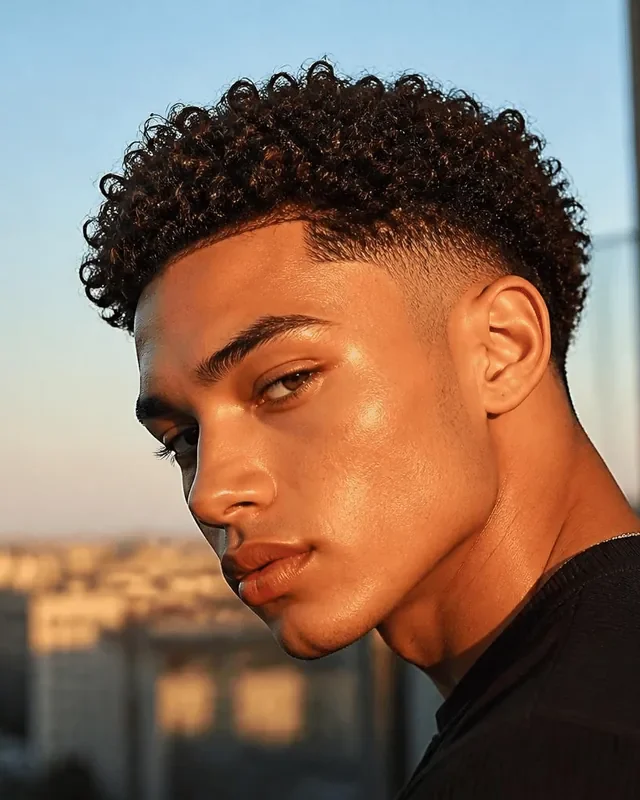
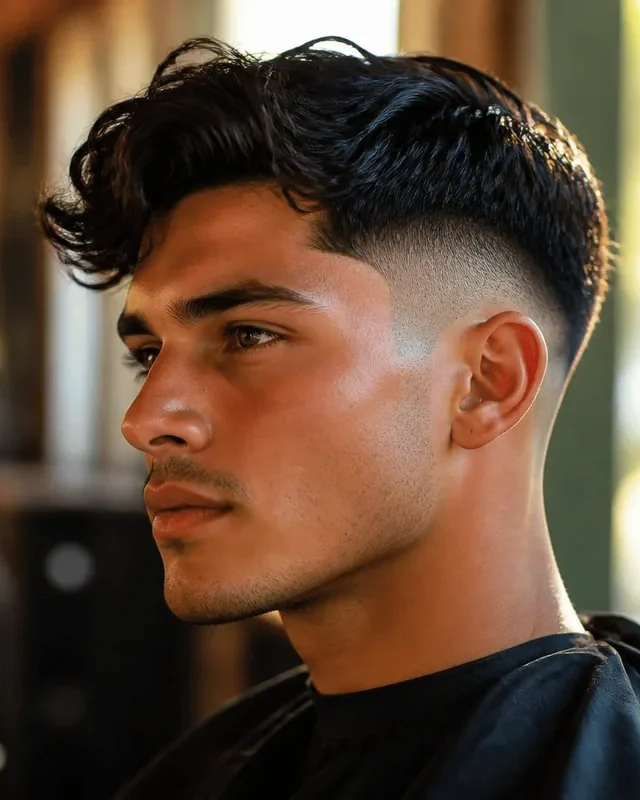
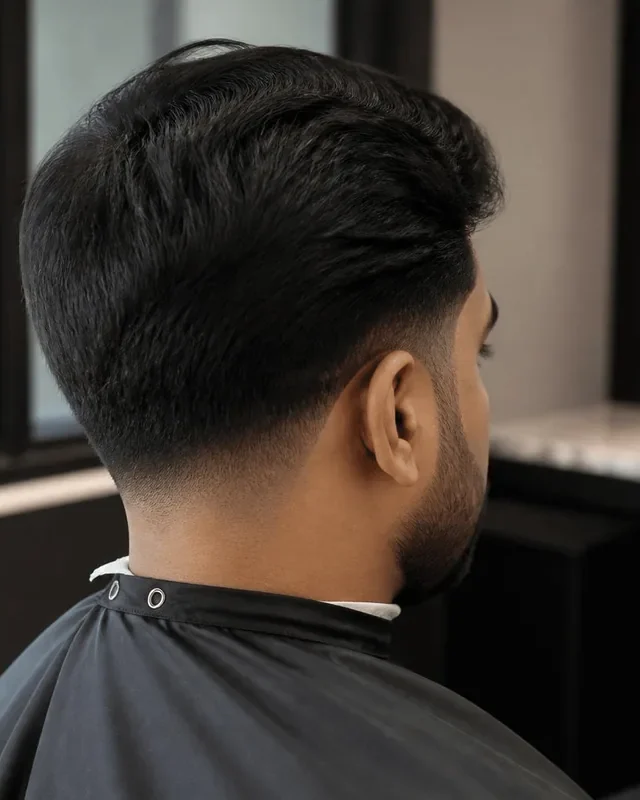
A drop fade neckline is the finishing edge of a drop fade at the nape. In a drop fade the fade line curves downward behind the ear, so it sits lower at the back than at the temple. The neckline is where that curve meets the skin of the neck, and it also decides how the cut looks when you turn away from the mirror.
Three things control it: the shape of the edge, the height of the curve and the way your own hair grows at the nape. Change one and the others react. A deep curve with a blocked edge looks heavy. A shallow curve with a natural edge looks soft. The skill is in choosing the pair that fits your head.
Which drop fade neckline shapes can you choose?
Barbers talk about four shapes. The table compares them.
| Shape | How it looks | Upkeep | Best for |
|---|---|---|---|
| Natural | Follows your own hairline, cleaned only at the edges | Low, grows out softly | Longer top, relaxed styles |
| Rounded | A gentle arc across the nape | Medium | Most men, most hair types |
| Tapered | Hair shortens gradually and fades to the skin | Low to medium | Office cuts, thick hair |
| Blocked | A straight, square line with sharp corners | High, shows regrowth fast | Short hair, bold looks |
Each shape has a character. The natural neckline is honest and forgiving. The rounded one is the safe choice. The tapered one is the cleanest in an office. The blocked one is the most dramatic, and it asks the most from you because every new hair shows within days.
How do you choose the right drop fade neckline?
Start with three questions: how long is your top, how does your nape grow and how often will you visit the barber? Then use this guide.
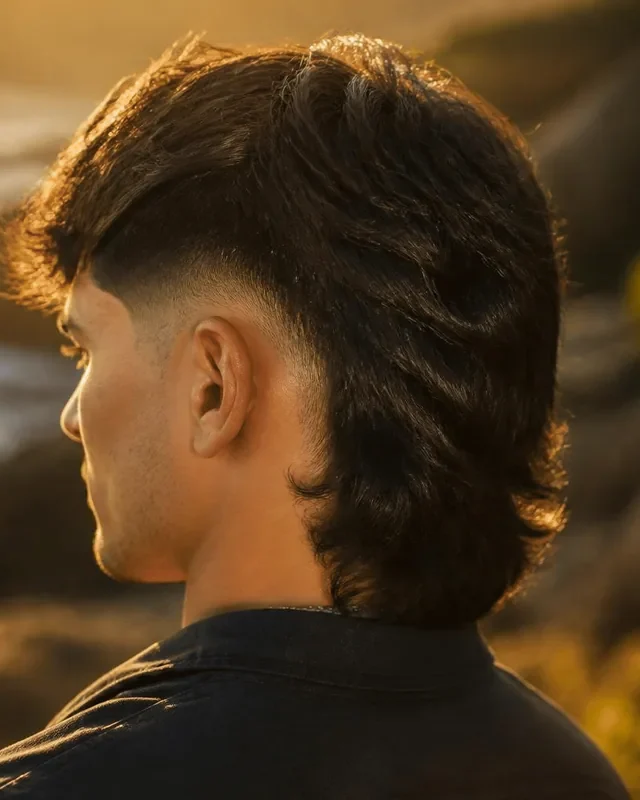
- Long top or a mullet-style back. Pick a natural or tapered edge. A blocked line under long hair looks like a mistake. See the drop fade mullet page for how the back works with length.
- Short, clean cut. Pick rounded or blocked, depending on how crisp you want to look.
- Uneven or low-growing nape. Pick tapered. It hides the unevenness instead of drawing a line through it.
- Visits every four weeks or more. Pick natural or tapered. Hard lines look rough by week three.
If you cannot decide, ask the barber to draw a rounded edge and then adjust at the next visit. It is the easiest to correct either way.

How low should the drop fade neckline go?
The curve drops from behind the ear toward the lower edge of the skull. How far it drops depends on the fade height and your head shape.
| Fade height | Where the neckline sits | Look |
|---|---|---|
| Low | At or just above the natural nape | Soft, conservative |
| Mid | Slightly above the nape, with a visible arc | Balanced, the most common |
| High | Well above the nape, with bare skin showing | Bold, high contrast |
For a longer face or a long neck, a lower neckline looks proportional. For a short neck, a slightly higher edge makes the neck look longer. If you are unsure of the height, read our pages on the low drop fade, mid drop fade and high drop fade, which explain each height in detail.
What if you have a flat back of the head?
A flat back is common, and the neckline can help or hurt it. A straight, blocked edge across a flat skull makes the back look wider and flatter. A rounded or tapered edge does the opposite: the arc suggests curvature and gives the head a better shape from behind.
Ask your barber to leave a little extra length in the middle of the occipital area, the slight bump at the back of the skull, and to fade it into the neckline. That extra length fills the flat area. Avoid a skin fade across the whole back, because bare skin shows every flat spot. If your head is flat at the top of the neck, a tapered edge with a #1 or #2 at the bottom works well.

How does your nape growth pattern change the neckline?
Hair at the nape rarely grows straight down. Some men have a low, thick hairline that reaches the collar. Others have a high, narrow one. Many have a swirl or a point in the middle, sometimes called a widow’s peak at the back. Hair also grows in different directions on the left and the right.
Your barber needs to read these patterns before choosing the edge, because a line cut against the growth pattern grows back crooked. The Cleveland Clinic notes that hair grows about 1 centimetre per month, so a nape line that was straight on Monday starts to blur within two weeks on most men, and faster where the hairline is low and thick.
- Low, thick nape. Needs frequent clean-ups. A tapered edge keeps it manageable.
- High nape. Shows bare skin quickly. A rounded edge looks balanced.
- Pointed or swirling nape. A natural or tapered edge follows the swirl. A blocked edge fights it.
- Uneven sides. The barber blends the shorter side up and keeps the line level.
How do you handle a cowlick at the nape?
A cowlick at the back makes the hair stand out or twist when it is cut short. The fix is a little length, not a closer cut. Leave the cowlick area a half guard longer than the rest, and let the barber blend it into the neckline with a scissor-over-comb pass. Cutting it short makes it spring out like a tuft by the next week.
If the cowlick is strong, choose a tapered edge. A razor-sharp line next to a cowlick will always look messy within days.
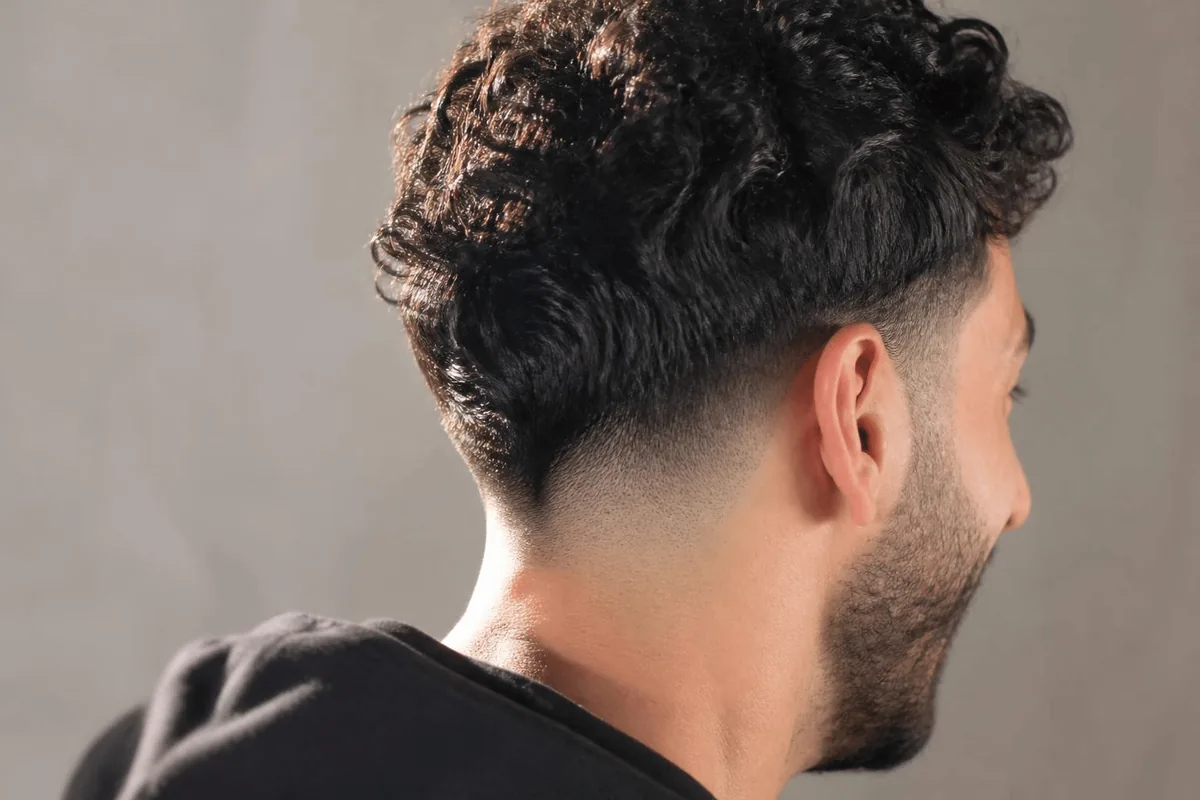
Which neckline suits each hair texture?
Texture changes what a drop fade neckline can do.
Straight hair
Straight hair lies flat, so the line shows clearly. A rounded or tapered edge looks neat, and a blocked edge shows every regrowth hair. Straight hair also shows a cut that slopes, so the barber must check the line from behind.
Wavy hair
Wavy hair adds movement, and it tends to bend at the nape. Choose a tapered edge so the waves sit naturally on the line. Our page on the drop fade pompadour shows how a longer top sits above a clean neckline.
Curly and coily hair
Curly and coily hair gives the sharpest results, because the contrast between short hair and skin is strong. A rounded or blocked edge both work. The barber should cut the edge against the grain with a trimmer and finish with a detail trimmer. For texture-specific advice, see the drop fade curly hair and drop fade Black men pages.
Thick versus thin hair
Thick hair builds weight at the nape and needs a taper to avoid a bulky back. Thin hair shows scalp, so avoid a high skin finish and keep a #2 or #3 at the base.
How do you ask your barber for the right neckline?
Most bad necklines come from a vague request, and a drop fade neckline is easy to get wrong when the instructions are loose. “Clean it up” means something different to every barber. Be specific.
- Name the cut and the shape. Say “mid drop fade with a rounded neckline” and not “a fade, but neat at the back”.
- Say the bottom guard. For example “start at a #1 and end at the skin at the nape”.
- Show a photo from behind. A back view removes the guessing.
- Mention any problem. A cowlick, a flat spot or a low nape changes the plan.
- Ask for a mirror check. Look at the back before you leave the chair.
What goes wrong: men show only front-view photos. The barber then invents the back, and the neckline ends up where the barber prefers it.
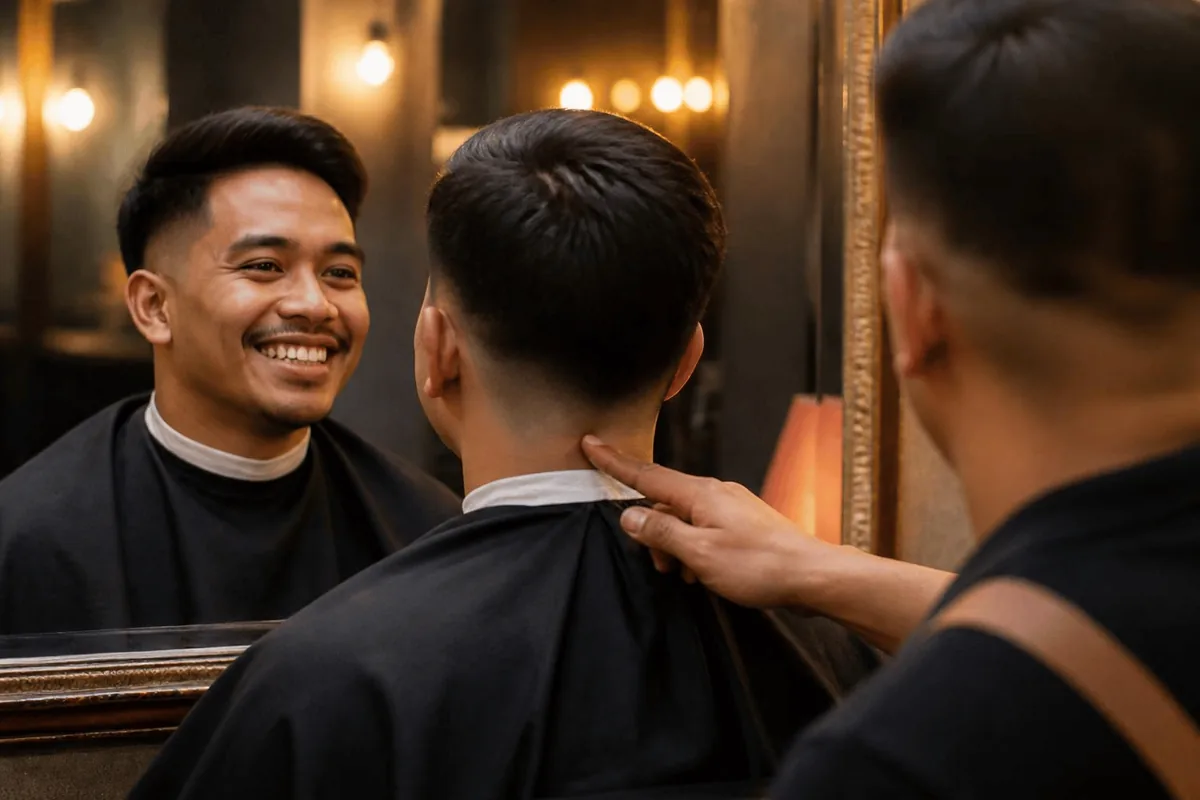
How is a drop fade neckline cut? Step by step
Barbers follow a similar order for a drop fade neckline. Knowing the steps helps you judge the work.
Step 1: Read the nape
The barber studies the growth direction, checks the shape of the skull and decides on the edge. What goes wrong: skipping this and cutting a standard line that fights the growth.
Step 2: Set the curve
The clipper guide line starts behind the ear and drops toward the nape. The barber marks the lowest point. What goes wrong: a curve that is lower on one side than the other.
Step 3: Fade the lower section
The hair below the line is faded to the chosen bottom, with clipper-over-comb work or a lever. What goes wrong: a visible ledge where the fade meets the nape.
Step 4: Cut the edge
A trimmer defines the shape, whether natural, rounded or blocked. The barber works from the centre outward. What goes wrong: starting at the sides, which pushes the middle off-centre.
Step 5: Blend the top of the fade
Scissors or clippers soften the transition into the longer hair above. What goes wrong: leaving a harsh stripe between the fade and the top.
Step 6: Check from every side
The barber looks from the back, both sides and the front, and often uses a hand mirror. What goes wrong: checking only the front, so the back is never reviewed.
For the full clipper method, see our guide on how to cut a drop fade.
How do you stop razor bumps (pseudofolliculitis barbae) on a drop fade neckline?
Razor bumps have a medical name, pseudofolliculitis barbae. It happens when a freshly cut hair curls back and grows into the skin, and it is most common on tightly coiled hair around the nape and behind the ears.
The nape is where razor bumps and irritation show up most. Hair at the back of the neck is often curly or grows at an angle, which makes it curl back into the skin. The American Academy of Dermatology explains the prevention steps in its guide to razor bump prevention.
- Ask the barber to use a trimmer or clipper instead of a razor if your skin reacts.
- Cut with the grain at the nape, even if it leaves a slightly longer finish.
- Apply a cool towel and a fragrance-free moisturiser after the cut.
- Avoid tight collars for the first day.
- Do not scratch or pick at bumps. See a dermatologist if they persist.
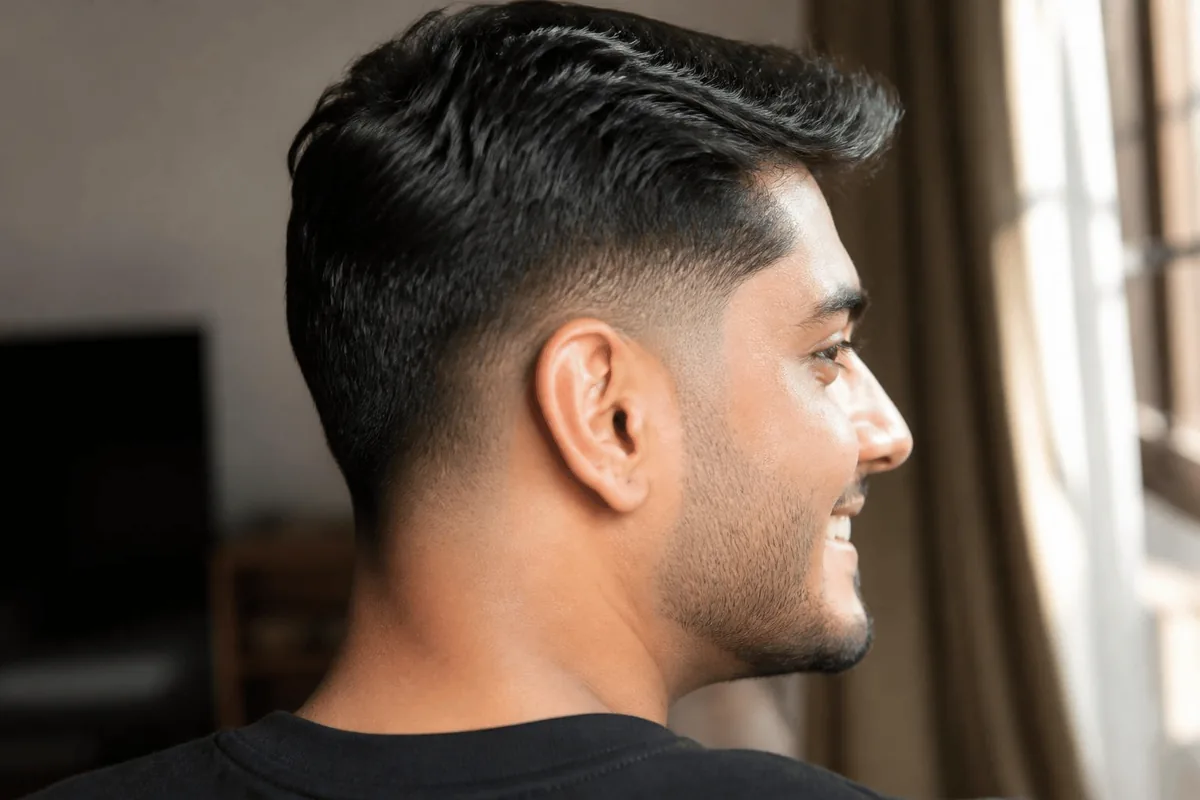
How do you maintain a drop fade neckline between visits?
You cannot cut your own nape well, but you can slow the blur. Wash the area gently, keep the skin moisturised and avoid pulling the hair. If you want to tidy the edge at home, use a small detail trimmer and only take off stray hairs below the line. Never move the line itself. A wrong move at the back means a week of looking uneven.
| Neckline | Clean-up every |
|---|---|
| Blocked | 1 to 2 weeks |
| Rounded | 2 to 3 weeks |
| Tapered | 3 to 4 weeks |
| Natural | 3 to 5 weeks |
These are typical estimates, and your growth speed may differ. Many barbers offer a short neckline clean-up at a lower price than a full cut.
How is a drop fade neckline different from a line-up or shape-up?
Men often mix up the terms. A line-up, or shape-up, defines the front hairline, the temples and the sideburns with a trimmer. A neckline defines the back. Many barbers do both in the same visit, but they are separate decisions. You can have a soft natural front with a sharp rounded neckline, or the reverse.
The two should agree in style. A razor-sharp front line with a messy neckline looks unfinished, and a crisp neckline with a blurry front looks the same. Ask the barber to match the sharpness at the temples and at the nape, so the cut looks like one piece of work from every angle.
Which tools cut a clean neckline?
A barber uses a small kit for the back of the neck, and knowing it helps you judge the result.
- Detail trimmer. A narrow, close-cutting trimmer draws the edge. A sharp, properly adjusted blade makes a clean line without tugging.
- Clippers with a lever. They open and close the blade to blend from the fade down to the skin.
- Foil shaver. Used on sensitive skin to leave a smooth finish without a razor pass.
- Hand mirror. It lets you see the back before you pay.
- Neck brush and talc. They remove loose hair, so you can see the real line.
A barber who reaches for a dull trimmer or skips the brush will leave a rough edge. Ask for a mirror check and look closely at the corners and the centre.

How do you tell a good neckline from a poor one?
Look at it in a mirror, and check four things. The line should be level when your head is straight. Both sides should match in length and height. There should be no step or ledge where the fade meets the skin. And the edge should look sharp without nicks or red skin.
If any of these are off, tell the barber before you leave. Most will fix a line in thirty seconds. It is much harder to correct after you have gone home, and a good barber would rather hear about it in the chair.
What is a simple neckline care routine?
The routine takes less than two minutes. After washing, pat the neck dry and apply a light, fragrance-free moisturiser to the nape. Use a clean towel, and change your pillowcase every few days. If you wear shirts with stiff collars, use a soft one for the first day after a cut to avoid friction. Keep to this routine and the cut stays comfortable and the skin stays clear.

Does the neckline change with a beard?
A beard changes how the back looks, because the neck becomes a frame for the lower face. If you wear a beard, the neckline of the beard and the neckline of the haircut should feel like one design. Keep the beard line a finger width above the Adam’s apple, and make sure the sideburn on the fade meets the beard cleanly. Our beard fade pillar covers the blend in detail.

Which neckline suits work, weddings and sport?
Match the edge to the setting.
- Office and formal events. Tapered or rounded. They stay tidy for three weeks and look smart under a collar.
- Weddings and photos. Book the cut three to five days ahead. A fresh blocked edge may look too sharp on day one, so give it a few days to settle.
- Sport. Natural or tapered. Sweat and helmet straps irritate a hard line.
- Nights out. Any shape, but a crisp blocked edge makes a strong impression.

How do you grow out a drop fade neckline?
When you want longer hair at the back, the neckline is the part to manage. Grow the top and the middle, and keep a light clean-up on the very bottom edge. After two months, ask for a natural neckline and stop using a trimmer on the line. By month four the fade has grown into a taper, and by month six it should blend into a natural nape.
The awkward stage is month two to three, when a ledge appears. Ask your barber to blend it with scissors instead of letting it grow flat. If you are growing toward a mullet, our drop fade mullet page explains how to keep the back tidy during the transition.
What are the common drop fade neckline mistakes?
| Mistake | Result | Fix |
|---|---|---|
| Cutting the line too low | A shaved, uneven nape | Keep the line above the natural hairline |
| Blocked edge on a curved skull | A flat, wide back | Choose rounded or tapered |
| Ignoring the cowlick | Tufts within days | Leave extra length and blend |
| Uneven sides | A tilted line | Check in a mirror before leaving |
| Cutting against the grain with a razor | Razor bumps | Use a trimmer, cut with the grain |
| Waiting too long between visits | A fuzzy, blurred edge | Book a short clean-up |
Which face and head shapes suit each neckline, and does the top length matter?
The neckline frames the back of the head, so head shape matters more than face shape. A flat back suits a rounded or tapered edge, because a square edge makes it look flatter. A rounded head carries any shape. A narrow nape suits a tapered edge that follows the natural line.
Face shape still plays a part. Oval and square faces suit a clean, square edge, round faces suit a tapered edge that adds length, and oblong, heart and diamond faces suit a rounded edge that keeps the outline balanced. Top length also matters: a longer top hides a rounded edge, while a very short top shows every line. If you wear a short crop, ask for the cleanest finish you can maintain. Match the drop fade neckline to the shape of your head, not to a photo alone. A drop fade neckline lasts longer when you keep the nape clean at home.
Drop fade neckline FAQ
What is a drop fade neckline?
It is the edge where the curved drop fade ends at the nape. It can be natural, rounded, tapered or blocked.
Which neckline is best?
Rounded suits most men. Tapered is best for offices and uneven napes, and blocked is best for short, bold cuts.
How low should the curve go?
It depends on the fade height. A low drop ends near the natural nape and a high drop leaves more bare skin.
How often should the neckline be cleaned up?
Every 2 to 3 weeks for most shapes, and every 1 to 2 weeks for a blocked edge.
What if I have a flat back of the head?
Choose a rounded or tapered edge and ask for a little extra length in the middle of the occipital area.
Can I trim my own neckline?
You can remove stray hairs below the line with a detail trimmer, but leave the line itself to a barber.
More in the drop fade series
This page is a cluster guide under our drop fade pillar. Read the how to cut a drop fade guide for the clipper method, and the fade haircuts hub for every fade type.
Lengths, timings and prices are typical estimates, and the growth figure follows the Cleveland Clinic. Our editorial policy explains how we label estimates.