
On this page
Low taper fade curly hair: what does the cut actually do?Which curl type do you have?How much will your curls shrink?Should a barber cut curly hair wet or dry?What should you say to the barber?Which guard should you choose for the bottom of the taper?Where curls meet the taper: how do you avoid a harsh step?Which neckline suits curly hair?What is a good weekly routine for curls on top?Low taper fade curly hair: which products work?How often should you tidy the taper?How should you protect curls at night?How does a low taper compare with other fades on curls?What are the most common mistakes, and how do you fix them?How does the cut work in three real-life situations?Who should pick this cut, and who should not?Frequently asked questionsWhere this fits in the fade rangeQuick answer. A low taper fade curly hair cut keeps your curls full on top and shortens only the sideburns, the area around the ears and the neckline, starting about 1 to 2 cm above the ear. Leave 6 to 10 cm of wet length on top so the curls can spring up to a visible shape once dry, ask for scissors or a dry cut on the top, and tidy the taper every 3 to 4 weeks.
Curly hair changes the rules of a taper. A straight-haired customer can show a barber a photo and get close to it. A man with curls shows the same photo and gets something different, because the top shrinks, the curl pattern pushes against the short sides, and a cut that looked perfect wet looks wrong dry. This guide for low taper fade curly hair is built around those three problems: shrinkage, the join between curls and short hair, and upkeep.
It sits under our main low taper fade guide, which covers the cut itself for every hair type. For low taper fade curly hair, the focus here is curl type, length maths, the exact words to say, and the routine that keeps the curls looking deliberate.
Low taper fade curly hair: what does the cut actually do?
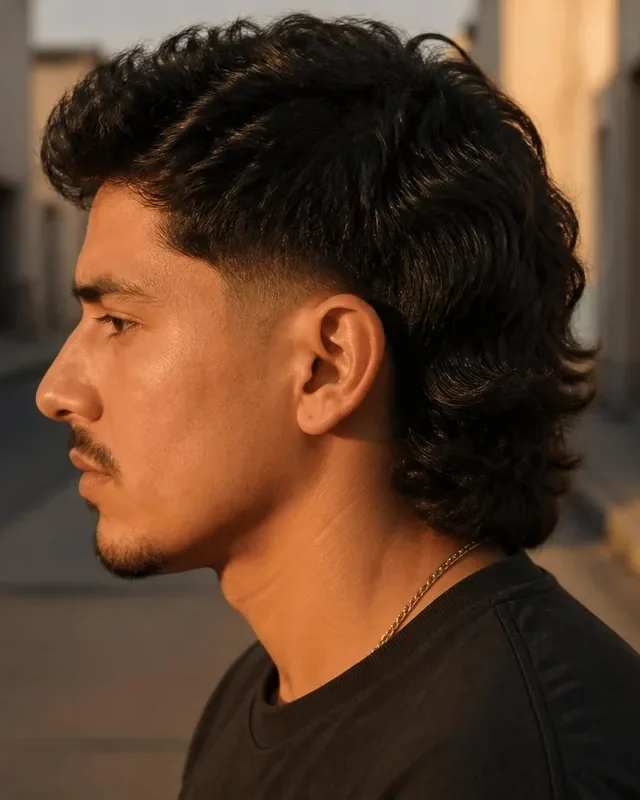
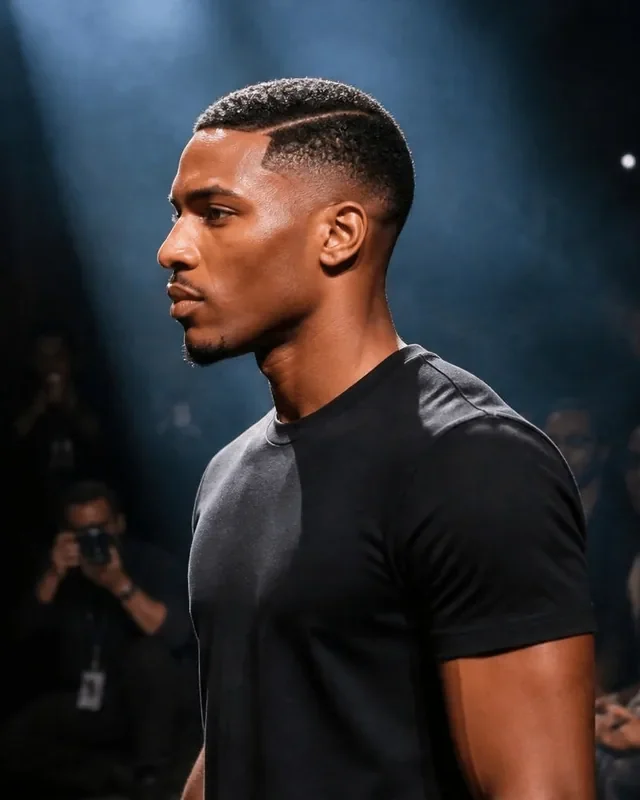
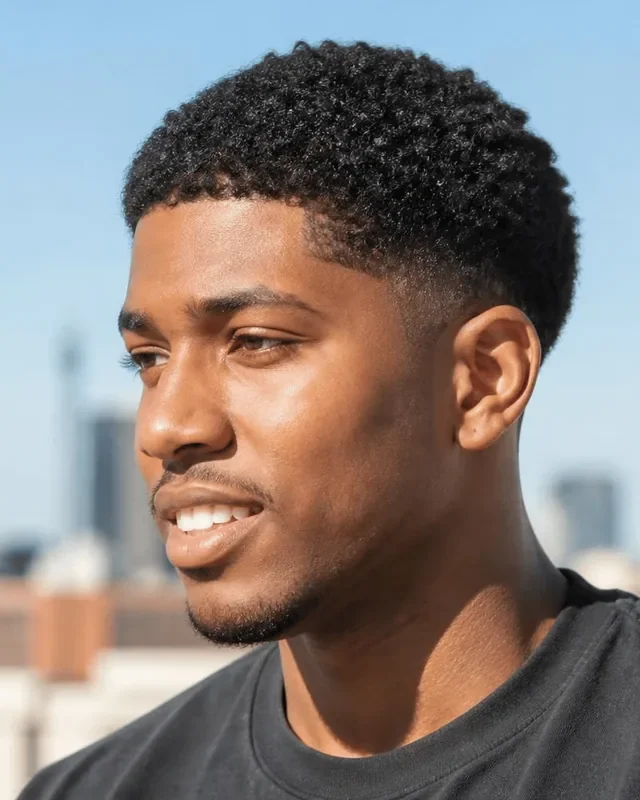
Low taper fade curly hair leaves the length of your curls alone and trims only the edges. The hair shortens gradually around the sideburns, over and behind the ears, and down the nape. Everything above that zone stays long. On curly hair this works well because the clean edges frame the curls, so the top looks planned instead of untamed.

Low taper fade curly hair is also the gentlest fade option. A mid fade or skin fade removes a lot of side hair and creates a hard step where curls meet bare skin. The low taper keeps most of the side hair, so the step is small and grows out softly. If you have never worn a fade, it is the lowest-risk way to try one.
Three results are worth expecting from a good low taper fade curly hair cut:
- The curls on top keep their full shape and volume.
- The sides look tidy from the front, because the sideburns slope cleanly.
- The back looks neat without a hard line, so it grows out gracefully.
Which curl type do you have?
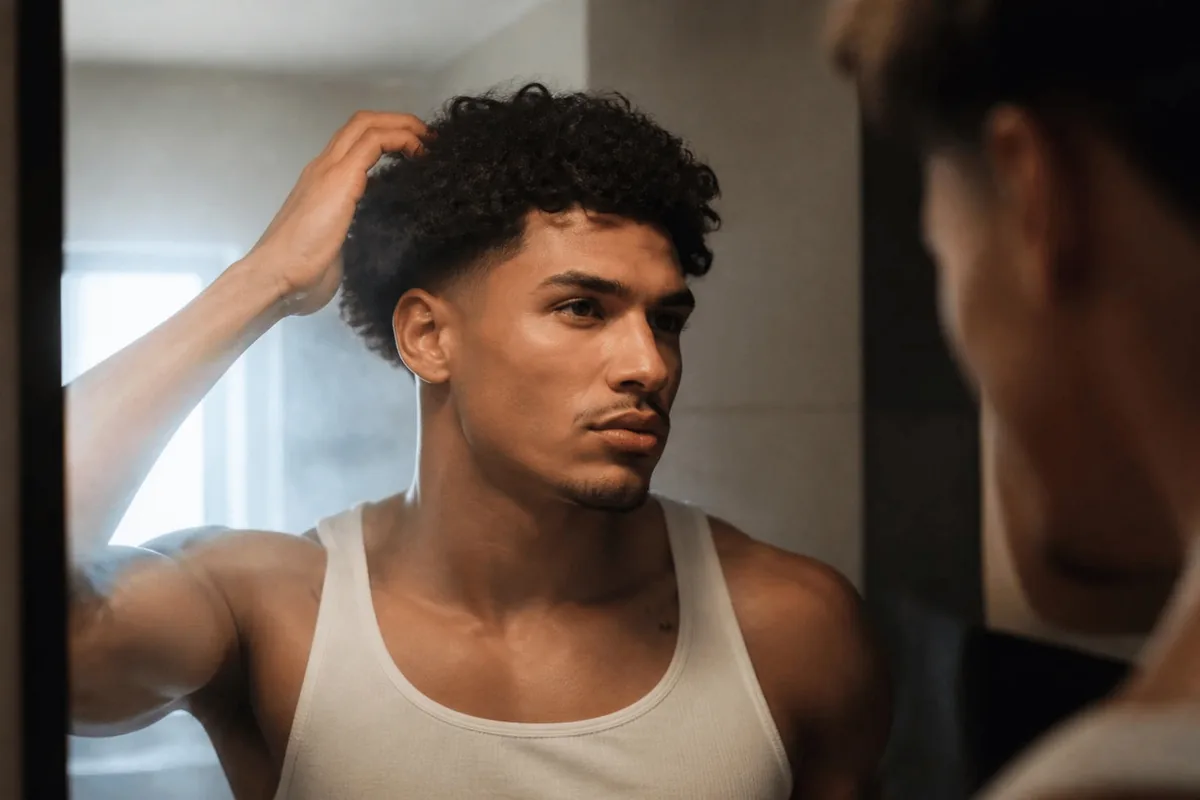
Barbers and hair care brands often describe hair with a numbered system from 2A (loose waves) to 4C (very tight coils). You do not need the exact label, but knowing your range tells you how much your hair will shrink and how to brief your barber. Use the table as a starting point and compare it with your own hair when it is dry and unstyled.
| Curl type | What it looks like dry | Typical shrinkage | Starting top length (wet) | Barber technique |
|---|---|---|---|---|
| 2A to 2C (wavy) | S-shaped bends, no tight curl | Small, about 10 to 25 percent | 6 to 8 cm | Scissors or clipper-over-comb, either wet or dry |
| 3A to 3C (curly) | Defined spirals or corkscrews | Moderate, about 30 to 50 percent | 8 to 10 cm | Scissors, ideally dry |
| 4A to 4C (coily) | Tight coils, zigzag or dense kinks | High, often 50 percent or more | 8 to 12 cm stretched, or whatever shows 4 to 6 cm dry | Dry cut, with a pick or comb to judge shape |
These percentages are rough guides, not measurements. Shrinkage depends on your exact curl, how dry the hair is, humidity and how you style it. Think of the table as a way to start a low taper fade curly hair conversation with your barber, who can see your hair in person.
How much will your curls shrink?
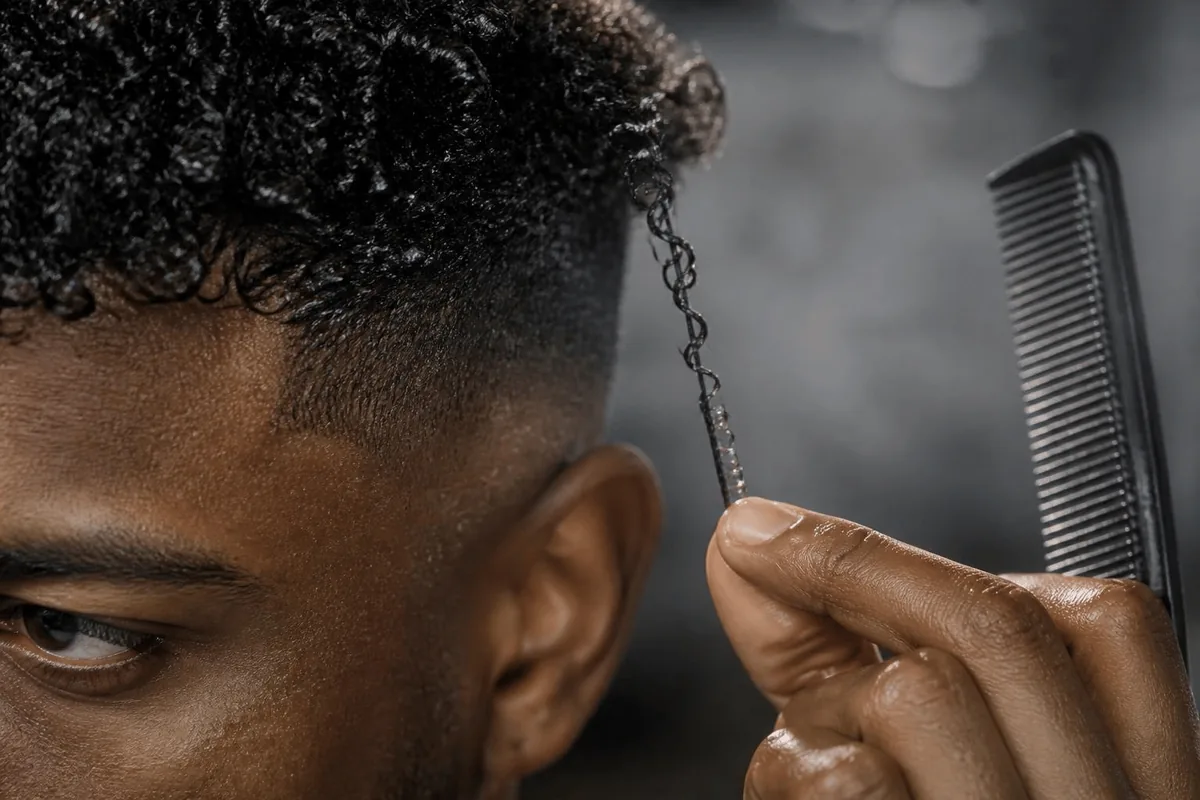
Shrinkage is the single biggest reason a low taper fade curly hair cut goes wrong. When curly hair dries, each strand coils back toward the scalp, so the visible length ends up well below the real length. Hold a single curl straight and it might measure 10 cm, but on your head it sits at 5 cm or less.
Here is a worked example. Say your 3B curls measure 10 cm when pulled straight and shrink by about 40 percent when dry. The visible length on your head will be near 6 cm. If you ask a barber for 6 cm because that is what you see in the mirror, and they measure stretched hair, you could lose most of your curl volume. If you tell them to cut by the dry shape instead, you keep what you expect.
The stretch test: how to measure your own shrinkage
- Wash and condition, then leave the hair damp. Do not blow dry or use heat.
- Pick a curl at the top of your head. Choose one from the crown or fringe area, the length you plan to keep.
- Pinch the root and stretch the curl straight along a ruler. Note the length in centimetres.
- Let the hair air dry fully, then measure the same curl in its resting shape. Do not pull it.
- Work out the gap. Divide the dry length by the stretched length. A result of 0.6 means 40 percent shrinkage.
What goes wrong: people measure on freshly washed hair that has not dried, or they pull the curl too hard and over-stretch it. Both make shrinkage look bigger than it is. Take the measurement twice and use the average.
Should a barber cut curly hair wet or dry?
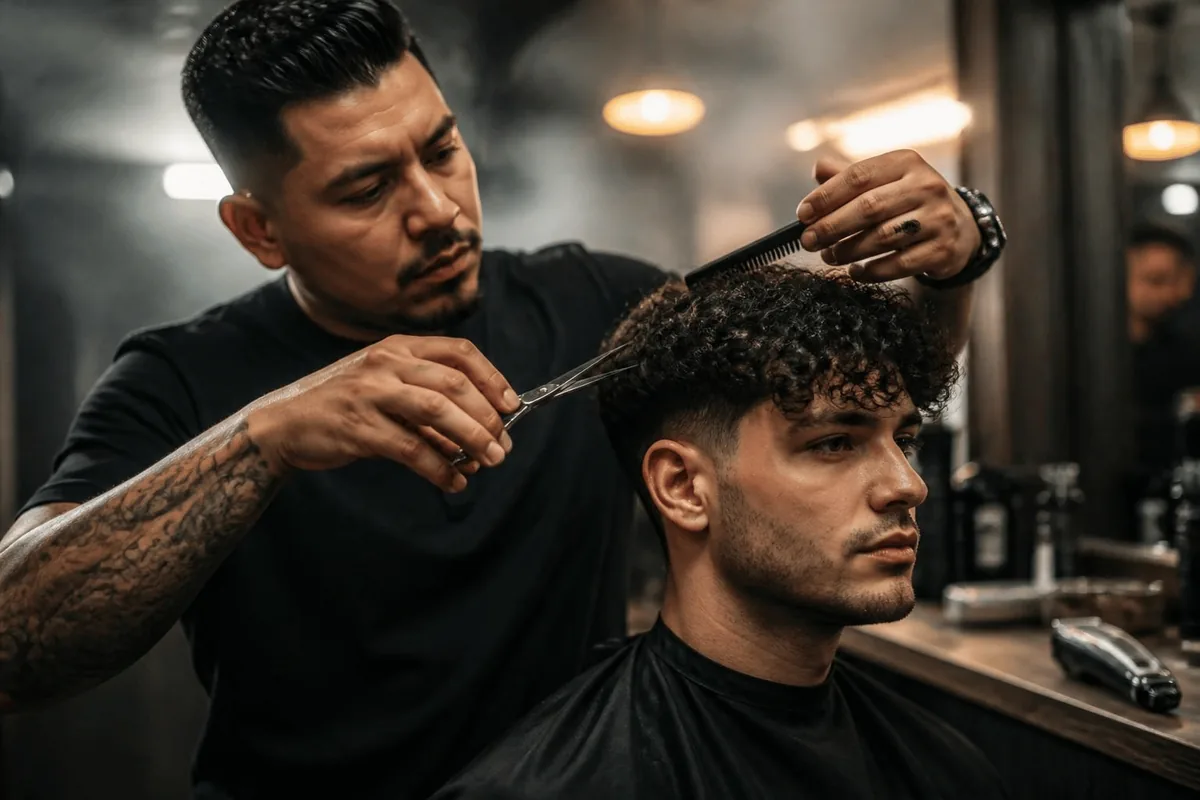
Both methods work for low taper fade curly hair, but they give different results. A dry cut shows the real shape and lets the barber work with the curl. A wet cut is faster and neater on the edges, but the barber has to guess how far the hair will spring back.
| Method | Best for | Main risk |
|---|---|---|
| Dry cut on top | 3 and 4 curl types, anyone worried about shrinkage | Takes longer; some shops charge for the extra time |
| Wet cut on top | Wavy hair, quick appointments | Curl length can end up shorter than expected |
| Clippers on the sides, scissors on top | Almost every curl type | Needs a barber comfortable with scissors |
| Clippers everywhere | Very short tops only | Flattens curl shape and can leave a blunt line |
For a low taper fade curly hair cut, clippers and trimmers are fine on the taper itself. The edges are short hair, and clippers give a cleaner blend than scissors. The point is to keep clippers away from the curly top unless you want it short.
What should you say to the barber?
Walk in with a clear plan instead of a vague “fade”. The script below fits low taper fade curly hair and is easy to adapt. Our general guide on how to ask for a haircut covers extra tips for first visits.
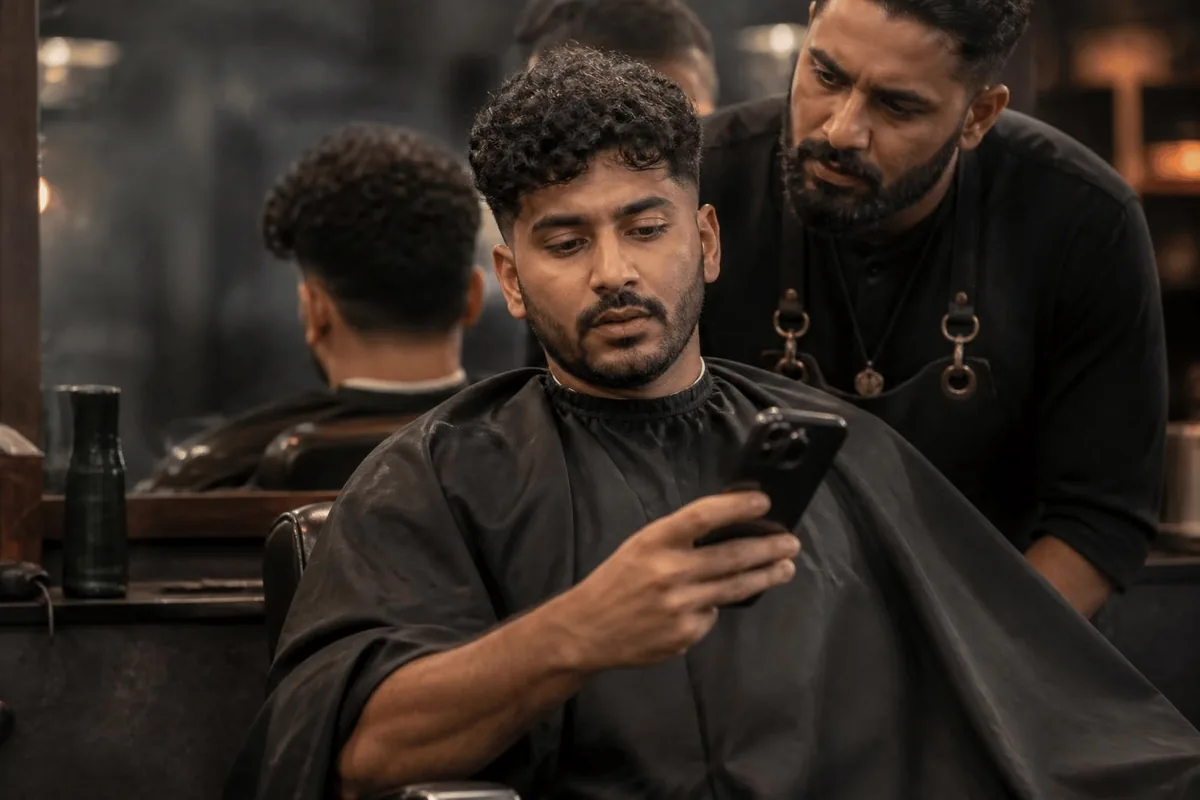
- “Low taper fade, curls left long on top.” This tells the barber not to take length from the top.
- “Please cut the top dry.” Add “I want about this much once it springs up,” and show the length with your fingers on your dry hair.
- “Taper from just above the ear, not higher.” It stops the barber from raising the taper into a mid fade.
- “A #2 at the bottom, soft blend.” Pick the guard from the table in the next section.
- “A natural or slightly rounded neckline.” Blocked necklines grow out harshly on curly hair.
What goes wrong: asking for “short on the sides and back” without naming a guard. Barbers read that differently, and curls need a clear boundary between the short and long zones. Show a photo of your own texture, because a straight-hair photo can mislead.
Which guard should you choose for the bottom of the taper?
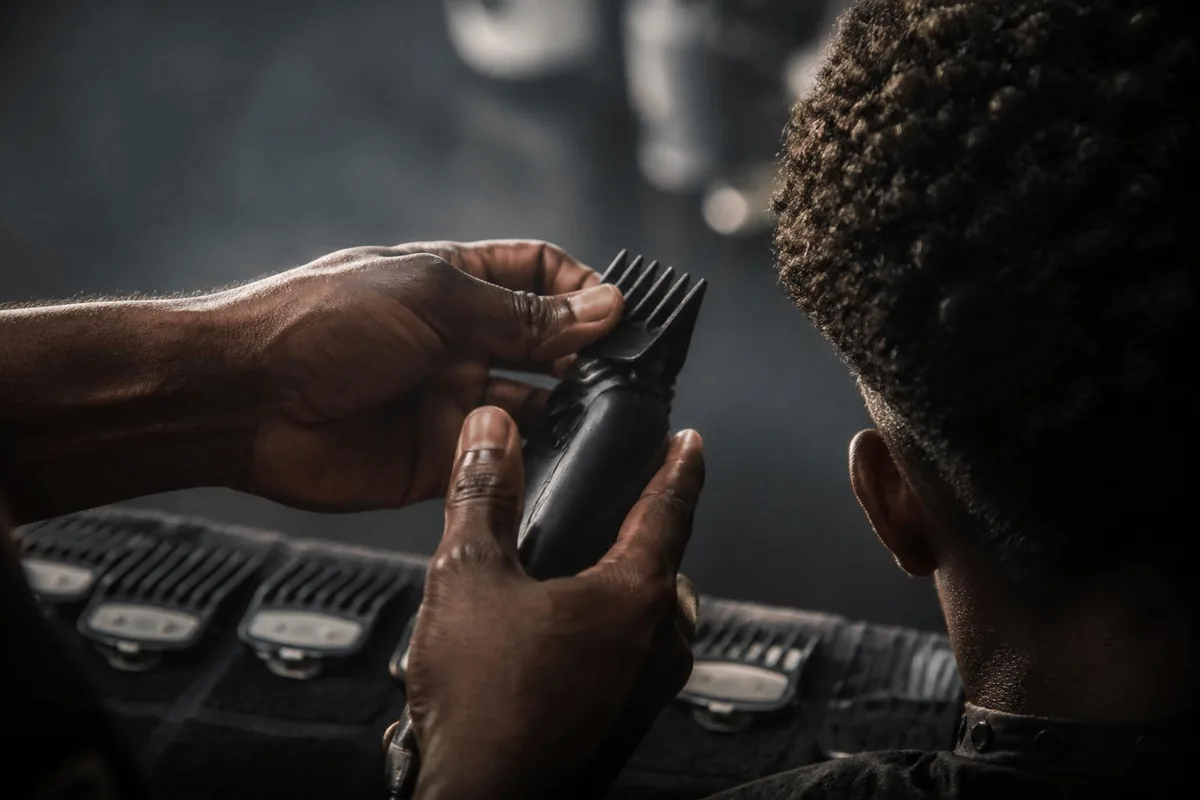
On low taper fade curly hair, the bottom of the taper sets how much contrast you see. A longer guard keeps the look soft. A shorter one adds sharpness but shows more scalp and makes growth show sooner. Guard sizes follow a standard scale, covered on our haircut numbers page.
| Bottom of taper | Length left | Look on curly hair | Upkeep |
|---|---|---|---|
| #2 guard | About 6 mm | Soft, natural, easy to grow out | Every 4 to 5 weeks |
| #1 guard | About 3 mm | Neat, definite contrast | Every 3 to 4 weeks |
| #0.5 or bare | About 1.5 mm or skin | Sharp, high contrast | Every 2 to 3 weeks |
For a first low taper fade curly hair cut, a #2 or #1 at the bottom is the safe pick. If you like the look, move shorter the next time.
Where curls meet the taper: how do you avoid a harsh step?
The trickiest part of low taper fade curly hair is the join, where long curls turn into short hair. On a wavy head the transition blends easily. On tight coils, the curls stand away from the scalp, which can make the line look like a ledge. Three habits help:
- Keep the sides a little longer than a straight-hair fade. If you would ask a friend with straight hair for a #1, consider a #2 so the join stays soft.
- Ask the barber to “blend into the curl”. This tells them to work the guard up gradually and not stop at a fixed line.
- Check the profile in a mirror before leaving. Step back and look at both sides for a tidy, even join.
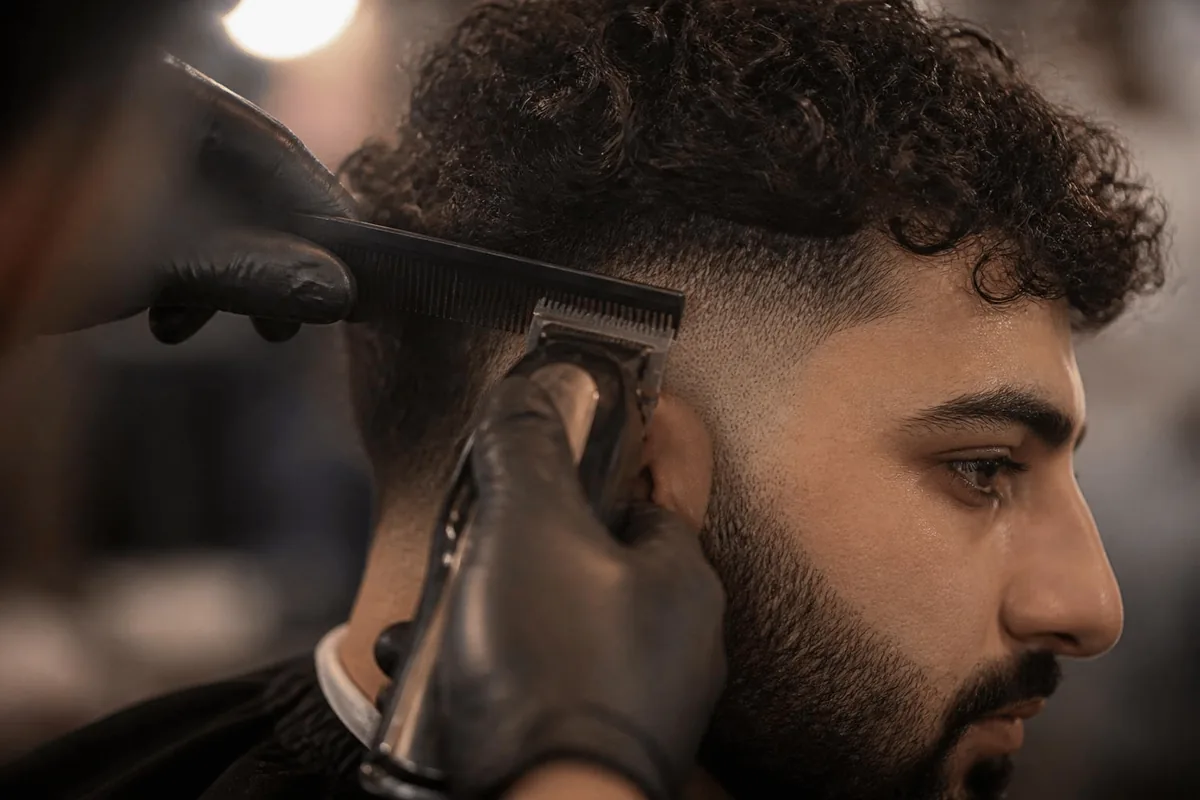
When a join still looks hard after a week, the fix is not to remove curls. It is to ask for a quick blend at the next visit, which takes a few minutes.
Which neckline suits curly hair?
Necklines are where curly hair causes the most trouble. Hair that curls back into the skin after a close shave can cause bumps. The American Academy of Dermatology (AAD) explains how to prevent razor bumps, and the same advice applies to a neckline: shave in the direction of growth, avoid pulling the skin tight, and keep the area clean.

| Neckline | How it looks | Growth-out | Fit for curls |
|---|---|---|---|
| Natural | Follows your hairline, no shaping | Easiest | Best for tight coils and sensitive skin |
| Rounded | Soft curve across the nape | Easy | Good all-round choice |
| Tapered | Fades out to the skin | Moderate | Works for most curl types |
| Blocked | Straight, square line | Hardest | Shows regrowth quickly; higher bump risk |
What is a good weekly routine for curls on top?
A short curly top needs less work than long hair, but it still needs a routine. The aim is moisture first, definition second, hold last. Here is a simple low taper fade curly hair routine that fits most curl types:
- Wash day (once or twice a week). Use a gentle shampoo, then a conditioner you leave in for a couple of minutes.
- Apply a curl cream to damp hair. Work it through the top, root to tip, using your fingers.
- Scrunch upward. Press the curls toward the scalp to encourage them to coil.
- Dry gently. Air dry, or use a diffuser on low heat.
- Add light hold if needed. A little gel or mousse after the hair is dry stops it separating.
- Refresh between washes. Mist with water and rub a small amount of cream through the top.
What goes wrong: touching the curls while they dry, which breaks the clumps and adds frizz. Wait until the hair is fully dry, then fluff it with your fingers or a pick.
Low taper fade curly hair: which products work?
Pick products for low taper fade curly hair by job, not brand. A short curly top needs moisture, light definition and an easy way to refresh. Heavy waxes, which sit on the hair, tend to weigh curls down. Our guide to the best hair products for men goes deeper on formulas.
| Product | Job | Best for | Watch out for |
|---|---|---|---|
| Leave-in conditioner | Moisture | All curl types | Too much makes hair limp |
| Curl cream | Definition and softness | Waves to curls | Use on damp, not dry, hair |
| Light gel | Hold without stiffness | Looser curls | Scrunch out the crunch once dry |
| Mousse | Volume and lift | Fine or low-density curls | Can dry the hair if overused |
| Natural oil | Seals in moisture | Coils and dry hair | A few drops only; too much looks greasy |
How often should you tidy the taper?
Hair grows about 1 centimetre a month, according to the Cleveland Clinic, so a month changes a low taper noticeably. Most men with low taper fade curly hair tidy the taper every 3 to 4 weeks. If you wear a #2 at the bottom, you can stretch to 5 weeks. The curls on top can go much longer, because their shape matters more than their exact length. Our guide on how often to get a haircut compares schedules for other styles.
| Week | What you see | What to do |
|---|---|---|
| 1 to 2 | Clean edges, crisp join | Nothing; style as usual |
| 3 to 4 | Taper softens, neckline fuzzes | Book a tidy-up, or trim the neckline |
| 5 to 6 | Sides look fuller, join disappears | Full re-cut of the taper |
| 7 and beyond | Taper has grown out | Re-cut and reset length on top |
How should you protect curls at night?
Low taper fade curly hair needs night care too. Cotton pillowcases absorb moisture and rub curls, which causes frizz. A satin or silk pillowcase reduces friction. On short curls, a satin bonnet or durag is optional, but it keeps the shape intact on the nights you do wear one. If you wake with flat curls, mist with water, add a little cream and fluff.
How does a low taper compare with other fades on curls?
Low taper fade curly hair sits at the soft end of the fade range. The table compares it with options that curly-haired men often consider.
| Cut | Contrast | Fit for curls | Upkeep |
|---|---|---|---|
| Low taper fade | Low | Best starting point for any curl type | 3 to 4 weeks |
| Low fade | Medium | Good if you want more skin at the sides | 2 to 3 weeks |
| Drop fade | Medium to high | Follows the curve of the head; good with fuller curls | 2 to 3 weeks |
| Burst fade | High at the ear | Strong with thick curls and a curved top | 2 to 3 weeks |
| Skin fade | Very high | Bold contrast; needs skin care | 2 weeks |
Looking for a version for another hair type? See the matching cluster guides for straight and fine hair and for long hair on top.
What are the most common mistakes, and how do you fix them?
| Problem | Likely cause | Fix |
|---|---|---|
| Top looks too short once dry | Barber cut by stretched length | Grow it out; next time ask for a dry cut and mark the length with your fingers |
| Hard line where curls meet the sides | Taper too high or guard too short | Ask for a blend at the join, and move up one guard |
| Frizz on top | Dryness or touching while wet | Add a leave-in conditioner and avoid brushing dry curls |
| Bumps on the neckline | Close shave against the grain | Switch to a natural or rounded neckline and follow AAD advice |
| Sides look sparse | Fine, thin side hair | Use a longer guard so the scalp shows less |
| Curls look flat | Heavy product or sleeping on cotton | Switch to a light cream and a satin pillowcase |
How does the cut work in three real-life situations?
A low taper fade curly hair cut behaves differently depending on where you wear it. These three scenarios show how to adjust the same cut.
At the office
Choose a #2 at the bottom and keep the top at about 6 to 8 cm wet, so the curls sit as a neat, rounded shape. Use a curl cream and a small amount of gel for control. Men who wear a shirt and tie often prefer a natural neckline, because it stays tidy through the week without a fresh edge-up.
At the gym or on the pitch
Sweat makes curls frizz and flattens product. Wear a light cream rather than a heavy gel, and rinse or mist with water after training. A #1 at the bottom is easy to keep clean, and a quick rinse keeps the taper looking neat without a full wash.

At a wedding or event
Book the cut three to five days before the event, not the same day. That gives the taper time to settle and the neckline time to calm down. On the day, apply cream to damp hair, diffuse on low heat, and finish with a touch of light gel for a defined, polished finish.

For low taper fade curly hair in any setting, bring a photo of curls that match your own pattern and keep the same barber across visits. A barber who has cut your hair before already knows how it shrinks and where it parts.
Who should pick this cut, and who should not?
Low taper fade curly hair fits men who want a neat outline without giving up their curls. It is easy to wear to the office, to the gym and to events. Wavy, curly and coily hair all work, as long as the barber adjusts the guard and the top length to the curl type.
It is a weaker choice if you want a dramatic look, because the contrast is soft. Men with a receding hairline or very fine, thin curls may prefer a slightly longer side. For those cases, read our guide to haircuts for a receding hairline and the haircuts by hair type overview.
Frequently asked questions
Can you get a low taper fade with curly hair?
Yes. Low taper fade curly hair is one of the best fade options, because the length on top stays untouched while the edges get cleaner.
How long should curly hair be for a low taper fade?
Aim for 6 to 10 cm of wet length, so the curls spring to about 4 to 7 cm when dry. Tighter coils usually need more stretched length to show their shape.
Should I get a low taper or a mid fade with curls?
Choose a low taper for a soft, natural look and easy growth. Choose a mid fade if you want more contrast at the sides and can keep up with a visit every 2 to 3 weeks.
What guard should the bottom of the taper use?
A #2 (about 6 mm) is the safest start, and a #1 (about 3 mm) gives a sharper finish. Tell your barber the number so there is no guesswork.
How do I stop my curls shrinking too much?
You cannot stop shrinkage on low taper fade curly hair, but you can plan for it. Measure it with the stretch test, cut by the dry shape and use a leave-in conditioner so the curls hold a clear pattern.
Can I get a low taper fade curly hair cut on 4C hair?
Yes. Ask for a dry cut, a #2 or #1 at the bottom, and a natural or rounded neckline, and let your barber judge top length with a comb or pick.
How often should I wash curly hair with a taper?
Once or twice a week suits most curl types. Wash more often if you sweat a lot, but rinse and condition instead of using shampoo every time.
Where this fits in the fade range
This low taper fade curly hair guide is one of five cluster pages under our low taper fade pillar. The others cover straight and fine hair, part lines and designs, long hair on top and cutting one at home. The full range sits on our fade haircuts hub.
The curl shrinkage ranges and top lengths above are typical values that vary by curl pattern and barber, and growth figures follow the Cleveland Clinic. Our editorial policy explains how the numbers on this site are labelled.