
On this page
What is a mid drop fade?Is a mid drop fade right for you? A quick decision guideHow does a mid drop fade compare with a mid fade and a mid taper?What guard numbers should you ask for?Which mid drop fade styles are worth asking for?Which tops go best with a mid drop fade, by hair type?Which face and head shapes suit it?How do you ask the barber for a mid drop fade?How do barbers cut a mid-height curve? A step-by-step walk-throughHow do you style the top at home with clay, pomade or sea salt spray?What is a mid skin drop fade, and what is a mid drop taper?Which height would a barber pick for your situation?What if you have a cowlick, a double crown or thick hair?Is a mid-height fade a good cut for teenagers and school?How does a mid drop fade work with a beard?What are the signs of a rushed fade?How much does a mid-height fade cost in a barbershop, and how long does it take?What do you need at home to keep it sharp?What does a 30-day plan look like?Does the weather change how it behaves?How long does it last, and how often should you trim?How do you prevent razor bumps (pseudofolliculitis barbae) after a fade?Which mid-height fade mistakes ruin the curve?Which variations pair with a mid-height curve: comb over, waves, long top and locs?Mid drop fade FAQMore in the drop fade seriesQuick answer. A mid drop fade starts level with the temple and curves down behind the ear to finish lower at the nape. It is the middle ground between a subtle low version and a bold high one, which is why barbers call it the default curved fade. Ask for a #1 or #2 at the bottom, a #3 or #4 above it and 4 to 9 cm on top. Book a tidy-up every 2 to 3 weeks and style the top only.
Walk into ten barbershops and ask what the most requested curved fade is. Most will say the same thing. The mid drop fade earns that spot because it does a lot with very little risk: enough contrast to look sharp, enough length left to look natural and a curve that flatters most head shapes.
This page helps you decide whether it is the right height for you, then gives you everything needed to order it, style it and keep it looking sharp. It sits inside our drop fade guide, which compares every height and every top in one place.

What is a mid drop fade?
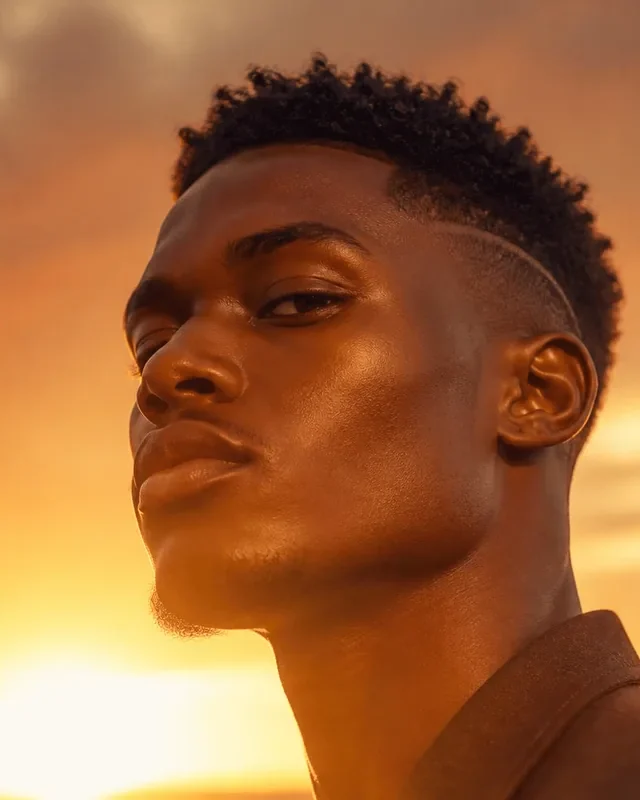
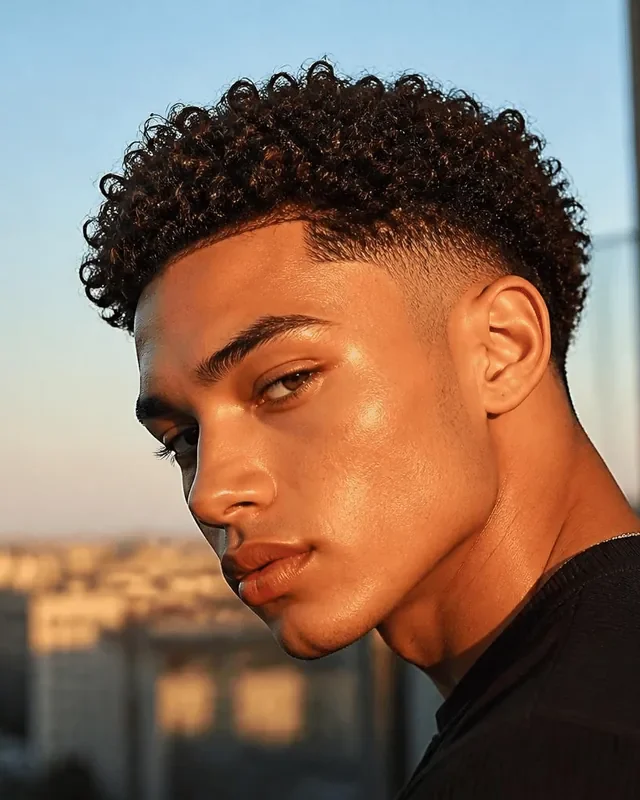
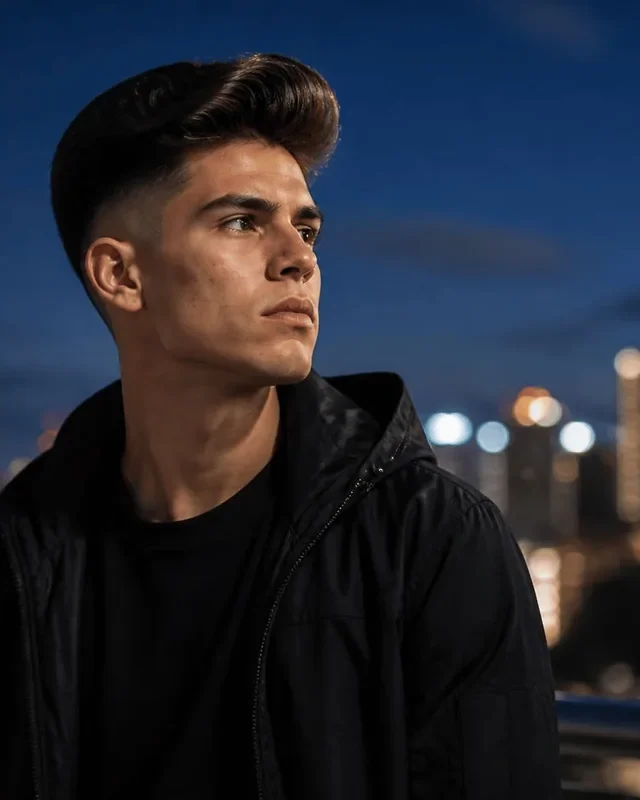
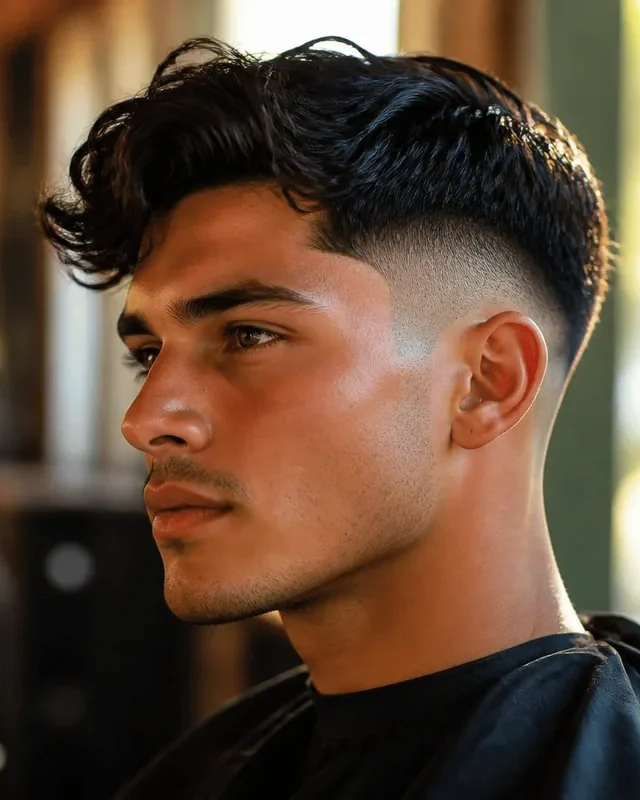
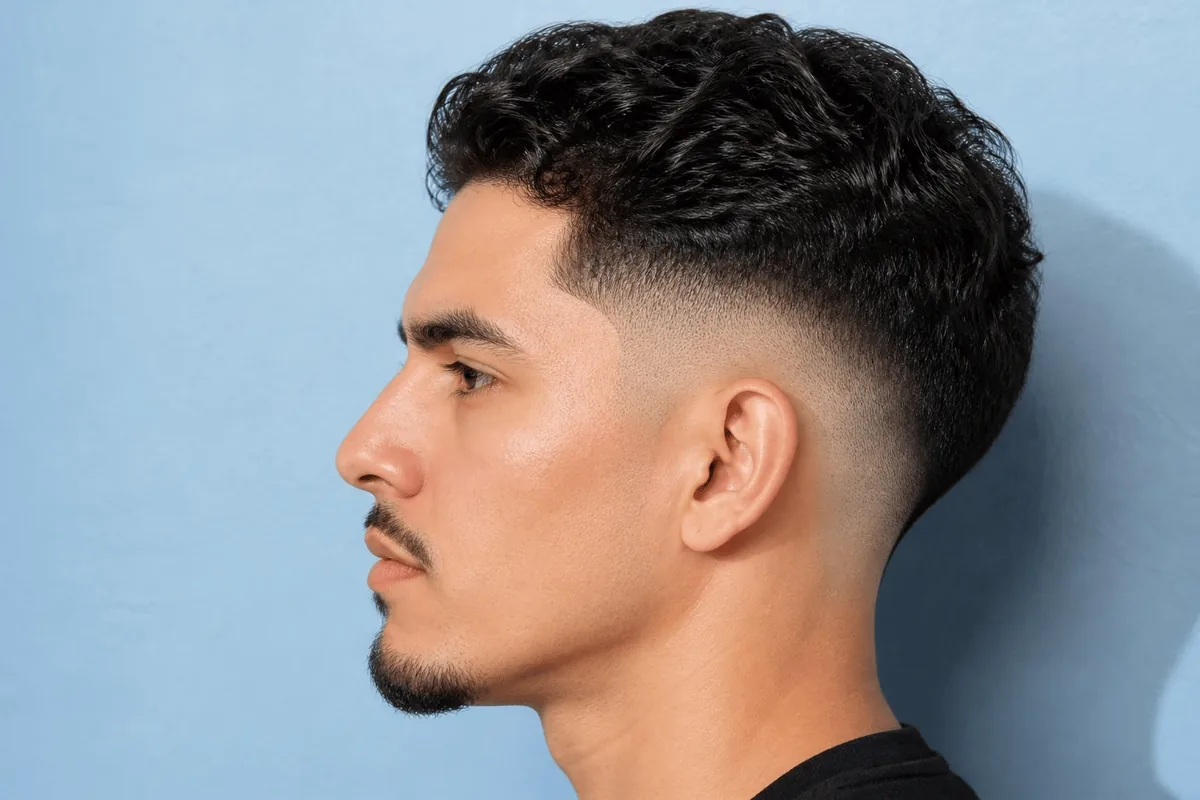
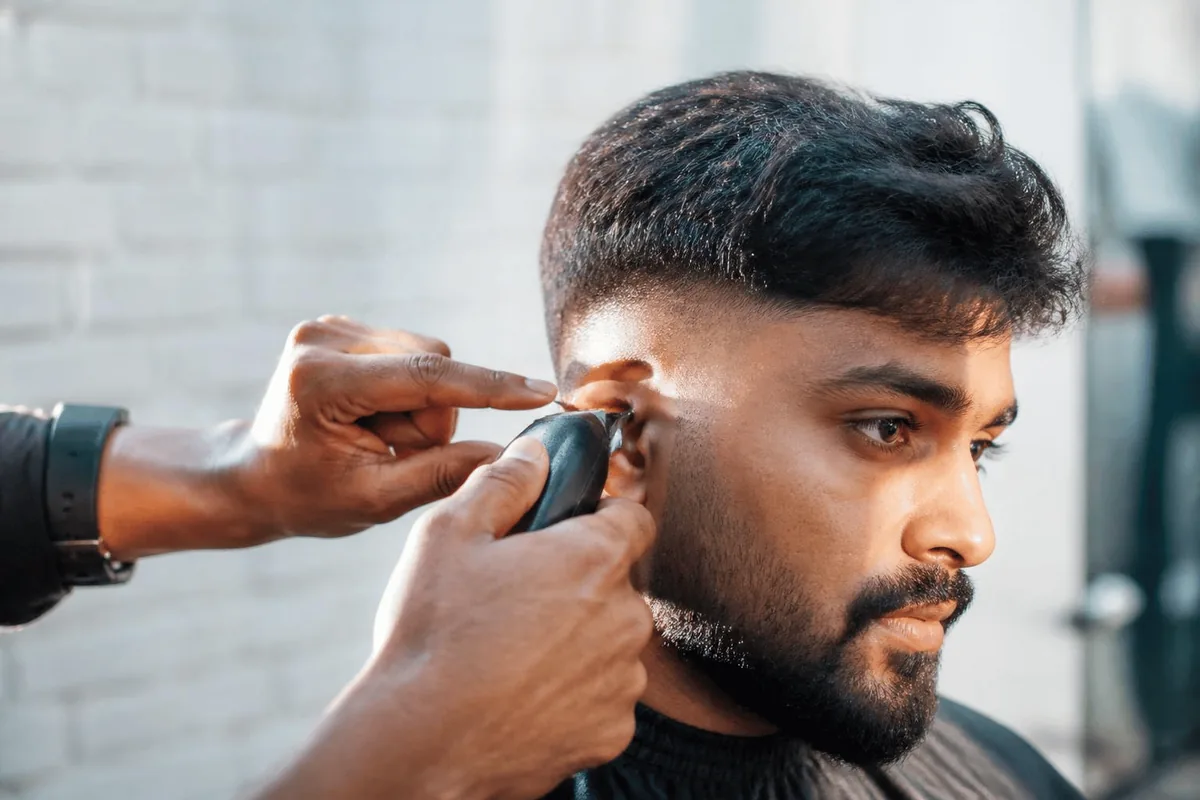
A mid drop fade is a curved fade that begins about halfway up the side of the head, roughly level with the temple and the outer corner of the eyebrow. From there the line runs back toward the ear, then bends downward behind it and ends lower at the nape. Everything below the line fades from short to shorter, and everything above stays longer.
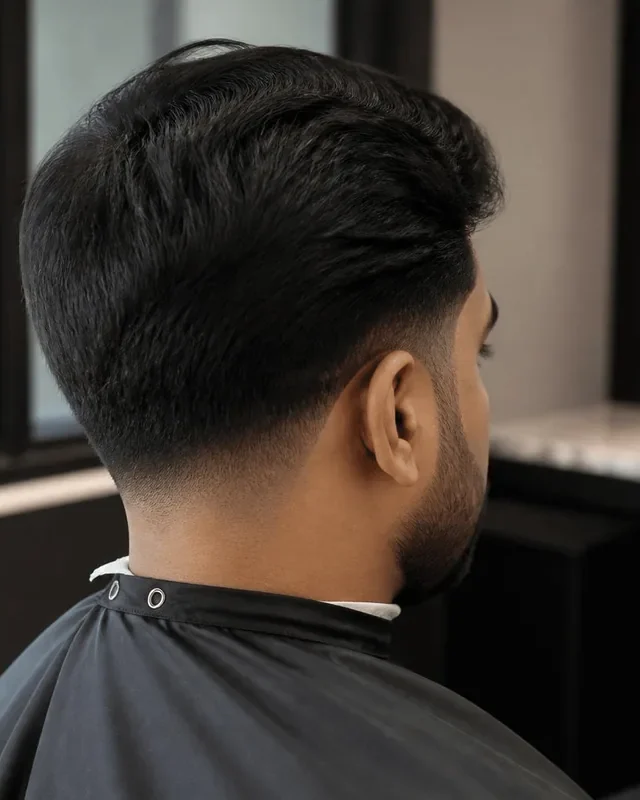
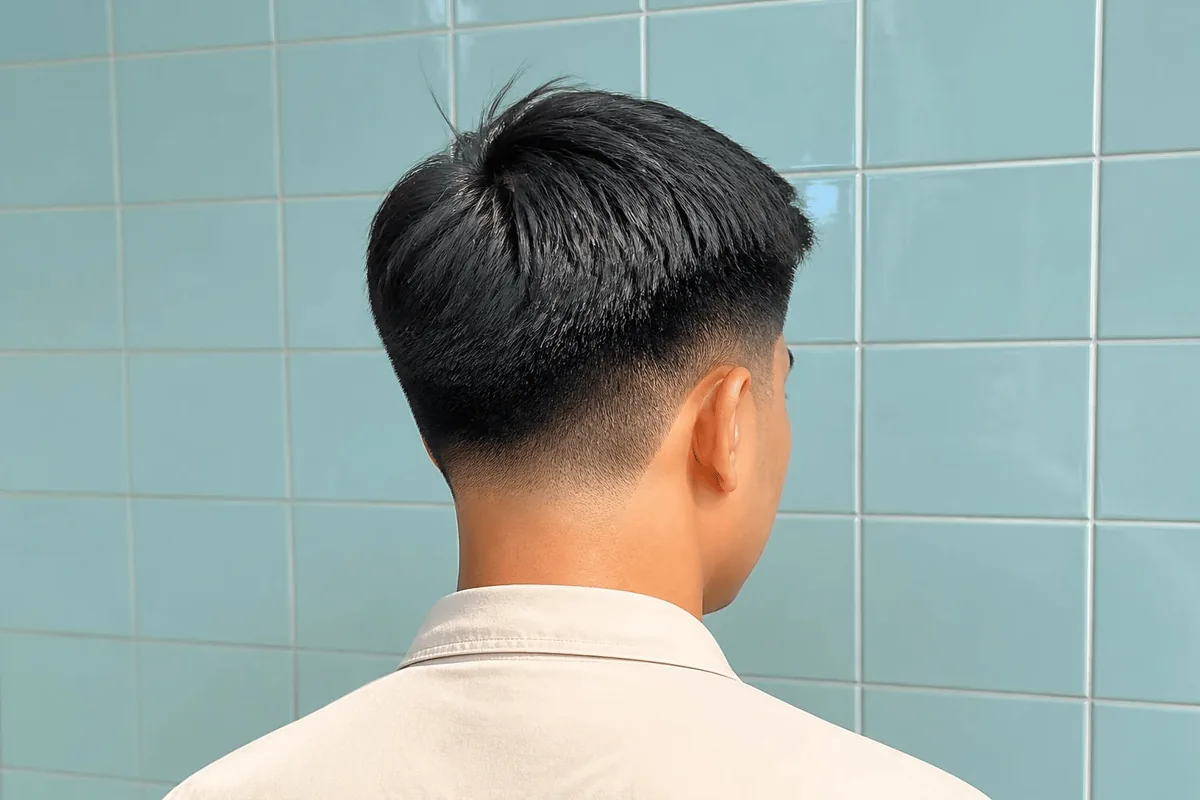
Two features set it apart from a mid fade. First, the line drops. A mid fade keeps the same height around the head, but this one follows the skull downward, which adds an arch that makes the back of the head look fuller. Second, it is a shape cut more than a blend cut: the outline matters as much as the gradient.
People also search for it as a mid drop fade haircut, mid drop fade men, mid drop fade taper and mid skin drop fade. The last two are options within the same cut, not new styles. A taper version leaves more length at the bottom, and a skin version goes to bare skin.
Is a mid drop fade right for you? A quick decision guide
Pick the height by asking three questions. How much contrast do you want? How often can you visit a barber? And how much does your workplace care? The table turns those answers into a choice.
| If you want… | Choose | Why |
|---|---|---|
| Maximum subtlety, office-safe | Low drop | Short, soft blend near the ear |
| Balanced contrast, any top | Mid drop | The fade starts at the temple and frames the face |
| Strong contrast, a bold shape | High drop | Short sides, a big top and a sharp outline |
| Fewer barber visits | Low drop with a #3 bottom | Grows out softly |
| A round face that needs height | Mid or high drop | Tight sides add vertical emphasis |
If you are still unsure, the mid is the safest answer. It looks good with a short crop, a pompadour, curls or a side part, and it leaves your barber room to go lower or higher next time.
How does a mid drop fade compare with a mid fade and a mid taper?
| Cut | Starts at | Line shape | Contrast |
|---|---|---|---|
| Mid drop fade | Temple level | Curves down behind the ear | Medium to high |
| Mid fade | Temple level | Level around the head | Medium to high |
| Taper fade | Sideburn and nape | Short soft edges | Low |
| Burst fade | Around the ear | Semicircle | Medium to high |
If your photo shows a line that stays level at the back, you want a mid fade. If it dips toward the neck, you want the drop version. If it hooks around the ear, you want a burst.
What guard numbers should you ask for?
Barbers think in guards, and showing one number is worth more than five adjectives. Guard sizes vary by brand, so use these as a guide and bring a photo. Our haircut numbers page explains how each guard cuts.
| Finish | Bottom | Middle | Top of fade |
|---|---|---|---|
| Soft, natural | #2 | #3 | #4 |
| Balanced (most common) | #1 | #2 then #3 | #4 |
| Sharp | #0.5 | #1.5 then #2 | #3 |
| Skin | Bare or #0 | #1 | #2 or #3 |
The classic order is a #1 at the bottom, blended through #2 and #3 up to a #4. If your hair is fine and straight, avoid the skin finish, because it shows scalp and makes the top look thinner by contrast.
Which mid drop fade styles are worth asking for?
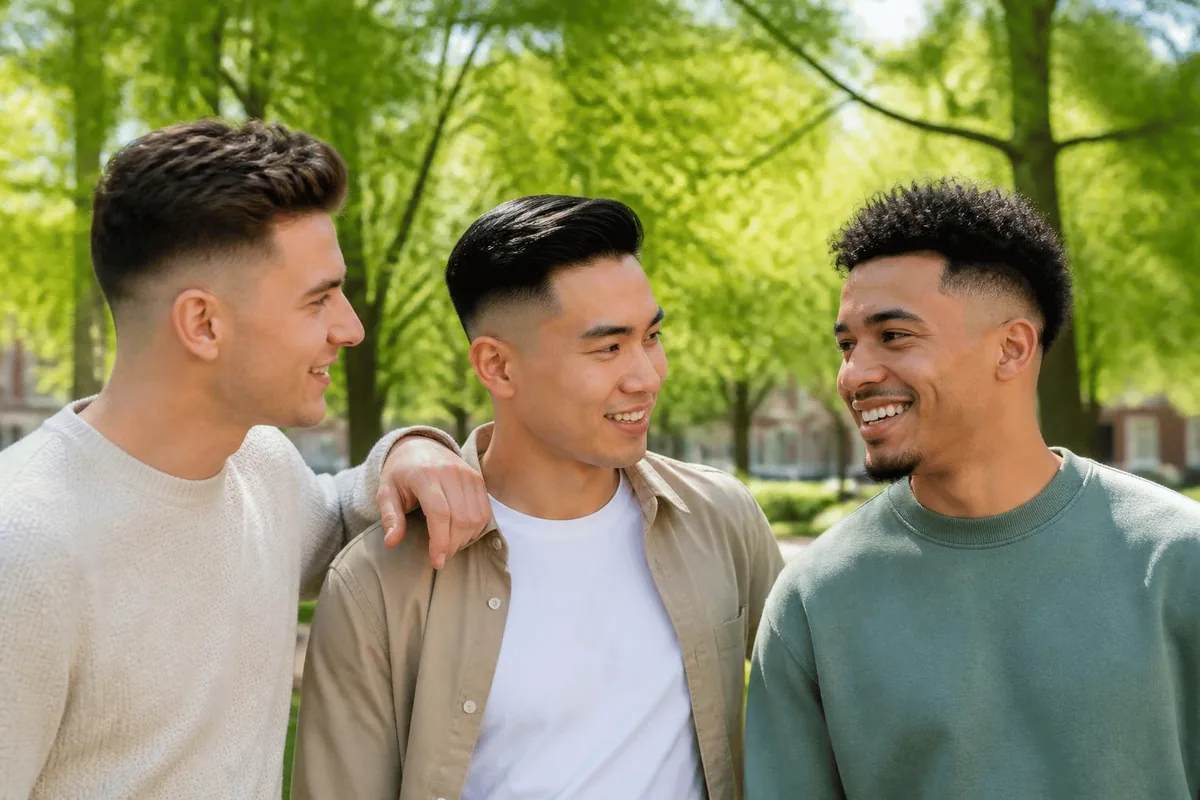
The fade is the frame. The picture is what you put inside it. These are the combinations barbers see most often, grouped by the mood they create.
Clean and professional
- Side part: 6 to 9 cm, combed over with a matte finish. Pair with a #2 bottom.
- Crew-cut top: 2 to 3 cm, tidy and quick. See the crew cut guide.
- Slick back: 7 to 10 cm with a light pomade. Works with straight or wavy hair.
Textured and casual
- Textured crop: 3 to 6 cm, point-cut. The textured crop page covers the cut.
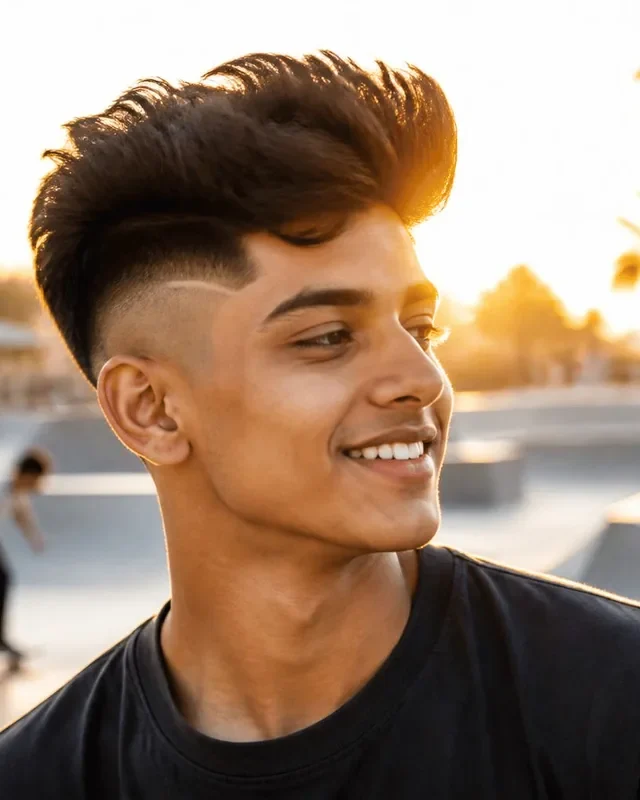
- Messy fringe: 4 to 7 cm, pushed forward. Good for young faces and wavy hair.
- Short quiff: 5 to 7 cm, lifted in front. See the quiff page.
Bold and statement
- Pompadour: 7 to 10 cm swept up and back. Read drop fade pompadour.
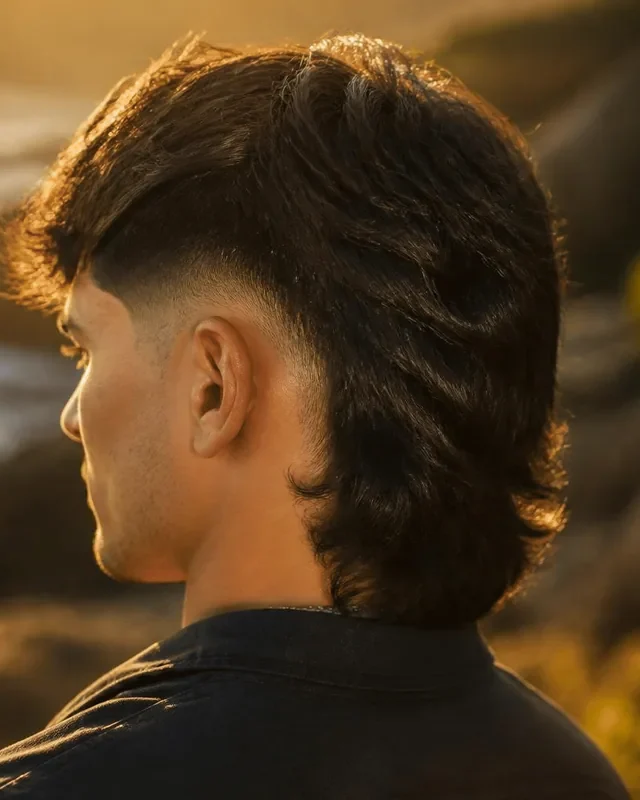
- Mullet: short sides with length at the back. See drop fade mullet.
- Undercut-style top: long top, tight sides, a sharp contrast.
Curl and texture focused
- Sponge curls: 3 to 5 cm of defined curls on top.
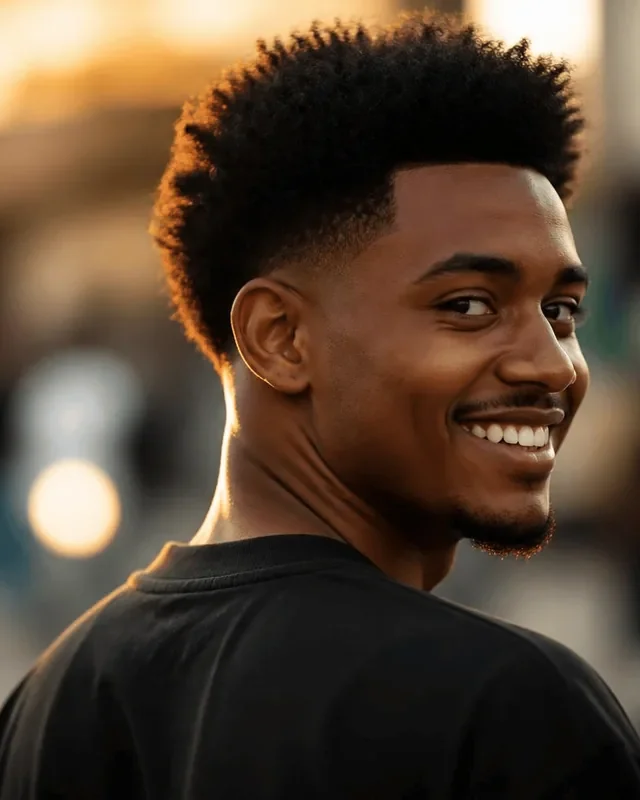
- Short afro: shaped round, with a clean edge. See drop fade black men.
- Curly top with twists: sections of twists above a faded base.
Which tops go best with a mid drop fade, by hair type?
| Hair type | Top that works | Product | Watch for |
|---|---|---|---|
| Straight, fine | Textured crop, side part | Texture powder, light paste | Flat roots |
| Straight, thick | Slick back, pompadour | Pomade, clay | Heavy bulk at the sides |
| Wavy | Quiff, messy fringe | Sea salt spray, matte paste | Frizz |
| Curly | Curly top, sponge curls | Leave-in cream | Shrinkage |
| Coily | Short afro, twists, waves | Moisturiser, curl cream | Dryness at the line |
Which face and head shapes suit it?
The mid height sits at the same level as the temple, so it changes how wide or narrow the upper face looks. These notes help you choose the top that balances it.
- Round face: add height on top. A quiff or pompadour makes the face look longer.
- Square face: a textured, slightly softer top relaxes a strong jaw.
- Oval face: almost anything works.
- Long face: keep the top shorter and avoid extra height.
- Diamond face: a fringe covers the forehead and balances wide cheekbones.
- Flat back of the head: the curve fills in the outline.
Our haircuts by face shape page has the full chart, and the hair type guide lists how each texture behaves.
How do you ask the barber for a mid drop fade?
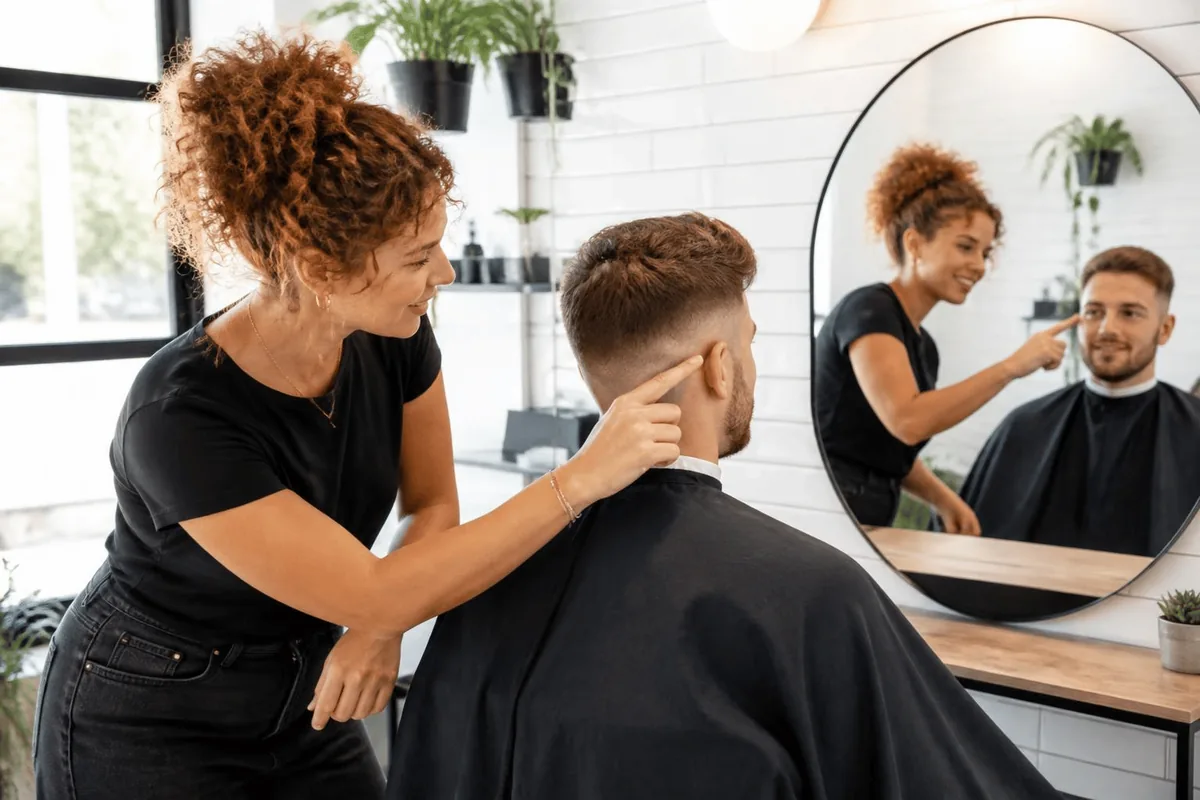
Barbers love a clear request. Use this script and swap the numbers for your own.
- “A mid drop fade, please.” This names the height and the curve.
- “Start at a #1, blending up to a #4.” Say the bottom and the top of the fade.
- “Start it level with my temple and drop it behind my ear.” Touch the spots as you say it.
- “Leave about 6 cm on top, point-cut.” Show the length.
- “Take the neckline natural.” This grows out better than a square block.
- “Can I see the back?” Ask for the hand mirror before you stand up.
The how to ask for a haircut page lists more phrases.
How do barbers cut a mid-height curve? A step-by-step walk-through
You do not need to cut it yourself to benefit from knowing the steps. They help you spot a rushed job. For a home version, use the full guide on how to cut a drop fade.
Step 1: Draw the guideline
The barber marks the fade line at the temple and drops it behind the ear. What goes wrong: a line drawn too high turns the cut into a high drop, so check it before cutting.
Step 2: Take the bulk off
A long guard clears the bulk below the line. What goes wrong: forcing clippers through thick hair leaves steps.
Step 3: Build the gradient
The barber moves from #1 through #2 and #3 with a flicking wrist. What goes wrong: pausing mid-stroke leaves a visible stripe.
Step 4: Shape the curve
Clipper over comb follows the arc behind the ear. What goes wrong: a curve that is deeper on one side looks uneven from behind.
Step 5: Detail and finish
The edges are cleaned, and the top is cut and textured. What goes wrong: a razor on irritated skin leaves bumps.
How do you style the top at home with clay, pomade or sea salt spray?
- Wash and towel dry. Leave the hair slightly damp.
- Prep. Sea salt spray for texture, leave-in cream for curls.
- Blow-dry the top. Direct the hair forward or up.
- Apply product. A pea-sized amount of paste, clay or pomade, on the top only.
- Shape. Fingers for a messy finish, a comb for a clean one.
See best hair products for men for specific picks.

What is a mid skin drop fade, and what is a mid drop taper?
These are the two most common versions inside the same cut, and they feel very different in the mirror.
A mid skin drop fade takes the bottom of the fade down to bare skin, so the contrast is strong and the curve is easy to see. It looks crisp in photos and on dark hair, but it needs a visit every one to two weeks and can irritate the neckline. A mid drop taper keeps a #2 or #3 at the bottom, so the line is softer and lasts longer between visits. If you are choosing between them, think about how much time you want to spend on upkeep.
A mid drop fade with a skin finish suits men who like sharp edges, short tops and a clean look. The taper version suits men who want a polished cut with fewer appointments. Neither is better. Each is a trade between precision and convenience.
Which height would a barber pick for your situation?
Barbers choose heights by lifestyle as much as by looks. Here is how that logic plays out in common situations.
- Weekly team meetings and a few presentations a year: a mid drop fade with a #2 bottom gives enough shape to look sharp and enough softness to look professional.
- Gym five days a week: sweat blurs a fade, so a mid version with a #2 or #3 bottom holds up better than a skin finish.
- Wedding in two weeks: book the mid drop fade a few days before the event, so the line has settled.
- Growing the top out: keep the mid drop fade on the sides and let the top grow. The curve keeps the cut neat while the hair gains length.
- Tight budget: choose the softer finish and visit every four weeks.
The same logic applies if you want to switch to something else later. Because the cut starts at the temple, you can move down to a low drop or up to a high drop without losing the curve.
What if you have a cowlick, a double crown or thick hair?
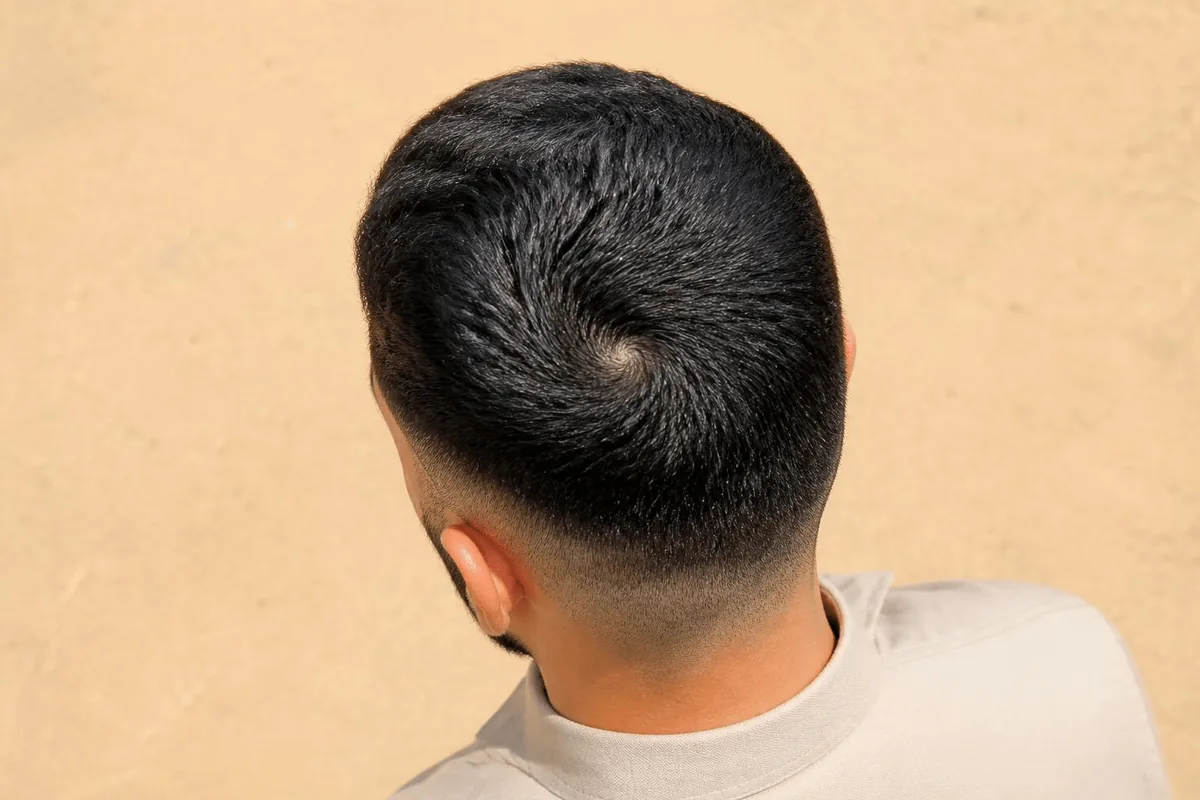
Hair growth patterns decide how a fade behaves, and no photo can tell you that. A cowlick at the front hairline pushes the fringe in one direction, so a barber should cut it slightly longer and let the weight hold it down. A double crown makes the back of the top spiral, which means the top should be kept a little longer or shaped to follow the swirl. If the crown is ignored, hair stands up on the day you style it.
Thick hair needs weight removed inside the top, not just the sides, or the fade looks puffy above the line. Fine hair needs the opposite: leave density in the top and keep the bottom guard at #2 or #3, so the sides do not look too sparse. Tell your barber about your growth patterns at the start. A good one will already be looking at them.
Is a mid-height fade a good cut for teenagers and school?
It is popular with teens because it looks current and takes little time to style. Most schools accept a #2 or #3 bottom, while a skin finish or a bold design may break the rules. Ask the school for the policy, or choose the softer version and keep the top natural. Young skin is more sensitive, so avoid a razor on the neckline and pick a gentle moisturiser afterward. Our boys haircuts hub covers younger styles.
How does a mid drop fade work with a beard?
The fade should flow into the sideburn and then into the beard, so the face reads as one outline. A short, even beard looks best with a #1 or #2 bottom. A full beard looks better with a #2 or #3, which keeps the sides from looking too bare against the thick facial hair. Ask the barber to fade the beard cheek line too, so there is no gap behind the sideburn.
A common mistake is combining a bald fade with a full, untrimmed beard. The strong contrast makes the face look top-heavy. Keep the beard neat, and see the beard fade page for the blend.

What are the signs of a rushed fade?
A new barber is a risk with any curved fade, because the shape is hard to see from the front. Watch for these signs while you are in the chair.
- No guideline. A barber who starts clipping without marking the line often ends up with an uneven curve.
- One guard only. A single guard gives a flat step, not a gradient.
- No mirror check. If the barber does not show you the back, ask.
- Rushed blending. If the line appears after two minutes, the blend is probably shallow.
Ask politely for any fixes before you pay. Most barbers are happy to correct an uneven curve, because it reflects on their work.
How much does a mid-height fade cost in a barbershop, and how long does it take?
Prices vary by city and shop, so check locally. A fade takes longer than a scissor cut because of the blending, so expect to pay a little more. Allow 30 to 45 minutes in the chair, and up to an hour with a beard or a shape-up. A busy shop adds waiting time, so book ahead for an event.
What do you need at home to keep it sharp?
You do not need a barbershop, but a few tools stretch the time between visits.
| Tool | Use | Tip |
|---|---|---|
| Small trimmer | Neckline and sideburns | Cut with the grain and go slowly |
| Soft brush | Loose hairs on the fade | Brush after every wash |
| Hand mirror | Checks the back | Use it with a bathroom mirror |
| Matte paste or clay | Texture on top | Pea-sized amount |
| Leave-in cream | Curls and dry hair | Use on damp hair |
Only tidy the neckline and sideburns at home. Leave the curve to a barber unless you have practised the method on our how to cut a drop fade page.
What does a 30-day plan look like?
A simple routine keeps the cut looking fresh for the full month.
- Day 1 to 3: the line is sharp. Wash gently and avoid a razor on the neckline.
- Day 4 to 14: style daily with a small amount of product. Brush the sides.
- Day 15 to 21: the bottom starts to fill in. Tidy the neckline at home if you like.
- Day 22 to 28: book the next visit. Use texture spray to hide the regrowth.
Does the weather change how it behaves?
Yes. Humidity makes wavy and curly hair puff above the fade and can blur the line. Dry cold air makes hair static and dull, so a leave-in cream helps. Hot weather makes oil build up faster on the scalp, so wash more often and use lighter products. If you live in a humid place, ask for the top to be a little shorter, so the hair does not swell into the fade.

How long does it last, and how often should you trim?
A mid drop starts to soften after a week and looks overdue after three. The Cleveland Clinic says hair grows about 1 centimetre per month, so the bottom of the fade fills in quickly. The numbers below are typical estimates.
| Finish | Visit every | Reason |
|---|---|---|
| Skin bottom | 1 to 2 weeks | Regrowth shows fast |
| #1 bottom | 2 to 3 weeks | Standard schedule |
| #2 or #3 bottom | 3 to 4 weeks | Grows out softly |
How do you prevent razor bumps (pseudofolliculitis barbae) after a fade?
Razor bumps have a medical name, pseudofolliculitis barbae. It happens when a freshly cut hair curls back and grows into the skin, and it is most common on tightly coiled hair around the nape and behind the ears.
The nape and sideburns are the usual trouble spots. The American Academy of Dermatology explains the basics in its guide to razor bump prevention. Ask for clippers, cut with the grain, rinse the loose hair and moisturise gently.
Which mid-height fade mistakes ruin the curve?
| Mistake | Result | Fix |
|---|---|---|
| Line too level | Looks like a plain mid fade | Ask for a visible drop |
| Fade too high | Turns into a high drop | Point to the temple |
| Too much product | Heavy, greasy top | Pea-sized amount |
| Skipping tidy-ups | Fuzzy outline | Book by week 3 |
Which variations pair with a mid-height curve: comb over, waves, long top and locs?
The mid height is the most flexible of the three, so barbers pair it with almost any top. A comb over with a hard part gives a business look. A slick back suits straight or wavy hair of five to eight centimetres. A textured crop suits men who want low effort, and 360 waves on short coily hair look sharper above a mid curve than above a low one.
Longer hair also works. A man bun or a medium-length top sits well over a mid curve because the shorter sides keep the shape neat, and the curve ends before it reaches the nape where a bun would sit. Men with locs or twists can ask for the sides to be faded while the length stays on top.
Whichever top you choose, give your barber one reference photo and tell them which part you like: the curve height, the top length or the finish. Show your barber the mid drop fade you want so the height and the top match. The mid drop fade stays versatile because it suits almost every variation.
Mid drop fade FAQ
What is a mid drop fade?
It is a fade that starts at the temple and curves down behind the ear.
Is it better than a low drop?
It has more contrast. The low version is subtler.
What guard should I ask for?
A #1 at the bottom blended to a #4 is the usual order.
How often should I trim?
Every 2 to 3 weeks.
Does it work on thinning hair?
Yes, with a short top and a #2 bottom.
Can I get a skin version?
Yes. Ask for a skin bottom and blend to a #2 or #3.
More in the drop fade series
This page is a cluster guide under our main drop fade page. Browse the rest on the fade haircuts hub.
Guard sizes and timings are typical estimates, since barbers and hair types differ. Our editorial policy explains how we label estimates.