On this page
What is a high drop fade?Where does the line start and finish?How does it differ from a high fade, a high taper and a burst?Which guards should you ask for?What is a high skin drop fade, and who should choose it?Which tops make the most of the height?How does it look on an afro or short coily top?Which face shapes suit a high drop fade?How to ask the barber for a high drop fadeHow do barbers cut the high curve? Step by stepHow do you style the top once the tall fade is cut?Does a tall fade suit sport, the gym and hot weather?How long does a tall fade stay sharp before it needs a trim?How do you prevent razor bumps (pseudofolliculitis barbae) and scalp irritation?Which high-fade mistakes make the cut look harsh?Can you wear a high drop fade with a receding hairline?What beard works with a high drop fade?Is a tall fade suitable for teenagers and school dress codes?How much does a tall fade cost, and how long does the chair time last?How do you time it for a wedding, a photo shoot or an interview?How do you soften it if it looks too stark?What should you ask a new barber before you sit down?Which top styles pair with the tall curve: undercut, comb over, waves and high top?High drop fade FAQMore in the drop fade seriesQuick answer. A high drop fade starts above the temple, near the crown line, and curves down behind the ear to finish low at the nape. It leaves the shortest sides of the three drop heights, so the contrast with the top is the strongest. Ask for a #0 or #1 at the bottom, a #2 or #3 at the top of the fade and 5 to 10 cm on top. It needs a visit every 2 weeks to stay crisp.
If the low version whispers and the mid version talks, the high drop fade makes an announcement. The sides are cut short almost all the way up, the top is allowed to stand tall and the curve behind the ear draws a clean arc around the skull. It is the haircut people photograph from the side.
That drama comes with trade-offs, and this guide lays them out before you sit in the chair. You will find where the line sits, which tops make the best use of the height, how to ask for it, how long it lasts and what to do when the contrast gets too stark. It is one of several cluster pages under our drop fade guide.
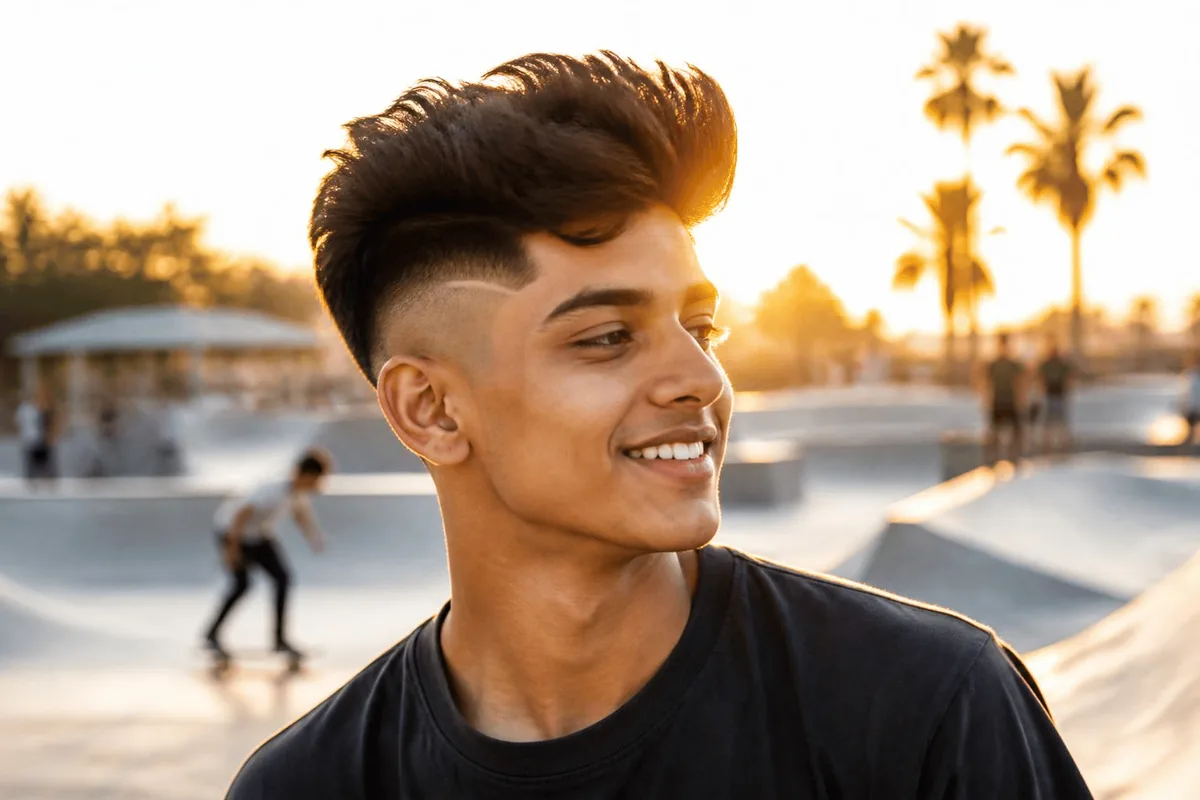
What is a high drop fade?
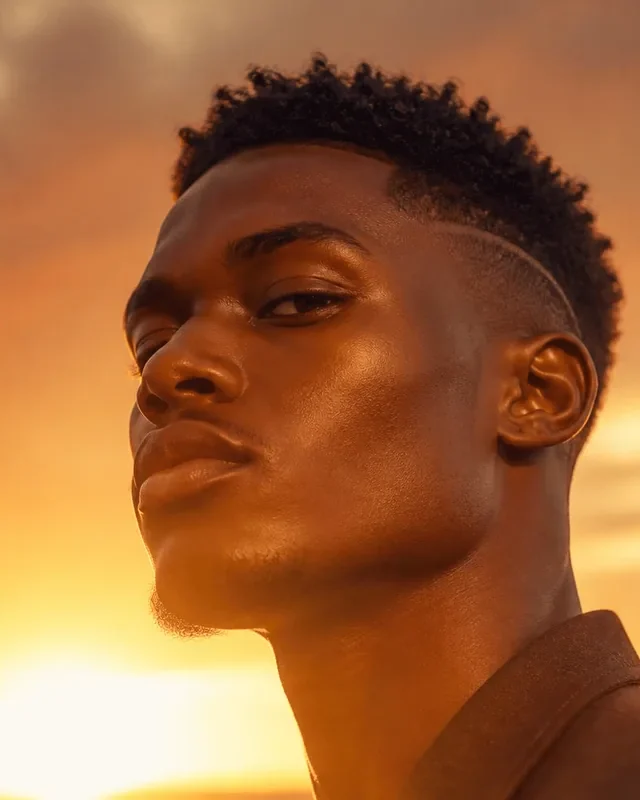
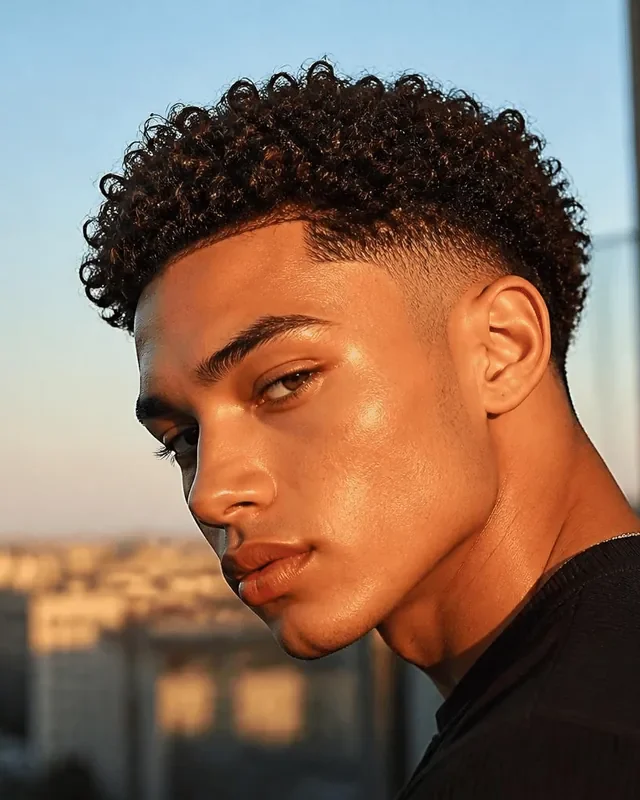
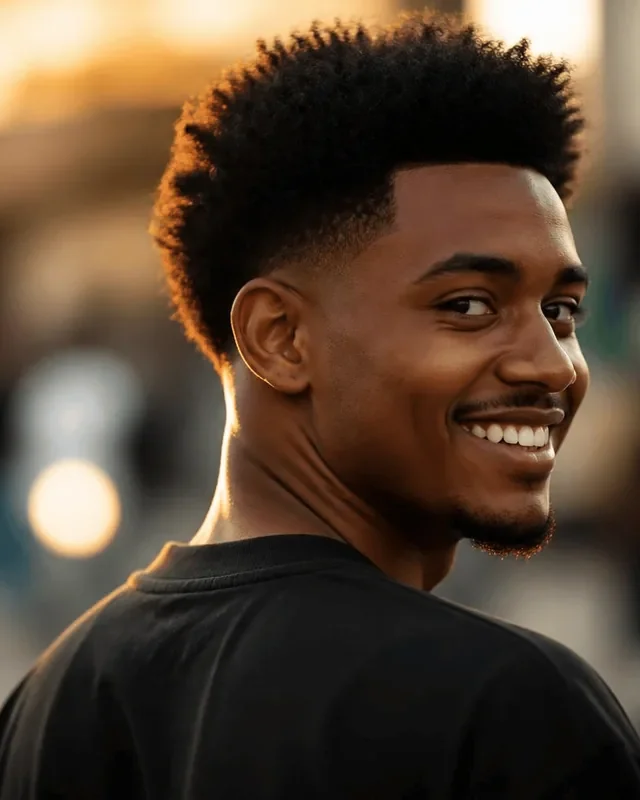
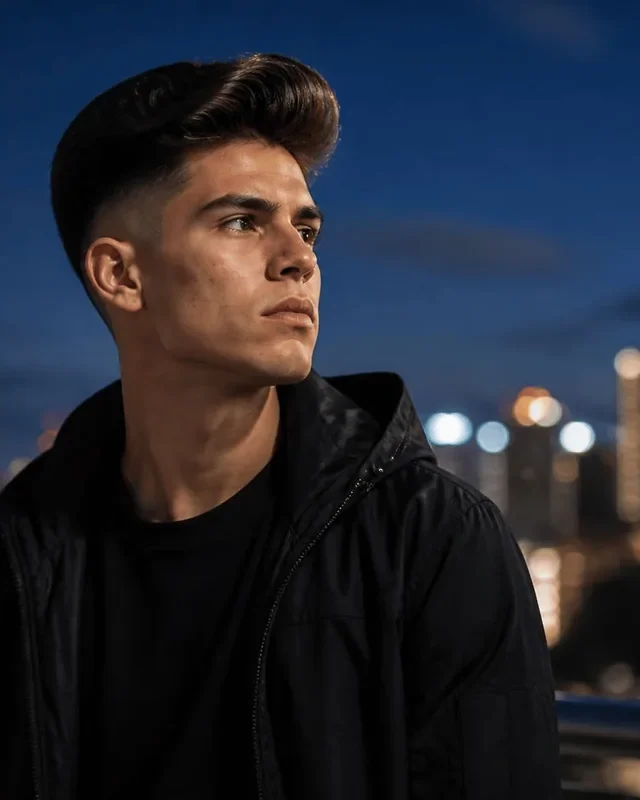
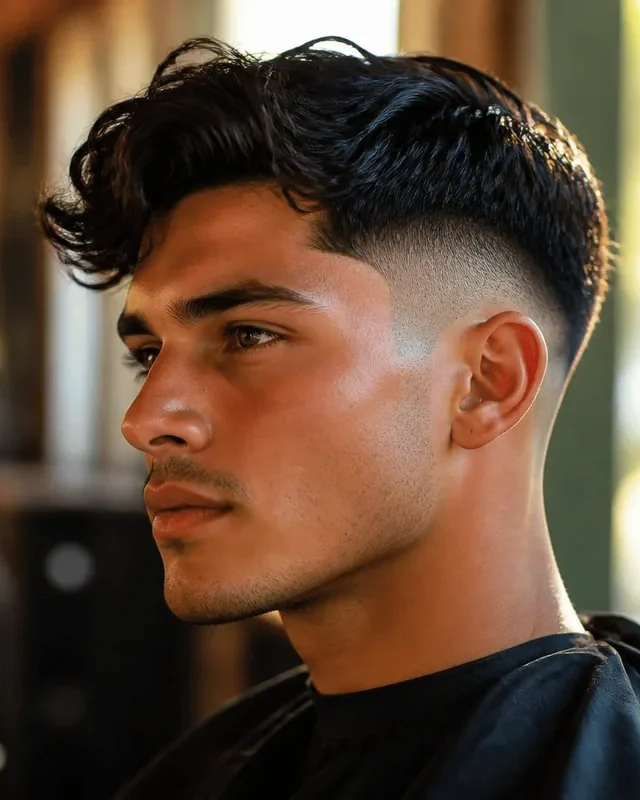
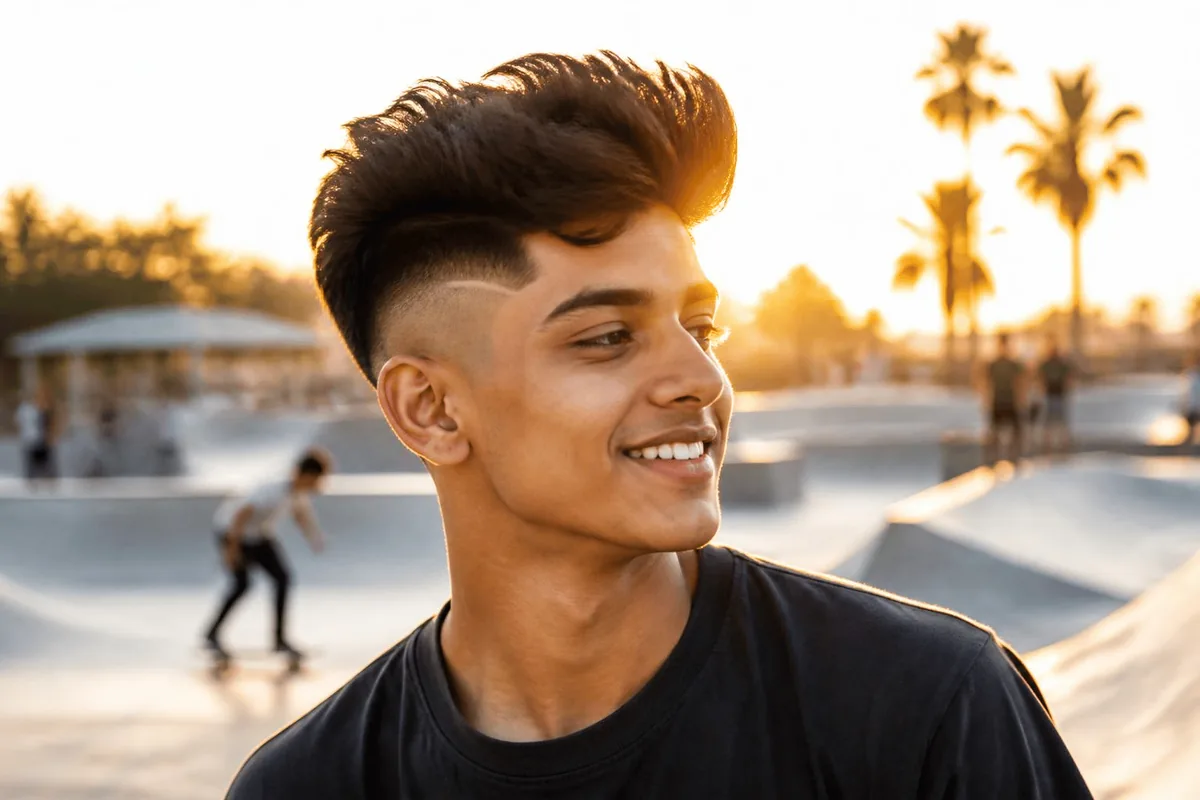
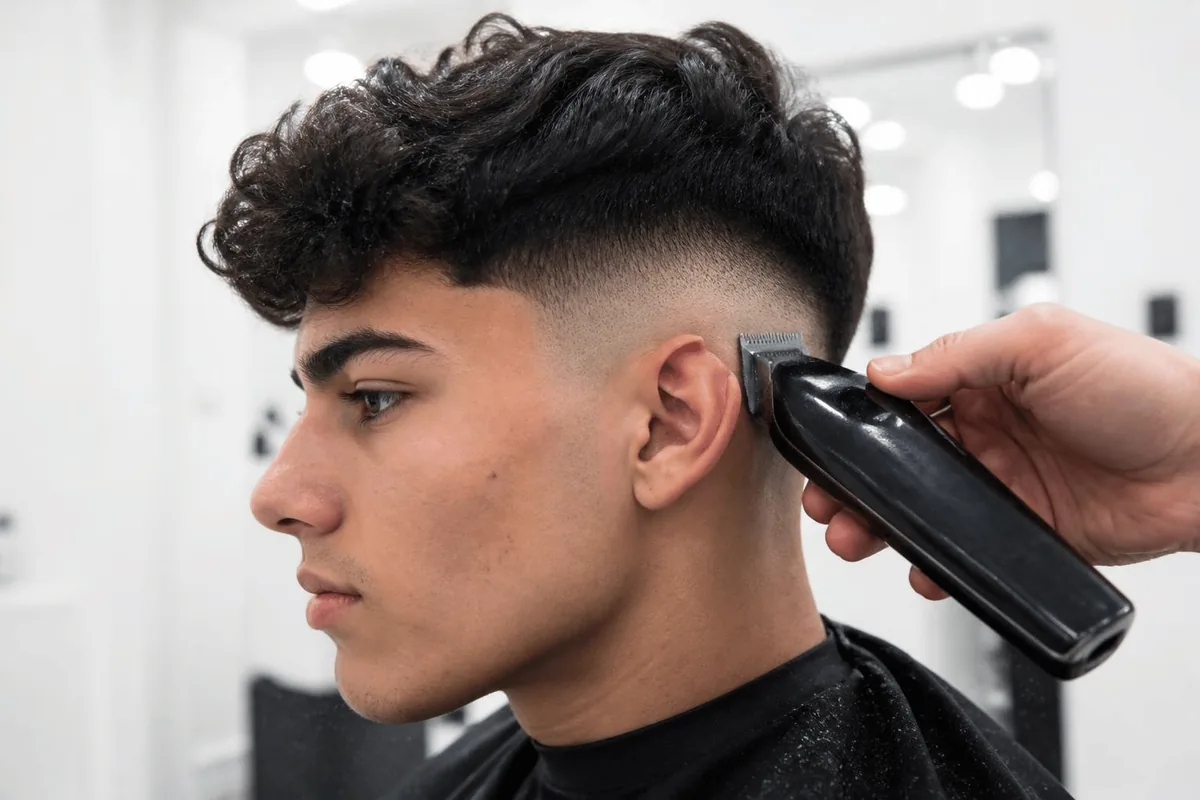
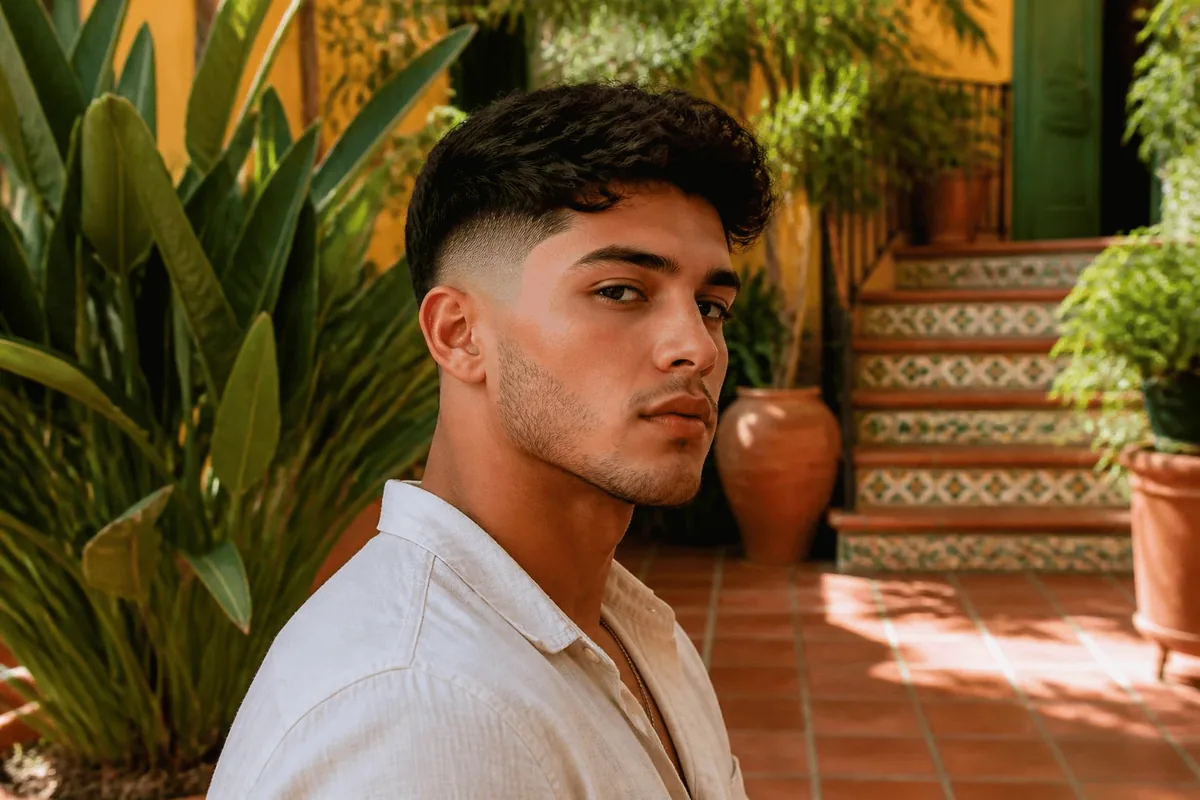
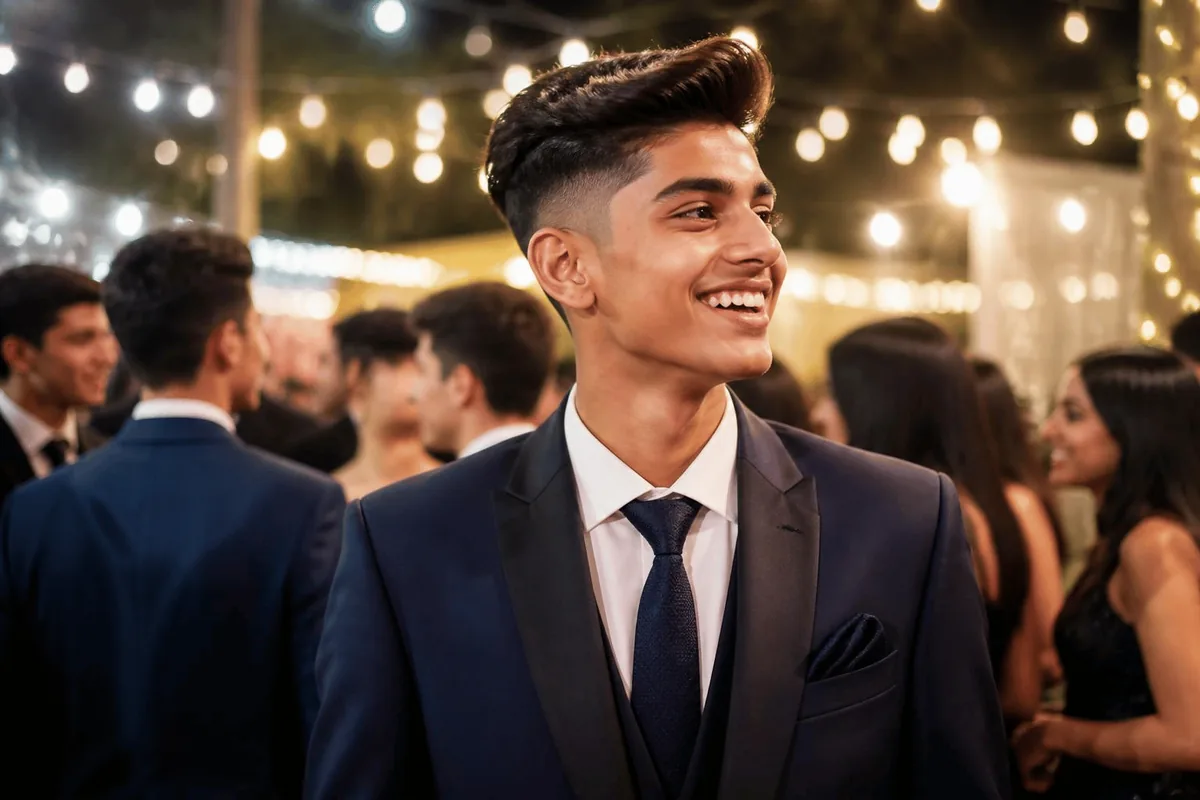
A high drop fade is a curved fade that begins high on the head, above the temple and close to where the top of the head starts to round. From that high point the line travels back, bends downward behind the ear and finishes at the nape. The result is a large area of very short hair on the sides and a distinct separation from the longer top.
Think of three variables. The start is high, so the short zone is big. The line is curved, so the shape follows the skull instead of cutting straight across. And the bottom is usually very short, which gives the contrast its edge. Take any one of those away and you have a different haircut: a high fade is level, a mid drop starts lower and a taper is softer.
You will see the cut described as a high drop fade haircut, a high drop fade skin version, a high drop fade with a taper and a high drop fade for Black men. The names change with the hair and the finish, but the shape is the same.
Where does the line start and finish?
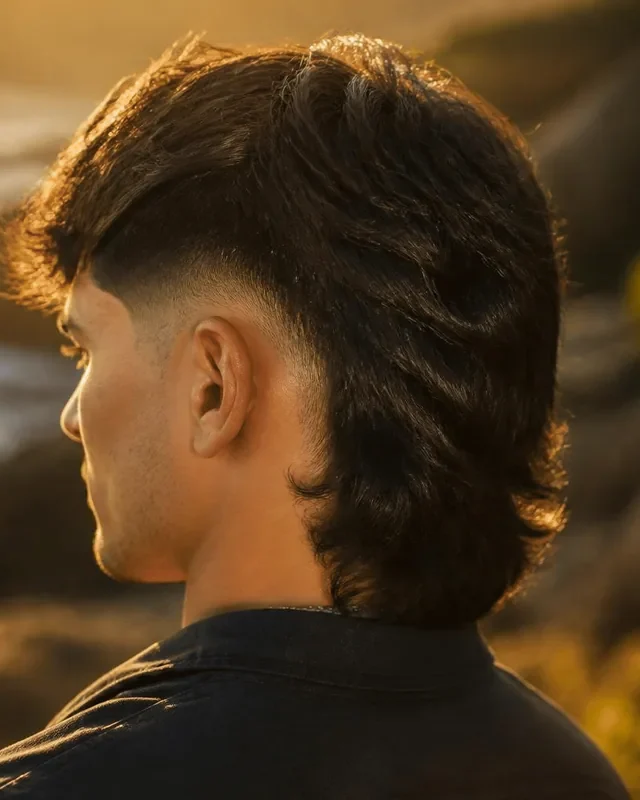
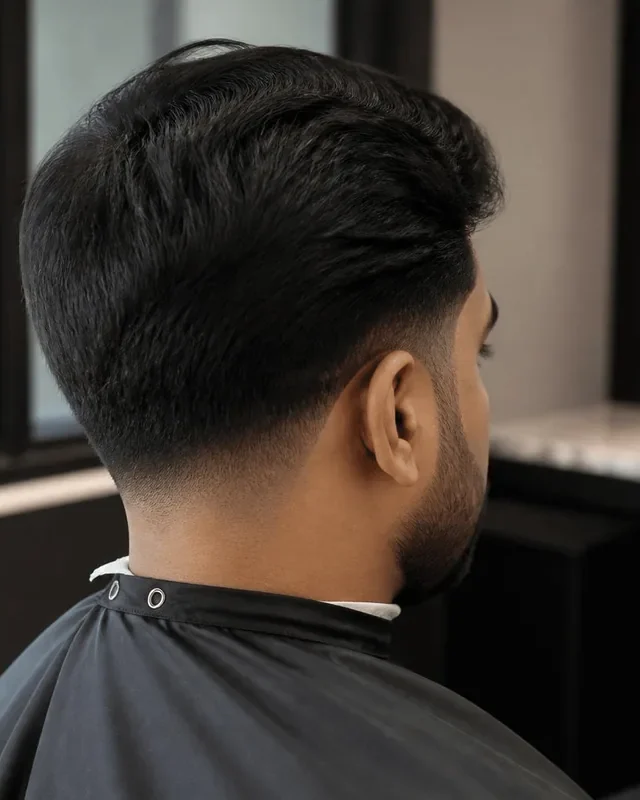
Picture the head from the side. A high drop starts about 3 to 4 cm above the top of the ear, at or above the temple line, and holds that height through the front. Behind the ear it begins to angle downward and finishes at the nape, 3 to 5 cm lower than where it started. That longer fall is why it reads as more dramatic than the mid or low versions.
- Front: the fade begins at the temple or slightly above it.
- Side: the line crosses above the ear at a steady height.
- Back: the arc drops and finishes near the nape, so the back of the head looks rounded.
If you prefer a smaller drop, compare the mid drop fade and the low drop fade.
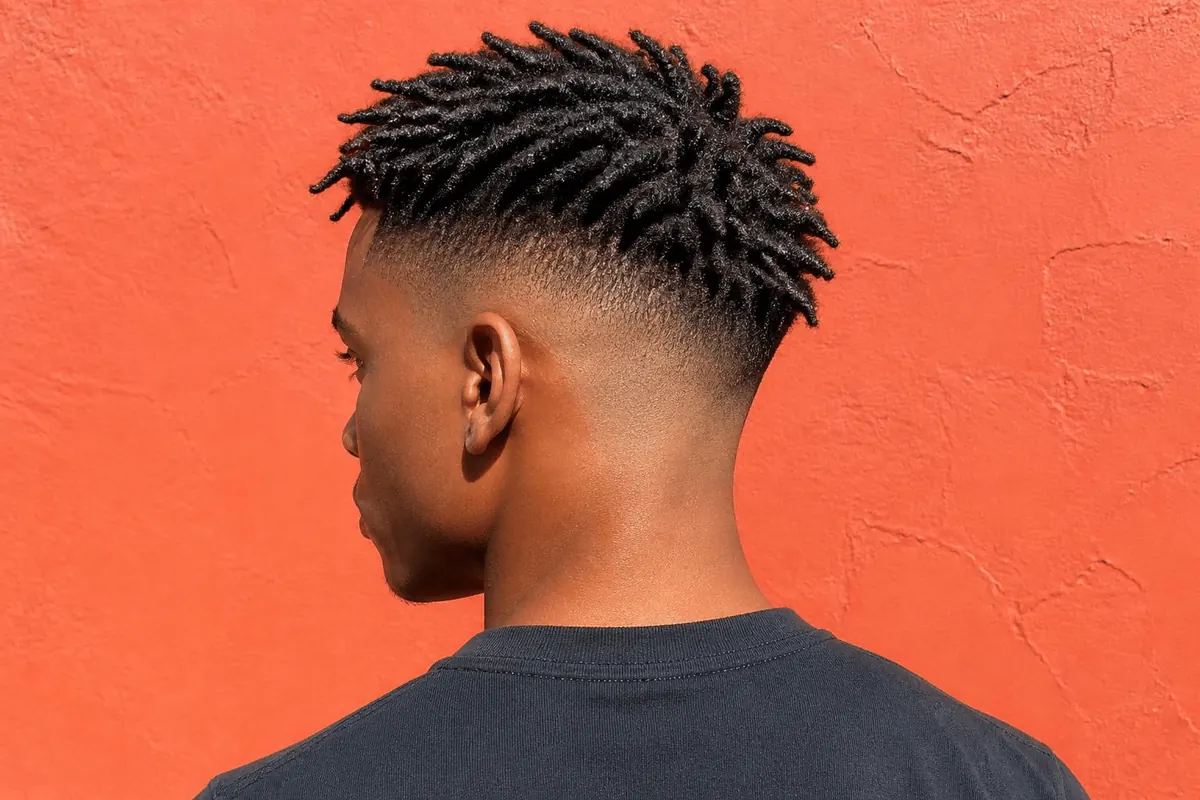
How does it differ from a high fade, a high taper and a burst?
| Cut | Starts at | Back line | Contrast |
|---|---|---|---|
| High drop fade | Above the temple | Curves down toward the nape | Very high |
| High fade | Above the temple | Level | High |
| High taper | Sideburn and nape | Short edges only | Low to medium |
| Burst fade | Around the ear | Semicircle, back stays long | High |
| Skin fade | Any height | Bare at the bottom | Highest |
A level line behind the ear is a high fade. A line that drops is a high drop. A line that circles the ear and leaves the back long is a burst. Many men order the wrong one because they only look at the front, so bring a photo of the back.
Which guards should you ask for?
High versions use shorter guards, because the point is contrast. Guard sizes differ by brand, so bring a reference photo. Our haircut numbers page explains each size.
| Finish | Bottom | Middle | Top of fade |
|---|---|---|---|
| Skin (bald) | 0 mm or razor | #0.5 to #1 | #2 |
| Short | #0.5 | #1 to #1.5 | #2 or #3 |
| Medium | #1 | #2 | #3 |
| Soft (taper-like) | #2 | #3 | #4 |
The most requested order is a skin or #0.5 bottom, a #1.5 middle and a #3 at the top of the fade. If your hair is fine or thinning, choose the soft option. A short fade on thin hair shows scalp and makes the top look thinner by comparison.
What is a high skin drop fade, and who should choose it?
The skin version goes down to bare skin at the bottom, which gives the curve its most dramatic edge. It looks superb on dark hair, in photos and under good light. It also asks the most of you: a visit every 1 to 2 weeks, a clean scalp and a skin that tolerates a razor.
- Good for: men with dense, dark hair, strong jaws and a bold style.
- Be careful if: you have sensitive skin, ingrown hairs or scars on the sides of the head.
- Skip it if: your workplace has a conservative dress code or you cannot visit every fortnight.
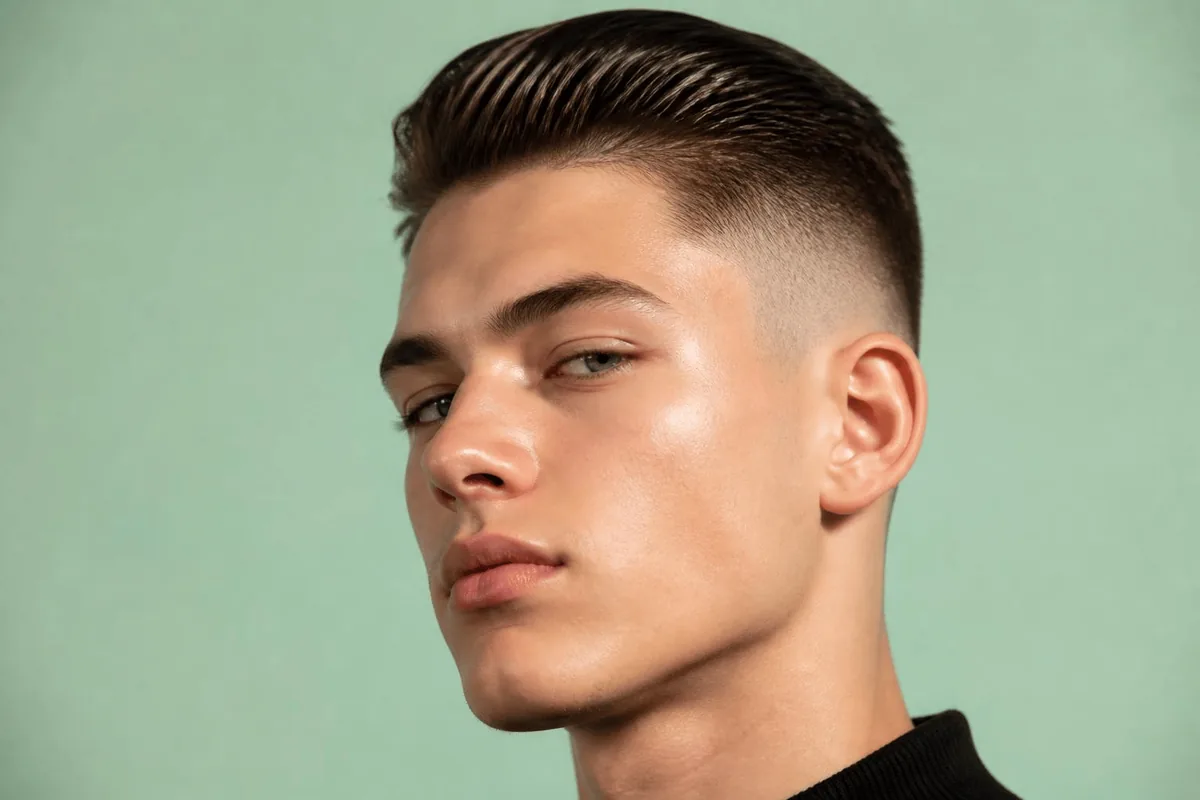
Which tops make the most of the height?
A high fade leaves a lot of room above the line, so the top has a bigger job. Choose a style with volume or length, or the cut looks unbalanced.
| Top | Length | Why it works | Best hair |
|---|---|---|---|
| Pompadour | 8 to 12 cm | Volume balances the short sides | Straight, wavy, thick |
| Quiff | 6 to 9 cm | Height with a softer finish | Straight, wavy |
| Slick back | 8 to 12 cm | Sharp, formal, long lines | Straight, thick |
| Textured top | 5 to 8 cm | Broken texture against clean sides | Wavy, thick |
| Short afro | 3 to 8 cm | A rounded shape above a crisp line | Coily |
| Curly top | 4 to 9 cm | Defined curls with clean edges | Curly |
| Long top, man bun | 12 cm and above | Tight sides keep the length tidy | Any long hair |
For the best volume, see drop fade pompadour. For curls and coils, our pages on drop fade curly hair and drop fade black men go deeper.

How does it look on an afro or short coily top?
This is where the cut shines. On coily hair, a high drop gives a crisp separation between the shaped top and the faded sides. The arc behind the ear frames the head, and a shape-up at the hairline finishes the picture. Use a pick to lift the top evenly, and ask the barber to keep the top round so the proportions look natural.
Moisture matters. Dry hair at the fade line shows as ashy skin or flaking, so use a light moisturiser or oil on the scalp after the cut. Sleep in a satin bonnet or on a satin pillowcase to protect the shape.
Which face shapes suit a high drop fade?
The height changes how tall and narrow the head looks, so match it to the face.
- Round faces benefit most, because tight sides and a tall top add length.
- Oval faces suit almost anything.
- Square faces look softer with a textured, slightly messy top.
- Long faces should avoid extra height and keep the top short.
- Heart faces can pair a high fade with a longer fringe to balance a wide forehead.
Check the haircuts by face shape page for the complete chart.
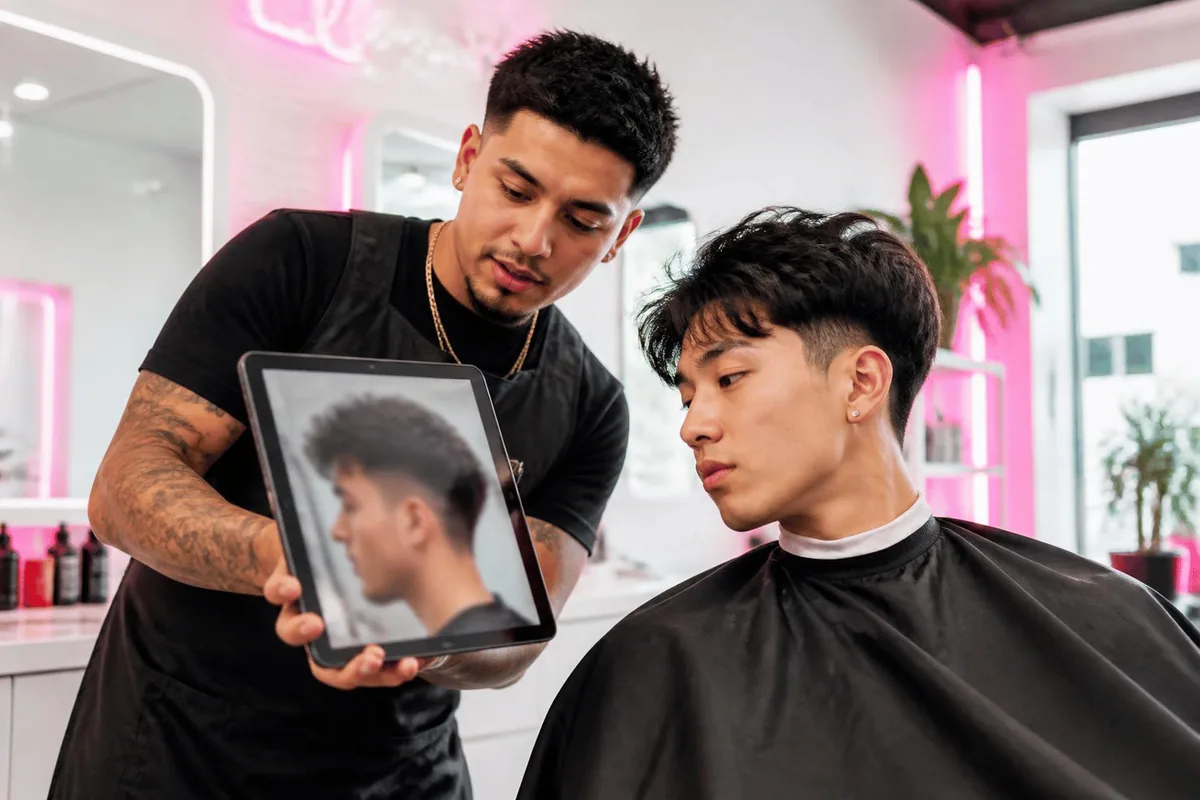
How to ask the barber for a high drop fade
With a dramatic cut, clear instructions matter more than usual. Use this script.
- “A high drop fade with a skin bottom.” State the height, the curve and the finish.
- “Start at a #0.5 and go to a #3 at the top of the fade.” This sets both ends.
- “Start above the temple and drop it behind the ear.” Point to the spots.
- “Leave 8 cm on top.” Show the length with your fingers.
- “Shape up the hairline.” Only if you want a crisp front edge.
- “Please check the back in the mirror.” The curve is hardest to see from the front.
For more phrases, read how to ask for a haircut.
How do barbers cut the high curve? Step by step
This overview helps you follow what your barber is doing. If you want to attempt it, start with our how to cut a drop fade guide.
Step 1: Set the guideline high
The barber marks the line above the temple and curves it downward behind the ear. What goes wrong: a line set too high leaves the top looking small, and a line set too low changes the cut to a mid version.
Step 2: Clear the bulk
A long guard removes the bulk below the line. What goes wrong: rushing through thick hair leaves ridges.
Step 3: Work down with shorter guards
The barber moves through #3, #2 and #1 with a flick at the end of each stroke. What goes wrong: using the same angle each time makes the gradient too abrupt.
Step 4: Bring in the foil or trimmer
For a skin finish, a trimmer or foil shaver takes the bottom to bare. What goes wrong: pressing hard on dry skin causes irritation.
Step 5: Blend the curve
Clipper over comb softens the line behind the ear. What goes wrong: a hard transition at the curve looks like a cut-out.
Step 6: Finish the top
The top is cut and shaped. What goes wrong: leaving the top too short removes the contrast that makes the cut work.
How do you style the top once the tall fade is cut?
A high fade tolerates product well because the sides are so short. Use a strong product on the top and nothing on the sides.
- Dry the top. Use a blow dryer and a round brush to lift the hair.
- Apply pomade or clay. A pea-sized amount, warmed between your palms.
- Shape. Push the hair up and back, or forward, depending on the style.
- Set. A light hold spray helps in wind and humidity.
Our best hair products for men guide compares pomades, clays and pastes.
Does a tall fade suit sport, the gym and hot weather?
Yes. Very short sides stay cool, dry quickly and cause less irritation under helmets and headbands. Footballers, boxers and runners often choose a high version for the same reasons. The downside is that sweat and friction can irritate a freshly shaved scalp, so wait a day before intense exercise if you have just had a skin finish.
In hot weather, remember sun protection. A fade leaves more skin exposed on the sides of the head, so apply sunscreen or wear a hat on long days outdoors.

How long does a tall fade stay sharp before it needs a trim?
A high version loses its crispness quickly because the contrast is large. The Cleveland Clinic says hair grows about 1 centimetre per month, so a bare bottom fills in within days. The figures below are typical estimates.
| Finish | Visit every | Why |
|---|---|---|
| Skin bottom | 1 to 2 weeks | Regrowth shows fast |
| #0.5 or #1 bottom | 2 weeks | The default schedule |
| #2 bottom | 2 to 3 weeks | Softer outline |
If you cannot visit every two weeks, choose a lower height. The how often should men get a haircut page explains more.
How do you prevent razor bumps (pseudofolliculitis barbae) and scalp irritation?
Razor bumps have a medical name, pseudofolliculitis barbae. It happens when a freshly cut hair curls back and grows into the skin, and it is most common on tightly coiled hair around the nape and behind the ears.
Skin finishes and razors raise the risk of ingrown hairs, especially on coily hair. The American Academy of Dermatology offers a clear guide to razor bump prevention. Ask for clippers where you can, cut with the grain, rinse the loose hair and moisturise. Do not pick at bumps.
Which high-fade mistakes make the cut look harsh?
| Mistake | Result | Fix |
|---|---|---|
| Top too short | The contrast disappears | Leave at least 5 cm |
| Fade too high for the face | Head looks long | Choose a mid version |
| Hard line at the curve | Looks cut out | Ask for a longer blend |
| Skipping visits | Fuzzy sides | Book every two weeks |
| Dry scalp | Flaking at the line | Moisturise after washing |
Can you wear a high drop fade with a receding hairline?
You can, but the height needs care. A high fade removes length from the sides and exposes the temples, which makes a receding hairline more visible. If the recession is mild, a high drop fade with a forward-swept top can look sharp and deliberate. If the recession is advanced, a mid or low version hides it better, because the fuller sides frame the face.
Three tweaks help. Keep the top at least 5 cm so it can be styled forward. Choose a #1 or #2 bottom instead of skin, so the contrast is not stark. And ask the barber to leave a little extra length around the temples. Our receding hairline page lists more options.

What beard works with a high drop fade?
A high fade makes the lower half of the face the focus, so the beard needs to be shaped. A short, sharp beard with a clean cheek line looks best, especially if the fade blends into the sideburn. A full, bushy beard can make the face look top-heavy next to such short sides. Ask for the beard to be tapered into the sideburn, and keep the neckline about a finger above the Adam’s apple.
For beard styles that pair well with fades, see our beard fade guide.
Is a tall fade suitable for teenagers and school dress codes?
Many teens like it, and some schools accept it if the bottom is a #1 or #2. A skin finish or a design cut can break the dress code, so ask first. Young skin is more sensitive, so skip the razor on the neckline and use a gentle moisturiser after the cut. Our boys haircuts hub covers younger styles.
How much does a tall fade cost, and how long does the chair time last?
Prices vary by city and shop, so check locally. A skin finish with a shape-up takes longer than a standard cut, so expect 40 to 60 minutes in the chair. Because you need to return every two weeks, the real cost is the schedule. Some barbers offer a cheaper edge-up between full cuts, which keeps the high drop fade crisp for less money.
How do you time it for a wedding, a photo shoot or an interview?
A high drop fade looks its best between day two and day ten. On day one, the skin can be slightly red, and by day fourteen the sides have started to fill in. Book it three to five days before the event. If you need to look sharp on a specific day, schedule an edge-up for the day before, which cleans the line without a full cut.
- Wedding: add a shape-up and a light pomade, and avoid heavy hold on windy outdoor days.
- Photo shoot: ask for a slightly longer blend so the curve photographs smoothly.
- Interview: choose a softer bottom and a neat side part.
How do you soften it if it looks too stark?
If your first high drop fade feels too strong, you have options. Use a little texture product on the top so the contrast is not so sharp. Let it grow for a week, which fills the bottom and softens the edge. Ask for a slightly higher bottom guard next time, or move down to a mid version. A longer blend also helps, because it makes the gradient smoother.
Do not try to fix it with a razor at home. Nearly all attempts make the curve uneven, and a barber can correct most issues with a short visit.
What should you ask a new barber before you sit down?
Four quick questions save a lot of trouble.
- Do you cut curved fades often?
- Can you show me a photo of one you have done?
- Do you use clippers or a razor for the bottom?
- Can you check the back with a hand mirror at the end?
The answers show whether the barber understands the cut. A good one will be glad you asked.
Which top styles pair with the tall curve: undercut, comb over, waves and high top?
The tall curve starts near the temple, so the top has to carry more of the visual weight. A disconnected undercut turns the fade into a bold contrast. A comb over with a skin finish gives a sharp, formal outline. A slick back adds length without extra volume at the sides, and a high top suits coily hair that can stand at three to five centimetres.
Waves also look strong here, because the exposed scalp frames the pattern. Short hair needs very little styling, while a longer top needs a matte clay or cream to control it. If you are not sure the height will suit you, begin one step lower, then raise it at the next visit. A high drop fade is easy to cut higher later, but impossible to lengthen again. Choose the high drop fade only when you are happy to show the scalp line. A high drop fade rewards a clean, well-kept top. Ask your barber how a high drop fade will look on your head shape.
High drop fade FAQ
What is a high drop fade?
It is a curved fade that starts above the temple and drops down behind the ear.
Is it the same as a high fade?
No. A high fade runs level around the head. A drop version curves down at the back.
What guard should I ask for?
A #0.5 or skin bottom blended to a #3 is the usual order.
How often do I need a trim?
Every 1 to 2 weeks for a skin finish, or every 2 to 3 weeks for a softer one.
Is it professional?
It is bolder than the low and mid versions. Check your workplace rules first.
Which top is best?
A pompadour, quiff or short afro makes the most of the height.
Does it suit thin hair?
Choose a softer finish and a short top, or consider a lower height.
More in the drop fade series
This is one of the cluster pages under our drop fade guide. See the others on the fade haircuts hub.
Guard sizes and timings are typical estimates, since barbers and hair types differ. Our editorial policy explains how we label estimates.