On this page
What is a drop fade pompadour?How does it differ from a quiff, a slick back and an undercut pompadour?Why does the curve make the pompadour look better?How much length do you need for a drop fade pompadour?What fade and guard numbers work best?Which hair types suit a drop fade pompadour?Which face shapes suit a tall quiff with a curved fade?How do you ask for a drop fade pompadour?How do you blow-dry a drop fade pompadour?Which products suit a drop fade pompadour?How do barbers cut the fade and the quiff? Step by stepWhich drop fade pompadour variation suits you?Can wavy or curly hair carry a drop fade pompadour?Does a drop fade pompadour go with a beard?How do you keep the pompadour looking good on day two?What about humidity, wind and rain?How much does this pompadour cut cost?Who should think twice before choosing this cut?How do you grow out a pompadour while keeping the fade tidy?Which tools do you need at home?Can you wear it with thinning hair?Is it suitable for work and formal events?How long does a pompadour fade stay sharp before the curve softens?How do you prevent razor bumps (pseudofolliculitis barbae) after a fade?Which pompadour mistakes flatten the quiff and expose the fade?How does the cut differ with a taper, a skin fade or a burst?Drop fade pompadour FAQMore in the drop fade seriesQuick answer. A drop fade pompadour pairs a tall, swept-back top with sides that fade down in a curve behind the ear. Keep 7 to 12 cm on top, ask for a mid drop with a #1 or #2 bottom and style the top with a blow dryer and a medium-hold pomade or clay. The curve frames the volume, so the pompadour looks tall and controlled. Book a trim every 2 to 3 weeks to keep the sides crisp.
A pompadour makes a promise: height, shape and a little swagger. The side haircut decides whether the promise is kept. Pair it with a level fade, and the volume can look like a hat. Pair it with a curve, and the volume looks grown from the head. That is why barbers keep reaching for the drop fade pompadour when a client asks for something sharp.
This page covers the pairing in detail: how the curve changes the shape, how much length you need, how to blow-dry the top, which products to buy, how to match the cut to your hair type and face, and how to keep the style alive between visits. For the history and the variations of the pompadour itself, see our main pompadour guide. This page is one of the clusters under our drop fade pillar.
What is a drop fade pompadour?
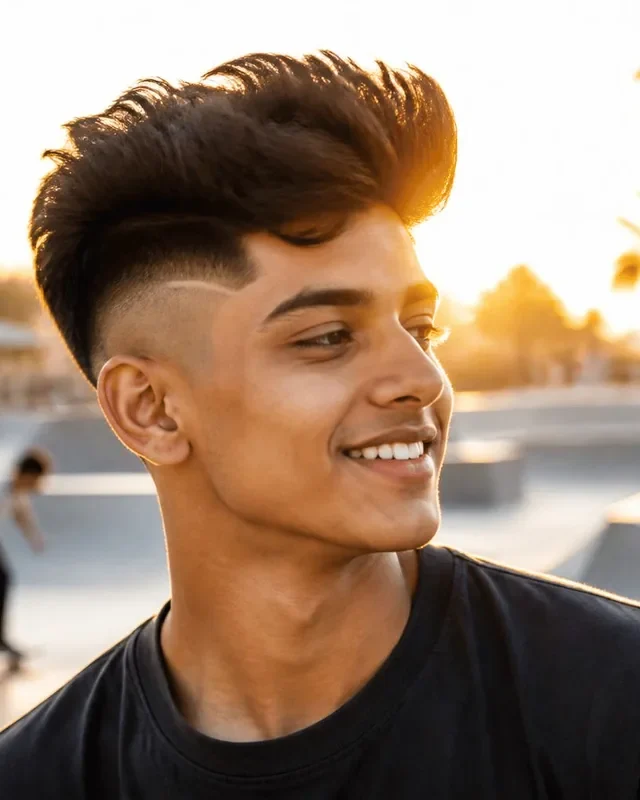
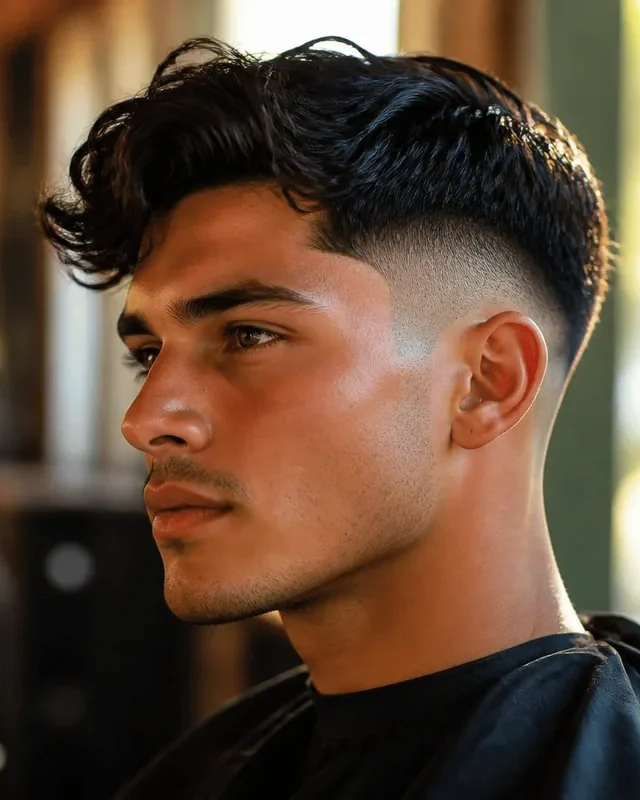
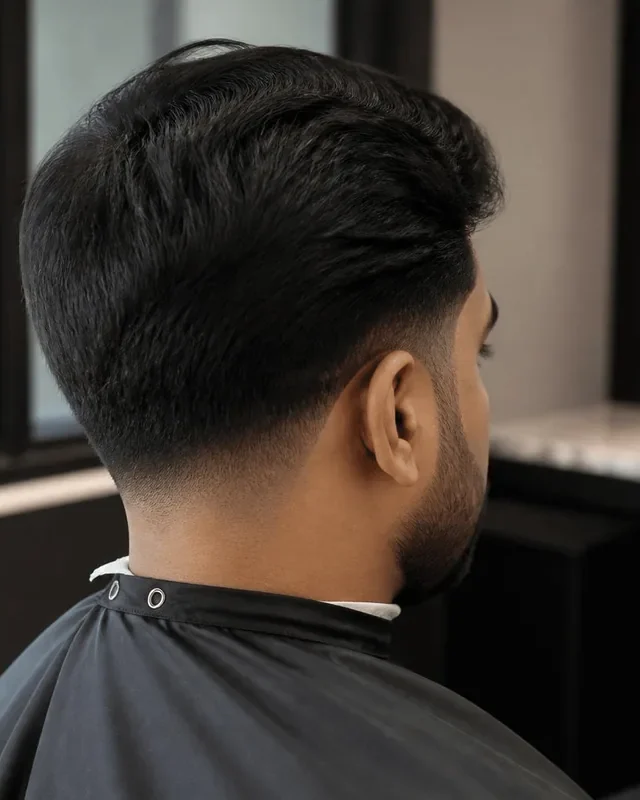
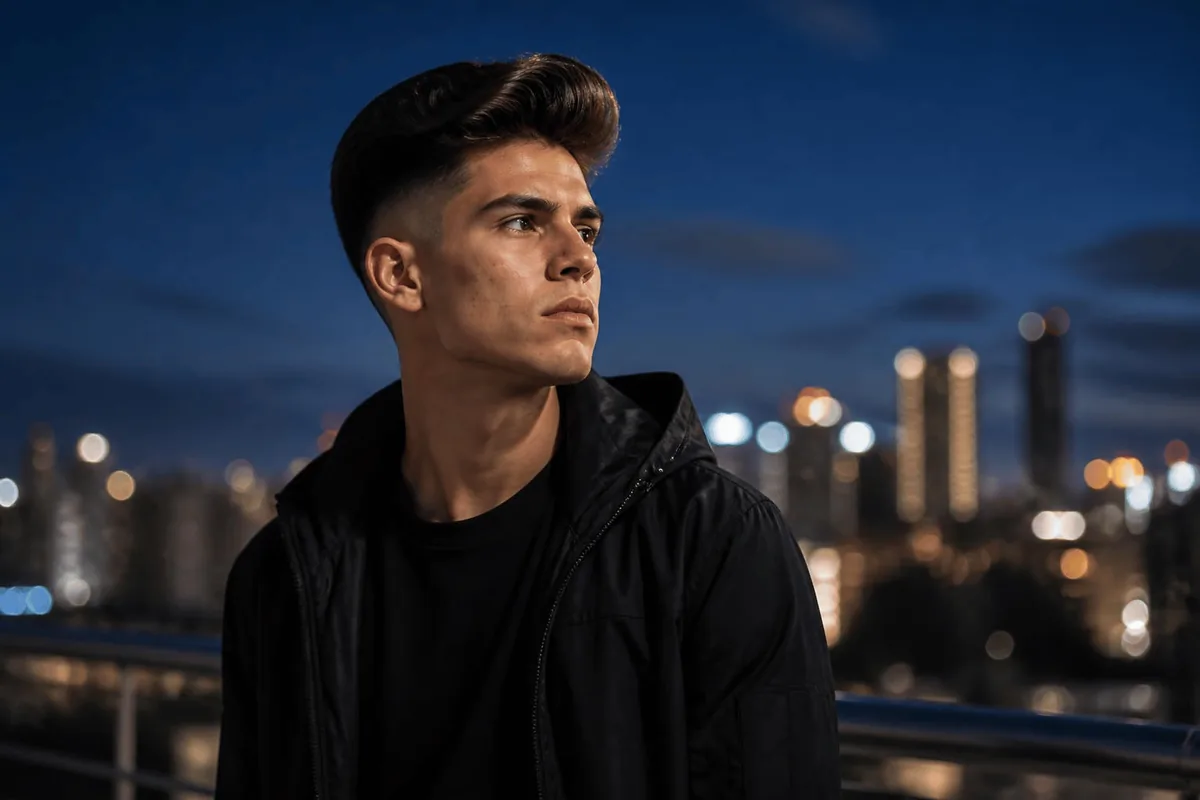
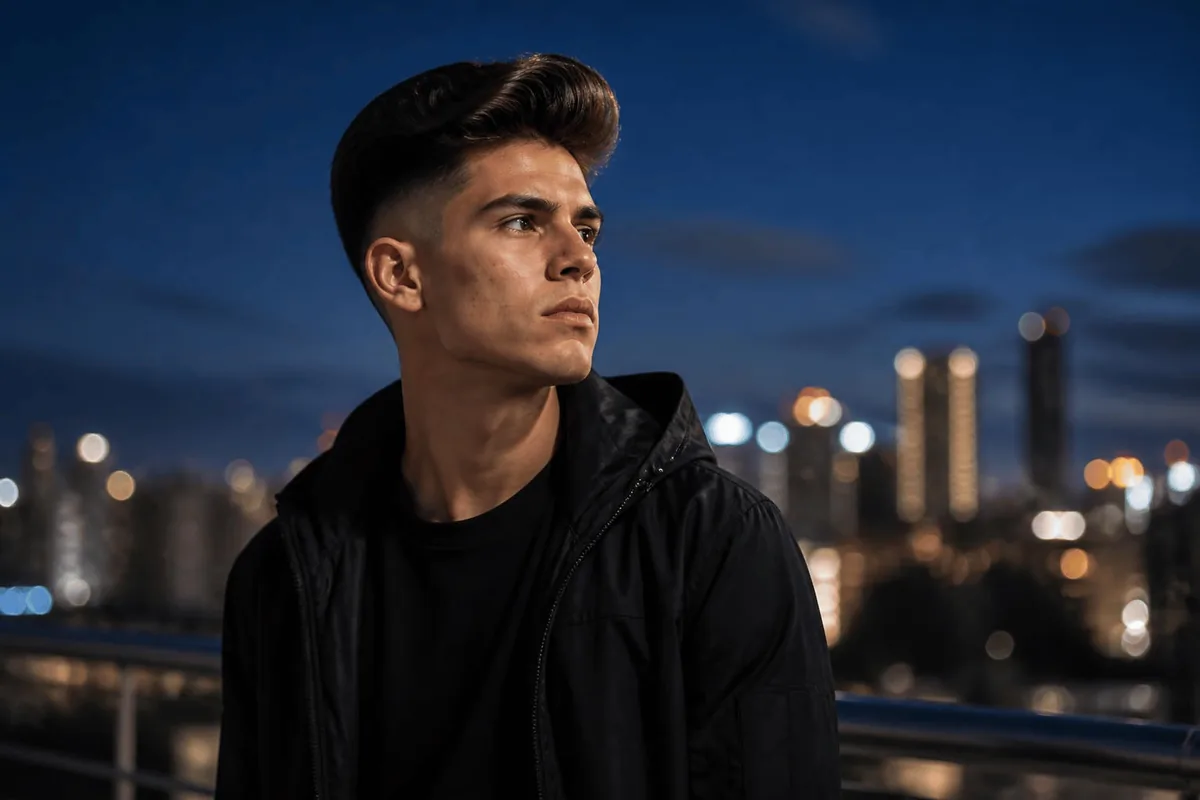
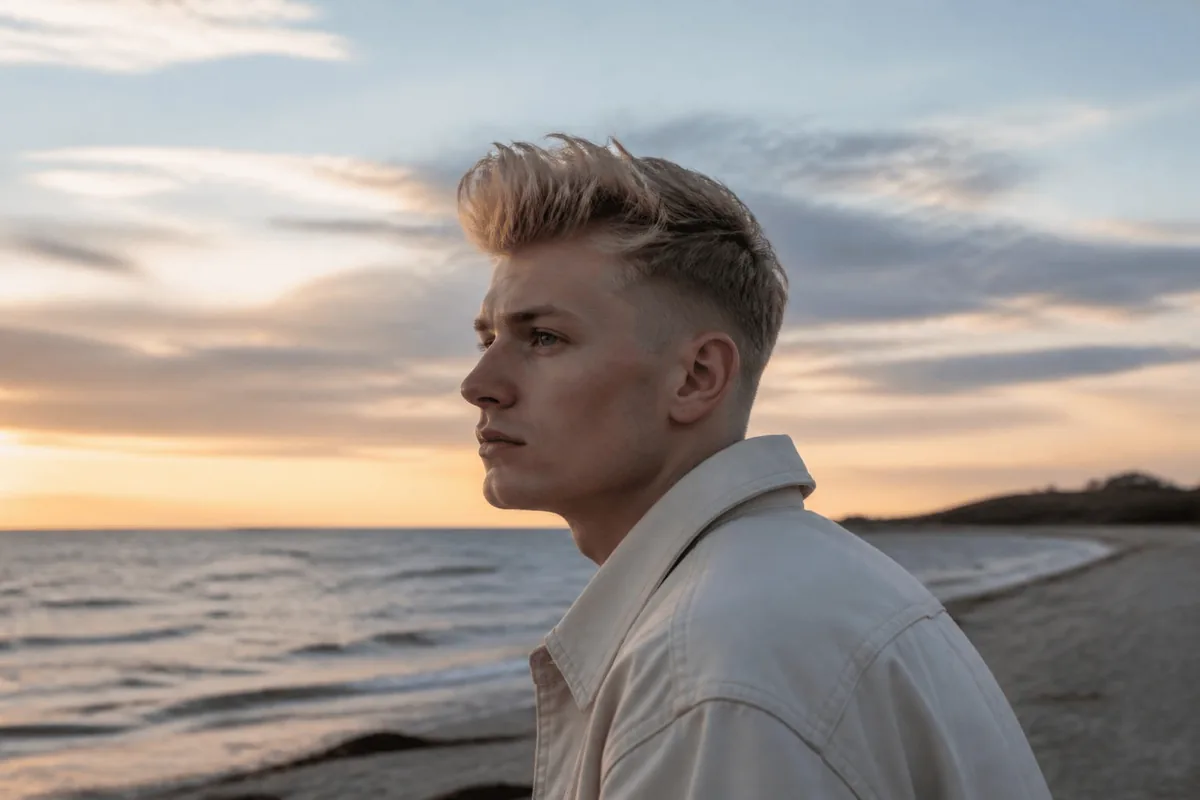
A drop fade pompadour is a pompadour haircut with a curved fade at the sides. The top is long, usually 7 to 12 cm, and it is swept up from the forehead and back over the crown. The sides are short, blended from a #1 or #2 bottom to the length of the top, and the fade line curves down behind the ear to finish at the nape.
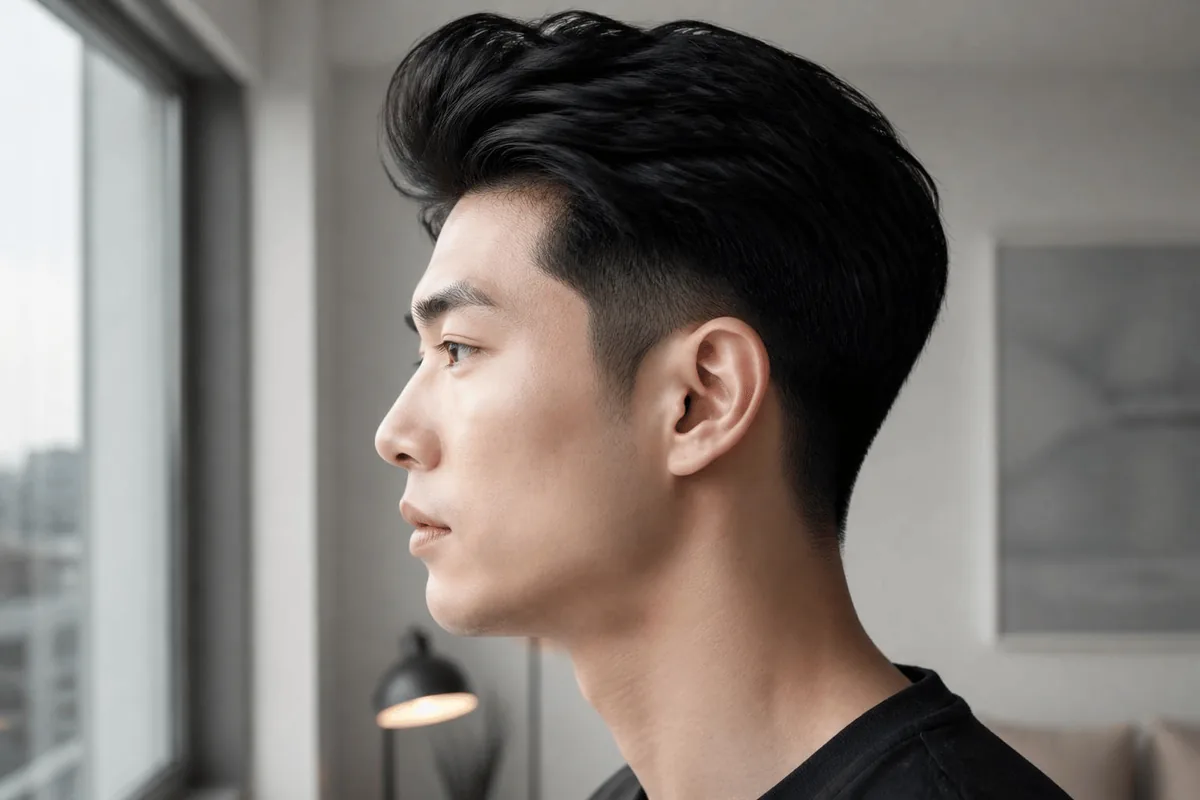
The curve matters because a pompadour adds height and roundness at the front. A level fade creates a horizontal line that cuts across that roundness. A curved fade echoes the shape of the pompadour: the top arcs up and back, and the fade arcs down and back. The two lines balance each other and make the whole head look like a single shape.
How does it differ from a quiff, a slick back and an undercut pompadour?
These styles share a long top and short sides, so they are easy to confuse. The table shows the difference.
| Style | Top length | Direction | Volume | Sides |
|---|---|---|---|---|
| Drop fade pompadour | 7 to 12 cm | Up and back | High at the front | Curved fade |
| Quiff | 5 to 9 cm | Up and forward | Medium | Fade or taper |
| Slick back | 8 to 12 cm | Flat and back | Low | Fade or scissor |
| Undercut | 8 to 15 cm | Any | Varies | One length, no blend |
A pompadour has more height at the front than a quiff, and more volume than a slick back. The undercut has no blend at all, while the fade pompadour has a gradual transition.
Why does the curve make the pompadour look better?
Three reasons come up again and again in barbershops.
- It frames the volume. The curve follows the lower edge of the top, so the volume looks supported.
- It flatters the back of the head. A flat back looks fuller with a curve, which helps when the pompadour is seen from the side.
- It grows out well. A level fade shows a ledge as it grows. The curve softens into a natural taper.
The trade-off is skill. The curve must match on both sides, and a poorly cut one can look uneven under the weight of the top. Choose a barber who cuts curved fades regularly.
How much length do you need for a drop fade pompadour?
Length decides whether the style works. Too short, and there is nothing to sweep. Too long, and it flops. The table gives a guide.
| Top length | Result | Good for |
|---|---|---|
| 5 to 7 cm | A short pompadour, more like a quiff | Office, thinner hair |
| 7 to 10 cm | A classic, balanced pompadour | Most men |
| 10 to 14 cm | A tall, dramatic pompadour | Thick hair, confident styling |
Hair grows about 1 centimetre per month, according to the Cleveland Clinic, so reaching 10 cm from a short cut takes close to ten months. Use the growth period to keep the fade sharp, and ask for light trims of the top every two to three months to remove split ends.
What fade and guard numbers work best?
The fade should be neat and not overpower the top. Mid and low heights usually work best, because they leave enough side hair to support the volume.
| Height | Bottom | Top of fade | Effect |
|---|---|---|---|
| Low drop | #2 | #4 | Soft, classic, office-safe |
| Mid drop | #1 | #3 | Balanced, the most common |
| High drop | #0.5 or skin | #3 | Bold, dramatic contrast |
Our pages on low drop fade, mid drop fade and high drop fade explain how each height changes the look. For guard sizes, see haircut numbers.
Which hair types suit a drop fade pompadour?
| Hair type | How it behaves | Tip |
|---|---|---|
| Straight, thick | Holds shape well | Blow-dry with a brush, use pomade |
| Straight, fine | Falls flat easily | Use volumising powder or mousse |
| Wavy | Natural lift | Use a light cream, dry with a diffuser |
| Curly | Natural volume, less sleek | Shape the curls upward with a pick |
| Coily | Dense height | Pick, moisturise, shape round |
Straight, thick hair is the classic fit, and it gives the sleekest result. Fine hair needs more help, and a texture product can make the difference. Curly and coily hair can wear a pompadour as a tall, textured top. Read drop fade curly hair for the routine.

Which face shapes suit a tall quiff with a curved fade?
- Round faces benefit most, because height adds length.
- Square faces suit a softer, slightly messy pompadour.
- Oval faces can wear almost any version.
- Long faces should keep the height modest, since too much adds length.
- Heart faces can wear it with a slight side sweep to balance the forehead.
The haircuts by face shape page has the full chart.
How do you ask for a drop fade pompadour?
The barber needs to know both the fade and the length of the top. Use this script.
- “A mid drop fade with a pompadour on top.” Name both parts.
- “Start the fade at a #1 and go to a #3.” Say the guards.
- “Curve it behind the ear.” Point to the spot.
- “Leave 9 cm on the top, longer at the front.” Show the length.
- “Blend the sides into the top without a hard line.” This keeps the shape smooth.
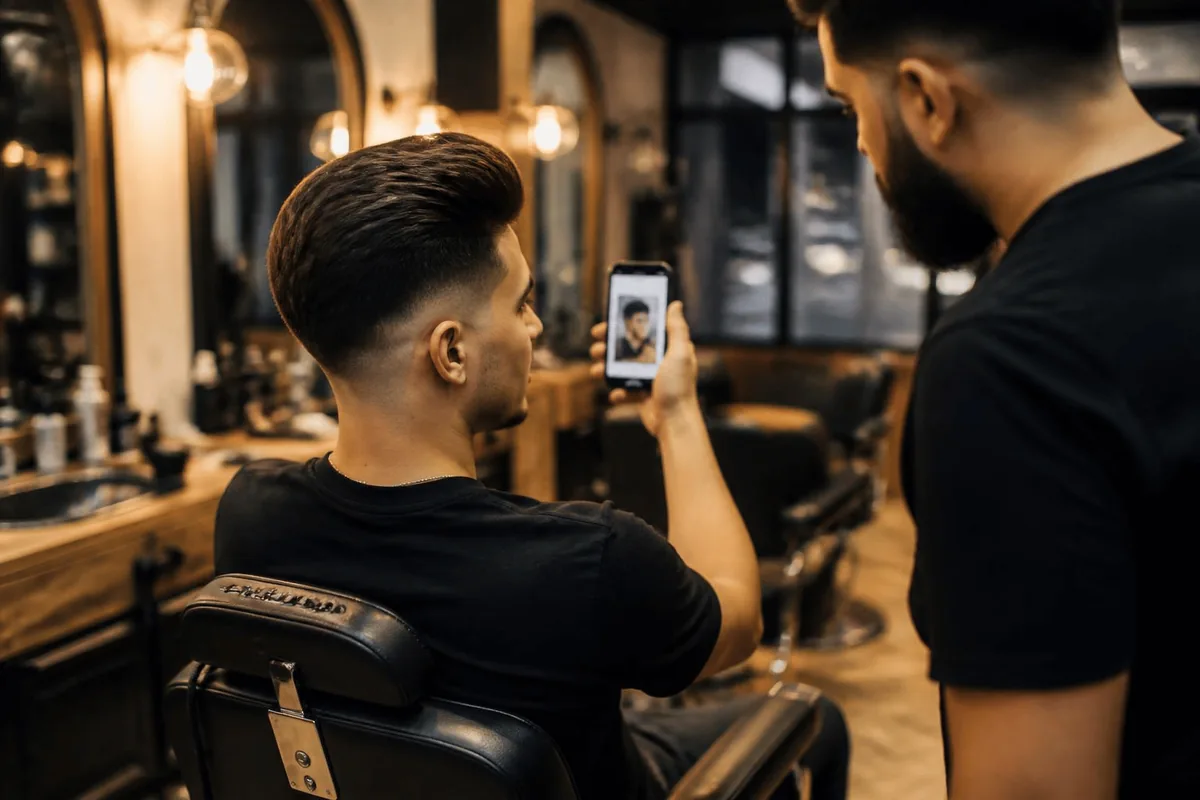
- “Please show me how to blow-dry it.” Many barbers will demonstrate.
More phrases are on our how to ask for a haircut page.
How do you blow-dry a drop fade pompadour?
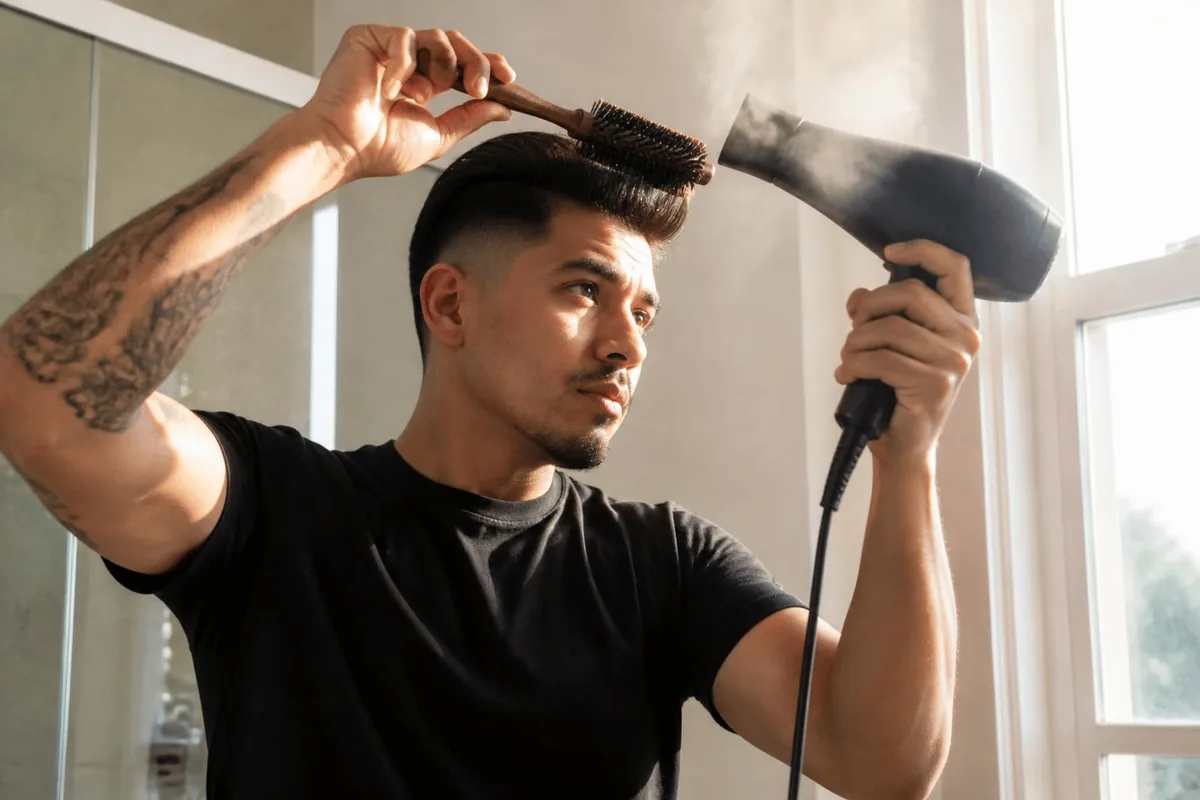
The blow-dry gives the pompadour its height, so it is the most important step. Practise it, and it will take under five minutes.
- Start with towel-dried hair. Leave it damp, not wet.
- Apply a heat protectant or mousse. This adds grip and protects the hair.
- Dry the front up. Use a round brush or a comb, lift the hair at the roots and aim the dryer up and back.
- Dry the sides and back. Brush them back and keep them flat.
- Cool shot. Use the cold setting to set the shape.
What goes wrong: drying the front forward flattens the volume. Always dry up and back, and finish with a cool shot.
Which products suit a drop fade pompadour?
| Product | Hold | Finish | Best for |
|---|---|---|---|
| Water-based pomade | Medium to high | Shiny | Classic, sleek looks |
| Clay | Medium to high | Matte | Textured, modern looks |
| Paste | Medium | Satin | All-round use |
| Volumising powder | Light | Matte | Fine hair |
| Hairspray | Light to strong | Natural | Windy days |
Use a pea-sized amount, warmed between the palms, and work from the back to the front. Keep product off the sides. Our best hair products for men page compares options.
How do barbers cut the fade and the quiff? Step by step
Step 1: Section the top
The barber clips the top away from the sides. What goes wrong: the fade cuts into the top, and removes length.
Step 2: Mark the fade line
The curve is drawn from the temple to behind the ear. What goes wrong: a line that is too high leaves little hair to support the top.
Step 3: Cut the fade
Clippers blend from the bottom to the top. What goes wrong: a hard line between the fade and the top leaves a visible edge.
Step 4: Cut the top
Scissors shape the top, longer at the front and tapering to the crown. What goes wrong: cutting the front too short removes the pompadour.
Step 5: Blend the join
The barber connects the fade to the top, using scissors over comb. What goes wrong: a gap between the two leaves a ring around the head.
Step 6: Style and check
The barber styles the top and checks the outline. What goes wrong: skipping the side and back views.
To learn the clipper method, see how to cut a drop fade.
Which drop fade pompadour variation suits you?
The pompadour is a family of looks, and the drop fade pompadour works with each of them. Pick the version that matches your hair, your job and the time you will spend each morning.
- Classic. Smooth, shiny and combed back with a defined side part or none at all. It needs a water-based pomade and a comb. Best for straight and wavy hair.
- Modern. A little shorter at 7 to 9 cm, with a matte finish and visible texture. It looks lived-in and takes about five minutes.
- Textured. Cut with point cutting so the ends separate. Clay and sea salt spray do the work. Best for thick or curly hair, and for anyone who dislikes a shiny finish.
- Wet look. Heavy shine from a gel or strong pomade. It photographs well but suits evenings more than offices.
If you are unsure, start with the modern version. It forgives a missed trim and a rushed morning, and you can move toward classic or textured once you know how your hair behaves.
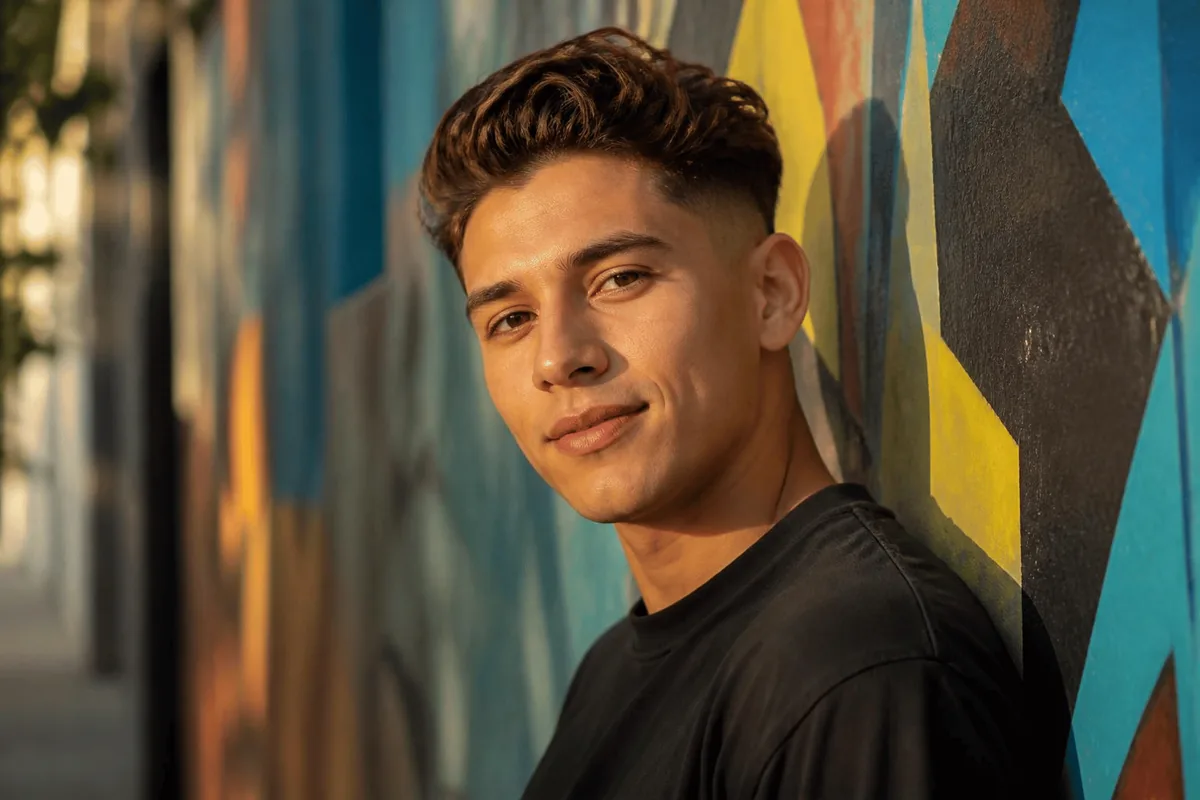
Can wavy or curly hair carry a drop fade pompadour?
Yes, and some of the best examples come from curly hair. The curl adds natural lift, so you need less blow-drying. The difference is in the finish: curls do not lie flat and glossy, so the shape is bigger and softer. Ask for a top of 8 to 12 cm, because curl shrinks length by a third or more when it dries.
Use a curl cream on damp hair, diffuse the top upward, then finish with a little clay to hold the front. Coily hair works too, and the curve at the sides gives the rounded top a clean base. If your hair is curly, read our guide to the drop fade for curly hair for a full routine, and the page on the drop fade for Black men for texture-specific advice.
Does a drop fade pompadour go with a beard?
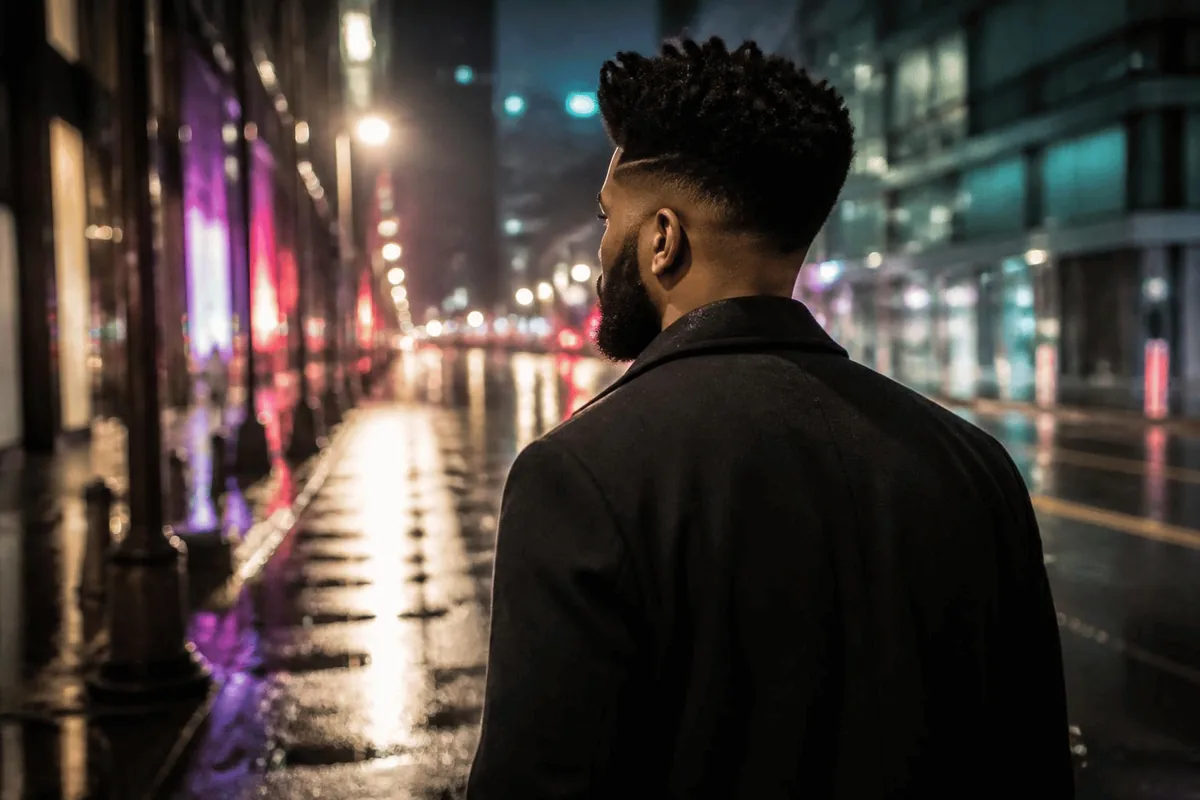
It does, as long as the fade and the beard meet cleanly. The curve of the fade drops behind the ear, and the beard line climbs to meet it near the sideburn. A good barber links the two so the face has no gap or hard line.
A short, neat beard keeps the pompadour as the focus. A full beard adds weight to the lower face, so the top needs more height to stay in proportion. Trim the cheek line every week and the neckline of the beard to match the fade. For the beard side of the cut, our pillar on the beard fade covers the transition in detail.
How do you keep the pompadour looking good on day two?
The top rarely looks perfect on the second morning, and that is normal. A few habits help.
- Sleep on a silk or satin pillowcase. It reduces friction and keeps the volume from flattening.
- Do not wash every day. Wash two or three times a week with a gentle shampoo, and rinse with water in between.
- Refresh, do not restyle. Mist the top with water, blow-dry for 60 seconds with the dryer pointing up and back, then add a pea-sized amount of product.
- Comb with a wide-tooth comb. A fine comb pulls the volume down and splits the shape.
What goes wrong: adding fresh pomade on top of yesterday’s, which makes the top heavy and greasy. Rinse first, then restyle with a small amount.
What about humidity, wind and rain?
Weather is the pompadour’s main enemy. Humidity makes straight hair frizz and curly hair swell. Wind lifts the front and drops the sides. Rain flattens the top.
In humid weather, use a pomade with a matte finish and a light mist of hairspray. In wind, a firm clay and a finishing spray anchor the shape. For rain, keep a small comb and a hat that does not press on the top. The curved fade stays tidy through all of this, which is one more reason to choose it over a level skin fade.
How much does this pompadour cut cost?
Prices vary by city and barbershop, so treat these numbers as typical estimates. A standard cut with a fade and styling usually costs more than a plain clipper cut, because the curve and the top take longer. Expect to pay at the upper end of your local fade price. Regular trims every two to three weeks add up, so some men book a short side clean-up and save the full cut for every second visit. Ask your barber what a maintenance trim costs before you commit to the schedule.
Who should think twice before choosing this cut?
No haircut suits everyone, and honesty here saves a wasted appointment. This look asks for time, length and a barber who can cut a clean curve.
- Men with very fine, flat hair. The top may refuse to stand, even with a dryer. A shorter quiff with a soft taper gives a better return.
- Men who dislike styling. If a five-minute routine feels like too much, a textured crop is easier.
- Men with strong cowlicks at the front hairline. The hair may fight the sweep. A skilled barber can work with a cowlick, but ask first.
- Anyone who needs a very low-maintenance cut. The sides need a visit every two to three weeks to stay crisp.
If one of these describes you, the style is still possible, but set the expectation with your barber and accept a slightly softer result.
How do you grow out a pompadour while keeping the fade tidy?
Most men begin with a short cut and need several months to reach pompadour length. The trick is to grow the top and keep cutting the sides. Visit your barber every three weeks, ask for the fade to be refreshed, and tell them you are growing the top. They will leave the length and clean the curve and neckline.
During the awkward middle stage, around 4 to 6 cm, use a matte clay and comb the top back. It will look like a short quiff, which is a good place to be. At about 7 cm, begin blow-drying up and back, so the hair learns the direction. By 9 or 10 cm, the shape holds on its own.
Avoid trimming the front yourself. A fringe cut too short sets the whole project back by weeks.
Which tools do you need at home?
A pompadour is easier with the right kit. You do not need much, but the quality matters.
- A blow dryer with a concentrator nozzle and two heat settings.
- A round or paddle brush for lifting the roots.
- A wide-tooth comb for the shape and a fine comb for the finish.
- Your chosen pomade or clay, and a light hairspray.
- A small hand mirror to check the back and sides.
Keep the dryer on medium heat. High heat dries the hair and makes the top brittle over time, which shows up as split ends and a duller finish.
Can you wear it with thinning hair?
Yes, with adjustments. A pompadour adds volume, which hides thinning at the crown. Use a shorter top, 6 to 8 cm, and a light volumising product. Avoid heavy pomade, which weighs the hair down and shows scalp. A softer fade, with a #2 or #3 bottom, keeps the sides looking full. If the hairline is receding, sweep the hair up and slightly back to cover it. See receding hairline for more options.

Is it suitable for work and formal events?
A classic pompadour with a low or mid fade is polished enough for most offices, weddings and formal events. Keep the volume moderate, choose a matte or natural finish and trim the neckline. A very tall version with a high skin fade may be too bold for conservative workplaces. For a formal event, book the cut three to five days ahead, and use a light-hold spray so the style survives the day.
How long does a pompadour fade stay sharp before the curve softens?
The sides lose shape after two weeks, and the top needs a trim every four to six weeks. The numbers below are typical estimates.
| Part | Trim every |
|---|---|
| Fade and neckline | 2 to 3 weeks |
| Top length | 4 to 8 weeks |
How do you prevent razor bumps (pseudofolliculitis barbae) after a fade?
Razor bumps have a medical name, pseudofolliculitis barbae. It happens when a freshly cut hair curls back and grows into the skin, and it is most common on tightly coiled hair around the nape and behind the ears.
The neckline and sideburns are the usual trouble spots. The American Academy of Dermatology explains how to reduce the risk in its guide to razor bump prevention. Use clippers, cut with the grain, and moisturise.
Which pompadour mistakes flatten the quiff and expose the fade?
| Mistake | Result | Fix |
|---|---|---|
| Top too short | No pompadour | Keep at least 7 cm |
| Fade too high | Top looks unsupported | Choose a low or mid height |
| Too much product | Heavy, flat top | Use a pea-sized amount |
| Drying forward | Flat volume | Dry up and back |
| Skipping trims | Fuzzy sides | Book every 2 to 3 weeks |
How does the cut differ with a taper, a skin fade or a burst?
The pompadour works with several fade types, and the choice changes how formal it looks. A taper keeps a little length at the nape and gives a classic, gentle finish. A skin fade strips the sides to bare skin and makes the top look taller by contrast. A burst fade curves around the ear instead of dropping to the neck, so the back stays fuller.
A disconnected undercut turns the cut into a bolder retro style, while a shorter top with the same curve becomes a quiff. A side part adds a business finish, and a slick back removes the volume for a smoother look. Decide how much volume you want first, then pick the fade to match it. The best drop fade pompadour is the one you can recreate at home. A drop fade pompadour gives the strongest result when the volume is built at the front. Ask your barber to show you the drop fade pompadour shape in the mirror before the finish.
Drop fade pompadour FAQ
What is a drop fade pompadour?
It is a pompadour with a curved fade at the sides.
How long should the top be?
7 to 12 cm.
Which fade height is best?
A mid height is the most common.
What product should I use?
A pomade or clay, depending on the finish you want. Use a pea-sized amount on a drop fade pompadour, because too much weighs the top down.
Can I get a drop fade pompadour with short hair?
You need at least 7 cm on top for a real pompadour. With less, grow it out for a few months and ask for a quiff in the meantime.
Does a drop fade pompadour work with a beard?
Yes. Ask your barber to link the fade to the beard line near the sideburn.
How often should I trim?
Every 2 to 3 weeks for the sides.
More in the drop fade series
This page is a cluster guide under our drop fade pillar. See the fade haircuts hub for more.
Lengths and timings are typical estimates, and the growth figure follows the Cleveland Clinic. Our editorial policy explains how we label estimates.