On this page
What is a low drop fade?Where exactly does the line sit?Low drop fade vs low fade vs low taper: what is the difference?Which guard numbers should you ask for?What top looks best with a low drop fade?Is a low drop fade professional enough for work?Does a low drop fade work for thinning hair?Which face shapes suit a low-set curve: oval, round, square or oblong?Does a low curve work on straight, wavy, curly and coily hair?How to ask the barber for a low drop fadeHow is a low drop fade cut? Step by stepHow do you style a low drop fade at home?How does a low drop fade grow out, week by week?How do you prevent razor bumps (pseudofolliculitis barbae) after a fade?How does the cut look at different ages?What about a beard with the cut?Does the season change what you should order?How much does a low-height fade cost in a barbershop, and how long does it take?How do you look after the fade between barber visits?What are the most common low drop fade mistakes?Which other drop fade pages should you read next?Which variations are popular: skin, undercut, comb over and slick back?Low drop fade FAQMore in the drop fade seriesQuick answer. A low drop fade starts just above the ear and curves down behind it toward the nape, so the line sits lower at the back than at the front. It is the softest curved fade you can get, which is why it is also called the low drop taper fade. Ask for a #2 or #3 at the bottom, a #4 above the line and 4 to 8 cm on top. It suits office life, thinning hair and first-time fade clients, and it needs a tidy-up every 3 to 4 weeks.
Some fades shout. The low drop fade speaks quietly. The blend stays close to the ear and the neckline, the sides keep most of their length and the only thing that gives the game away is a gentle arc behind the ear. Colleagues notice that you look tidy. They rarely notice why.
That subtle effect is what makes this cut so easy to live with. This page is the practical guide: where the line starts, how it differs from a plain low fade and a low taper, which guards to ask for, which tops look best, how it grows out week by week and what to say in the chair. It belongs to our drop fade series, so use that page if you want to compare every height before you decide.
What is a low drop fade?
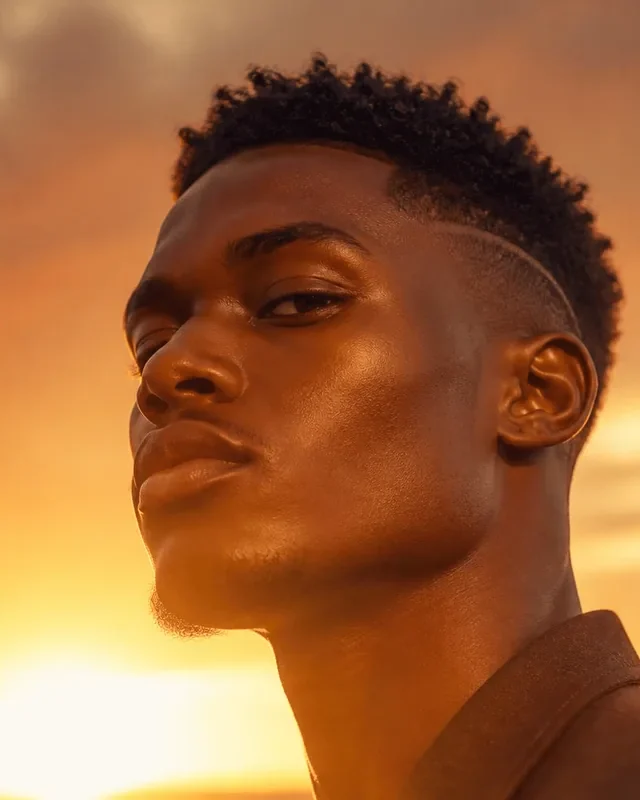
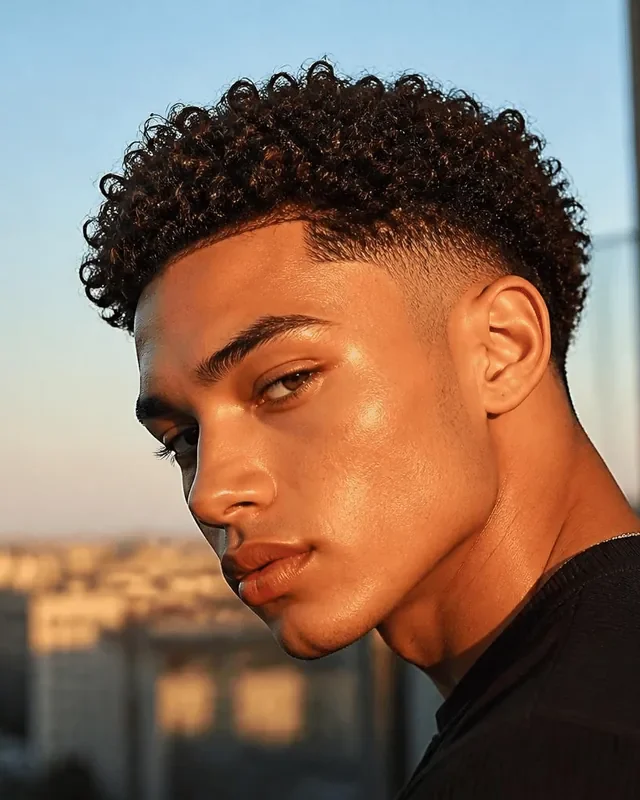
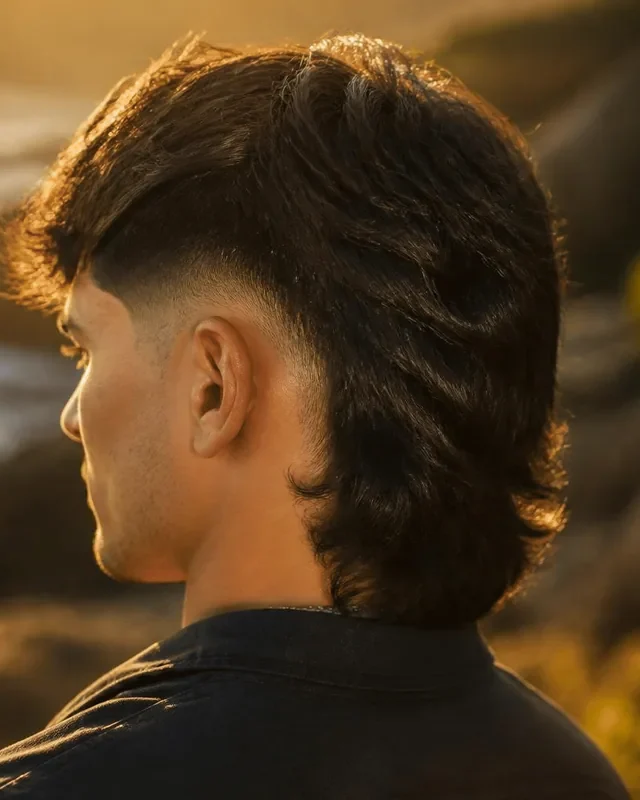
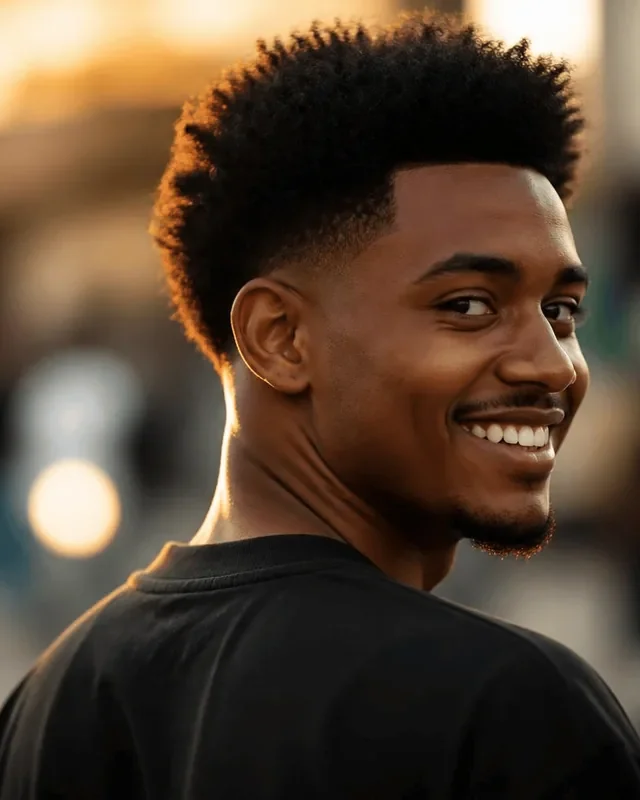
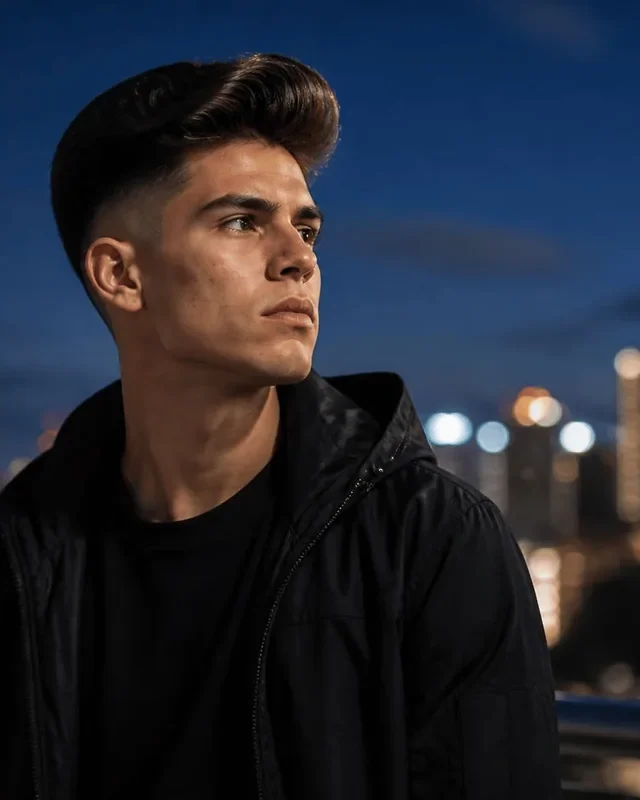
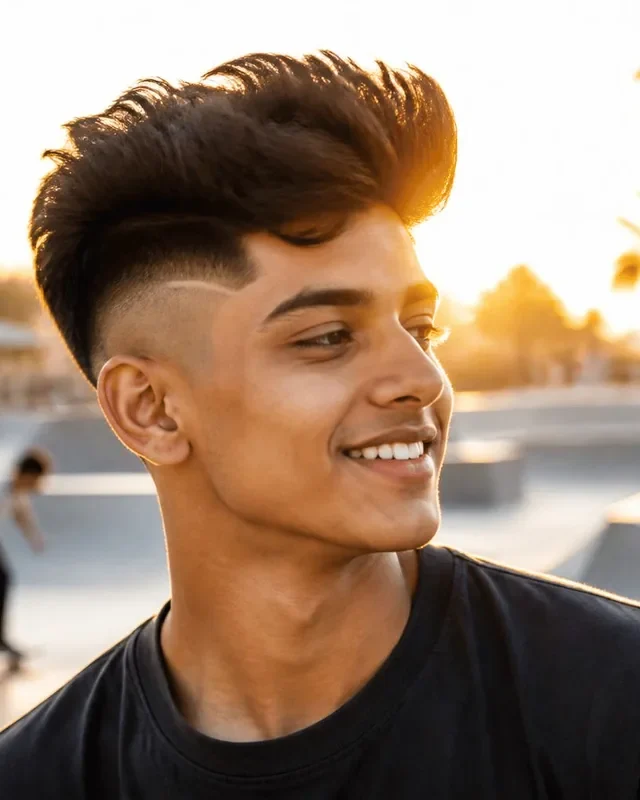
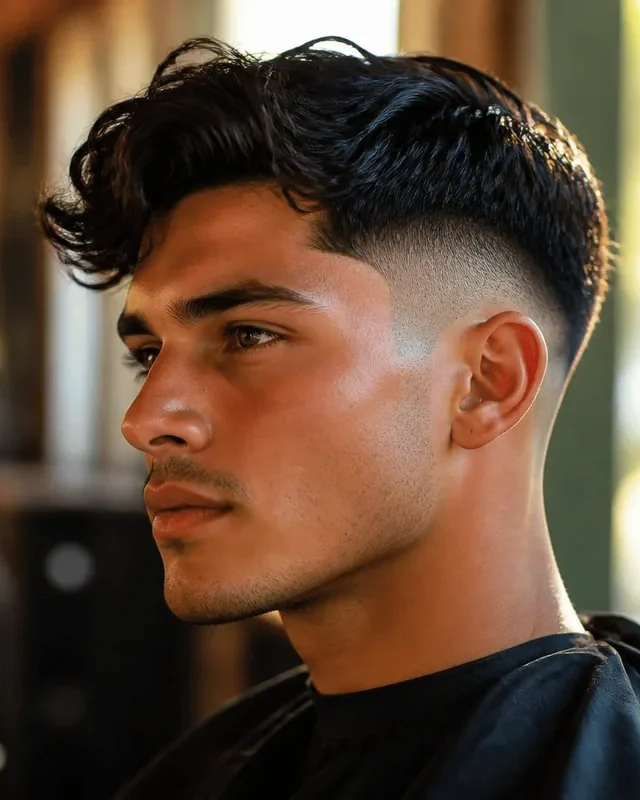
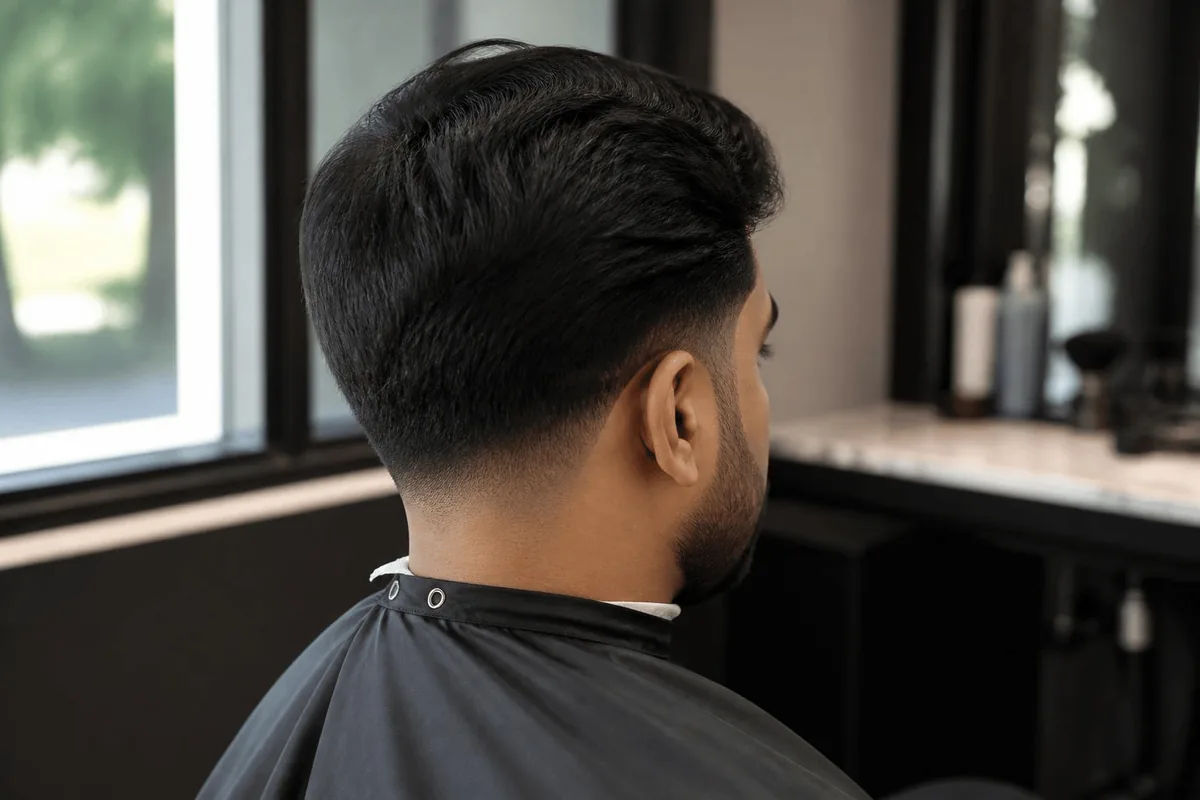
A low drop fade is a fade that begins low on the head, roughly at the top of the ear, and drops in a smooth curve behind the ear to finish lower at the nape. The word low describes where the fade starts. The word drop describes the path the line takes once it passes the ear.
Three details define it. The fade is short and narrow, so most of the side length stays in place. The line is curved, not level, so it follows the skull instead of running like a shelf. And the bottom guard is usually a soft one, a #1.5, #2 or #3, so the skin is not fully bare.
You will also see it written as low drop taper fade, low drop haircut and low drop fade haircut. They describe the same shape. A taper means the cut is gentle, a fade means the contrast can be stronger, and a low drop sits somewhere between the two depending on the guard you choose.
Where exactly does the line sit?
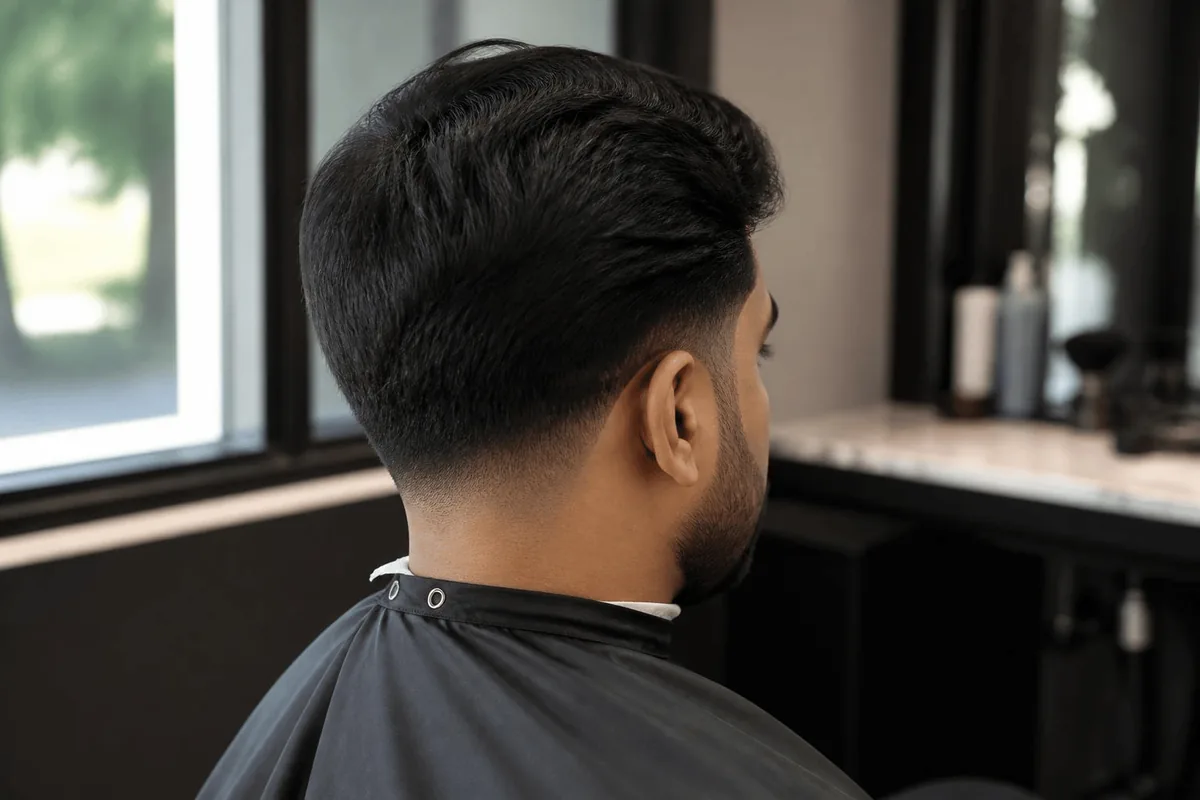
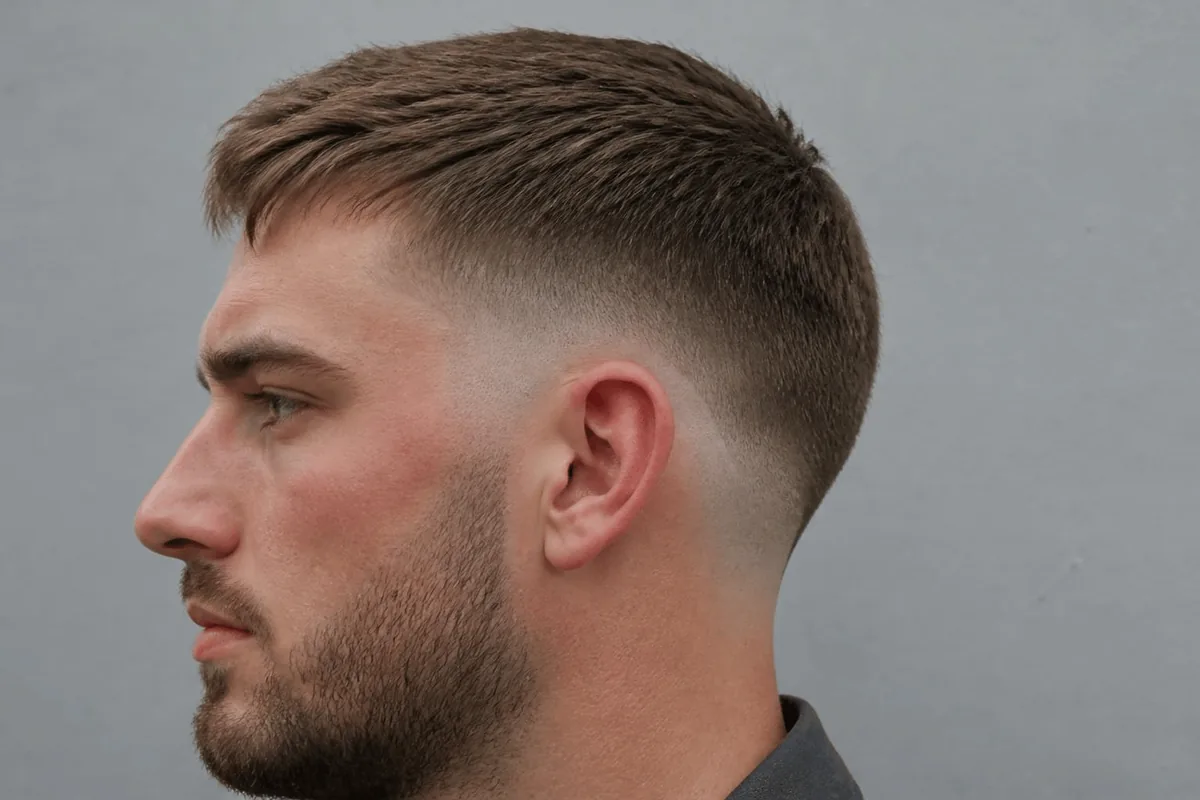
Hold a finger at the top of your ear and run it back toward the neck. The low drop line follows that path, then bends slightly downward behind the ear. It finishes about 1 to 3 cm lower than the point where it began, close to the natural hairline at the nape.
- Front: the sideburn and the small area in front of the ear are trimmed short.
- Middle: the line stays at ear height, just above the helix, the curved rim of the ear.
- Back: the line dips toward the neckline and fades into the natural hair growth.
If the line starts at the temple, you have a mid version. If it jumps above the temple, you have a high version. Compare those on our mid drop fade and high drop fade pages.
Low drop fade vs low fade vs low taper: what is the difference?
These three get mixed up in every barbershop, and the confusion costs people haircuts they did not want. The table gives the plain version.
| Cut | Line shape | Length left at the bottom | Best known for |
|---|---|---|---|
| Low drop fade | Curves down behind the ear | #1 to #3 | Subtle shape and a smooth outline |
| Low fade | Usually level around the head | #0 to #2 | Clean sides with more contrast |
| Low taper fade | Short and soft, trims edges only | #2 to #4 | The gentlest option |
| Burst fade | Semicircle around the ear | #0 to #2 | Strong shape, best with a mullet or mohawk |
The simple test is the back. A level line is a low fade. A line that curves down is a drop. A line that wraps around the ear is a burst. If you want the softest of the three, the taper version of the drop is the one to ask for.
Which guard numbers should you ask for?
Guard sizes differ by brand, so treat these as a starting point and always show a photo. Our haircut numbers page explains each guard in detail.
| Look you want | Bottom guard | Upper guard | Visits |
|---|---|---|---|
| Very soft, office-safe | #3 | #4 | Every 4 to 5 weeks |
| Balanced (the usual order) | #2 | #3 or #4 | Every 3 to 4 weeks |
| Sharper, more contrast | #1 | #3 | Every 2 to 3 weeks |
| Skin finish | #0 or razor | #2 or #3 | Every 2 weeks |
Most men are happiest with a #2 at the bottom blended into a #4. It looks clean from day one and still looks fine on day twenty-five. If you are trying a fade for the first time, start with a #3 and go shorter at the next visit once you know how you like it.
What top looks best with a low drop fade?
Because the low drop keeps the sides calm, it lets the top do the talking. These are the pairings barbers recommend most often for this height.
| Top | Length | Why it works | Best hair |
|---|---|---|---|
| Classic side part | 5 to 8 cm | Reads as polished and professional | Straight, wavy |
| Textured crop | 3 to 6 cm | Choppy and easy, two minutes to style | Straight, wavy, curly |
| Short quiff | 5 to 7 cm | Adds height without a strong fade | Straight, thick |
| Natural curls | 4 to 8 cm | Clean sides frame the curl pattern | Curly, coily |
| Slick back | 7 to 10 cm | Formal and sleek | Straight, thick |
| Comb over | 5 to 8 cm | A sharp part and a soft side | Straight, wavy |
For the crop, read our textured crop guide. For a polished office look, the side part page has barber scripts.
Is a low drop fade professional enough for work?
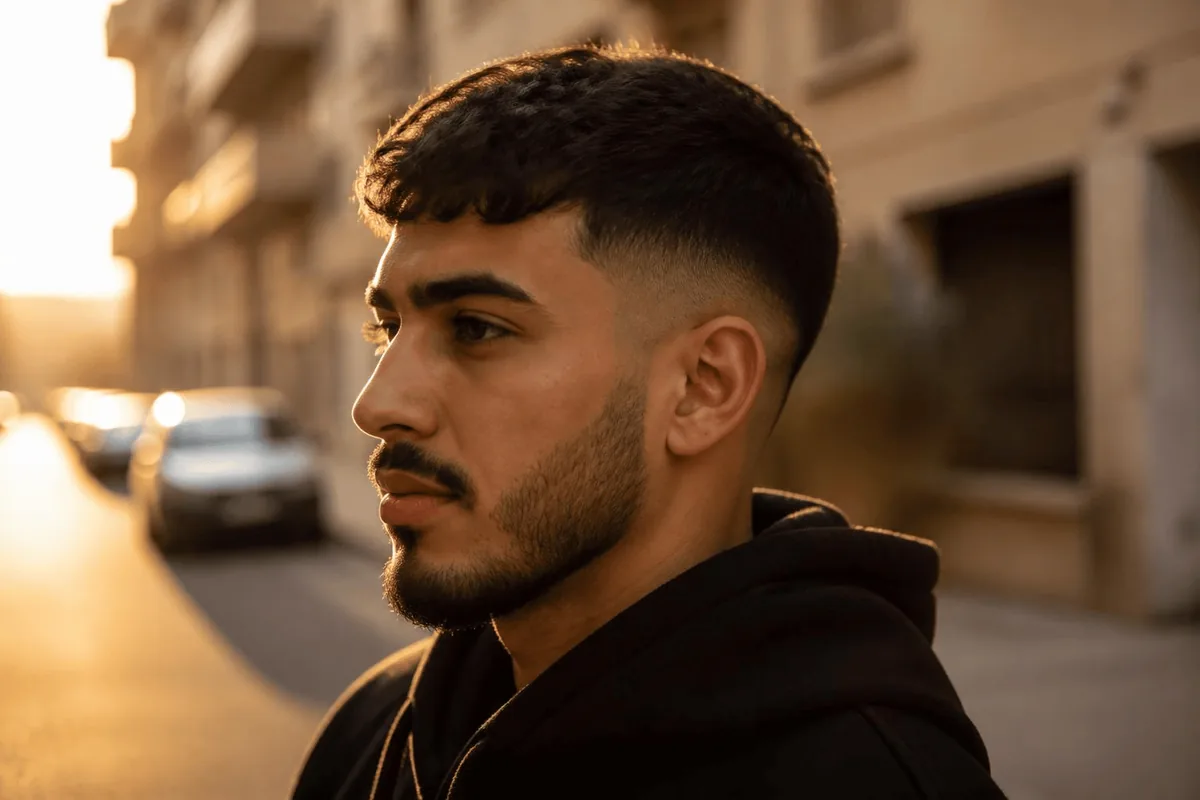
Yes. In fact it is probably the safest fade for an office, a law firm, a classroom or a customer-facing job. The sides stay full enough to look like a normal haircut. The curve behind the ear adds shape without the high contrast that some employers consider casual.
To keep it conservative, choose a #3 bottom, leave the top 4 to 6 cm and skip the shape-up. If your workplace has a dress code that mentions fades, check whether it names skin fades specifically, since a #3 bottom is not a skin fade.
- Interviews: book the cut 3 to 5 days before, so the line has settled.
- Client meetings: a soft side part and a matte finish read as tidy.
- Remote work: you can go sharper, because the neckline and ears show on camera more than on the street.

Does a low drop fade work for thinning hair?
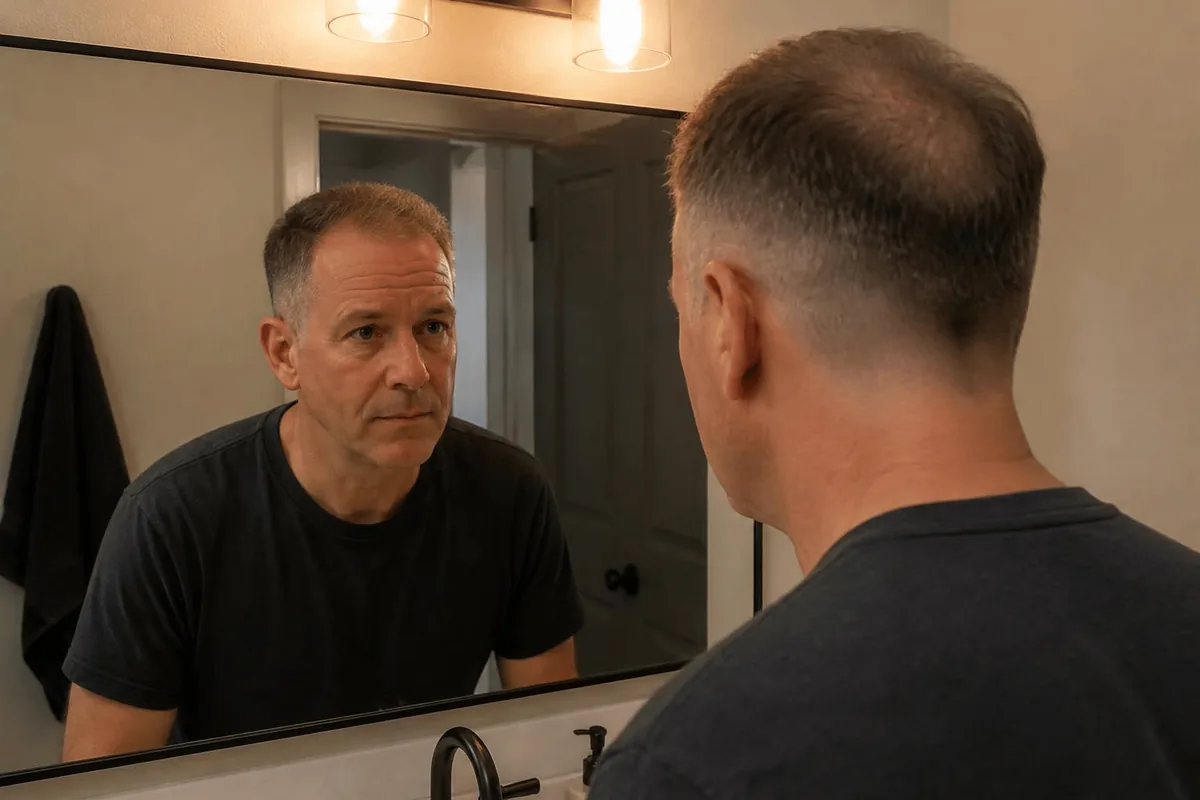
It is one of the better choices. A short, soft fade makes the top look denser by comparison, and the low start keeps the sides full, which matters when the crown or temples are thinning. Keep the top short, around 3 to 5 cm, avoid a skin bottom and pick a light texture product such as powder or paste. Heavy clay and wax weigh the hair down and show scalp.
If the hairline is receding at the temples, ask the barber to leave the front side area slightly longer, and consider a forward fringe. Our receding hairline guide covers more options.
Which face shapes suit a low-set curve: oval, round, square or oblong?
- Oval: any top works, since the cut does not distort the balance.
- Round: add height on top and keep the sides tight at the bottom of the fade.
- Square: a low drop with a textured, slightly messy top softens a strong jaw.
- Long: keep the top shorter and the sides fuller, because the low start does not add length.
- Heart: a longer fringe balances a wide forehead.
The haircuts by face shape page has the full chart. A flat back to the head also benefits, because the curve adds an outline where the skull is straight.
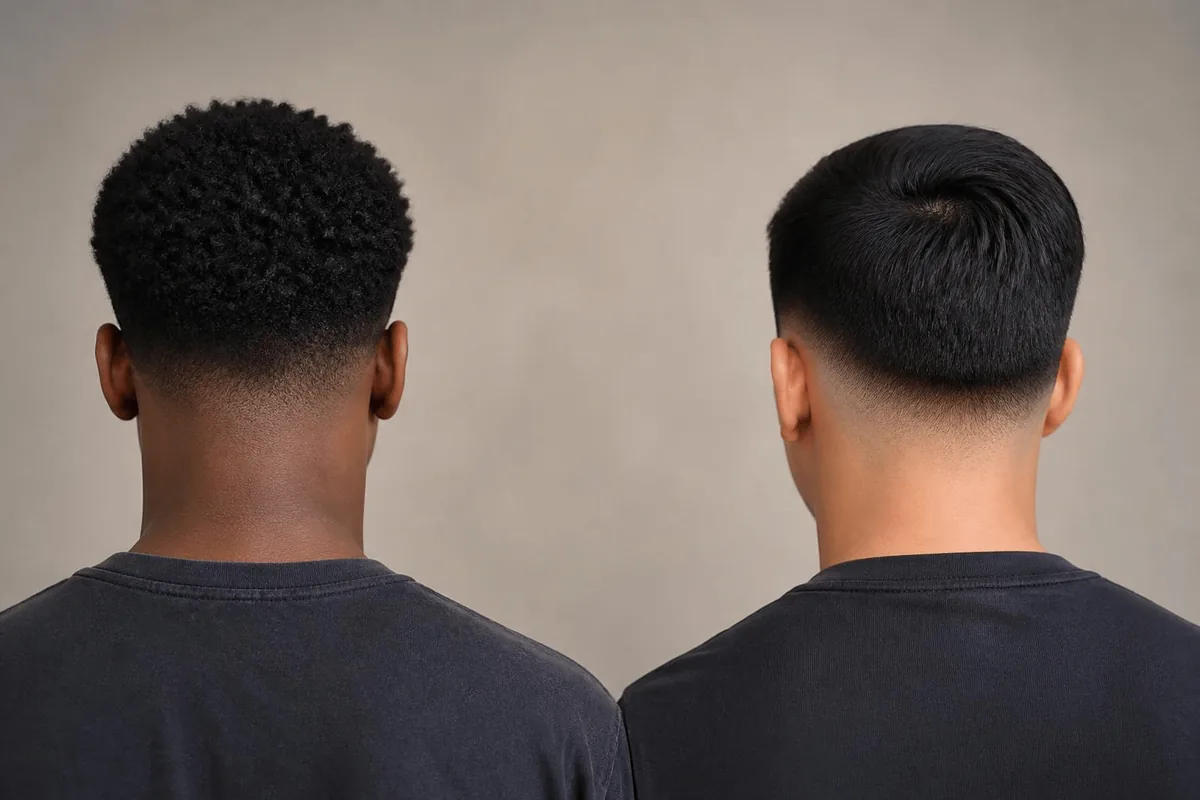
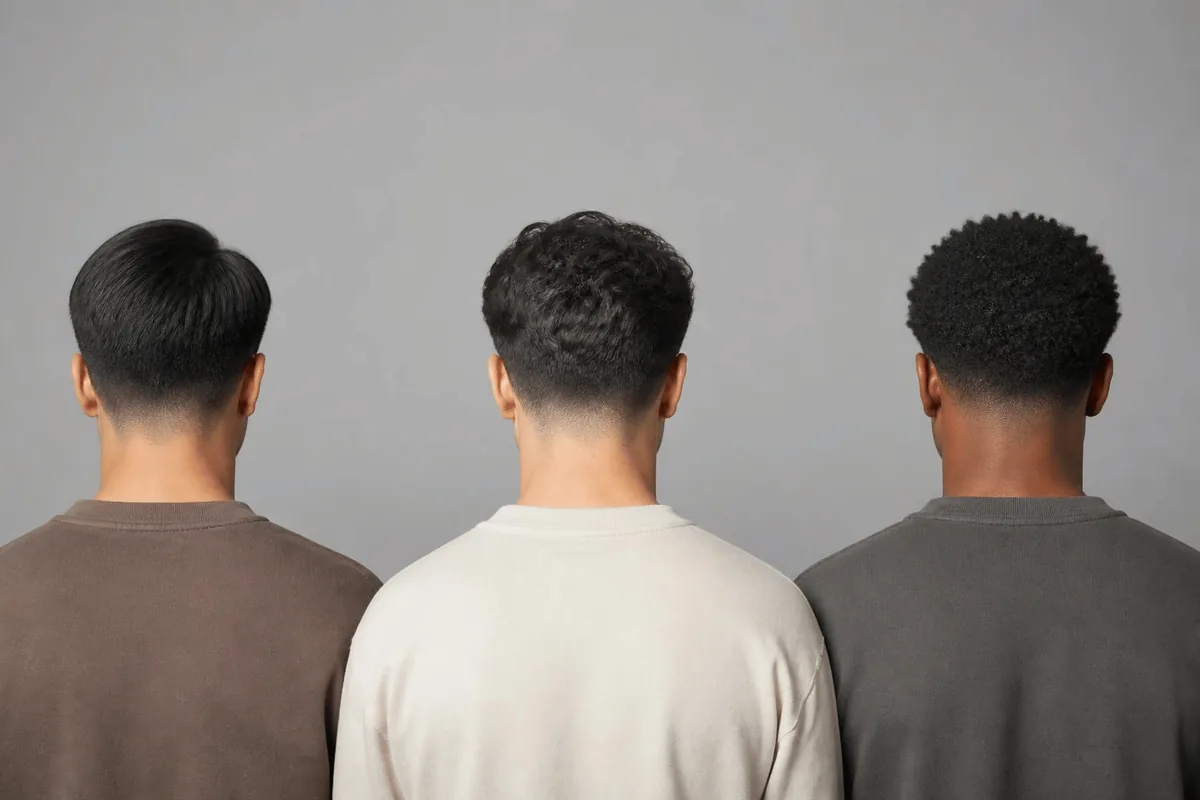
Does a low curve work on straight, wavy, curly and coily hair?
| Hair type | How it looks | Ask for | Watch for |
|---|---|---|---|
| Straight and fine | Sleek and neat | A #3 bottom, light texture on top | Showing scalp if the fade is too short |
| Wavy | Natural movement above clean sides | A #2 bottom, a few cm of length | Frizz in humid weather |
| Curly | Defined curls, tidy edges | A dry cut on top | Shrinkage hides the length |
| Coily | Sharp outline, dense shape | A shape-up and a #1 or #2 bottom | Dryness at the fade line |
| Thick | Full and strong | Weight removed inside the top | Puffy sides after two weeks |
For deeper detail see drop fade curly hair and drop fade black men.
How to ask the barber for a low drop fade
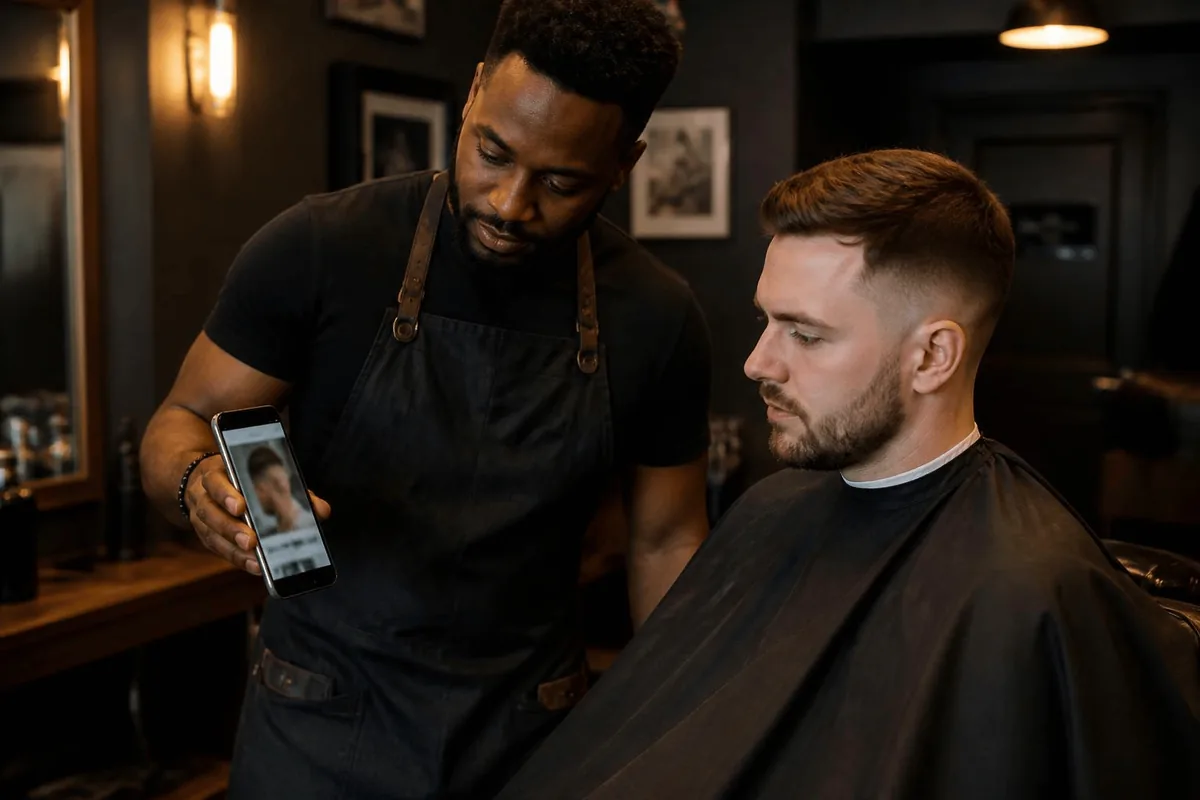
A photo helps more than any description, but the right words speed things up. Use this script and adjust the numbers.
- “I would like a low drop fade.” Name the height and the curve.
- “Start the fade at a #2, blending into a #4.” This sets the bottom and the upper guard.
- “Start it at the top of the ear and drop it behind.” Point to the ear.
- “Leave about 5 cm on top.” Show the length with two fingers.
- “Keep the neckline natural.” A natural neckline grows out more softly than a squared one.
- “Please check both sides in the mirror.” This catches an uneven curve while the barber can still fix it.
For extra phrases, read how to ask for a haircut.
How is a low drop fade cut? Step by step
This is useful if you want to follow your barber, or if you plan to try it yourself. For the full home method, use our how to cut a drop fade page.
Step 1: Mark the guideline
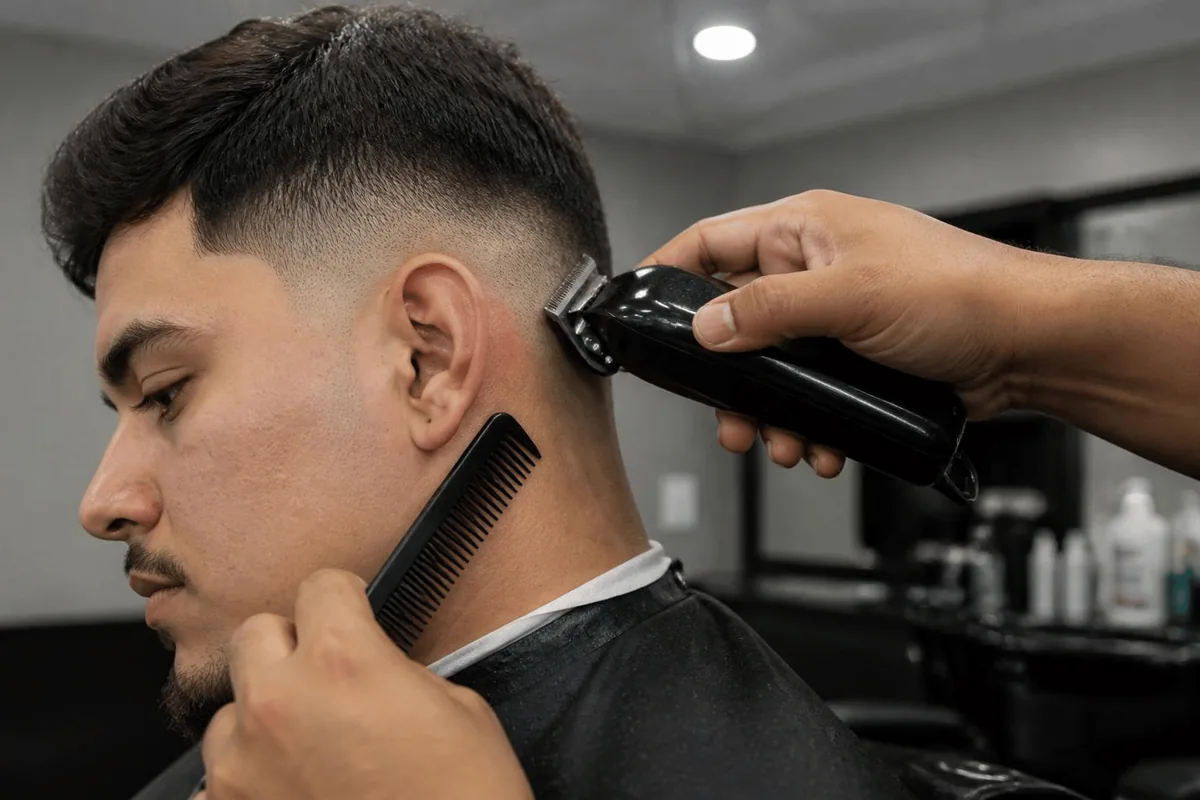
The barber marks the line at the top of the ear and curves it down behind the ear. What goes wrong: a line that starts too high turns the cut into a mid fade, so check the mark before the clippers go in.
Step 2: Remove the bulk
A #4 guard removes the bulk from the sides and back. What goes wrong: pushing against the grain leaves steps that are hard to blend.
Step 3: Build the fade
The barber drops to a #3, then a #2, using a flicking motion that follows the curve. What goes wrong: stopping the clipper in one place leaves a visible line.
Step 4: Detail the sideburn and neckline
A trimmer cleans the sideburn, the ear and the nape. What goes wrong: a neckline cut too square looks sharp on day one and ragged by week three.
Step 5: Cut the top
The top is cut with scissors to the length you chose and point-cut for texture if you asked for it. What goes wrong: cutting the top before the sides means the balance cannot be judged.
Step 6: Check the back
The barber brushes off loose hair and shows you the back with a hand mirror. What goes wrong: skipping the hand mirror hides an uneven curve until you get home.
How do you style a low drop fade at home?
Styling takes less than three minutes. Towel dry first, then work from the back to the front.
- Dry the top. Use a hairdryer and your fingers to set the direction.
- Warm the product. Rub a pea-sized amount of paste, clay or cream between your palms.
- Apply to the top only. Keep product off the sides, since it hides the blend.
- Shape and finish. Use a comb for a side part, or fingers for a crop.
The best hair products for men page explains which finish suits which hair.
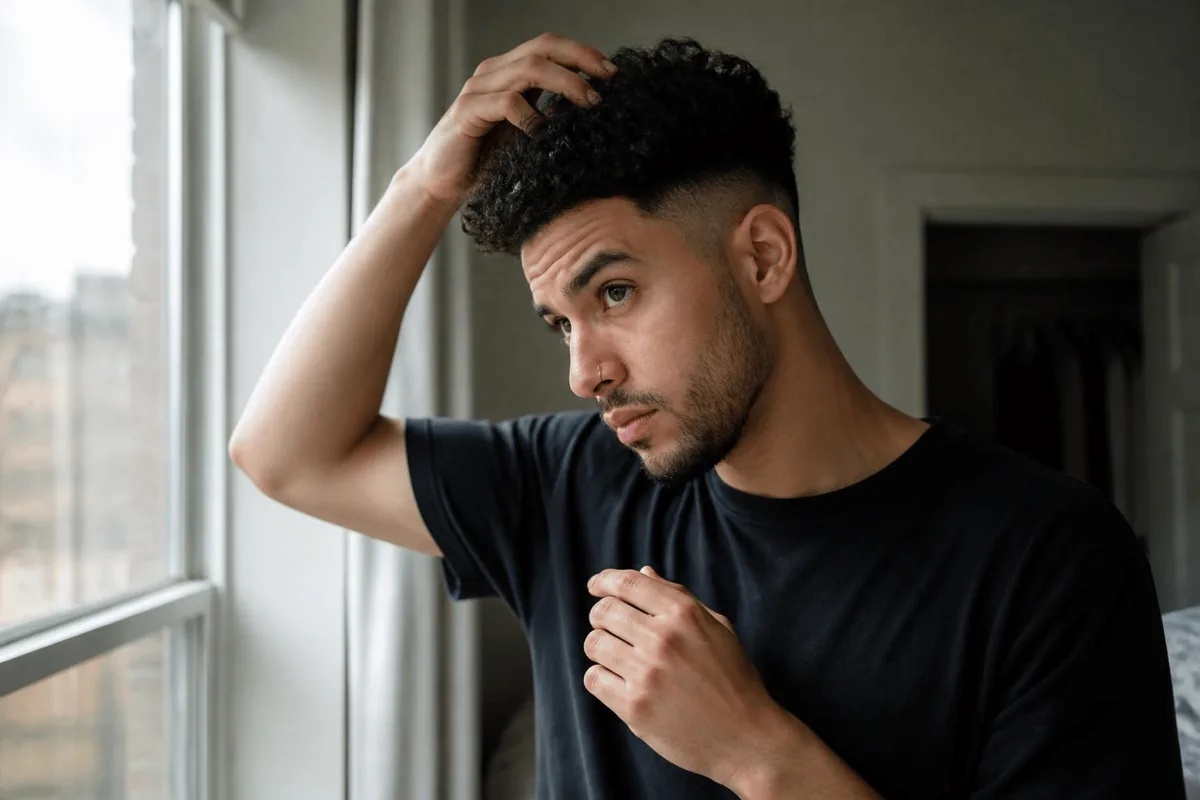
How does a low drop fade grow out, week by week?
A low drop grows out more kindly than any other curved fade because the contrast is small. According to the Cleveland Clinic, hair grows about 1 centimetre per month, so the numbers below are typical estimates.
| Week | What you see | What to do |
|---|---|---|
| 1 to 2 | Sharp curve, clear blend | Enjoy it |
| 3 to 4 | Line softens, sideburns fuller | Book a tidy-up |
| 5 to 6 | Curve fades into a taper | Full cut, or sideburn trim only |
| 7 to 8 | Sides puffy, outline lost | Overdue |
If you can only visit once a month, order the #3 bottom. It buys you an extra week of tidy.
How do you prevent razor bumps (pseudofolliculitis barbae) after a fade?
Razor bumps have a medical name, pseudofolliculitis barbae. It happens when a freshly cut hair curls back and grows into the skin, and it is most common on tightly coiled hair around the nape and behind the ears.
The nape and the area behind the ear are where bumps appear. The American Academy of Dermatology explains how to prevent them in its guide to razor bump prevention. In short:
- Ask for clippers or a trimmer instead of a razor if you are prone to bumps.
- Cut with the grain at the neckline.
- Rinse loose hair off the skin and use a gentle moisturiser.
- Do not pick at bumps, and see a dermatologist if they persist.
How does the cut look at different ages?
Because the contrast is gentle, the low version travels well across decades. Teenagers usually pair it with a longer, messier top and a #2 bottom, which looks current without breaking most school rules. Men in their twenties and thirties often add a shape-up and a textured crop, since social and work settings both accept it. After forty, a #3 bottom and a neat side part look polished, and the soft blend hides the grey that tends to appear first at the sides.
From sixty onward, the main goal is usually density and neatness. A slightly longer top, a #3 bottom and a clean neckline give the head a tidy outline. Skip skin finishes, because bare scalp shows age spots and any scarring more clearly than a short guard does.
What about a beard with the cut?
A low start pairs well with most beards because the sideburn sits at the same height as the beard line. Ask the barber to continue the fade into the beard so the two blend, instead of stopping at the sideburn. A short stubble beard looks best with a #2 or #3 bottom, while a fuller beard needs a #3 or #4 so the face does not look top-heavy. If you grow a long beard, keep the fade high enough to stay visible, or the sides will look like part of the beard.
Trim the beard neckline at the same time as the haircut, about one finger above the Adam’s apple, so both finish evenly. The beard fade page covers the blend in detail.
Does the season change what you should order?
Yes, in small ways. In summer, a #2 bottom feels cooler and the soft line still reads as tidy in heat and sweat. Wash the fade area more often, because sweat and oil make a soft blend look dirty faster. In winter, a #3 or #4 keeps the ears warmer and hides the grow-out better under hats, since a hat flattens the top and a hard line would show at the edge.
- Summer: a lighter top, a texture spray and a regular trim keep the shape.
- Winter: a little more length on top and a leave-in cream stop dry, static hair under hats.
- Holidays and events: book 3 to 5 days ahead so the line has settled but is still crisp.
How much does a low-height fade cost in a barbershop, and how long does it take?
Prices depend on the city, the shop and the barber, so check locally. A fade usually costs a little more than a basic scissor cut because it takes longer. Expect 25 to 40 minutes in the chair for a standard version, and up to 50 minutes if you add a beard trim or a shape-up. A skilled barber is worth the premium because the curve is the part that is hard to fix after the fact.
To keep costs down, ask whether the shop offers a cheaper sideburn and neckline tidy between full cuts. Many do, and it extends the life of the cut by a week or more.
How do you look after the fade between barber visits?
Three habits keep the fade neat. First, wash the hair every one to two days with a mild shampoo, so oil does not clog the short sides. Second, pat the neckline dry instead of rubbing, which reduces irritation on the short hairs. Third, use a soft brush on the sides, because brushing lifts loose hairs and keeps the blend smooth. Avoid thick wax near the ears, since it clings to short hair and creates a greasy line.
If you sleep on a rough pillowcase, the sides can flatten or itch. A smooth cotton or satin case reduces friction, and it helps coily and curly hair hold moisture overnight.
What are the most common low drop fade mistakes?
| Mistake | What you see | Fix |
|---|---|---|
| Line starts too high | Looks like a mid fade | Point to the top of the ear |
| Curve too flat | Looks like an ordinary low fade | Ask for a drop behind the ear |
| Bottom guard too short | Bare skin, a harsh edge | Choose a #2 or #3 |
| Product on the sides | Greasy, flat fade | Style the top only |
| Skipping tidy-ups | Fuzzy outline | Book at week 3 or 4 |
Which other drop fade pages should you read next?
If you like the curve but want a different height, compare the mid drop fade and high drop fade. If you want to know how far down the arc should go, read drop fade neckline. If you plan a long back, see drop fade mullet.
Which variations are popular: skin, undercut, comb over and slick back?
Barbers sell several versions of this haircut, and each one changes the top more than the sides. A skin version takes the bottom of the fade down to bare skin for the sharpest contrast. A disconnected undercut removes the blend and leaves a hard step between the sides and the top. A comb over adds a side part, and a slick back suits men with enough length to sweep the top backwards.
The same low curve also works with waves on short coily hair, with a short crop on thin hair and with longer, textured tops on thick hair. Short hair gets a clean, military feel, while long hair gets a softer, more casual look. If you cannot decide, ask your barber to keep the sides the same and change only the top, because that is the cheapest way to test a new look. A low drop fade is a good base for these experiments since the curve stays out of sight at the sides.
Pick the version that matches your routine. A skin finish looks best but needs a visit every two weeks, while a taper version tolerates three to four. Ask for the low drop fade you saw in your reference photo, and the barber can match the variation. A low drop fade also keeps its shape well while it grows out.
Low drop fade FAQ
What is a low drop fade?
It is a fade that starts low, near the top of the ear, and curves down behind the ear toward the nape.
Is a low drop fade the same as a low taper?
No. A taper only trims the edges and keeps most of the length. A low drop is a curved fade with a visible blend.
What guard should I ask for?
A #2 at the bottom blended into a #4 is the most common order. Use a #3 for a softer look.
How often should I get a trim?
Every 3 to 4 weeks keeps it tidy.
Is it good for work?
Yes. It is the most conservative curved fade.
Does it suit thinning hair?
Yes, with a short top and a #2 or #3 bottom.
Can I get it with a beard?
Yes. Ask the barber to blend the fade into the sideburn and beard. See our beard fade guide.
Can I cut it myself?
It is possible but hard to match on both sides. Start with the guide linked above.
More in the drop fade series
This page is one of the cluster guides under our main drop fade guide. Browse the full set on the fade haircuts hub, or compare the low taper fade pillar.
Guard numbers and timings are typical estimates, since barbers and hair types differ, and the growth figure follows the Cleveland Clinic. Our editorial policy explains how we label estimates.