On this page
What is a drop fade mullet?How does it differ from a burst fade mullet and a low taper mullet?How long should the back be?Which fade height suits a drop fade mullet?What guard numbers should you ask for?Which tops go with a drop fade mullet?How does a drop fade mullet work on curly hair?How does it work on straight and fine hair?How does it work on wavy hair?Which face shapes suit a drop fade mullet?How do you ask for a drop fade mullet?How is a drop fade mullet cut? Step by stepHow do you style a drop fade mullet?Can you wear a drop fade mullet to work?How do you grow one out without a bad phase?How is it different from a wolf cut or an edgar cut?How do you wash and care for the long back?What beard goes with it?Can men with thinning hair wear it?Does the season change how you wear it?Which mullet myths should you ignore?What does it cost, and how often should you visit?What does a three-month plan look like?How do you prevent razor bumps (pseudofolliculitis barbae) after a fade?Which mullet-fade mistakes leave the back ragged?Which mullet variations suit you: skin fade, taper, undercut and perm?Drop fade mullet FAQMore in the drop fade seriesQuick answer. A drop fade mullet combines tight, curved sides with length at the back, so the fade line dips behind the ear and the longer hair falls from the nape. Ask for a mid or low drop with a #1 or #2 bottom, 4 to 8 cm on top and 8 to 15 cm at the back. Style the top with texture spray and let the back fall naturally. Expect a trim every 3 to 4 weeks to keep the sides crisp and the back neat.
The mullet used to be a joke. Now it is on magazine covers, and the version people actually want has little in common with the 1980s original. The modern drop fade mullet keeps the sides clean and the outline deliberate, so the length at the back looks like a decision and not an accident.
This guide is about that decision. It explains how the curved fade shapes the mullet, how long the back should be, which hair types and face shapes suit it, how to ask the barber, how to style it and how to grow it out without a bad phase. It is one of the cluster pages under our drop fade guide. For the history and every style of the mullet itself, see our main mullet page.
What is a drop fade mullet?
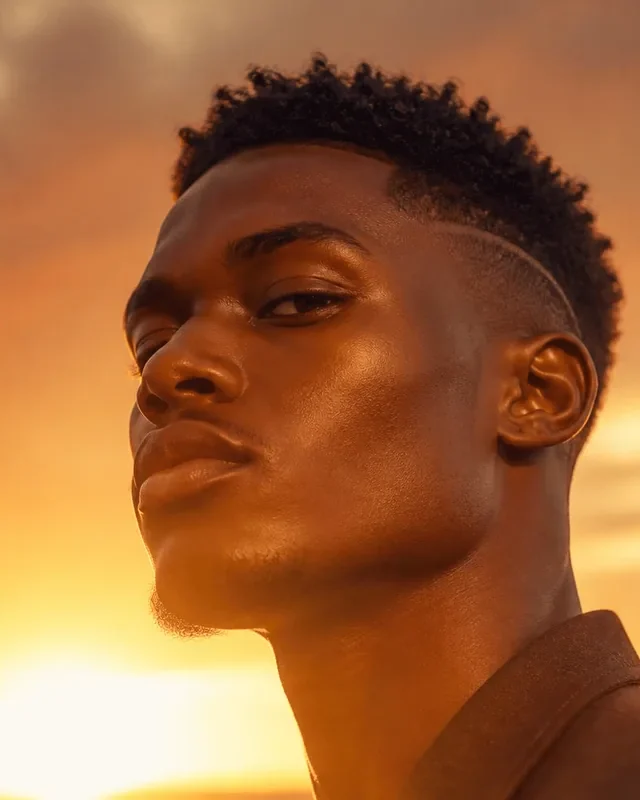
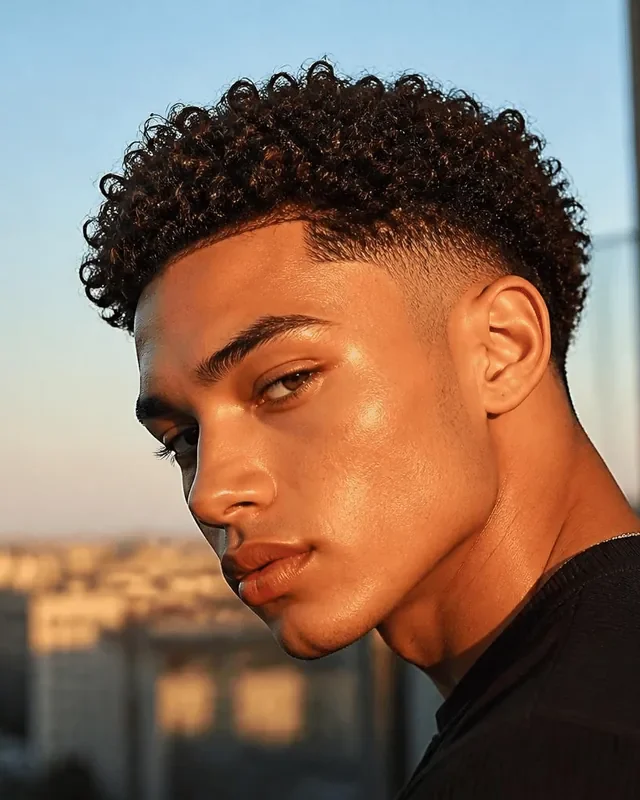
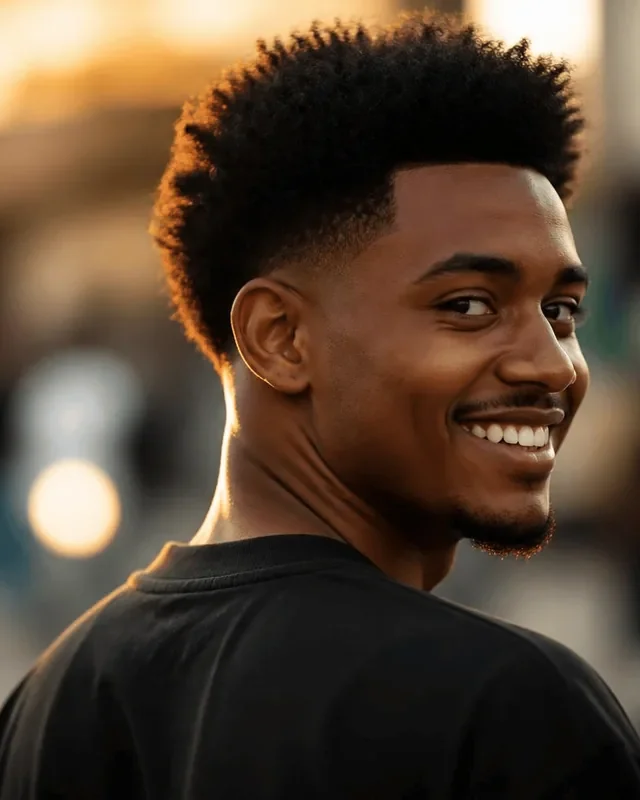
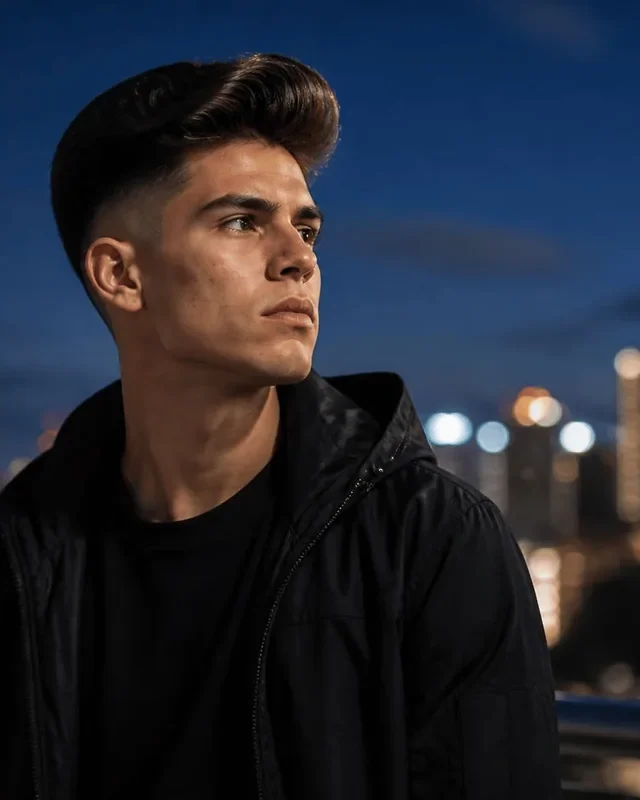
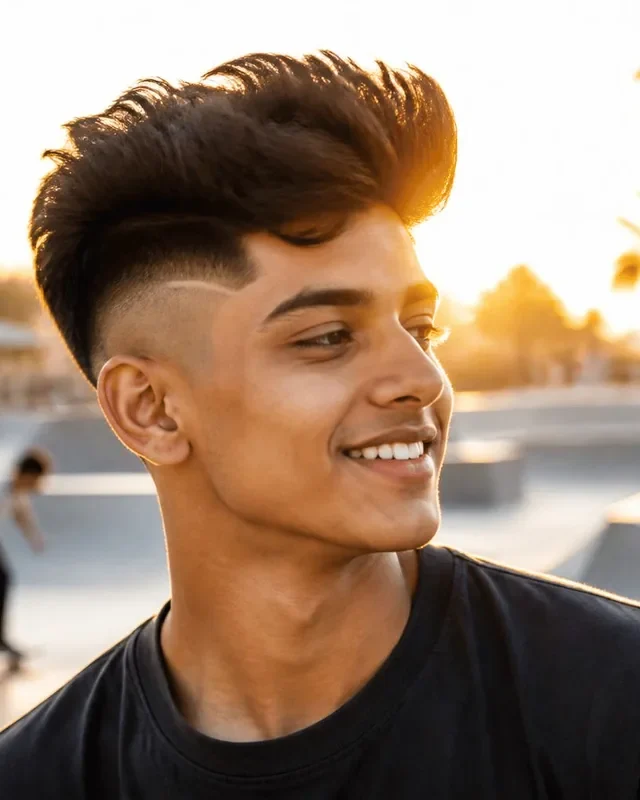
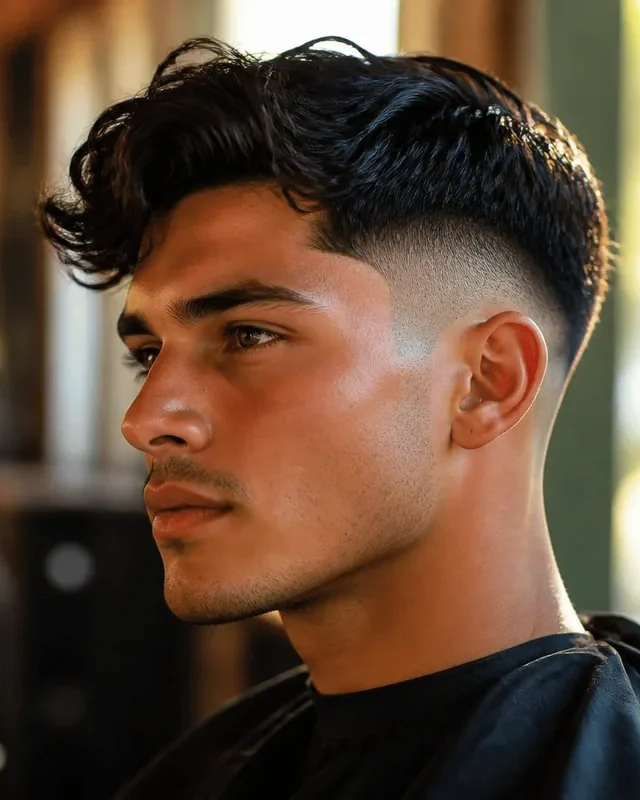
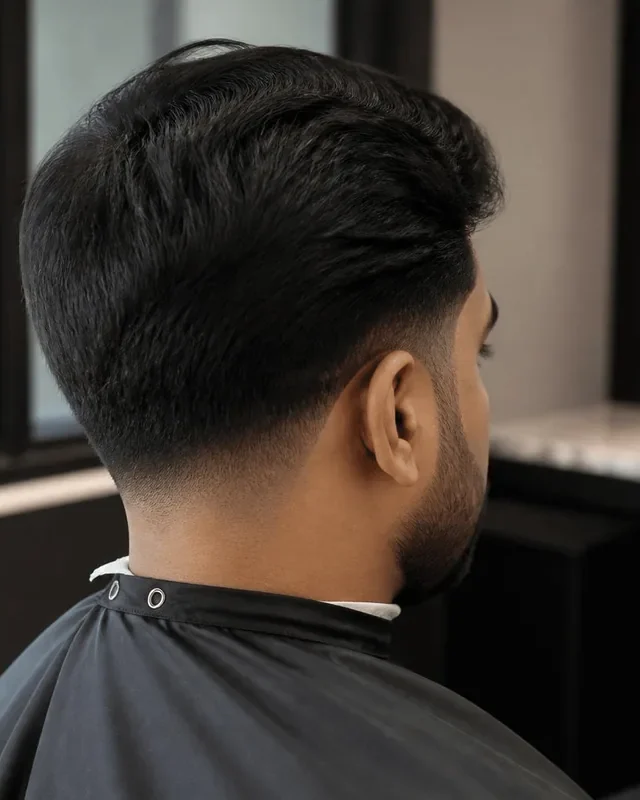
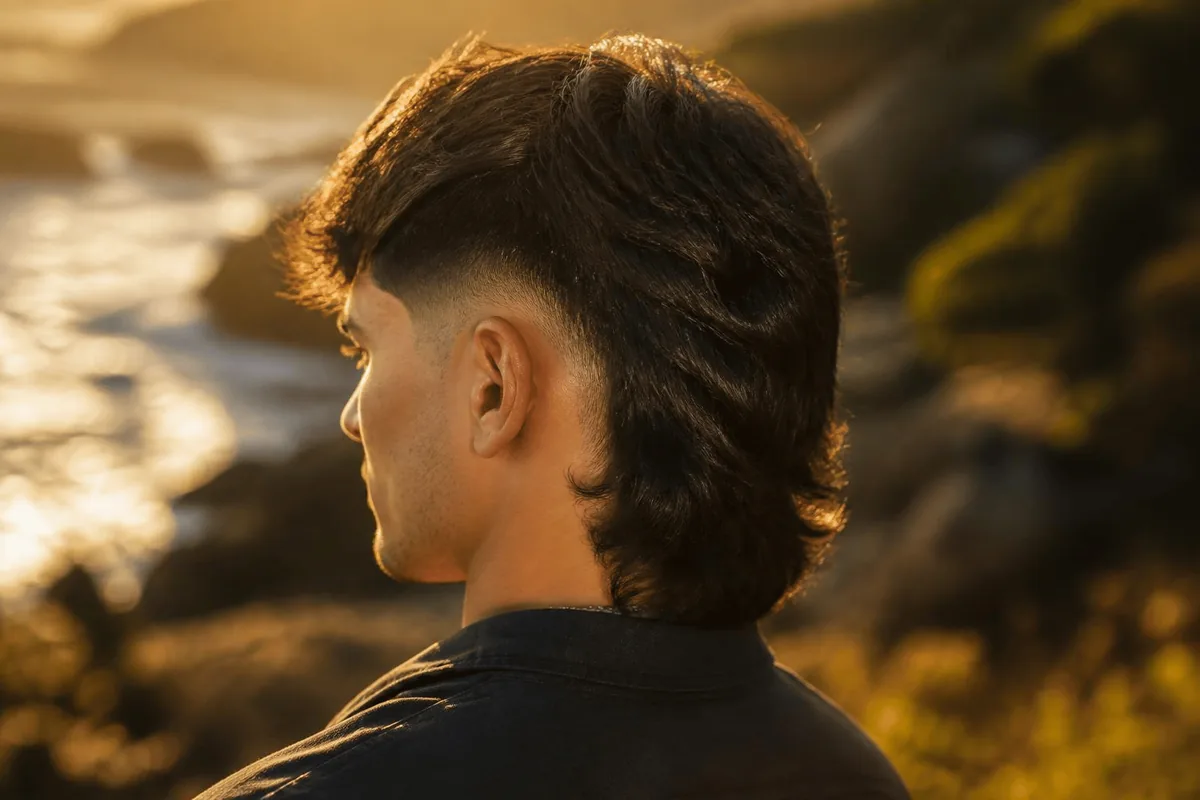
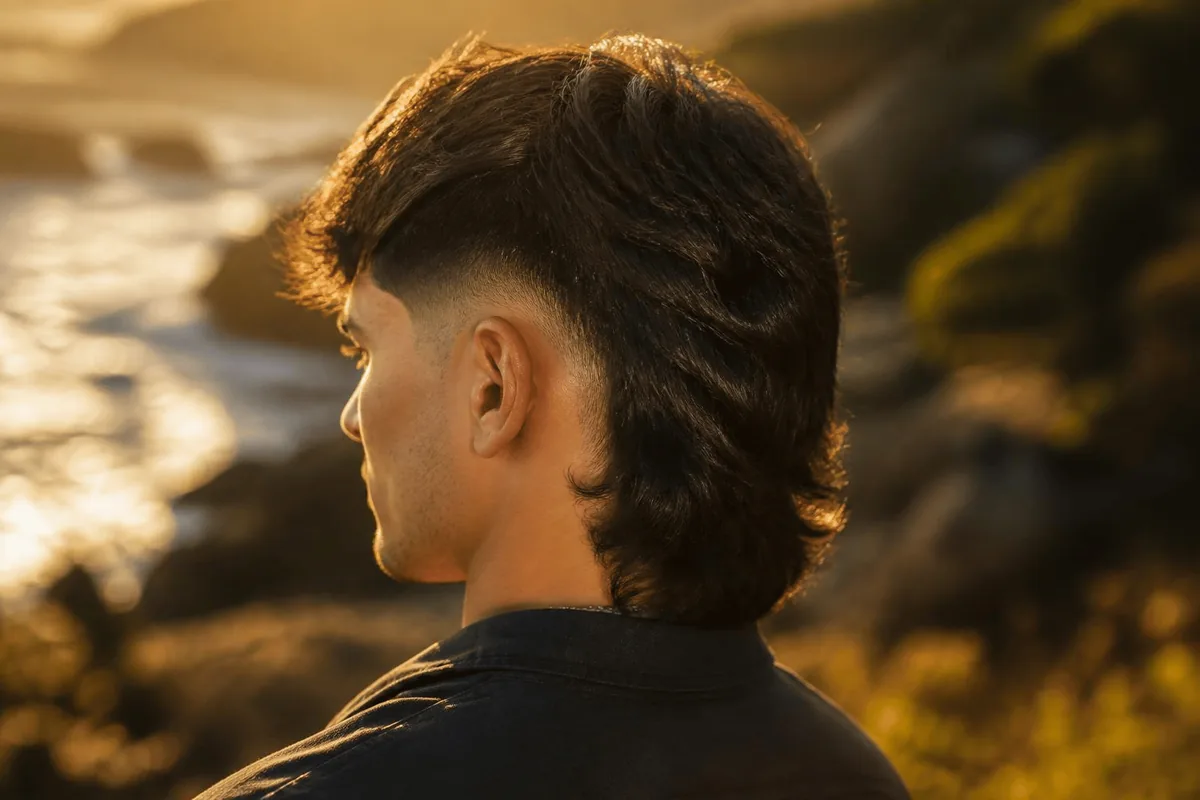
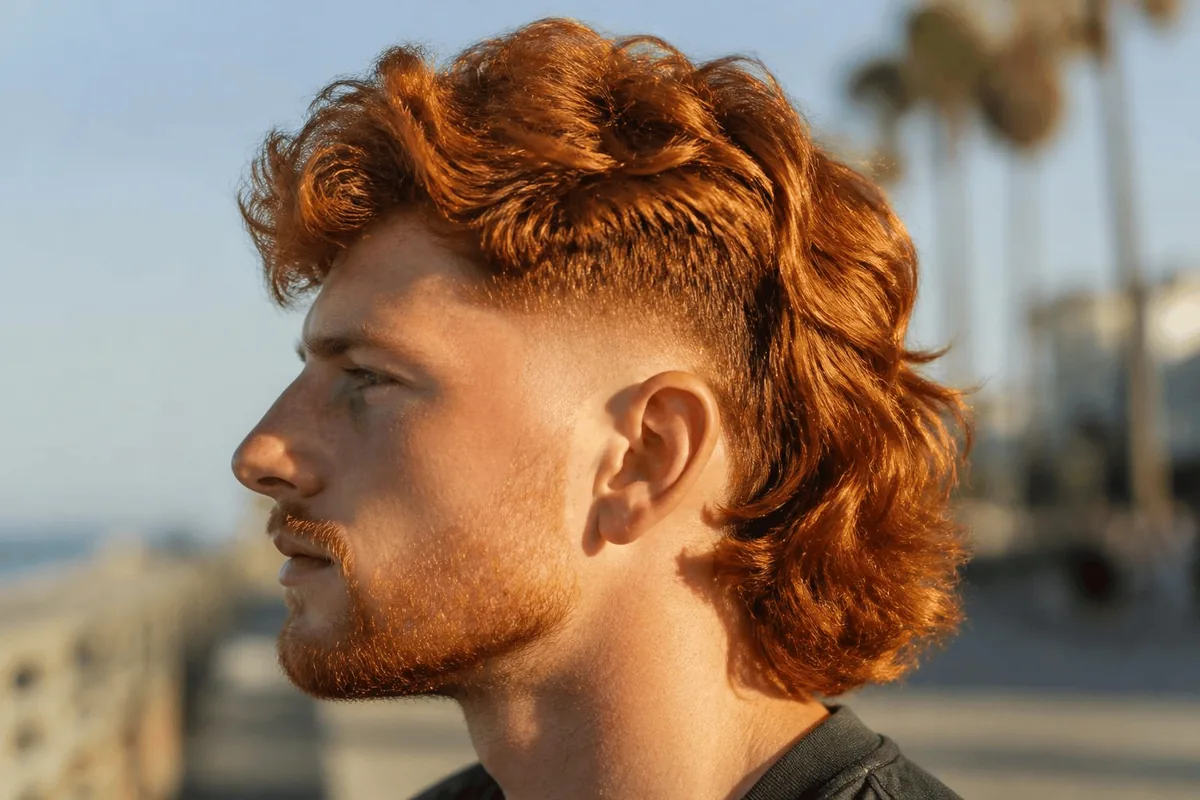
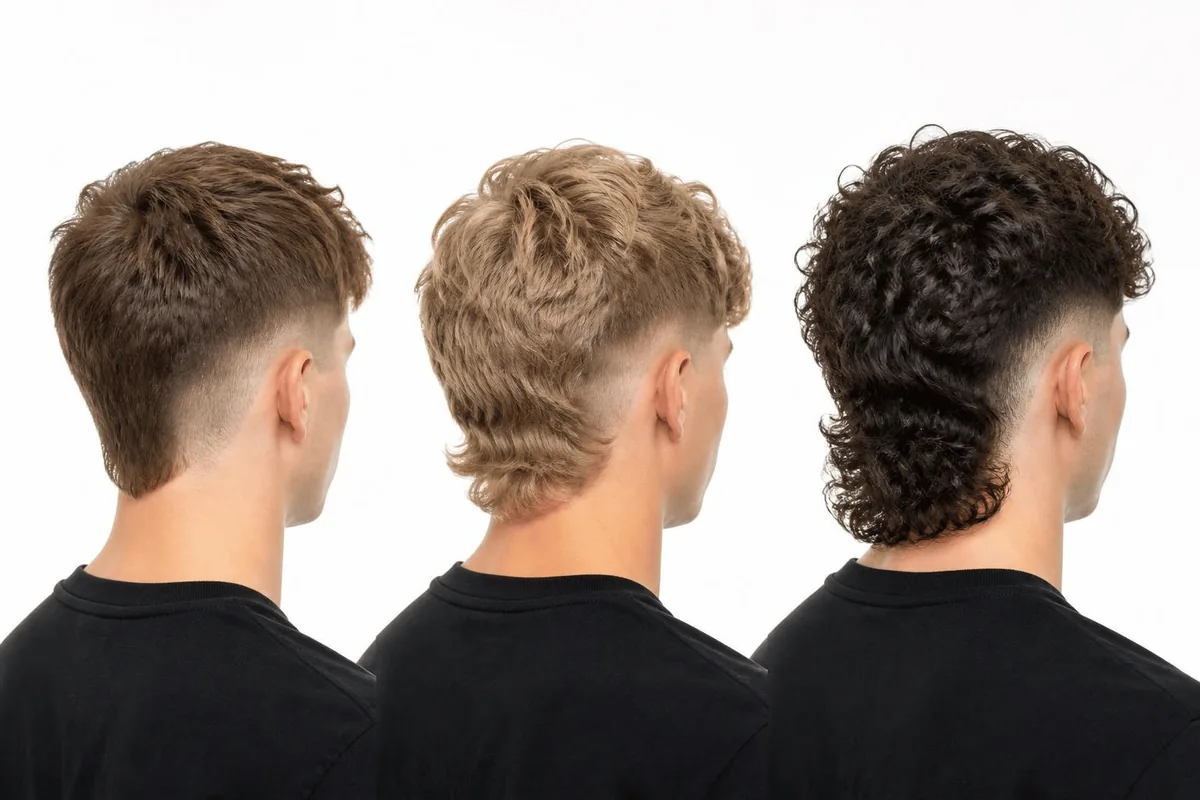
A drop fade mullet is a mullet haircut with a curved fade at the sides. The fade starts at a low, mid or high point, curves down behind the ear and ends at the nape, where the longer back section begins. The result has three zones: faded sides, a shorter or textured top and a longer back that falls past the neckline.
The fade solves the main problem with a mullet, which is bulk. Without it, the sides puff out and make the back look heavy. With a fade, the sides are slim, and the back becomes a clear shape that frames the neck. The curve also draws a line from the ear to the nape, which tells the eye where the long section begins.
How does it differ from a burst fade mullet and a low taper mullet?
Three fades are used with mullets, and each gives a different effect. The table sets them side by side.
| Mullet | Fade shape | Back length | Look |
|---|---|---|---|
| Drop fade mullet | Curves down behind the ear to the nape | 8 to 15 cm | Clean, shaped, modern |
| Burst fade mullet | Semicircle around the ear | 10 to 20 cm | Bold and dramatic |
| Low taper fade mullet | Soft edges only | 8 to 15 cm | Subtle, wearable |
| Skin fade mullet | Bare bottom, any line | 10 to 20 cm | High contrast |
The burst wraps around the ear and leaves the back to hang free, which gives a stronger shape. The taper is gentler. The drop fade mullet sits between them: a visible fade and a controlled outline, with a back that sits naturally on the neck.
How long should the back be?
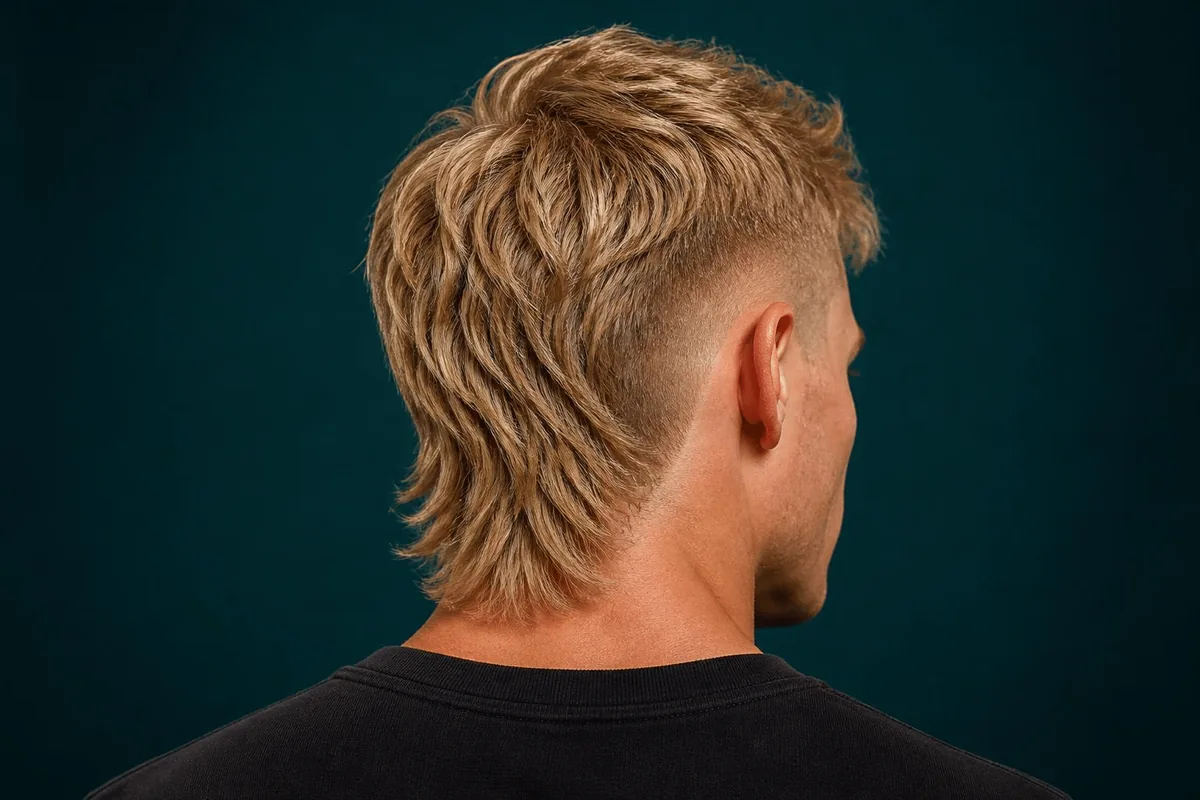
The back is the star, so get the length right. Too short, and the style looks like a regular fade. Too long, and it looks untidy at work.
| Back length | Look | Good for |
|---|---|---|
| 5 to 8 cm | A hint of a mullet, subtle | Office, first-timers |
| 8 to 12 cm | Classic modern mullet | Most men |
| 12 to 18 cm | Statement mullet, over the collar | Creative jobs, social life |
| 18 cm and above | Long, dramatic | Wavy, curly or thick hair |
If you are starting from a short cut, expect to wait. The Cleveland Clinic says hair grows about 1 centimetre per month, so 10 cm of back length takes roughly ten months. Plan the grow-out in stages, with trims to keep the shape.
Which fade height suits a drop fade mullet?
The height changes how much side hair stays and how strong the contrast looks.
- Low: the sides stay fuller, and the cut reads as soft. See low drop fade.
- Mid: the balanced choice, and the most common order. See mid drop fade.
- High: the sides are very short, which shows off a long back. See high drop fade.
If you are unsure, start with a mid height. It gives a clear shape without making the sides look too bare, and you can adjust at the next visit.
What guard numbers should you ask for?
Guard sizes vary by brand, so bring a photo. Our haircut numbers page explains each size.
| Finish | Bottom | Top of fade | Visit every |
|---|---|---|---|
| Soft | #2 | #4 | 4 weeks |
| Balanced | #1 | #3 | 3 weeks |
| Sharp | #0.5 | #3 | 2 to 3 weeks |
| Skin | Bare | #2 | 2 weeks |
A #1 bottom blended to a #3 is the most common request. Choose a #2 for a softer look.
Which tops go with a drop fade mullet?
The top sits between the faded sides and the long back, so it needs to look connected to both. These are the combinations barbers cut most.
| Top | Length | Mood |
|---|---|---|
| Textured crop | 3 to 6 cm | Casual, low effort |
| Fringe | 5 to 8 cm | Soft, youthful |
| Quiff | 6 to 9 cm | Polished, with height |
| Messy layers | 6 to 10 cm | Rock and roll, lived-in |
| Curls | 5 to 10 cm | Natural, voluminous |
| Slick back | 8 to 12 cm | Formal, sleek |
For a short, easy top, see textured crop. For volume, see quiff.
How does a drop fade mullet work on curly hair?
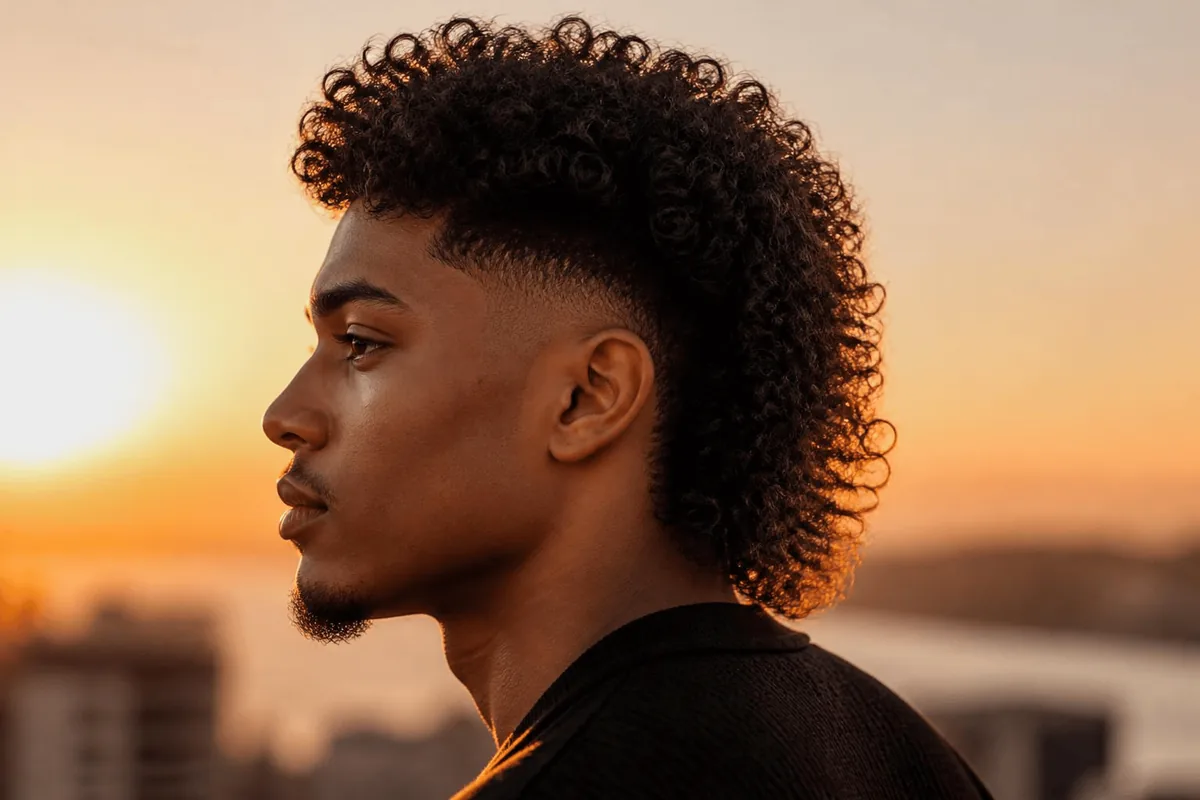
Curly hair makes a spectacular mullet. The back falls in spirals, the top keeps its curl pattern and the fade gives a clean outline. Ask for the top and back to be cut dry, so the barber sees where the curls land, and leave extra length, since curls shrink. A leave-in cream keeps the back from frizzing. Our drop fade curly hair page explains the routine.
The risk is bulk at the back. Ask the barber to remove weight inside the length, and shape the back into a soft taper at the bottom, so the curls do not form a triangle.
How does it work on straight and fine hair?
Straight hair gives a sleek mullet that looks sharp and modern. The challenge is movement, because fine straight hair can hang flat. Ask for layers through the top and back, and use a sea salt spray or a texture powder to add grip. Fine hair also looks thin at the ends, so ask the barber to keep the bottom of the back blunt, not wispy.

How does it work on wavy hair?
Wavy hair is the easiest to wear as a mullet. It has natural movement, holds a shape and looks lived-in with little product. Use a light cream or sea salt spray on damp hair, then air dry or diffuse. Wavy hair also grows out more gracefully, which matters if you are in the middle of growing the back.
Which face shapes suit a drop fade mullet?
- Oval faces suit most versions.
- Round faces benefit from height on top and a longer back, which add length.
- Square faces look softer with a textured top and a fringe.
- Long faces should keep the top shorter and the back moderate.
- Heart faces look balanced with a fringe and a fuller back.
See haircuts by face shape for the chart.
How do you ask for a drop fade mullet?
This is a detailed cut, so use clear words and bring photos of the front, side and back.
- “A mid drop fade mullet.” Name the height and the style.
- “Start the fade at a #1 and go to a #3.” Say the guards.
- “Curve the fade down behind the ear, and stop it at the nape.” Point to where the long back begins.
- “Leave about 10 cm at the back.” Show the length with your hand.
- “Keep the top around 6 cm, textured.” Name the top.
- “Taper the bottom of the back softly.” This stops a hard edge.
For more phrases, read how to ask for a haircut.

How is a drop fade mullet cut? Step by step
Step 1: Section the hair
The barber separates the top, the sides and the back with clips. What goes wrong: the back gets cut by mistake. Keep the line clear.
Step 2: Mark the fade line
The curve is marked from the temple to behind the ear and down toward the nape, stopping where the long back begins. What goes wrong: the line extends into the back section and removes length.
Step 3: Build the fade
Clippers blend from the bottom to the top of the fade with changing guards. What goes wrong: a hard line between the fade and the back leaves a visible step.
Step 4: Cut the back
Scissors shape the back to the chosen length, with layers or a soft taper. What goes wrong: cutting the back too blunt makes the shape heavy.
Step 5: Cut the top
The top is cut and texturised, and then connected to the back. What goes wrong: a top that is too short disconnects from the back, so the cut looks like two haircuts.
Step 6: Check the shape
The barber brushes everything and checks the outline from every angle. What goes wrong: missing an uneven back line. Use a hand mirror.
How do you style a drop fade mullet?
Styling should look easy. Aim for movement, not a fixed shape.
- Start with damp hair. Towel dry gently.
- Apply sea salt spray. Mist the top and back for texture.
- Dry. Blow-dry the top forward or up, and let the back dry naturally.
- Add paste or cream. Use a small amount on the top.
- Finish. Tuck the back behind the ears or let it fall.
See best hair products for men for ideas.
Can you wear a drop fade mullet to work?
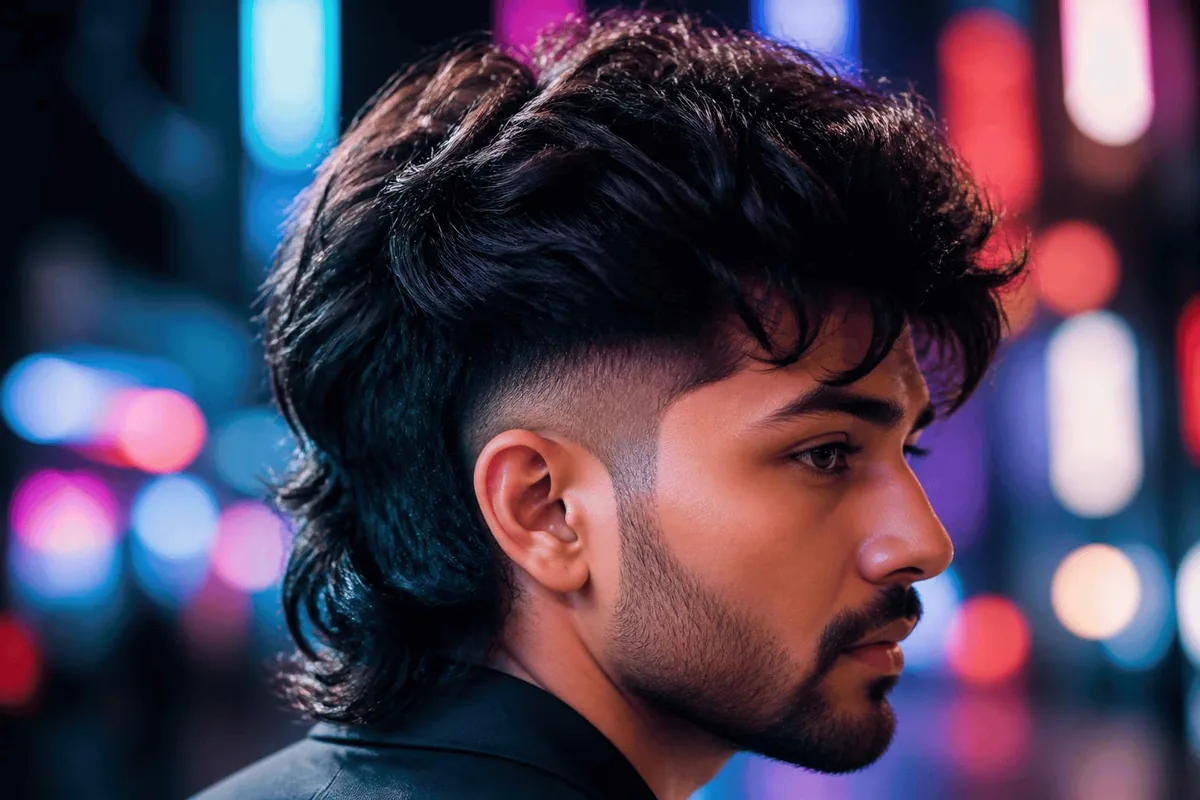
It depends on the workplace, but the drop version is one of the more office-friendly mullets, because the sides are tidy and the outline is clean. To keep it conservative, choose a shorter back of 5 to 8 cm, a low or mid height and a neat top. Style the hair back or tuck it behind the ears for meetings.
In creative fields, you can go longer and more textured. If you are unsure, ask about the dress code, and start with the subtle version.

How do you grow one out without a bad phase?
The awkward stage is the main reason men give up. A few tactics help.
- Keep the sides faded. A neat fade makes the length at the back look intentional.
- Trim the neckline. A tidy nape stops the back from looking messy.
- Take small trims. Ask for a light trim every 8 to 10 weeks to remove split ends.
- Use product. Texture spray gives shape during the in-between months.
How is it different from a wolf cut or an edgar cut?
People mix these up because all three have length and texture. The difference is where the length sits and how the sides are treated.
| Cut | Sides | Length sits | Texture |
|---|---|---|---|
| Faded mullet | Short and curved | Back | Layered or textured |
| Wolf cut | Longer, shaggy | All over, in layers | Heavy layering |
| Edgar cut | Faded, often high | Top, with a blunt fringe | Flat, blunt |
| Classic mullet | Short, often scissor cut | Back | Straight, unlayered |
If you want a clear fade and a long back, the faded mullet is the right choice. If you want shaggy length all over, look at the wolf cut. If you want a sharp, blunt fringe, look at the edgar.
How do you wash and care for the long back?
The back is the longest part of the cut, so it needs a little more care than the sides. Wash it every two to three days with a mild shampoo, and condition the lengths, not the roots. Detangle with a wide-tooth comb from the ends upward, so you do not pull the hair. Use a leave-in cream or a light oil on the ends to prevent split ends, which make the back look scruffy.
Avoid heavy heat styling on the back. A hairdryer on low heat is fine, and a diffuser suits wavy and curly hair. If you swim, rinse the hair after chlorine or salt water, because both dry out the ends.
What beard goes with it?
A faded mullet looks best with a beard that is shaped and balanced. A short, neat beard keeps the focus on the haircut. A full beard works too, and it gives a rugged look, especially with a longer back. The fade should blend into the sideburn and the beard, so there is no gap. Avoid a very long beard with a very long back, since the face will look overwhelmed. Our beard fade page explains the blend.
Can men with thinning hair wear it?
Yes, with care. A faded mullet puts the length at the back, where many men keep more density, and a short top shows less thinning. Keep the top short, around 3 to 5 cm, and use a light texture product. A forward fringe can cover a receding hairline. If the crown is thinning, ask the barber to shape the top so the crown is covered. Our receding hairline page lists more options.

Does the season change how you wear it?
A longer back is warmer in winter, which keeps the neck covered. In summer, it can feel hot, so tie it back if it is long enough, or choose a shorter version. Humidity makes wavy and curly hair puff, so use a light cream and avoid heavy products. In dry winter air, hair can turn static, so a leave-in conditioner helps. Salt water gives natural texture in summer, which suits the style.
Which mullet myths should you ignore?
- Myth: a mullet is always messy. A faded version is tidy, because the outline is controlled.
- Myth: you need long hair to wear one. A back of 6 to 8 cm is enough for a subtle version.
- Myth: it only suits young men. The cut works at any age, with a shorter back for a polished look.
- Myth: it needs a lot of product. A small amount of texture spray is usually enough.
- Myth: it cannot be professional. A neat, low-contrast version is accepted in many workplaces.
What does it cost, and how often should you visit?
Prices vary by city and shop, so check locally. The fade needs maintenance every three to four weeks, while the back can go six to eight weeks between trims. Some barbers charge extra for layering. To save money, ask for a sideburn and neckline tidy between full cuts. A good barber will plan a schedule that fits your growth and budget.
What does a three-month plan look like?
If you are starting from short hair, a plan helps you stay motivated.
- Month 1: get a mid fade, keep the top at 5 to 6 cm and let the back grow. Visit every 3 weeks.
- Month 2: the back reaches the nape. Ask for a soft taper on the ends and keep the sides sharp.
- Month 3: the back passes the collar. Add layers and texture, and visit for a trim at week 10.
By month four, you have a clear mullet, with a fade that keeps it neat. The same plan works if you start with a longer top, because the fade does most of the shaping.
How do you prevent razor bumps (pseudofolliculitis barbae) after a fade?
Razor bumps have a medical name, pseudofolliculitis barbae. It happens when a freshly cut hair curls back and grows into the skin, and it is most common on tightly coiled hair around the nape and behind the ears.
The neckline and sideburns are the usual trouble spots. The American Academy of Dermatology explains how to reduce the risk in its guide to razor bump prevention. Use clippers, cut with the grain, rinse and moisturise.
Which mullet-fade mistakes leave the back ragged?
| Mistake | Result | Fix |
|---|---|---|
| Back too short | Looks like a regular fade | Ask for at least 8 cm |
| Fade into the back | Loses length | Stop the fade at the nape |
| No layers | Heavy, flat back | Ask for layers |
| Blunt bottom | Hard edge | Taper the ends softly |
| Skipping visits | Fuzzy sides | Book every 3 to 4 weeks |
Which mullet variations suit you: skin fade, taper, undercut and perm?
The mullet is not one haircut. A skin fade version has bare sides and a long back for maximum contrast. A taper version keeps a little length at the ears and suits office jobs. An undercut mullet removes the sides completely, which makes the back look longer. A permed mullet adds curl to straight hair, and a shag version layers the top for a messier shape.
Each one works with the curve, but the effect is different. The skin and undercut versions look bold. The taper version is easier to grow out. A temple fade adds a clean outline at the front if you want something sharper. Choose the version that matches how often you can visit a barber, because the high-contrast versions need a trim every two to three weeks. A drop fade mullet looks best when the back is trimmed regularly. Tell your barber which drop fade mullet version you want before the first cut.
Drop fade mullet FAQ
What is a drop fade mullet?
It is a mullet with a curved fade that drops behind the ear and ends where the long back begins.
How long should the back be?
8 to 12 cm suits most men.
Which fade height is best?
A mid height is the safest start.
Does it suit curly hair?
Yes. Ask for a dry cut and layers.
Is it professional?
A short back with a neat top is acceptable in many offices.
How often should I trim?
Every 3 to 4 weeks.
More in the drop fade series
This page is a cluster guide under our drop fade pillar. See the fade haircuts hub, or compare the wolf cut.
Lengths and timings are typical estimates, since hair growth varies, and the growth figure follows the Cleveland Clinic. Our editorial policy explains how we label estimates.