On this page
What is a low taper fade mullet?Why choose a low taper fade mullet over a classic mullet?What does a low taper fade mullet look like in each style?Which hair types suit a low taper fade mullet?Does a low taper fade mullet suit your face shape?How to ask the barber for a low taper fade mulletHow is the mullet cut? Step by stepHow to style a low taper fade mullet every morningWhich products work on this mullet?How long does it take to grow a low taper fade mullet?How often does a low taper fade mullet need upkeep?How do you avoid razor bumps and irritation around a taper?Is this mullet acceptable at work?How does a low taper fade mullet compare with similar cuts?Common mistakes with this mullet and how to fix themFrequently asked questionsMore in this seriesQuick answer. A low taper fade mullet keeps the classic mullet shape (shorter on top, longer at the back) and swaps the harsh sides for a soft taper that only trims the sideburns, the ears and the neckline. Ask for a #2 or #3 at the bottom of the taper, leave 10 to 20 cm at the back, keep the top 5 to 8 cm and textured, and book a tidy-up every 4 to 5 weeks. It is the easiest way to wear a mullet at work, on a first date and in everyday life.
Mention the word mullet to a barber and you may get a nervous laugh. Mention a low taper fade mullet and the conversation changes. The cut is no longer the joke from the 1980s. It is a neat, modern shape with a short, textured top, a soft fade around the ears and a back that grows long on purpose.
This guide is part of our low taper fade series. It explains what the cut is, which hair types suit it, exactly what to tell your barber, how it is cut, how to style it each morning and how long it takes to grow. If you want the full history and every mullet variation, our main mullet guide covers that. Here we stay with the fade version.
What is a low taper fade mullet?
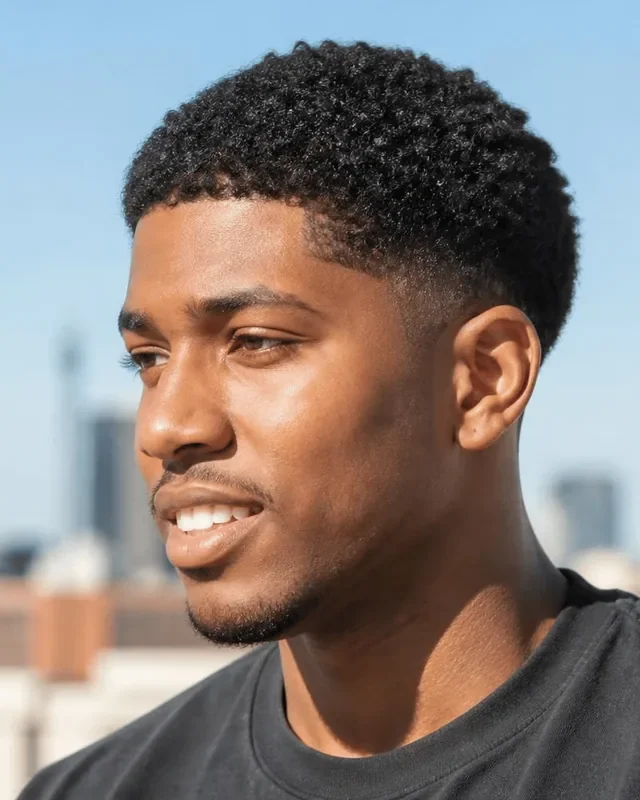
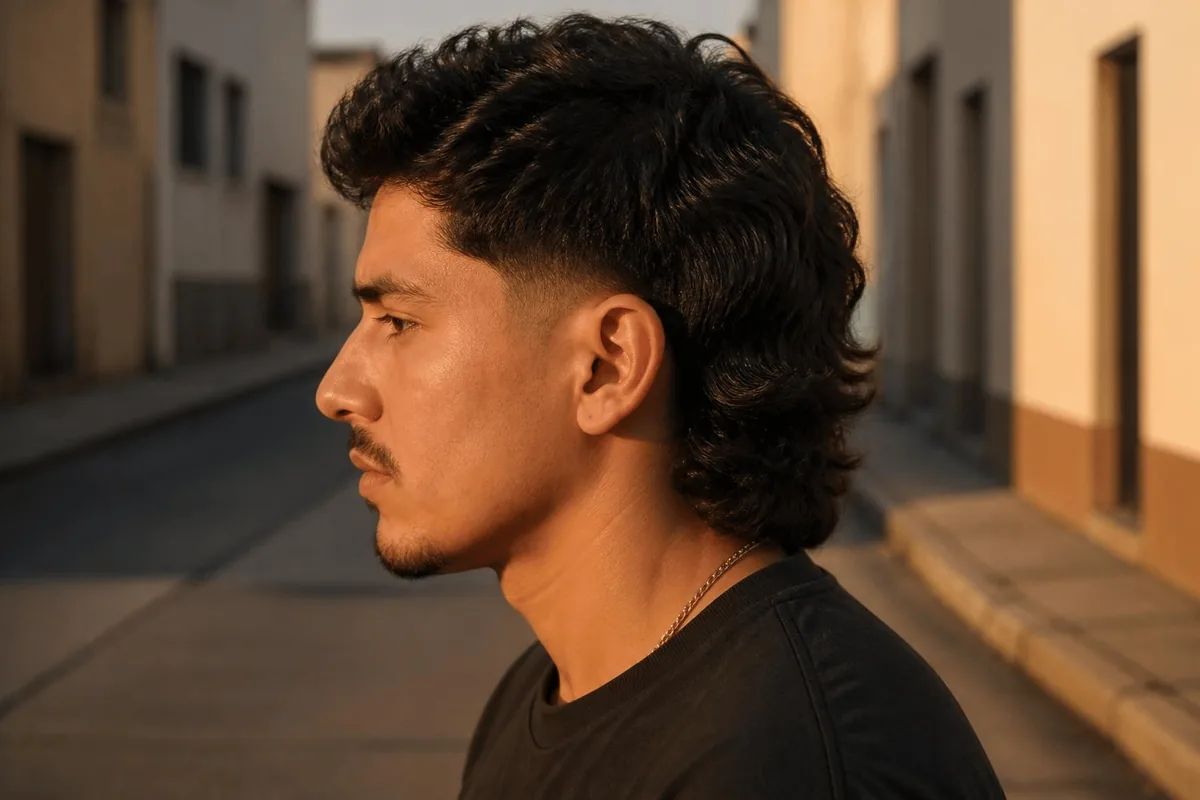
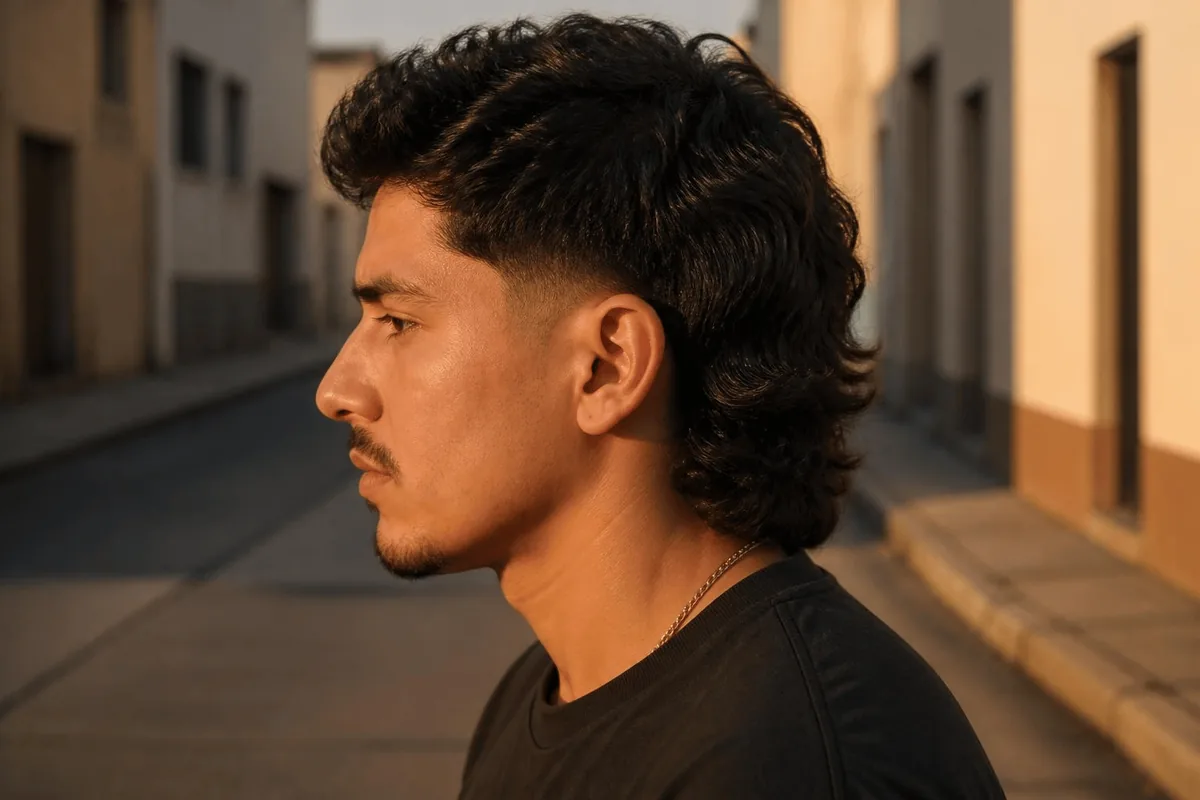
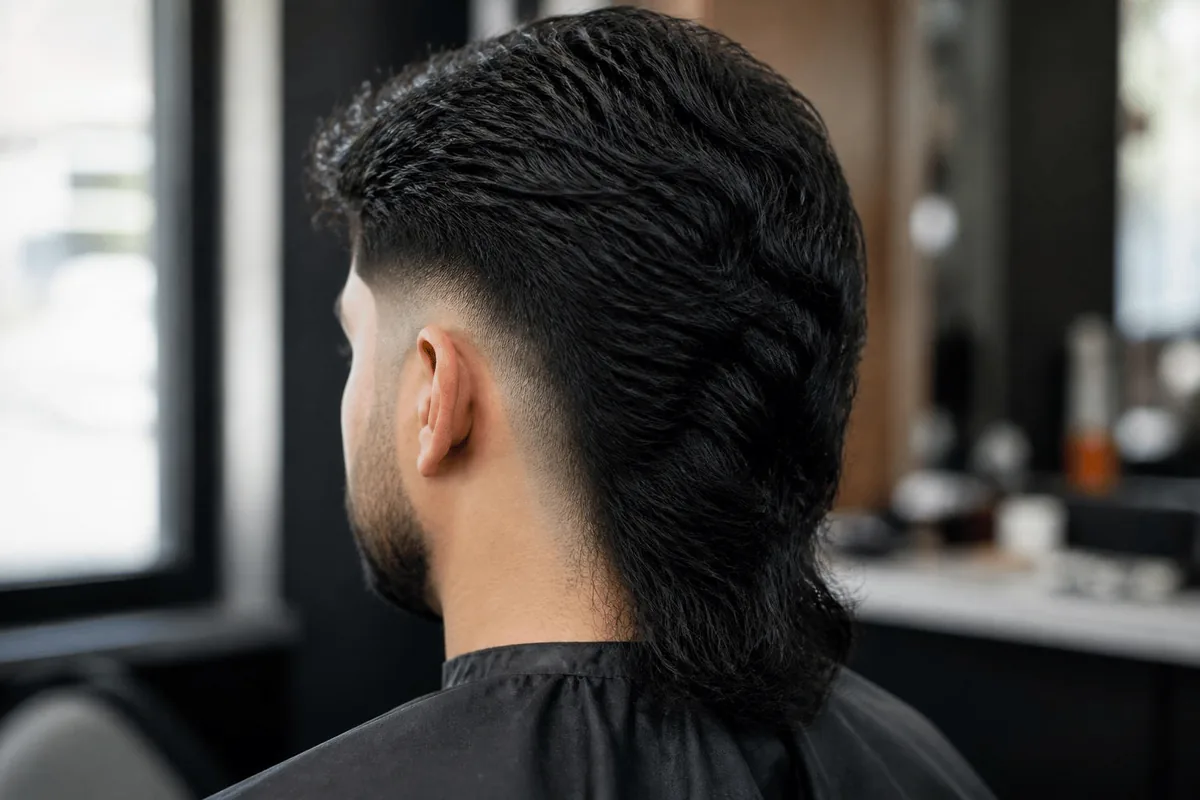
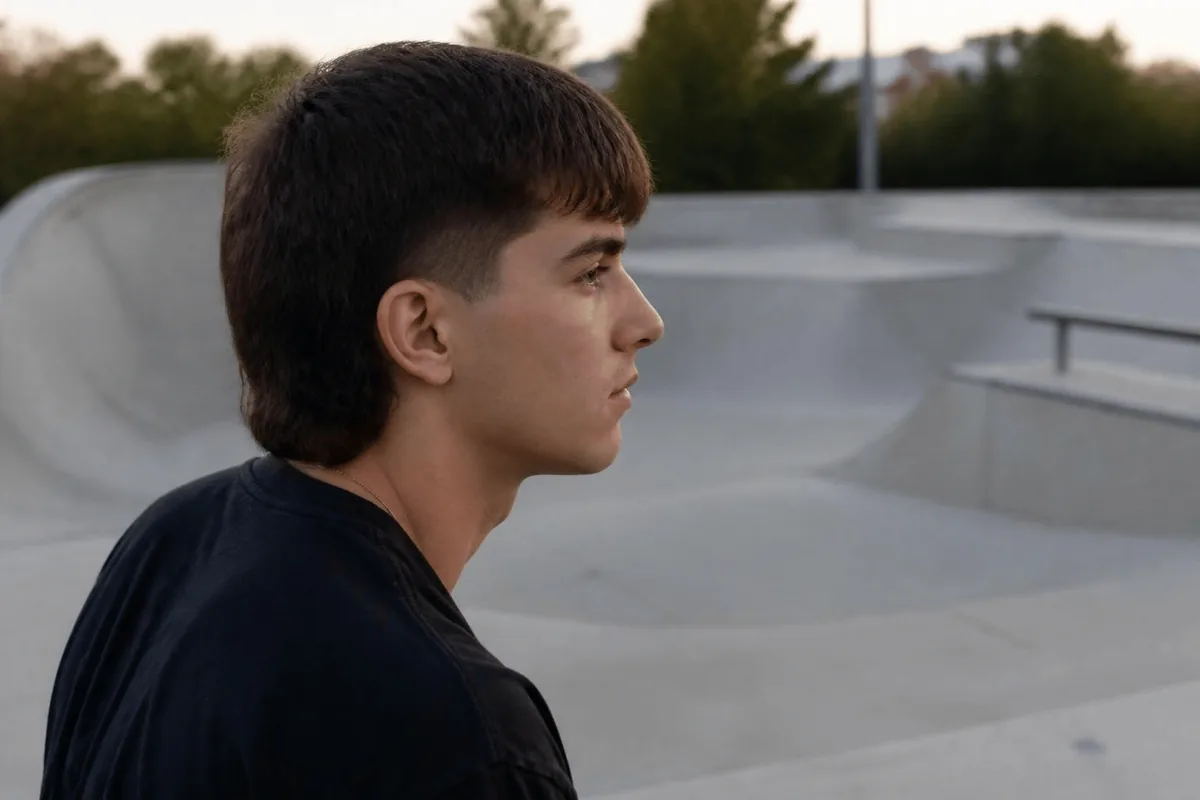
A low taper fade mullet is a mullet with a low taper on the sides. The sides are cut short only at the very edge, around the sideburns, the tops of the ears and the nape. Everything above that stays longer and blends into the top. The back is left longer and is the signature of the mullet. In short: short on top, neat at the sides, long behind.
That edge is the difference. A classic mullet often has no fade at all. The sides are scissor-cut or left bulky, and the cut depends on the hair doing what it is told. A taper does the work for you. It removes the weight right behind the ears, keeps the shape clean as it grows and makes the back look chosen instead of forgotten.
Three zones define the cut:
- The top: usually 5 to 8 cm, textured with a razor or point-cut scissors so it can be styled with a little product.
- The sides: a low taper that starts just above the ear, blending from a #1 or #2 at the very bottom into the longer hair above.
- The back: left long, from about 10 cm to well past the collar, with a softly cut or tapered tail.
Because the fade is low, it sits below the temple line and does not draw attention. People notice the shape, not the fade. That is why it works on men who want a mullet but not a statement.
Why choose a low taper fade mullet over a classic mullet?
A classic mullet asks a lot. Bulky sides, a heavy back and a messy top take daily effort to look intentional. A low taper fade mullet keeps the idea and removes the effort. There are four practical reasons men switch.
- It looks tidy from the front. With the back hidden, the cut reads as a short, textured style with clean sides. You get the mullet only when someone sees you from behind or in profile.
- It grows out gracefully. Tapered edges stay in shape for weeks. A classic mullet looks rough after two.
- It works with more hair types. Removing bulk behind the ears helps thick and curly hair sit flat and lets fine hair look fuller on top.
- It is flexible. You can tie the back, tuck it behind the ears or wear it loose.
It is also a good bridge. If you are growing your hair, a low taper fade mullet gives you a neat shape at every stage. Our guide to the low taper fade for long hair follows the same idea with a longer top.
What does a low taper fade mullet look like in each style?
The word covers several versions. They differ in how much length sits at the back and how much texture is on top. The table below makes the choice easier before you see a barber.
| Version | Top length | Back length | Best for | Barber note |
|---|---|---|---|---|
| Short and subtle | 4 to 6 cm | 8 to 10 cm | Office, first-time mullet | Barely longer behind than a normal taper |
| Modern | 5 to 8 cm | 10 to 15 cm | Everyday wear | Textured top, soft tail |
| Shaggy | 7 to 10 cm | 12 to 18 cm | Wavy and thick hair | Heavy layering, point-cut ends |
| Long tail | 6 to 9 cm | 18 to 25 cm | Confident, creative looks | Keep the tail thin and tapered |
| Curly | 6 to 10 cm | 10 to 20 cm | Curly and coily hair | Cut dry, follow the curl pattern |
| Wolf-style | 8 to 12 cm | 15 to 20 cm | Fuller, layered look | Layers through the crown |
If you like the wilder, shaggier end of this range, compare it with the wolf cut for men. The two share layers but the fade keeps your sides cleaner.

Which hair types suit a low taper fade mullet?
Almost every hair type can wear this cut. Texture decides how it looks and how often it needs work, not whether it is possible. Use the table to set expectations.
| Hair type | How it looks | What to ask for | Watch out for |
|---|---|---|---|
| Straight | Sleek, defined tail | Texturising on top, thin the tail | Flat top without product |
| Wavy | Natural movement, the easiest to style | Layers through the crown | Frizz in humid weather |
| Curly | Full, bouncy top, rounded tail | Dry cut, follow the curls | Shrinkage makes the tail look shorter |
| Coily | Dense, sculpted shape | Longer top, keep the tail even | Dryness at the ends |
| Thick | Strong shape, needs thinning | Remove weight behind the ears | Puffy sides between visits |
| Fine or thinning | Light, airy shape | Keep the top short and textured | A thin tail looks sparse |
Our pages for curly hair and straight hair go deeper on how a taper behaves on each texture. If you are not sure where your hair sits, the guide to haircuts by hair type helps you decide.


Does a low taper fade mullet suit your face shape?
Face shape matters less than people think, because the cut changes mostly at the back and the sides. It still changes how balanced your face looks from the front. A few simple rules:
- Oval faces suit nearly every version. Choose by taste.
- Round faces look longer with a little height on top. Keep the sides tight and add texture upward.
- Square faces look softer with a slightly longer, wavier top. A sharp, boxy top adds to the angles.
- Long or oblong faces need less height. Keep the top short and let the tail do the length.
- Heart-shaped faces look balanced with a fuller back and a gentle fringe.
For a more detailed guide, see haircuts by face shape. If you have a receding hairline, a short, textured top with a fringe hides it well, and the guide to haircuts for a receding hairline explains why.
How to ask the barber for a low taper fade mullet
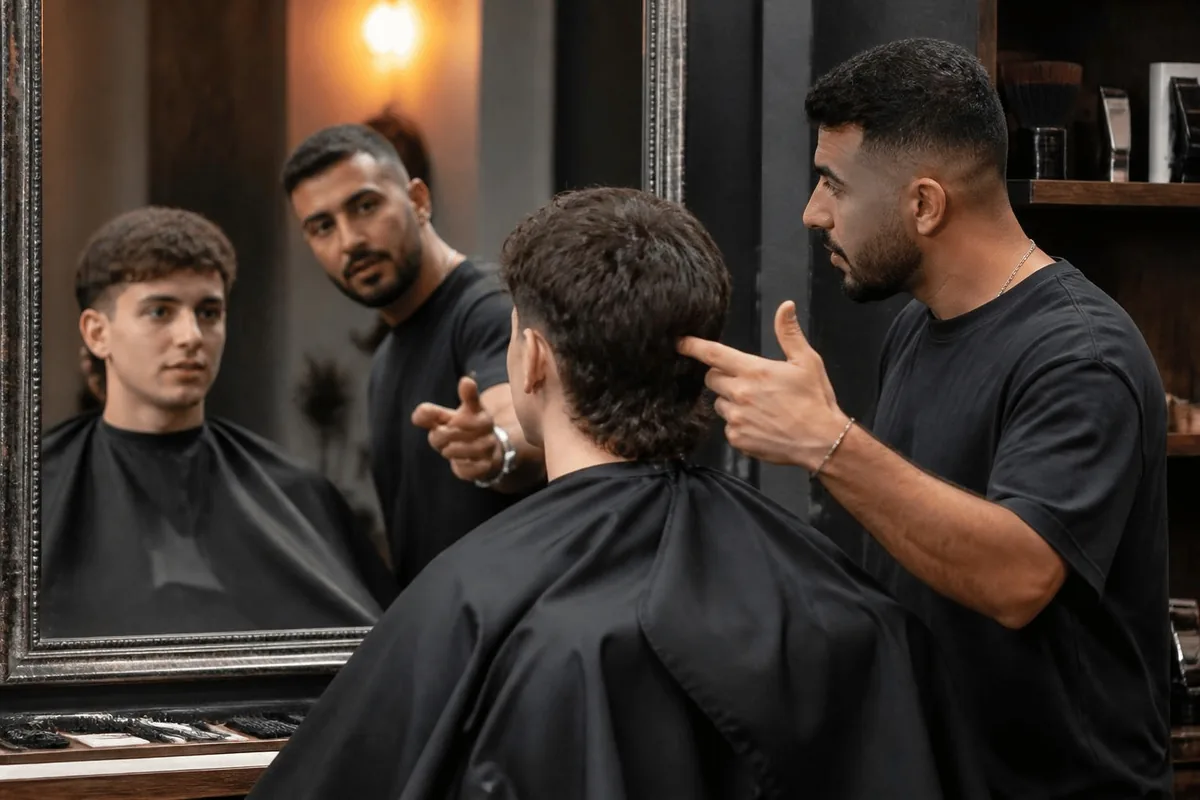
This is where most disappointments start. Barbers hear “mullet” and imagine anything from a barely-there tail to a 1986 revival. Bring a photo and use plain words. A clear script avoids the two common failures: a tail that is cut off, or sides that are taken too short.
- “I want a mullet with a low taper fade.” Say both words. It tells the barber the sides are tidy and the back stays long.
- “Start the taper at a #2 and keep it low.” A low taper stays around the ear and nape. The number sets how short the bottom edge is. For a softer look, ask for a #3.
- “Keep the length at the back, about this much.” Show the length with your fingers against your neck and shoulders, or a photo. Do not leave the back length to guess.
- “Texturise the top, about 6 cm.” Ask for point-cutting or a razor, so the hair moves instead of sitting in a block.
- “Blend the sides into the back.” This is the step that makes the tail look connected instead of added on.
- “Tidy the neckline, but do not take the tail up.” Barbers like a very clean neck. On a mullet, a high neckline cuts the tail short.
Our guide on how to ask for a haircut has more phrases, and the haircut numbers page explains guard sizes. The table below shows what each bottom guard does on this cut.
| Bottom guard | Look | Visits needed |
|---|---|---|
| #1 | Sharp, high contrast | Every 3 to 4 weeks |
| #2 | Clean, balanced (best default) | Every 4 to 5 weeks |
| #3 | Soft, natural | Every 5 to 6 weeks |
| #4 | Barely there, very low contrast | Every 6 weeks |

How is the mullet cut? Step by step
This section is for people who want to understand what the barber is doing, or who have cut hair before. If you are new to clippers, read our guide to cutting a low taper fade at home first. A mullet adds one extra rule: protect the back length.
Step 1: Section the hair
Clip the top and the back out of the way. Separate three zones: top, sides and back. The back section should be clipped high, so the clipper never touches it by accident. What goes wrong: if the back is not clipped away, a single pass of the guard can take off an inch of tail.
Step 2: Set the top length
Comb the top up and cut it to the length you want, usually 5 to 8 cm, with scissors over comb or point-cutting. Cut a little at a time. What goes wrong: cutting the top too short makes the tail look heavier than it is.
Step 3: Start the taper low
Use a #2 guard around the sideburn, the ear and the nape, working about 2 cm up from the hairline. What goes wrong: starting the taper too high turns it into a mid fade and loses the mullet feel.
Step 4: Blend with a flicking motion
Move the clipper upward and flick it away from the head, switching to a #3 and then a #4 to move from short to long. What goes wrong: stopping the clipper in one place leaves a visible line.
Step 5: Connect the sides to the back
At the back, the taper needs to fade into the longer length instead of stopping. Use scissors over comb to join the two. What goes wrong: a hard line between the short nape and the long tail looks like two haircuts.
Step 6: Shape the tail
Cut the tail to a point, a gentle curve or a straight line, depending on the style. A slightly rounded, tapered end looks best for most men. What goes wrong: a blunt, straight line looks heavy and dated.
Step 7: Clean the edges
Outline the sideburns and ears with a trimmer. Leave the neckline natural or only lightly cleaned. What goes wrong: a deep, square neckline makes the tail look shorter than it is.
Step 8: Check and finish
Comb everything down, look from the front, sides and back, and fix any uneven spots. Add texture spray or a light cream. What goes wrong: checking only in a front mirror hides uneven tails. Use a hand mirror.
How to style a low taper fade mullet every morning
Styling takes five minutes. The point is texture on top and a controlled tail, not perfection. Follow the sequence below.
- Start with damp hair. Towel dry until it stops dripping. Hair that is too wet dilutes product.
- Add a base. Use a sea salt spray for straight and wavy hair, or a leave-in cream for curly and coily hair.
- Dry the top. Blow-dry upward and forward with your fingers, so the hair dries with some lift.
- Add texture. Rub a pea-sized amount of matte paste or clay between your palms and work it through the top. Use less than you think.
- Control the back. Smooth a little cream down the tail. Leave it natural, or tuck it behind the ears.
- Set it. Use a light-hold spray only if the style does not stay in place.
What goes wrong: too much product makes the top look wet and flat, and a dry tail looks frizzy. Use a light hand on the top and a smooth cream at the back. Our page on the best hair products for men helps you choose.

Which products work on this mullet?
| Product | Where to use it | Best for |
|---|---|---|
| Sea salt spray | Damp hair, top and crown | Straight and wavy hair that needs grip |
| Matte clay or paste | Dry top, fingertips only | Texture without shine |
| Leave-in cream | Tail and ends | Curly, coily or dry hair |
| Lightweight oil | Ends only, a drop | Frizz control |
| Light-hold spray | Over the finished top | Windy days and long hours |
| Wide-tooth comb | Damp hair | Detangling the tail without breakage |
Keep products light on the sides. Anything heavy flattens the taper and makes the edges look greasy.
How long does it take to grow a low taper fade mullet?
If you start from a short cut, the back is the slow part. According to the Cleveland Clinic, hair grows about 1 centimetre per month, so the numbers below are estimates and your own rate may be a little faster or slower.
| Starting length at the back | Target | Growth needed | Time at 1 cm/month |
|---|---|---|---|
| 3 cm | 10 cm | 7 cm | About 7 months |
| 3 cm | 15 cm | 12 cm | About 12 months |
| 6 cm | 12 cm | 6 cm | About 6 months |
| 6 cm | 18 cm | 12 cm | About 12 months |
| 10 cm | 20 cm | 10 cm | About 10 months |
You do not have to wait for the full length. At around 8 to 10 cm the back already reads as a modern, subtle mullet. During the awkward months, keep the sides and the neckline tidy, and let only the back grow. Our long hair timeline shows how to survive each stage, and how often should men get a haircut explains the visit rhythm.
How often does a low taper fade mullet need upkeep?
| Area | Task | How often |
|---|---|---|
| Sides and ears | Refresh the taper | Every 4 to 5 weeks |
| Neckline | Light clean-up only | Every 4 to 5 weeks |
| Top | Texturise and trim | Every 6 to 8 weeks |
| Tail | Trim the ends only | Every 8 to 12 weeks |
| Washing | Shampoo and condition | 2 to 4 times a week |
The sides run on a short clock and the tail on a long clock. If you can only visit once a month, ask for the taper and a very small trim on the top, and leave the tail alone.
How do you avoid razor bumps and irritation around a taper?
Tapers use clippers and trimmers around the ears and the nape, where skin is thin and hair is dense. Ingrown hairs and razor bumps are common on the neckline. The American Academy of Dermatology has a clear guide on preventing razor bumps. In practice, a few habits help:
- Do not shave the neckline close. Let the barber use clippers at a short guard instead of a razor, if you are prone to bumps.
- Cut with the grain at the nape. Going against the grain raises the risk of ingrown hairs.
- Cleanse after the cut. Wash away loose hair and use a gentle, fragrance-free moisturiser.
- Do not pick or scratch. If bumps persist, ask a dermatologist.
Is this mullet acceptable at work?
In most workplaces, yes, if you choose the subtle versions. A short top, a neat taper and a back of 8 to 12 cm look professional. In formal settings, you can tie the tail low or tuck it behind the ears. In creative fields, you can go longer and shaggier.
Think of three levels. Conservative offices suit the short, subtle version. Hybrid and creative workplaces suit the modern version. Events, nights out and weekends suit the long tail and shaggy versions. The same cut can move between them with a bit of product and a hair tie.

How does a low taper fade mullet compare with similar cuts?
| Cut | Sides | Back | Main difference |
|---|---|---|---|
| Low taper fade mullet | Low taper, tidy | Long | Subtle and neat |
| Classic mullet | Scissor-cut, bulkier | Long | More volume, less structure |
| Mullet with a mid fade | Fades higher up the head | Long | Higher contrast, sharper |
| Edgar cut | Very short, high fade | Short | Blunt fringe, no length at the back |
| Wolf cut | Layered, no fade | Long | Shaggy, layered all over |
| Low taper with textured crop | Low taper | Short | Same sides, no length at the back |
If you want the neatest version of all, a short top and a tidy side with no length behind, look at the low taper fade with a textured crop. If you want a higher contrast with a mullet tail, see the mid fade pillar.
Common mistakes with this mullet and how to fix them
| Mistake | What you see | Fix |
|---|---|---|
| Taper starts too high | Looks like a different cut | Ask for a low taper and point to the ear |
| Tail cut too blunt | Heavy, dated shape | Ask for a tapered, rounded end |
| No blend at the back | Two haircuts joined | Ask for a blend between the nape and the tail |
| Top too short | Tail looks bigger | Keep at least 5 cm |
| Too much product | Wet, flat top | Use a pea-sized amount of matte clay |
| Skipping visits | Puffy sides, messy neck | Visit every 4 to 5 weeks |
Frequently asked questions
What is a low taper fade mullet?
This cut is a mullet whose sides have a soft, low taper around the ears and neckline. The top is short and textured and the back is longer. It looks neater than a classic mullet and is easier to wear every day.
How long should the back be on a low taper fade mullet?
Most men choose 10 to 15 cm for a modern look. A subtle version can be as short as 8 cm, and a long tail can reach 20 to 25 cm.
Which guard number should I ask for?
A #2 at the bottom is the best default. Choose a #1 for a sharper look or a #3 for a softer one, and ask the barber to keep the taper low.
Can I get a low taper fade mullet with curly hair?
Yes. Curly hair often suits a mullet well because the curls fill the shape. Ask for a dry cut so the barber can see the curl pattern, and use a leave-in cream on the tail.
Does a low taper fade mullet suit thin hair?
Yes, with a short, textured top and a moderate back length. A very long, thin tail can look sparse, so keep it neat and tapered.
How often do I need a trim?
Refresh the taper every 4 to 5 weeks. Trim the top every 6 to 8 weeks and only the ends of the tail every 8 to 12 weeks.
Can I do it at home?
The taper is the hard part, and a mistake at the back cannot be undone. If you try, follow our home guide, work slowly and leave the tail alone.
More in this series
This guide is one of the cluster pages under the low taper fade pillar. The others cover curly hair, straight and fine hair, part lines and designs, long hair, cutting one at home and the textured crop. See the full range on our fade haircuts hub.
Back lengths and growth times above are typical estimates, since hair growth and texture vary from person to person, and the growth figure follows the Cleveland Clinic. Our editorial policy explains how we label estimates.