On this page
What is a low taper fade with textured crop?Why is a low taper fade with textured crop so popular?Which versions of the textured crop work with a low taper?Which hair types suit a low taper fade with textured crop?Does it suit your face shape and hairline?How does a low taper fade with textured crop work on thinning hair?How to ask the barber for a low taper fade with textured cropHow is the cut done? Step by stepHow to style a low taper fade with textured cropWhich products work best for a low taper fade with textured crop?How long does a low taper fade with textured crop last?How do you prevent razor bumps and irritation?Where does a low taper fade with textured crop work: office, gym and formal events?How does a low taper fade with textured crop compare with similar cuts?Common low taper fade with textured crop mistakes and how to fix themFrequently asked questionsMore in this seriesQuick answer. A low taper fade with textured crop pairs a short, choppy top (3 to 6 cm, usually with a forward fringe) with a soft taper that trims only the sideburns, the ears and the neckline. Ask for a #2 or #3 at the bottom of the taper, a point-cut top and a natural fringe. Style it with a pea-sized amount of matte clay on dry hair, and book a tidy-up every 3 to 5 weeks. It suits straight, wavy, curly and thinning hair alike.
Some haircuts try too hard. The low taper fade with textured crop does not. It is short, neat and easy to wear, it takes two minutes to style and it looks right with a T-shirt, a suit or gym clothes. No wonder barbers get asked for it every day.
This guide is part of our low taper fade series. It covers what the cut is, which hair types and face shapes suit it, exactly what to tell the barber, how it is cut step by step, how to style it and how long it lasts. For the wider story of the crop itself, our main textured crop guide goes into history and every variation. Here we focus on the version with the low taper.
What is a low taper fade with textured crop?
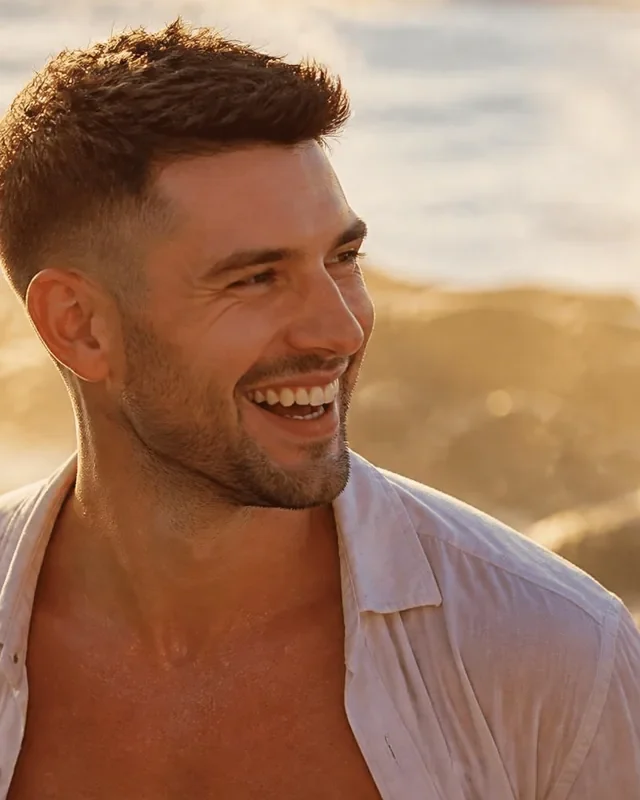
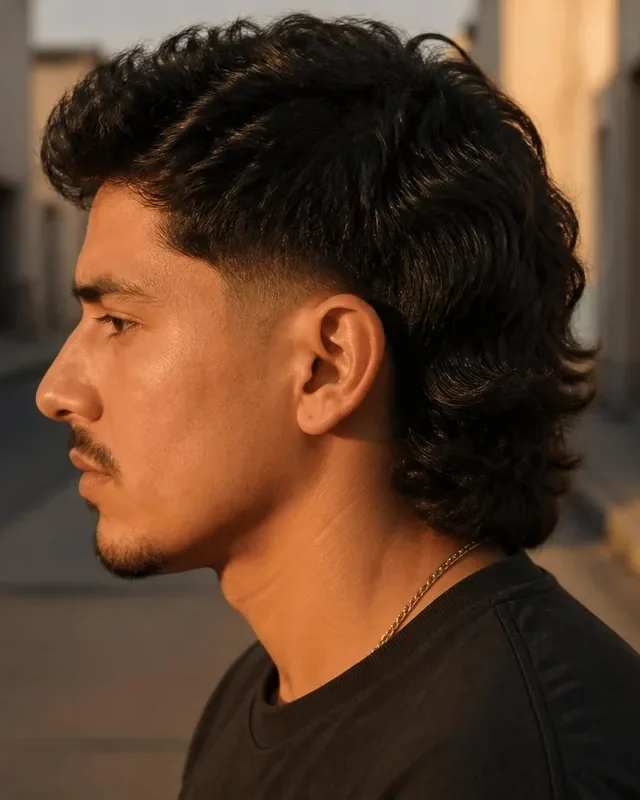
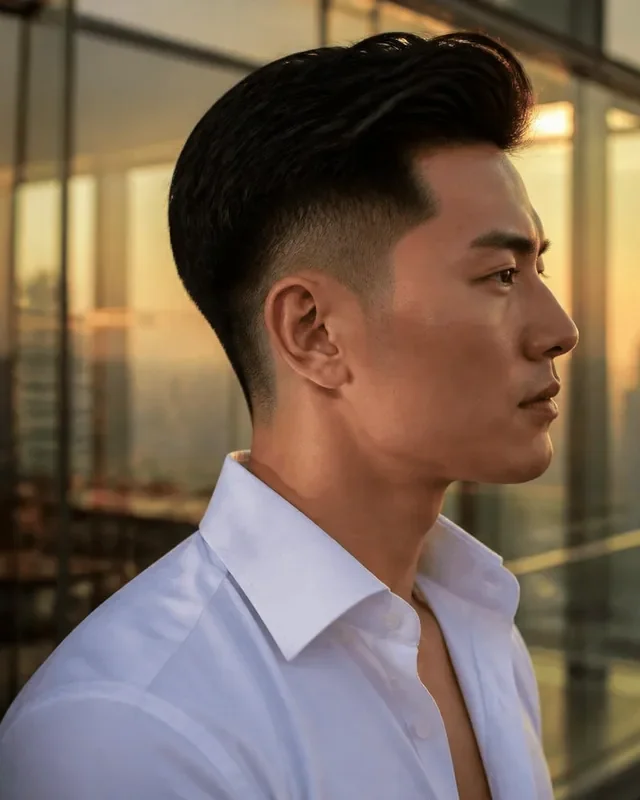
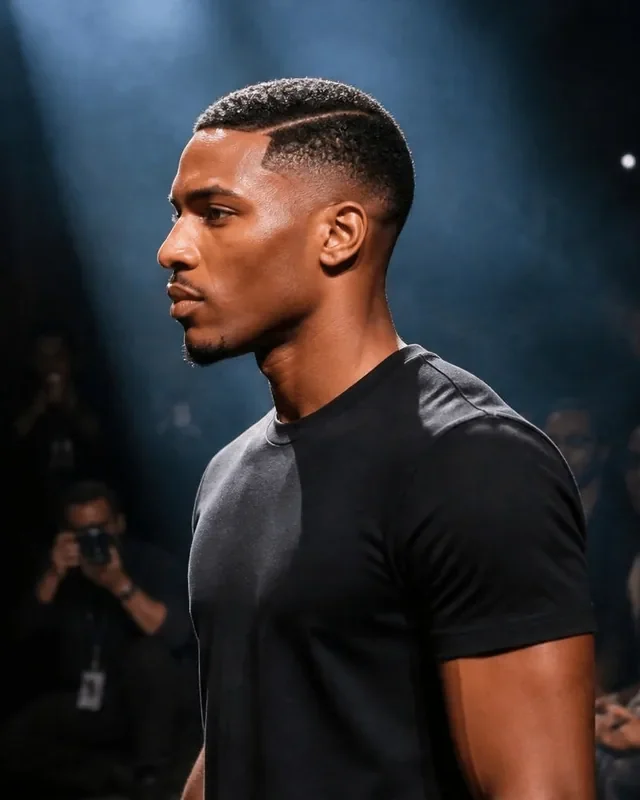
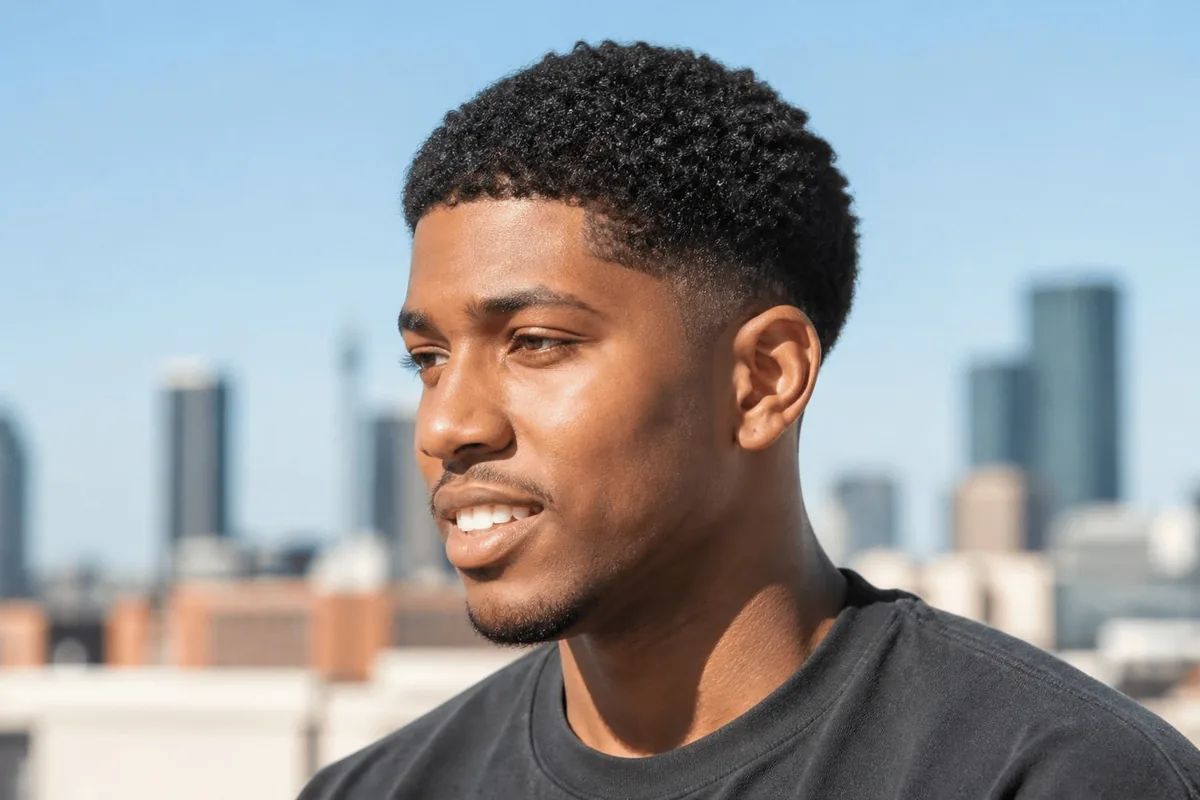
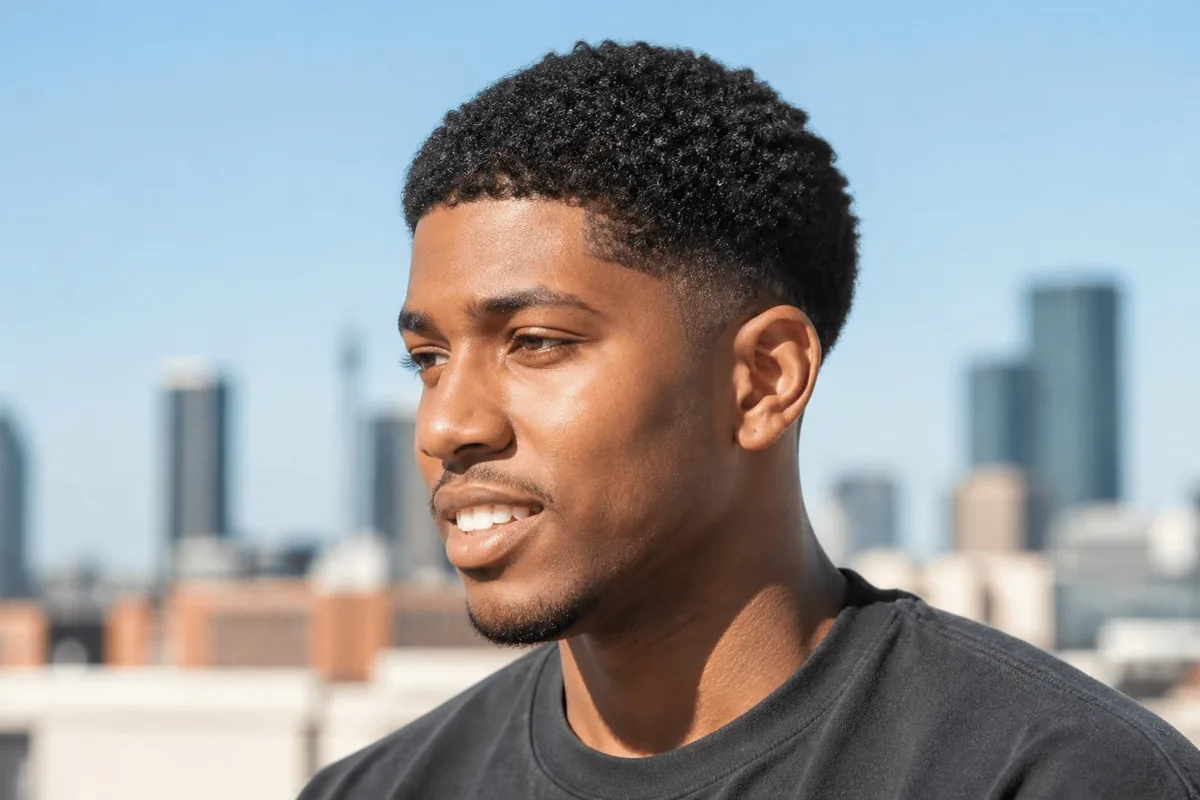
A low taper fade with textured crop combines two things. The first is the textured crop: a short top, cut with scissors or a razor so the ends are uneven and separated, then brushed forward into a short fringe. The second is the low taper: sides that stay long at the top and are trimmed shorter only around the sideburn, the ear and the nape.
Together they give a shape with three clear parts:
- The top: 3 to 6 cm, choppy and matte, with a fringe that sits across the forehead or slightly to the side.
- The sides: left slightly longer than a skin fade, so they look soft instead of bare. A #3 or #4 guard is common above the taper.
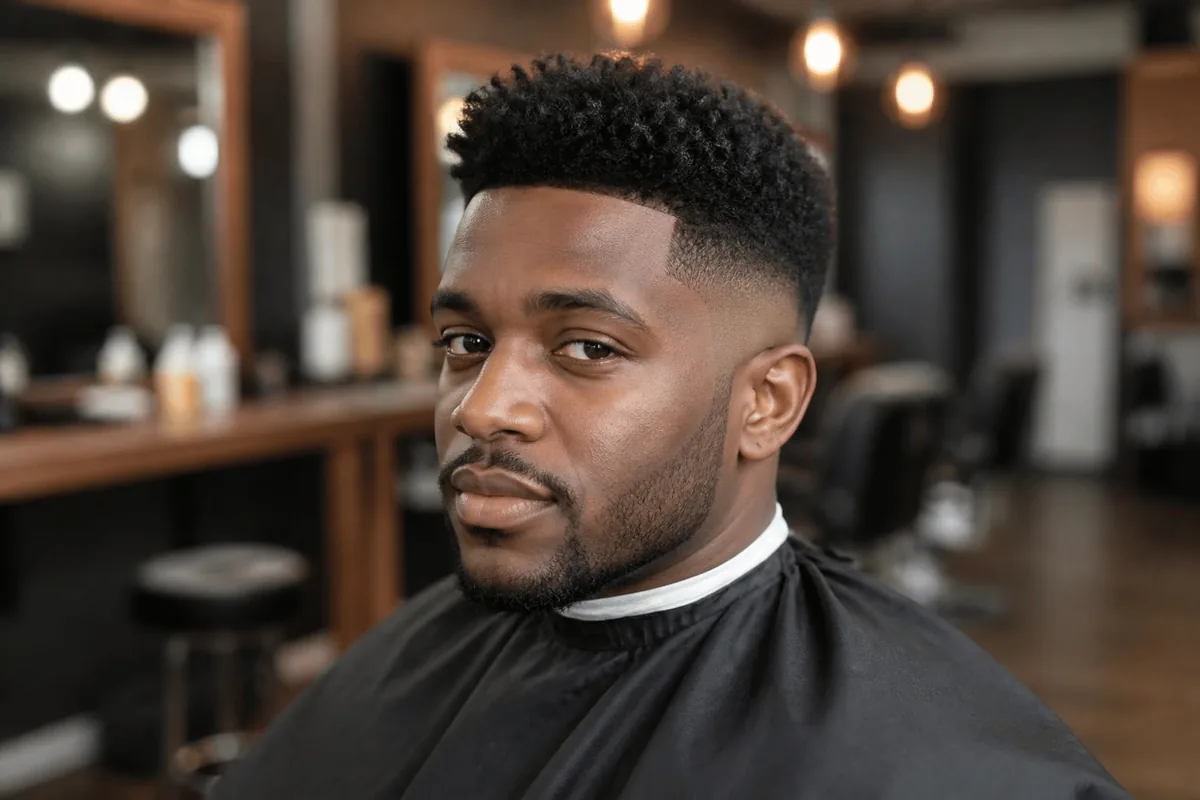
- The taper: a low, narrow fade that starts just above the ear and runs down to the neckline.
The low taper is the reason this cut works on so many men. A high fade makes a strong statement and needs frequent visits. A low taper stays subtle, grows out gracefully and keeps the shape of the head natural. The crop adds texture, so even a very short cut looks styled.
Why is a low taper fade with textured crop so popular?
There are four reasons, and they are all practical.
- It takes minutes to style. The texture is built into the cut, so a little clay is enough.
- It suits most hair. Straight, wavy, curly and thick hair all hold the shape. Fine and thinning hair look fuller because the top is short and choppy.
- It is flexible. The same cut is acceptable at a job interview, a wedding or the gym.
- It grows out well. A low taper does not look odd at week five, and a crop that grows a little looks like a messy quiff, not a mistake.
It is also a safe first fade. If you have only ever had a scissor cut, a low taper is the gentlest way to try one. If you later want something sharper, the mid fade and skin fade pages show the next steps.
Which versions of the textured crop work with a low taper?
The word crop covers several looks. They differ in fringe length, texture and how much of the forehead is covered.
| Version | Top length | Fringe | Best for | Barber note |
|---|---|---|---|---|
| Short and neat | 2 to 3 cm | Very short, straight | Office, conservative settings | Light texture, sharp edges |
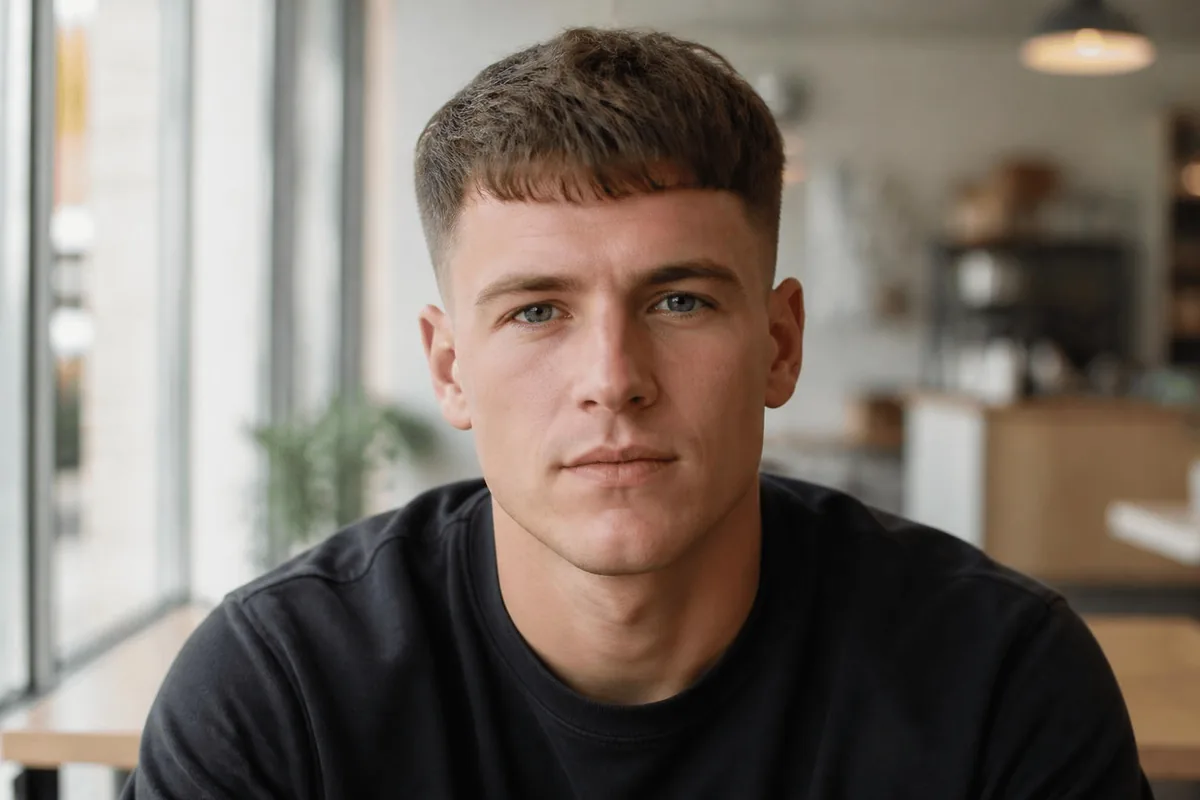
| Classic | 3 to 5 cm | Forward, slightly choppy | Everyday wear | Point-cut with scissors |
| Messy | 4 to 6 cm | Broken, uneven | Wavy and thick hair | Heavy texturising |
| Side-swept | 4 to 6 cm | Swept to one side | Rounder faces | Leave a little more length on one side |
| Long fringe | 5 to 7 cm | Past the eyebrows | Straight hair, younger looks | Keep the sides tight |
| Curly crop | 4 to 8 cm | Curled, rounded | Curly and coily hair | Cut dry, follow the curl |
If you like a very clean, blunt fringe, compare the French crop, which is shorter and more structured than the textured version.
Which hair types suit a low taper fade with textured crop?
Most of them. The cut works because short hair can be texturised on any hair type. What changes is how it looks and what products it needs.
| Hair type | How it looks | What to ask for | Watch out for |
|---|---|---|---|
| Straight | Sleek, defined fringe | Heavy point-cutting for movement | Looks flat without product |
| Wavy | Natural, tousled texture (the easiest) | Light texturising | Frizz on humid days |
| Curly | Full, bouncy crop | Dry cut, keep curls on top | Shrinkage makes the fringe look shorter |
| Coily | Dense, sculpted shape | Shape the top into a soft round | Dryness, so use a leave-in cream |
| Thick | Strong shape | Remove weight inside the top | Puffy sides between visits |
| Fine or thinning | Fuller, textured top | Short top, light texture | Heavy clay can weigh the hair down |
Our pages on straight hair and curly hair go deeper on each texture, and the guide to haircuts by hair type helps if you are not sure where you sit.

Does it suit your face shape and hairline?
The crop changes how your forehead and face look, so it is worth a quick check.
- Oval faces suit every version of the cut.
- Round faces look longer with a little height in the front. Keep the fringe short and the sides tight.
- Square faces look softer with a slightly messy, side-swept fringe.
- Long faces look balanced with a longer, forward fringe that covers part of the forehead.
- Receding hairlines suit a forward fringe, which hides the temples. See our guide to haircuts for a receding hairline.
For a full guide on balancing the cut with your face, read haircuts by face shape.
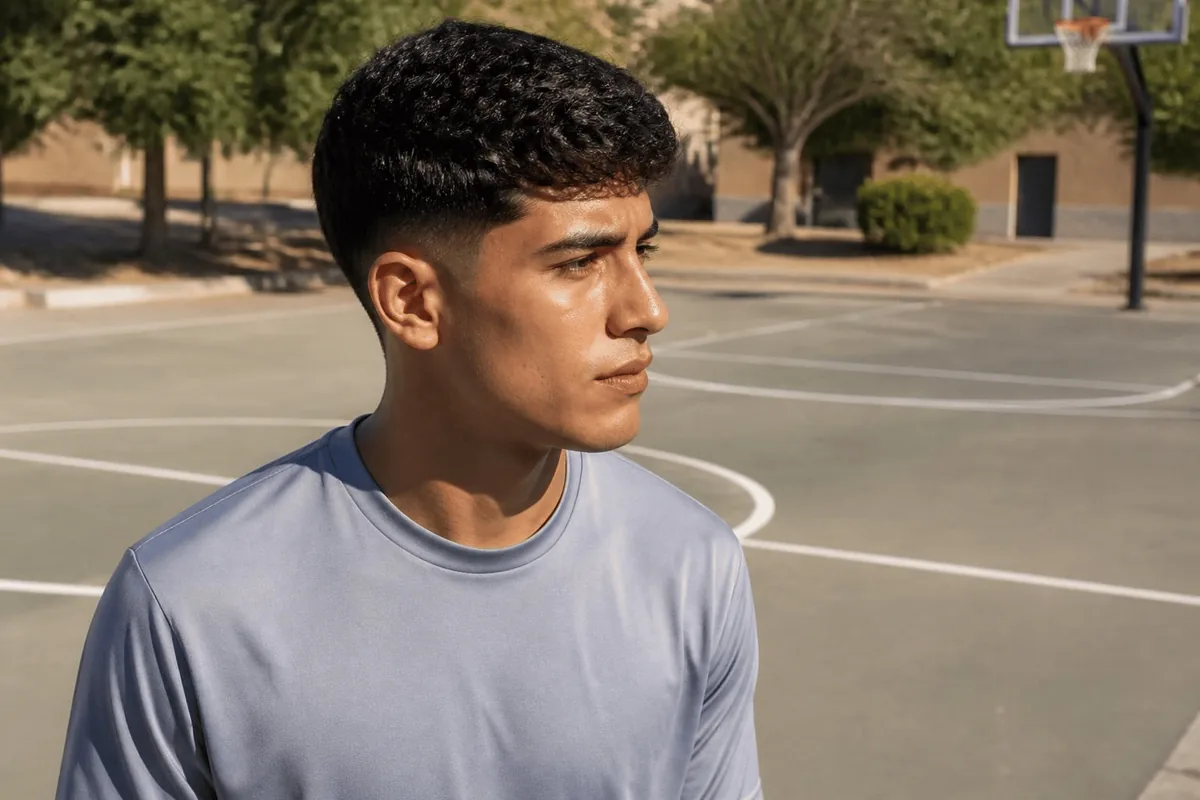
How does a low taper fade with textured crop work on thinning hair?
It is one of the best cuts for thinning hair, and the reason is simple. A short top shows less scalp than long hair that has fallen apart. Texture adds the look of density, and a forward fringe covers a receding hairline. The low taper keeps the sides neat so the eye goes to the top.
- Keep the top short, usually 2 to 4 cm, and avoid a long, heavy fringe.
- Use a light powder or matte paste, not a heavy clay or wax.
- Avoid very short sides. A #3 or #4 at the bottom keeps the contrast soft, and a skin fade can make thin hair look thinner.
- Ask the barber to texturise lightly so you do not remove too much density.
- Wash with a gentle shampoo and skip heavy styling on days you stay in. Resting the hair keeps it looking fuller.

How to ask the barber for a low taper fade with textured crop
Barbers love a clear request, and this cut has two parts, so say both. Here is a script you can use in the chair.
- “I want a textured crop with a low taper fade.” It names the top and the sides in one sentence.
- “Start the taper at a #2 and keep it low.” A #2 is clean without being bare. Choose a #3 for a softer finish or a #1 for a sharper one.
- “Leave a #3 or #4 above the taper.” This is the length of the upper sides, and it makes the blend look natural.
- “Cut the top at about 4 cm, with a forward fringe.” Show the length with your fingers, or use a photo.
- “Point-cut the ends for texture.” This is how the crop gets its choppy look.
- “Keep the neckline natural.” A softly tapered neckline grows out better than a sharp square one.
Our guide to how to ask for a haircut has extra phrases, and the haircut numbers page explains guard sizes. The table below shows what each bottom guard does.
| Bottom guard | Look | Visits needed |
|---|---|---|
| #1 | Sharp and clean | Every 3 weeks |
| #2 | Balanced (best default) | Every 3 to 4 weeks |
| #3 | Soft and natural | Every 4 to 5 weeks |
| #4 | Very subtle | Every 5 to 6 weeks |
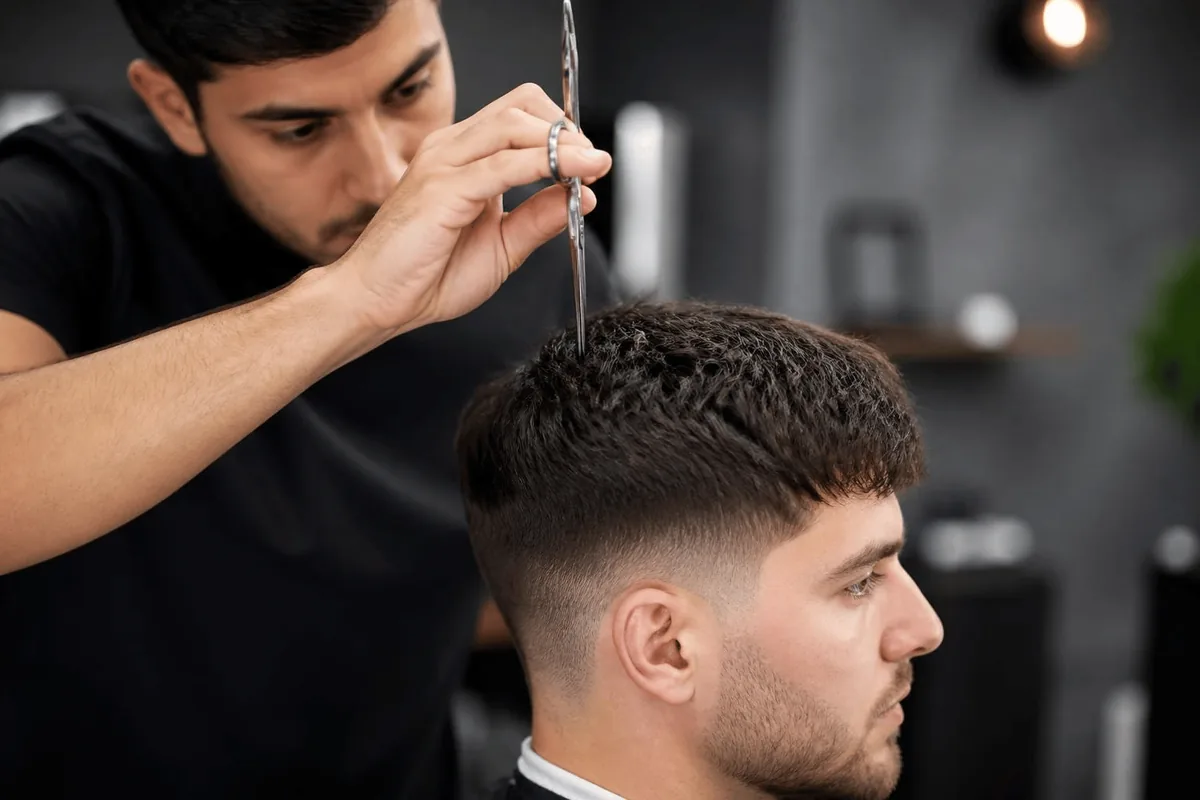
How is the cut done? Step by step
This section helps you follow what your barber is doing, or plan a trim if you already cut hair. If you are new to clippers, start with our guide to cutting a low taper fade at home.
Step 1: Section the top
Clip the top away from the sides. Keep the front section separate so the fringe does not get cut by accident. What goes wrong: if the top is not clipped, a stray clipper pass cuts into the fringe.
Step 2: Cut the sides with a long guard
Run a #4 guard over the sides and the back, keeping the clipper flat to the head. What goes wrong: pushing the clipper against the skull makes one side shorter than the other.
Step 3: Build the taper low
Switch to a #3, then a #2, and work only about 2 cm above the ear and the nape. What goes wrong: starting too high makes a mid fade and removes the soft look of the cut.
Step 4: Blend the join
Use a flicking motion upward and outward to blend the taper into the longer sides. What goes wrong: stopping the clipper in one spot leaves a hard line.
Step 5: Cut the top length
Lift the top between your fingers and cut the length with scissors, 3 to 6 cm depending on the style. Work from the front to the crown. What goes wrong: cutting straight across makes a blunt, heavy top with no movement.
Step 6: Add the texture
Point-cut into the ends with the scissors held vertically, or use a razor lightly. This creates the broken, uneven look. What goes wrong: too much texturising on fine hair thins it out, so use a light touch.
Step 7: Shape the fringe
Comb the fringe forward and cut it to just above the eyebrows or the length you want. Point-cut the edge. What goes wrong: a straight, hard fringe line looks like a bowl cut.
Step 8: Check and tidy
Brush everything into place and check from the front, sides and back. Tidy the sideburns and the neckline. What goes wrong: checking only in the front mirror misses an uneven back. Use a hand mirror.
How to style a low taper fade with textured crop
Styling should take two minutes. Because the texture is cut in, you only need a little product to bring it out.
- Start with towel-dried hair. Dry the top with a hairdryer, using your fingers to push the hair forward and up.
- Add prep if needed. A sea salt spray gives grip on fine or straight hair.
- Warm the product. Rub a pea-sized amount of matte clay or paste between your palms until it is soft.
- Work it through. Start at the back of the top and move forward, using the tips of your fingers.
- Shape the fringe. Pinch and twist the ends to make them separate, and brush forward or to the side.
- Finish lightly. Use a light-hold spray only if it needs it.
What goes wrong: too much clay makes the top look greasy, and styling wet hair makes it flat. Use less than you think, and style when the hair is nearly dry. See the guide to the best hair products for men for choices.
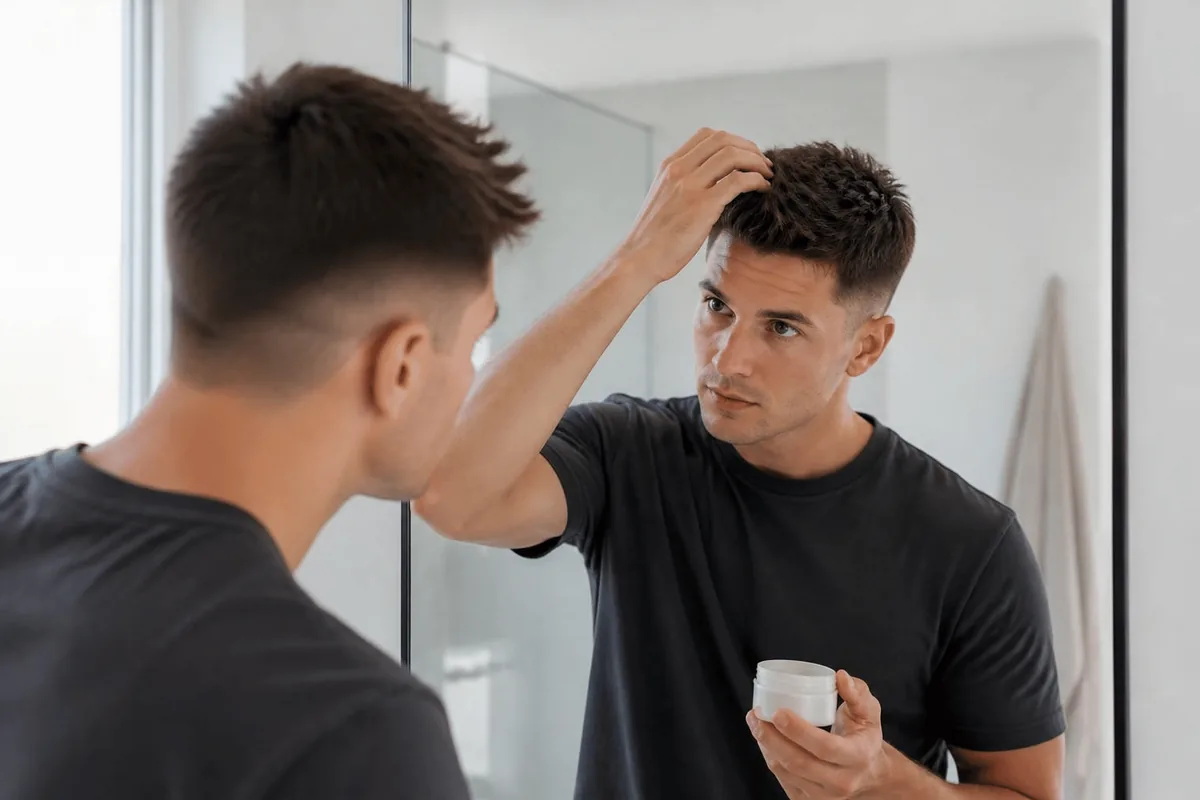
Which products work best for a low taper fade with textured crop?
| Product | Where to use it | Best for |
|---|---|---|
| Matte clay | Dry top, with fingertips | Thick, straight and wavy hair |
| Matte paste | Dry top | Medium and fine hair |
| Sea salt spray | Damp hair before drying | Fine or straight hair that needs grip |
| Texture powder | Roots, a light dusting | Thinning hair |
| Leave-in cream | Damp curls | Curly and coily hair |
| Light-hold spray | Over the finished top | Windy days |
Keep the sides product-free. Anything heavy flattens the taper and makes it look dirty.
How long does a low taper fade with textured crop last?
A low taper stays neat longer than a high fade, but the crop loses its shape as the top grows. The numbers below are typical estimates, since growth varies. According to the Cleveland Clinic, hair grows about 1 centimetre per month.
| Week | What you see | What to do |
|---|---|---|
| 1 to 2 | Sharp edges, clear texture | Enjoy it |
| 3 to 4 | Taper softening, sideburns fuller | Book a tidy-up |
| 5 to 6 | Fringe longer, top heavier | Full cut with texturising |
| 7 to 8 | Sides puffy, taper lost | Overdue, and the style takes more product |
The sides and neckline run on a short clock, and the top on a longer one. If your budget allows only one visit a month, ask for the taper and the neckline to be refreshed, and trim the top every second visit. For the wider picture, read how often should men get a haircut.
How do you prevent razor bumps and irritation?
Tapers use clippers and trimmers around the ears and the nape, where skin is thin and hair is dense. Ingrown hairs and razor bumps are common on the neckline. The American Academy of Dermatology has a clear guide on preventing razor bumps. In practice:
- Ask for clippers, not a razor, if you get bumps. A short guard is gentler than a close shave.
- Cut with the grain at the nape. Going against it raises the chance of ingrown hairs.
- Wash after the cut. Rinse loose hair off and use a gentle, fragrance-free moisturiser.
- Do not pick at bumps. If they persist, see a dermatologist.

Where does a low taper fade with textured crop work: office, gym and formal events?
This is one of the most flexible cuts you can wear. It looks professional at a desk, practical at the gym and tidy in a suit.
| Setting | How to wear it |
|---|---|
| Office | Keep the fringe short and the texture light, with a #3 taper |
| Gym and sport | Skip the styling, use a little cream, and let the natural texture work |
| Wedding or formal | Use matte clay, sweep the fringe to the side and tidy the neckline the day before |
| Date night | Add a little more texture and push the fringe up |
| Hot weather | Keep the top short, use no heavy product and protect the scalp with sunscreen |
One more habit for short hair is sun care. A cut this short shows more scalp, and the AAD recommends sun protection for the scalp as well. Apply sunscreen along the parting and the fringe line, and wear a hat on long days outdoors. A low taper leaves the area around the ears exposed, so remember sunscreen in summer.
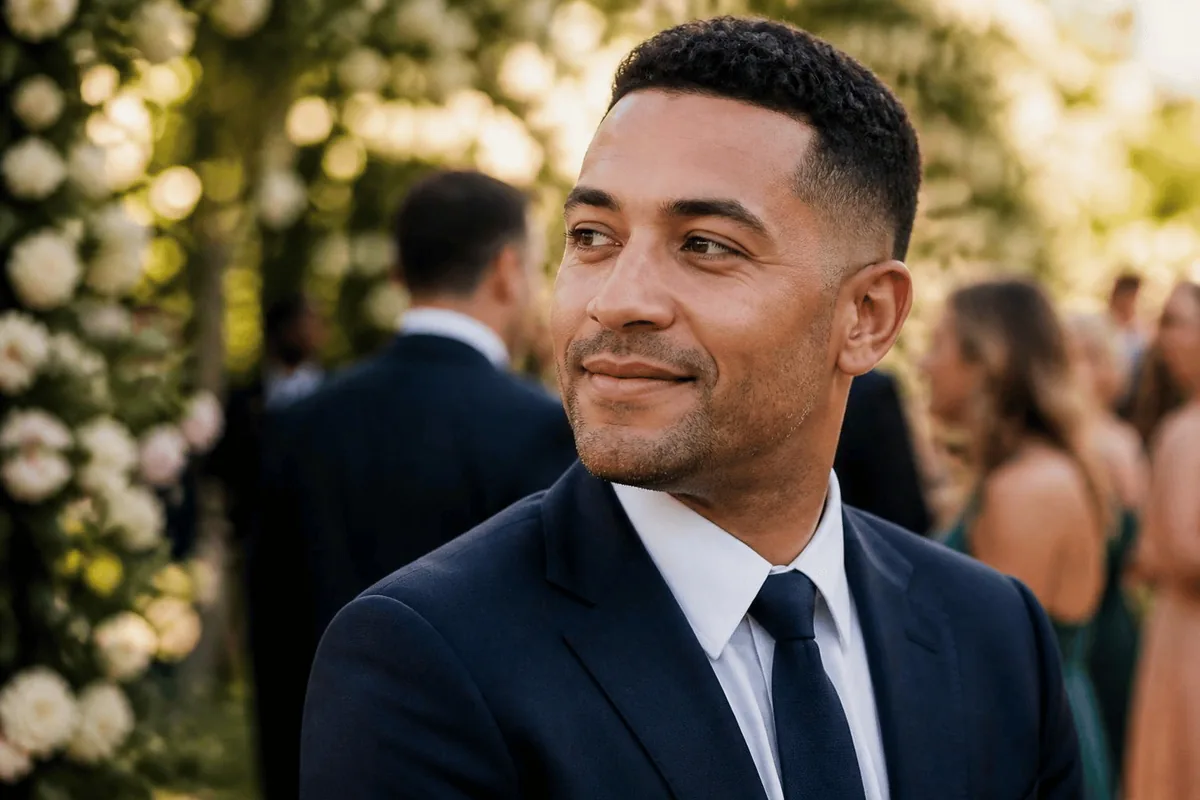
How does a low taper fade with textured crop compare with similar cuts?
| Cut | Sides | Top | Main difference |
|---|---|---|---|
| Low taper fade with textured crop | Low taper, soft | Choppy, 3 to 6 cm | Balanced and easy |
| French crop | Short, often faded | Short, blunt fringe | More structured, less texture |
| Caesar cut | Short, often faded | Even length, straight fringe | Uniform top, straight line |
| Crew cut | Tapered, short | Short on top, longer at the front | Neater, less texture |
| Mid fade crop | Higher fade | Textured | Higher contrast |
| Low taper fade mullet | Low taper | Short, textured | Same sides with a long back |
If you like the sides but want length at the back, look at the low taper fade mullet. If you want part lines and shaved details, see the design cluster.
Common low taper fade with textured crop mistakes and how to fix them
| Mistake | What you see | Fix |
|---|---|---|
| Taper starts too high | Looks like a mid fade | Ask for a low taper and point to the ear |
| Fringe cut straight | Bowl-cut look | Ask for a point-cut, broken fringe |
| Too much texturising | Thin, patchy top | Ask for light texture, especially on fine hair |
| Too much clay | Greasy, heavy top | Use a pea-sized amount on dry hair |
| No blend | Hard line at the taper | Ask the barber to blend the join |
| Skipping visits | Puffy sides, heavy fringe | Book every 3 to 5 weeks |
Frequently asked questions
What is a low taper fade with textured crop?
It is a short, choppy crop on top with a low taper at the sides and neckline. The top is usually 3 to 6 cm with a forward fringe, and the taper only trims around the ears and the nape.
What guard number should I ask for?
A #2 at the bottom of the taper is a good default. Choose a #1 for a sharper look or a #3 for a softer one, and ask for a #3 or #4 above the taper.
How long should the top be?
Most men choose 3 to 6 cm. A short and neat version is 2 to 3 cm, and a long fringe version can reach 7 cm.
Does a low taper fade with textured crop work on curly hair?
Yes. A curly crop is full and bouncy, and the taper keeps the sides neat. Ask for a dry cut and use a leave-in cream.
Is it good for thinning hair?
Yes, because the short, textured top looks fuller and the fringe covers a receding hairline. Keep the products light and avoid very short sides.
How often do I need a trim?
Book a tidy-up every 3 to 5 weeks. Trim the top about every second visit.
Can I cut it at home?
The top is easy to trim, but the taper is harder. If you try, follow our home guide, work slowly and keep the guard flat.
More in this series
This guide is one of the cluster pages under the low taper fade pillar. The others cover curly hair, straight and fine hair, part lines and designs, long hair, cutting one at home and the mullet. See the full range on our fade haircuts hub.
Lengths, guard numbers and timings above are typical estimates, since hair type and growth vary, and the growth figure follows the Cleveland Clinic. Our editorial policy explains how we label estimates.